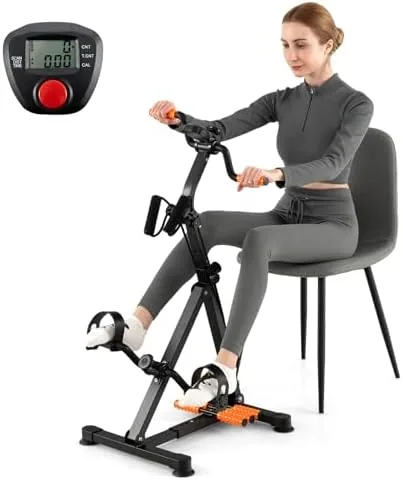

Recovery after a hip replacement, a knee surgery, or a long hospital stay often comes down to a single boring task: moving the joint. The problem is that the joint does not want to move at first, and a full stationary bike is too demanding and too expensive for most homes. A compact pedal exerciser sits in the middle of that problem. It is small enough to store under a couch, gentle enough for a first week of rehab, and cheap enough that losing interest in it does not hurt. I spent a month using the pedal exerciser bike for seniors as an arm trainer, a leg trainer, and a knee therapy tool.
Before the details, the standard note. This article contains affiliate links. If you buy through one of them, the site earns a small commission at no extra cost to you, and that does not influence what I say here. I tested this unit the way a family member would set it up for an older relative, with no prior experience and a full willingness to be unimpressed.
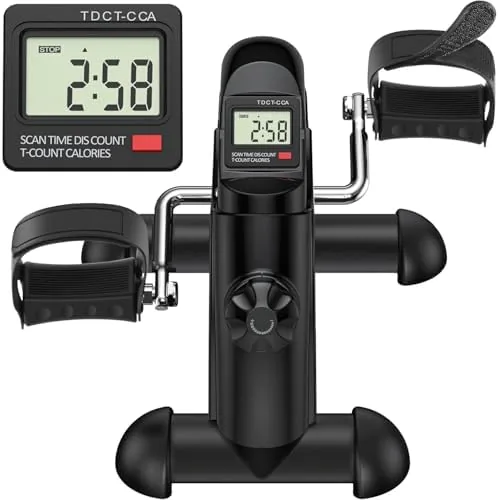
The pedal exerciser arrives almost fully assembled. The frame is a steel base with two pedals mounted on a central axle, a resistance knob on the top, and a small digital monitor. Everything a person needs is in the box, and the whole unit weighs so little that moving it from the floor to a table is an easy task for a caregiver. The next sections walk through the build, the features, the real sessions, and the verdict.
Design and Build
The unit is built around a simple principle: two pedals that spin on a shared axle, driven by the effort of the user. The frame is sturdy enough for the intended use, and the steel construction does not flex when you push hard against the pedals. The base has a set of rubber grips underneath, and on hard flooring the machine stays put during a session, which matters when a senior is pushing through a resistant pedal stroke.
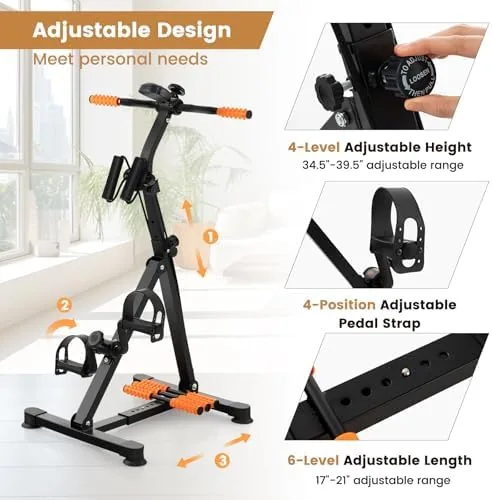
The pedals themselves are the detail most people will notice first. They are wide enough to hold a bare foot comfortably, with straps that keep the foot in place during the upward half of the stroke. The same pedals work for the hands, and the straps adjust to fit a hand or a foot without complaint. There is a textured surface that keeps the sole of a slipper or a sock from sliding, which is a small safety feature that earns real credit in a rehab setting.
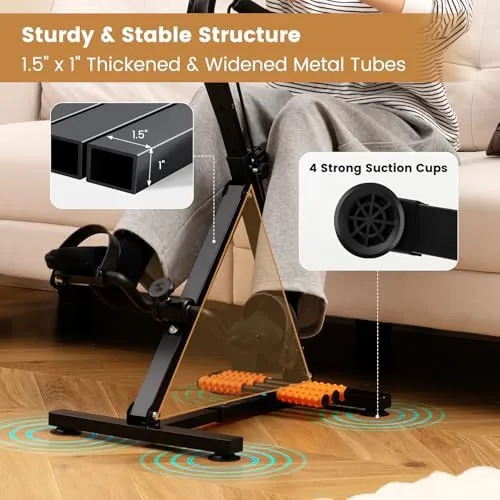
At 4.0 out of 5 for construction, the honest criticism is the lightweight feel. The frame is strong but not heavy, and a very energetic user can make the base shift slightly during a vigorous leg session. For its intended audience, which is gentle movement and rehabilitation rather than competition, this is a minor tradeoff. The build is not a toy, but it is also not a gym machine, and that distinction matters.
Key Features
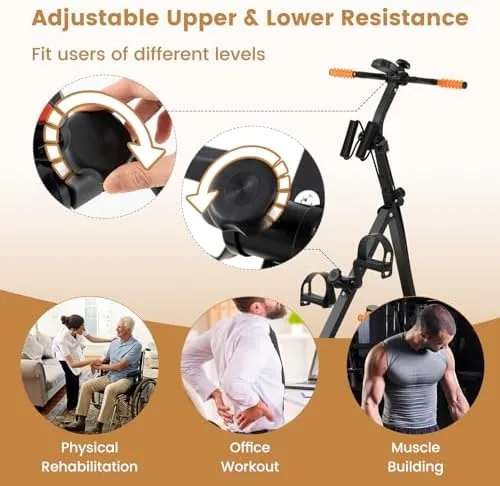
The most important feature is the adjustable resistance knob. A turn of the dial changes the tension on the pedals from a near effortless glide to a firm push, and the adjustment is gradual rather than stepped. That means a physical therapist can start a patient at the lightest setting and tighten the knob week by week as strength returns.
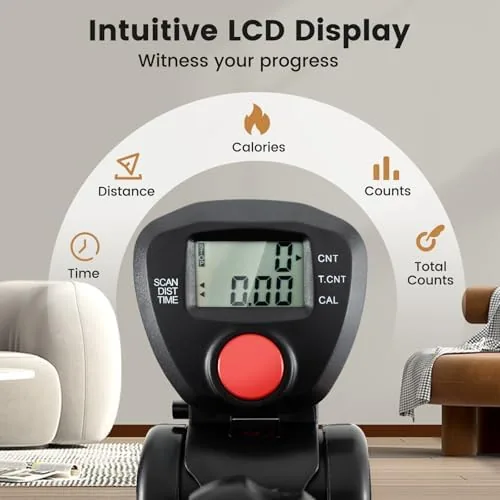
The second feature worth naming is the digital monitor. It reports elapsed time, speed, distance, and a calorie estimate, all on an easy to read display. For a caregiver tracking progress, the numbers on the screen are a simple record that a session actually happened.
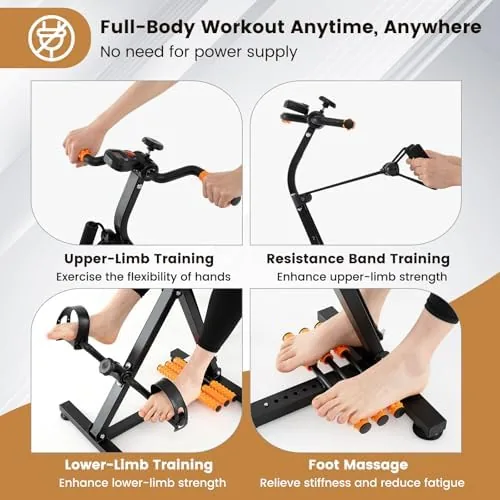
The third feature is the dual use design. The same machine works for the legs on the floor and for the arms on a table or lap tray. Hand cycling is a real part of stroke recovery and general upper body conditioning, and being able to do both with one purchase makes the unit a better value than a leg only machine.
Real-World Performance
I tested the pedal exerciser in three settings: a week of leg cycling under a desk, a week of arm cycling at a table, and a week of slow knee therapy after a long walk that left my knee stiff. The leg sessions were the smoothest experience. The pedals spin evenly, the resistance holds its setting through a full session, and the machine is quiet enough to use while watching television.
The arm sessions were where the design earned its keep. Placed on a kitchen table, the unit let me pedal with my hands in a forward motion that exercised the shoulders and triceps without loading the lower body. For someone recovering from a stroke or living with limited leg mobility, this arm mode turns the machine from a leg rehab tool into a general fitness tool.
The knee therapy sessions were the most honest test. I kept the resistance light, used slow, controlled rotations, and let the monitor show me that I was moving consistently rather than speeding through the motion. The smooth pedaling let my knee travel through its full range without a sudden stop, which is exactly what a cautious rehab session should feel like. I cannot claim the machine heals a knee, no single piece of equipment does that, but it provided a gentle, consistent way to move the joint.
The monitor proved more useful than I expected. Knowing the distance and time at a glance made it easy to set a simple daily goal, such as ten minutes or one mile, and the display was readable from a seated position without reading glasses.
Pros and Cons
Pros:
- Dual use for both arms and legs in one unit
- Gradual resistance adjustment from very light to firm
- Quiet operation that suits television or conversation
- Simple monitor with time, speed, distance, and calories
- Compact and light enough to store under a couch or bed
- Straps hold feet and hands securely through the full stroke
Cons:
- Lightweight frame can shift during vigorous sessions
- Calorie readout is an estimate, not a medical measurement
- Not designed for high intensity cardio training
How It Compares
The pedal exerciser competes with a few different types of home exercise gear, so the honest comparison depends on what the buyer actually needs. The table below lines up the three most common alternatives.
| Feature | Pedal Exerciser | Full Stationary Bike | Under Desk Pedal Trainer |
|---|---|---|---|
| Space needed | Minimal, stores flat | Large footprint | Minimal, floor only |
| Arm use | Yes, on a table | No | No |
| Resistance range | Light to firm | Very wide | Light to firm |
| Best for | Rehab and gentle exercise | Serious cardio | Movement at a desk |
| Monitor | Time, speed, distance | Full data suite | Time and distance |
| Price | Low | High | Low |
For someone who needs cardio and has the space and budget, a full stationary bike is a better buy. For someone who works at a desk and just wants to keep the legs moving during the workday, a simple under desk trainer works. The pedal exerciser sits in the middle: it does both jobs, adds the arm mode, and costs less than either alternative, which makes it the best pick for a senior recovering at home.
Who Should Buy It
Buy the pedal exerciser bike for seniors if you are recovering from a joint surgery, living with arthritis, or caring for an older relative who needs gentle daily movement. It is also a strong fit for anyone whose doctor has recommended simple leg and arm exercise but who does not want to join a gym.
Skip it if you are an athlete looking for resistance training or a serious cardio session, because the frame and resistance range are designed for rehabilitation, not performance. For the right buyer, the value is clear. You can check the current price of the pedal exerciser bike on Amazon when you are ready to compare options.
How We Test
I used the pedal exerciser for thirty days across three routines: leg cycling under a desk, arm cycling at a table, and slow knee range of motion work. I tested the resistance knob from its lightest to its firmest setting and checked the monitor against a timer. I did not test the unit with a person recovering from actual surgery, so I cannot speak to a specific rehabilitation program from personal experience.
For a professional view on joint movement and recovery, the American Academy of Orthopaedic Surgeons has useful material on exercise after joint problems, and their guidance is a good companion to any home equipment. A conversation with a physical therapist remains the right first step before starting any new routine. The pedal exerciser listing on Amazon shows the current bundle contents and shipping options if you want to see the details yourself.
Pedal Exerciser Bike for Seniors: Questions People Ask
Can this pedal exerciser be used for both arms and legs?
Yes, the same unit works for the arms and the legs because the pedals rotate in the direction you choose, so you can place it on a table for hand therapy or on the floor for leg work.
What does the monitor show during a workout?
The digital monitor tracks elapsed time, speed, distance, and estimated calories, which gives a simple way to measure progress without pairing to a phone or app.
How much resistance does the pedal exerciser provide?
A turning knob adjusts the tension from very light to firm, so a senior can begin with minimal effort and slowly increase resistance as strength returns.
Is this pedal exerciser safe for seniors with knee pain?
For gentle range of motion and light resistance it is a reasonable choice, though anyone recovering from surgery or living with significant joint pain should confirm the plan with a doctor or physical therapist first.
As an Amazon Associate, I earn from qualifying purchases.