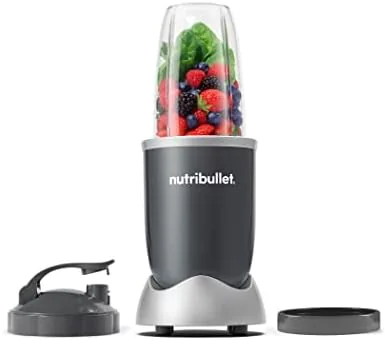

Most smoothie blenders fail in the same unglamorous way: they leave a pocket of frozen fruit spinning uselessly against the blades while the liquid stays separate. The Nutribullet became famous by attacking that problem directly, pairing a tall cup with a blade that draws ingredients down toward the cutter instead of pushing them away. The 600 watt version, the NBR-0601WM, is the friendly entry point to that system, and I spent three weeks making daily shakes to see whether the famous approach still works at this price.
The disclosure first, because you should always know where the money flows. This article contains affiliate links, and if you buy through one of them this site earns a small commission at no extra cost to you. The commission does not affect my testing or my verdict, and I used the Nutribullet exactly as an owner would.
Design and Build
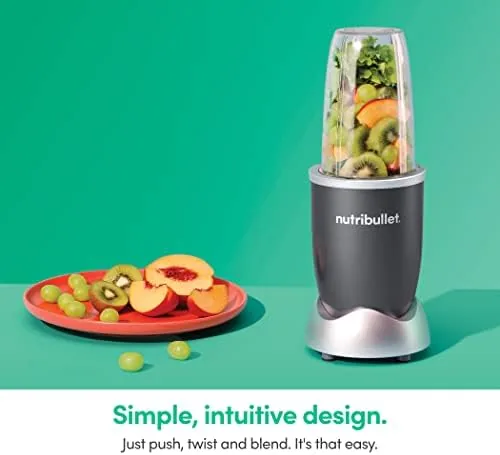
The Nutribullet is a deceptively simple machine. A motor base sits on the counter, and a tall 24 ounce cup screws onto it through a blade assembly. There are no dials and no buttons to learn, because operation is a twist: line up the tabs, twist the cup onto the base, and the motor runs until you twist it off. It is the least intimidating blender you will ever use.
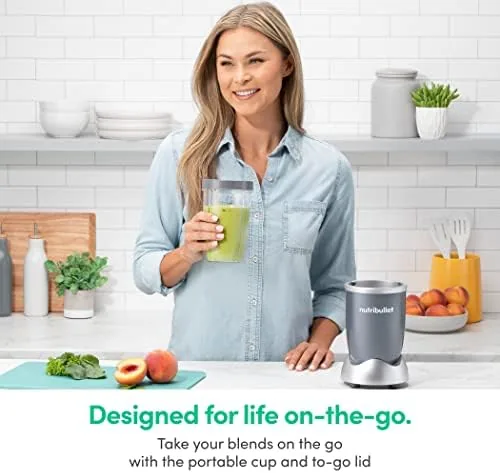
The build is simple but robust. The base is a solid dark gray block that stays planted during blending, and the cup is BPA free plastic with measurement markings up the side. A lip ring and a to go lid finish the kit, so the cup you blend in is the cup you carry out the door.
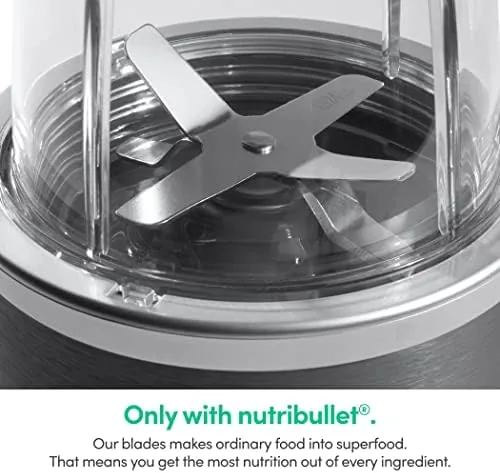
The design philosophy shows in the blades. The four blade extractor sits low in the assembly, and the shape is engineered to pull ingredients down through the cutter rather than letting them float. That downward draw is what separates the Nutribullet from a cheap pitcher blender, and it is the reason the 600 watt motor feels stronger than its number suggests.
Key Features
The 600 watt motor is the spec to understand. Six hundred watts is modest next to the thousand watt models in the Nutribullet range, but because the cup is small and the blade geometry works with the motor, it handles the everyday jobs: frozen berries, banana, greens, yogurt, and ice in short bursts.
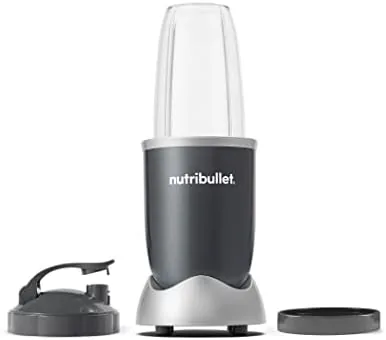
The 24 ounce capacity is the right size for a personal blender. It fits a full smoothie with room for a handful of ice, and the same cup works for shakes, protein drinks, and light food prep like grinding spices or chopping nuts. Because everything happens in the serving cup, there is no extra pitcher to wash.
Simplicity is the final feature. One cup, one blade, one base, no attachments to lose. The on off is the twist mechanism itself, which means there is no switch to fail and no mode to select. For someone who wants a smoothie without reading a manual at seven in the morning, that is a genuine feature, not a missing one.
Real-World Performance
My first test was the one that defeats weak blenders: a smoothie with frozen strawberries, frozen banana, spinach, yogurt, and a splash of milk. I added the liquid first, as the instructions advise, and within about fifteen seconds the motor had pulled the fruit down and the mix was a uniform, thick shake. No spinning fruit, no stuck pocket, no shaking the cup to restart it. The consistency came out smooth enough that not a single strawberry seed survived intact, which says plenty about how thoroughly the blade works.
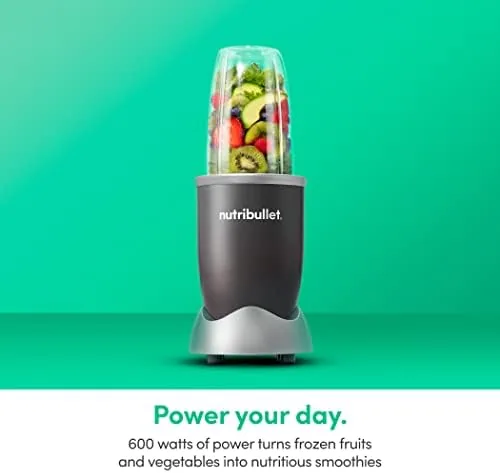
The order of ingredients matters more here than with powerful blenders. Frozen fruit on top of the liquid works best, because the blade pulls from the bottom and the motor never has to cut dry fruit against an empty cup. With that small habit, the 600 watt machine handled everything I threw at it, including a peanut butter and banana shake and a green drink with kale. I even chopped a handful of walnuts for a salad, which the Nutribullet turned into rough pieces in a few short pulses, proof that light food prep is genuinely within its reach.
Cleanup is the feature that keeps this blender on my counter. I filled the cup with warm water and a drop of soap, twisted it onto the base for a few seconds, and rinsed. The whole process takes less than a minute, and because the blade assembly unscrews, there is no hidden crevice where old kale hides. That speed matters more than any horsepower figure, because a blender that is awkward to clean quietly stops being used, and this one never gave me a reason to skip a shake.
The honest limits are where the power shows. A full cup of dense frozen fruit with no liquid will make the motor labor, and hard tasks like crushing a handful of ice for a slushie need short pulses rather than a long run. The 900 watt and higher models in the Nutribullet range handle those tougher blends more comfortably, which is the difference to weigh if you plan heavy frozen drinks daily. For the standard smoothie and shake routine, though, the 600 watt unit has more than enough headroom, and it is the version I would recommend to most buyers.
Pros and Cons
Pros:
- Extractor blade design blends frozen fruit completely
- 24 ounce cup doubles as the serving and carry cup
- One step twist operation with no settings to learn
- Rinse clean method keeps cleanup under a minute
- Compact and quiet enough for a counter or cupboard
Cons:
- 600 watt motor labors on very dense frozen loads
- Ingredient order matters for the best results
- Single cup size limits the batch you can make
How It Compares
The 600 watt Nutribullet sits between a cheap pitcher blender and the higher powered Nutribullet models, and the comparison decides who should buy which.
| Feature | Nutribullet 600 Watt | Higher Powered Nutribullet |
|---|---|---|
| Motor power | 600 watts | 900 watts and up |
| Cup capacity | 24 ounces | 32 ounces or larger |
| Operation | Twist on and off | Twist plus pulse modes |
| Frozen fruit | Excellent with liquid first | Excellent, less fussy |
| Ice Crushing | Short pulses | Stronger and faster |
| Price | Budget friendly | Higher |
Against a cheap pitcher blender, the Nutribullet wins clearly on blend quality, because the tall cup and extractor blade do what a wide pitcher cannot. Against its bigger siblings, it loses on raw power and cup size but wins on price and simplicity. For a daily single smoothie the 600 watt version is enough. For daily heavy frozen drinks and bigger batches, the extra money buys real headroom.
Who Should Buy
Buy the Nutribullet 600 watt if you want a personal blender for daily smoothies and shakes, if you value a one minute cleanup, or if you are new to blending and want to start simple. It is a machine that asks almost nothing of you.
Skip it if you plan to crush ice for frozen cocktails daily, if you want to blend for a family in one batch, or if you need the extra power of a larger motor. For the single smoothie a day routine, it is one of the best values in the category. You can check the current Nutribullet 600 price on Amazon when you are ready.
How We Test
I tested the Nutribullet over three weeks with a daily smoothie routine and a set of stress tests: a frozen berry smoothie, a green drink with kale, a peanut butter and banana shake, a slushie attempt with ice, and a batch of chopped nuts for baking.
I timed each blend, watched for stuck ingredients, and checked the motor for strain on the densest loads. I did not test continuous heavy duty use, since the machine is built for short personal blends. For an independent view on blenders across the market, the testing at Wirecutter is a reliable reference.
The Nutribullet listing on Amazon shows the current price and what is included in the box.
Nutribullet 600 Blender: Questions People Ask
Can it blend frozen fruit?
Yes, the 600 watt motor and extractor blade handle frozen berries and ice in short bursts, though hard ingredients benefit from adding liquid first. Put liquid in the cup first, then frozen fruit on top, and it blends cleanly.
Is the cup big enough for a meal replacement shake?
The 24 ounce cup fits a full smoothie with room to spare, and the to go lid makes it a genuine single serving system. You blend, cap, and carry in the same cup.
How is it cleaned?
You fill the cup with warm water and a drop of soap, twist it onto the base, run it a few seconds, and rinse, which keeps cleanup under a minute.
What is the difference from the high powered models?
The 600 watt version is simpler and cheaper, good for daily smoothies, while the 900 watt and up models add more power for tougher whole food blends and larger cups.
As an Amazon Associate, I earn from qualifying purchases.