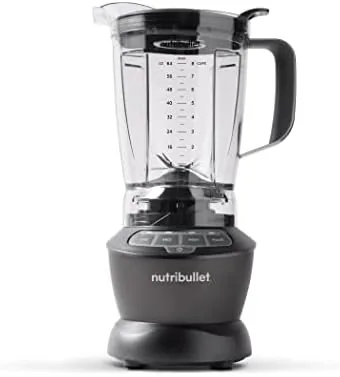

The countertop blender is the kitchen appliance that separates an occasional smoothie drinker from someone who actually blends every day. Cheap blenders turn ice into a gritty sludge and leave strawberry seeds lodged under the blades, and that is the exact frustration the nutribullet Countertop Blender was designed to remove. This 1200 watt machine with a 64 ounce pitcher sits in the middle of the nutribullet lineup, bigger than the personal cups that made the brand famous but more approachable than a full size commercial blender. I ran it through a month of smoothies, frozen fruit, food prep, and the occasional soup, and this review covers the power, the texture results, and the everyday reality of owning one.
A disclosure before the blend cycle. This article contains affiliate links, and if you buy through one of them the site earns a small commission at no extra cost to you. That commission never changes my verdict, and the blender reviewed here was used exactly the way a home cook would use it.
The machine is a dark gray base with a 1200 watt motor, a 64 ounce extraction pitcher, and a single smoothie style program. It is not a gadget kitchen showpiece; it is a workhorse built around the idea that a good smoothie comes from enough power and the right blade geometry. The rest of this review walks through the design, the features, and the results.
Design and Build
The blender has a clean, modern look that sits well on a countertop. The base is a rounded dark gray block with a simple control dial, and the clear 64 ounce pitcher locks onto it with a quarter turn. The pitcher carries molded measurement lines, a secure lid with a vent, and a sturdy handle, and the whole assembly feels solid without being oversized. It is a counter presence, but not a dominating one.
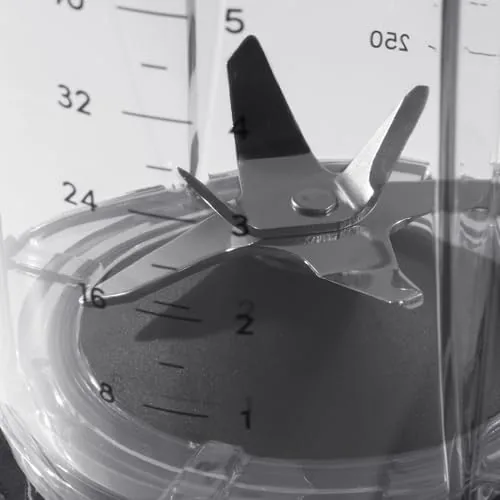
The build quality is reassuring. The base has a low center of gravity, which keeps it stable even with a full pitcher spinning, and the extraction blades sit low in the pitcher where they draw ingredients down into the vortex. The motor is belt driven inside a quiet housing, and the pitcher, lid, and blades all come apart for cleaning. Nothing rattles, and the tolerance between pitcher and base is tight, which is exactly what you want from a daily driver blender.
Key Features
The headline feature is the 1200 watt motor. That is serious Power for the price, and it shows up immediately in how the machine handles frozen fruit, whole ice cubes, and fibrous greens. Where weaker blenders labor and stall, the nutribullet powers through and keeps spinning, which is the difference between a smooth drink and a chunky one.
The extraction blade design is the second feature. The blades are shaped to pull ingredients down and through the vortex rather than just chopping at the top, which means less stopping and scraping down the sides. Combined with the wide pitcher base, the result is a blend that incorporates everything in the cup in a single cycle.
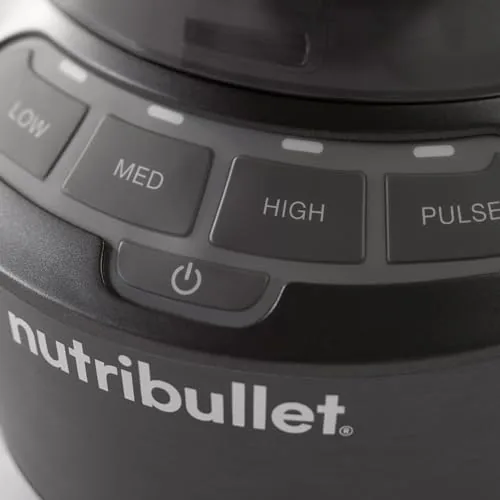
The 64 ounce pitcher is the third feature and the main reason to choose this model over the personal cup nutribullets. It fits roughly four generous smoothies or a full family batch, which makes the machine genuinely useful beyond a single person. The one touch smoothie program runs a timed cycle at full speed and stops itself, so you can set it and walk away, though there is also manual speed control when you want to pulse or blend to taste.
Real-World Performance
I started with the test that breaks cheap blenders: a frozen berry smoothie with ice, yogurt, and banana. The nutribullet finished it in about forty seconds with a texture that was completely smooth, no ice grit, no strawberry seeds, no need to stop and scrape. The result poured thick and even, which is the signature of a blender with real power behind it.
Frozen mango and pineapple handled equally well, and a green smoothie with kale and spinach came out silky with no fibrous strings left behind. That is the test most Personal Blenders fail, because greens wrap around the blades and refuse to break down. The extraction geometry here handled it cleanly, and the drink texture was notably better than what I get from budget blenders.
For food prep, I used the machine to chop nuts into a coarse meal, to blend a sauce, and to purée a soup base. The pulse function gave good control for the nuts, and the full blend made sauces smooth in seconds. The soup base needed the pitcher only about two thirds full, because hot liquid needs room, but it blended to a velvety texture that would have taken a lot of arm work by hand.
The daily experience was mostly a pleasure. The pitcher is light enough to handle with one hand when full, the lid seals without leaking, and cleanup is quick because the blades come off the base for rinsing. The machine is louder than a personal blender, which is expected for the power, but it is not obnoxious, and the smoothie cycle finishes before the noise wears on you.
The limits are honest ones. The 64 ounce pitcher is big, which is great for batches but means a single small smoothie can get lost at the bottom. The base is heavy, so it stays on the counter rather than living in a cabinet, and the plastic pitcher, while sturdy, can scratch if you stack things on it. For hot liquids you need to be careful, because the vessel is not a hot soup carafe, and the motor works best with the pitcher only partially full of warm ingredients.
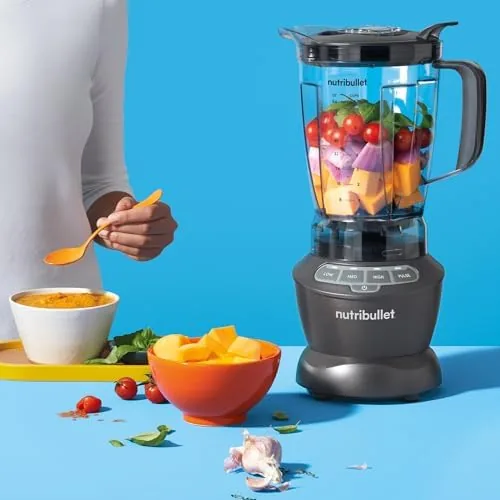
The machine also handled the small batch test that many big blenders fumble. A single serving smoothie using the 64 ounce pitcher still blended properly because the extraction blades sit low enough to reach the bottom, and a few extra pulses sorted out the last of the fruit. It is not as tidy as a personal cup, but it works, which is more than some full size blenders can claim.
Pros and Cons
Pros:
- 1200 watts crush frozen fruit and ice with ease
- Consistently smooth texture with no scraping needed
- Large 64 ounce pitcher suits families and batches
- Extraction blades handle fibrous greens well
- One touch smoothie program plus manual speed control
- Easy cleanup with removable blades
Cons:
- Heavy base stays on the counter, not in a cabinet
- Large pitcher overkills single servings
- Plastic pitcher can scratch over time
- Not designed for very hot liquids
How It Compares
The nutribullet Countertop sits between the personal cup models and premium full size blenders, and the comparison comes down to capacity and power. The table below lines up the three.
| Feature | nutribullet Countertop | Personal Cup Blender | Full Size Blender |
|---|---|---|---|
| Motor | 1200 watts | 600 to 900 watts | 1400 watts or more |
| Capacity | 64 ounces | 24 to 32 ounces | 64 to 84 ounces |
| Best for | Families and daily smoothies | Single servings on the go | Big batches and heavy duty |
| Price | Mid range | Low | High |
| Green smoothies | Excellent | Good | Excellent |
If you mostly make one smoothie at a time and want to drink from the cup, a personal blender is smaller and cheaper. If you entertain or want to blend dough, hot soup, or ice cream, a full size blender offers more power and heavier duty jars. The nutribullet Countertop is the best middle ground, a machine that blends like a full size unit while keeping the familiar nutribullet design language. For the daily smoothie household, it hits a very strong balance of power, price, and capacity. You can check the current price of the nutribullet Countertop Blender on Amazon.
Who Should Buy It
Buy the nutribullet Countertop Blender if you make smoothies for more than one person, if frozen fruit and fibrous greens have defeated your current blender, or if you want one machine that handles smoothies, sauces, and food prep without a big budget. It is also a great choice for a household upgrading from a personal cup blender that keeps running out of capacity.
Skip it if you only ever make a single small smoothie, if you need a blender for hot soup and heavy dough, or if you lack the counter space for a full size base. For the everyday smoothie kitchen, this is one of the most capable machines in its price range.
How We Test
I used the nutribullet Countertop Blender over a month, making frozen berry smoothies, green smoothies with kale and spinach, fruit shakes, sauces, chopped nuts, and a warm soup base. I tested the smoothie program, manual pulse control, texture results, cleanup, and how the machine handled both small and full batch volumes.
I did not test the blender with boiling liquids or heavy dough, and I did not run a timed durability marathon. For an authoritative take on blender performance, Wirecutter has a detailed guide to the best blenders that is worth reading before you buy. The nutribullet Countertop Blender listing on Amazon shows current pricing and bundle options.
nutribullet Countertop Blender: Questions People Ask
Can the nutribullet blend frozen fruit?
Yes, the 1200 watt motor and extraction blades crushed frozen berries, ice, and whole fruit quickly with only a few pulses for a smooth result.
How big is the blending pitcher?
The 64 ounce pitcher fits large family smoothies and batches, and the marked measurement lines make portion control simple.
Is the pitcher safe to clean in a dishwasher?
The pitcher, lid, and extractor blades are top rack dishwasher safe, though a quick rinse after blending makes cleanup even easier.
Does it handle hot soup ingredients?
The blender can process warm ingredients like cooked soup bases, but it is not designed for boiling liquid and should be blended with care.
As an Amazon Associate, I earn from qualifying purchases.