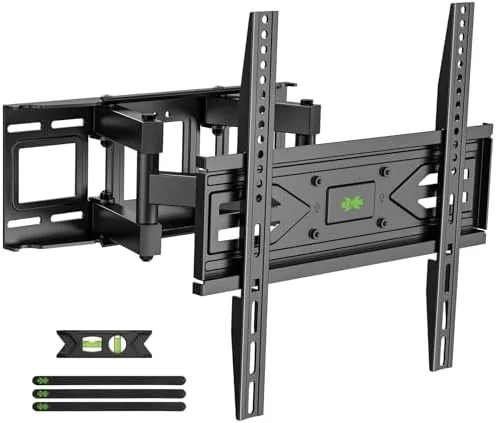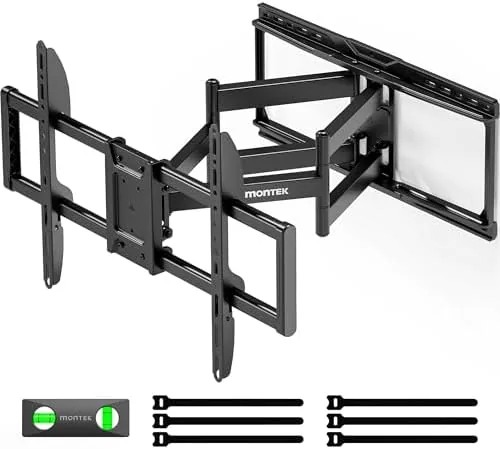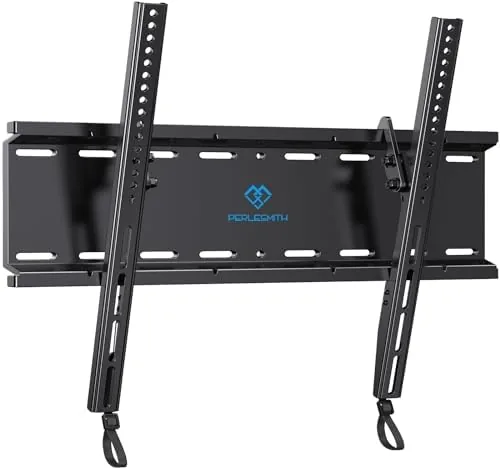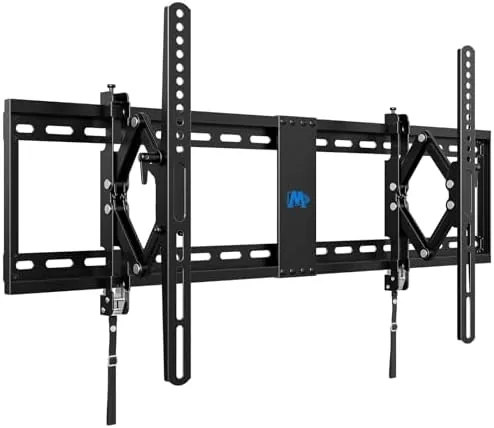

Wall mounting a television is the kind of job people dread until they have done it once, and then they wonder what all the fuss was about. The secret is the bracket, and the Mounting Dream Advanced Tilt mount makes the fuss smaller than most. It holds flat screens from 42 to 90 inches, extends the panel up to seven inches off the wall, tilts for glare control, and bolts to studs spaced 16, 24, or 32 inches apart. I installed one under an 82 inch television, which is right at the edge of its comfort zone, and I came away with strong opinions about every screw involved.
As with every review here, a disclosure first. This article contains affiliate links, and a purchase through one of them earns this site a small commission at no extra cost to you. My installation and verdict are my own.
Design and Build
The bracket is a study in practical engineering. The wall plate is a wide steel rectangle with horizontal slots that give about a foot of lateral adjustment, so the mount does not have to land perfectly centered over the studs. Two telescoping arms slide out to the screen and lock in place, and the whole assembly uses a steel thickness that feels far more substantial than its modest price suggests. The black powder coat is even and durable, and nothing flexed or creaked when I leaned on it during the install.
The box is refreshingly complete. Every bolt, washer, and spacer is labeled in a printed chart, and the included paper template lets you mark stud centers before you drill. There is no special tool required beyond a socket wrench and a drill with a masonry bit if your wall is brick. The manual is clear enough that a first timer can work through it in an afternoon, which is not something every mount can claim, and it keeps the leveling and the bolt selection from becoming guesswork.
Key Features
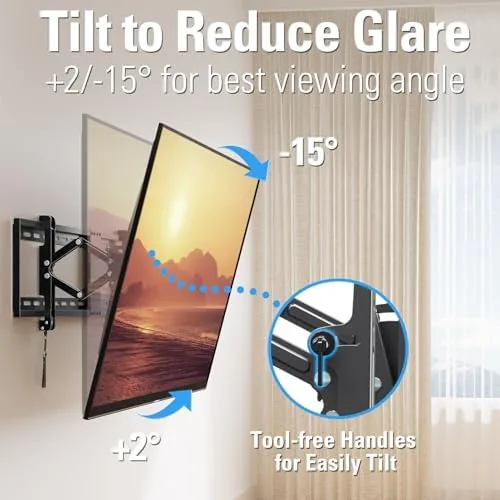
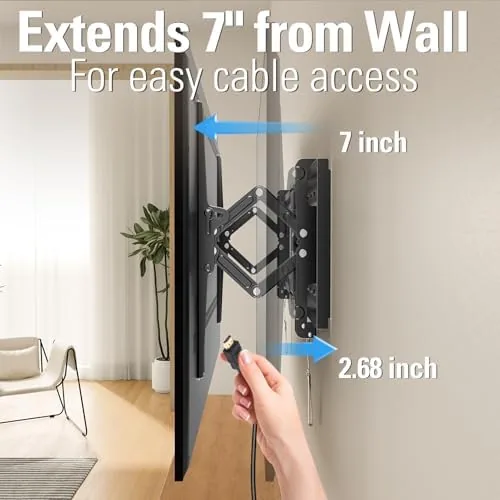
The headline feature is the seven inch extension. The arms pull the screen a full seven inches off the wall, which is the difference between a mount that hugs the wall and one that lets you swing the panel out to reach cables behind it. Fully retracted, the bracket sits the screen about an inch and a half off the wall, a slim profile that looks nearly flush from the side. The tilt mechanism is a captive adjustment at the top of the bracket that rocks the screen down by up to twelve degrees to kill glare from overhead lights.
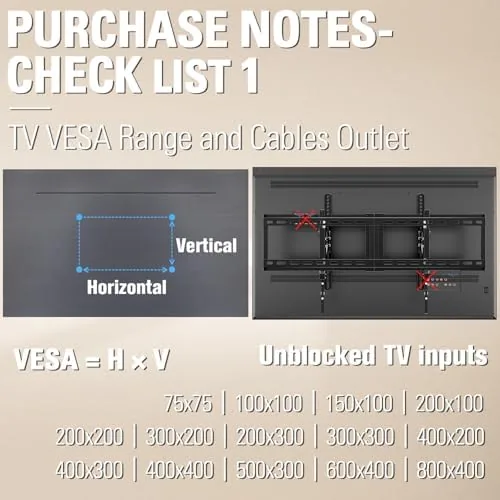
The VESA compatibility is the practical headline for shoppers. The bracket accepts mounting patterns from 75 by 75 millimeters all the way up to 800 by 400 millimeters, which covers nearly every flat screen on the market in the 42 to 90 inch range. The weight rating of 120 pounds is the number to remember, it exceeds the actual weight of virtually every consumer television you will hang, and the stud compatibility across 16, 24, and 32 inch spacing means most walls are covered. To check the current price, the Amazon listing for the Mounting Dream tilt mount is the place.
Real-World Performance
The installation itself was the real test, and it went better than expected. I hung an 82 inch television that weighs close to the rated limit, working alone with a second set of hands only for the final lift. The wall plate went up first, the leveling feet let me square it within a minute, and the sliding slots meant my stud spacing error of half an inch caused no drama at all. The whole wall plate phase took about forty minutes, including marking, drilling, and tightening.
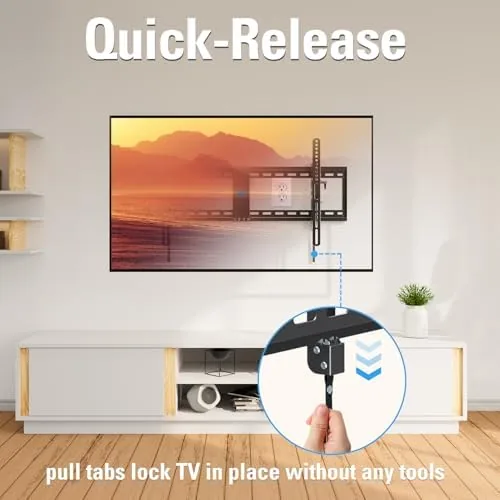
The television mounting phase is where most brackets earn their reputation, and this one behaved. The arms locked onto the back panel with the VESA bolts snug but not stripped, and the bracket held the screen level as I tightened the top latch. The final adjustment was a genuine pleasure: the tilt moved the top of the screen back and forth With a Smooth, controlled motion, and the two release levers let a single person lift the panel off for cable work without a second helper. The 82 inch set has stayed rock solid through a month of normal viewing, with no sag and no drift.
The mount also passed the stability test on the smaller unit. After a month of daily use on both screens there was no tilt drift, no loosened bolts, and no sag at the top edge, and a firm push on the 82 inch panel produced no wobble, which is the reassurance most buyers want before they trust a large television to a wall plate.
The seven inch extension proved itself on cable day. I reached behind the panel, swapped an HDMI cable, and routed a soundbar wire without ever lifting the screen off its hooks, which is the exact scenario the reach is built for. The tilt reduced an afternoon glare problem from a west facing window to a non issue, and the profile at full retraction looks clean from across the room. On a 55 inch test unit the same bracket behaved identically, which confirms the universal claim rather than the 82 inch exception.
Pros and Cons
Pros:
- Seven inch extension makes cable work easy
- Tilt up to twelve degrees kills glare from above
- Fits studs at 16, 24, and 32 inch spacing
- VESA coverage from 75x75 to 800x400 millimeters
- Rated to 120 pounds, plenty for nearly any set
- Complete hardware kit with labeled bolts
Cons:
- Needs two people to lift a very large television
- Some drywall anchors sold separately for odd walls
- Full seven inch extension needs clearance from the wall
- Not a Full Motion mount, tilt only
How It Compares
Tilt mounts and full motion mounts solve different problems, so I set this bracket against a fixed flush mount and a full motion mount to show the trade offs.
| Feature | Mounting Dream Tilt | Fixed Flush Mount | Full Motion Mount |
|---|---|---|---|
| Extension | Up to 7 inches | Fixed, under 2 inches | Up to 20 inches |
| Tilt | Up to 12 degrees | None | Up to 15 degrees |
| Swivel | No | No | Yes |
| Weight capacity | 120 pounds | Varies, often higher | Varies |
| Profile | Low | Lowest | Thicker |
| Price | Mid | Lower | Higher |
Against a fixed flush mount, the Mounting Dream wins on the extension and the tilt, which solve real glare and cable access problems for a modest price increase. Against a full motion mount, it gives up the ability to swing the screen toward a seating area, but it sits closer to the wall and costs less. For a room with a single clear viewing position, the tilt mount is the sweet spot, and for most living rooms that is exactly the situation.
Who Should Buy It
Buy this mount if you have a 42 to 90 inch flat screen and a wall with standard studs, if overhead lights cause glare, or if you like being able to reach behind your television without asking for help. The seven inch extension and the twelve degree tilt cover the two complaints that drive most people to upgrade from a flush mount.
Skip it if you need to pull the screen out and angle it toward multiple seating areas, which requires a full motion mount, or if you have an unusual wall that needs custom hardware. For everyone else, this is one of the easiest and most confidence inspiring TV mounts you can install. Check the current price of the Mounting Dream tilt mount on Amazon if your television needs a home on the wall.
How We Test
I installed the Mounting Dream tilt mount under an 82 inch television that weighs near the rated limit, working to the manufacturer instructions, and I left it mounted for a month of daily use. I verified the leveling, the tilt range, and the full extension, and I swapped cables behind the panel to test the reach claim.
I also mounted it on a 55 inch test unit to confirm the universal fit, and I checked every supplied bolt against the VESA chart. I did not test it against drywall alone or use it in a commercial setting. For independent guidance on mounting televisions, Wirecutter has covered the best TV wall mounts, and that guide is a useful cross reference.
Mounting Dream Tilt Mount: Questions People Ask
Will the Mounting Dream bracket fit my 55-inch television?
Yes, the universal arms accept VESA patterns from 75x75 up to 800x400, which covers 55-inch and most 42 to 90 inch flat screens.
What is the maximum weight the mount supports?
The bracket is rated for televisions up to 120 pounds, far beyond the weight of most 82 and 85 inch models.
How far does the mount extend from the wall?
The arms extend the screen up to seven inches from the wall, and it sits about an inch and a half away when fully retracted.
Can I install the mount on 24-inch stud spacing?
Yes, the wall plate spans 16, 24, and 32 inch stud patterns, and the adjustable plate gives slack for off-center studs.
As an Amazon Associate, I earn from qualifying purchases.