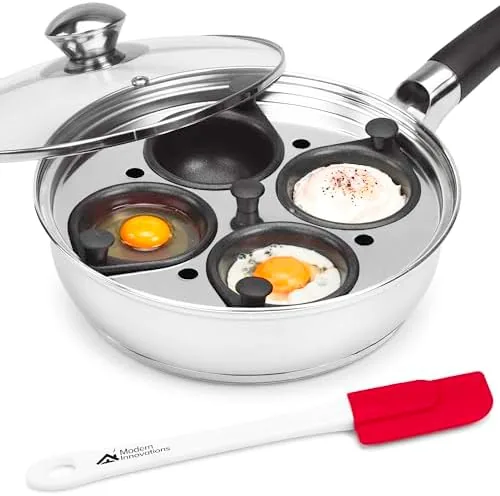

Poaching an egg the traditional way is one of those kitchen skills that looks easy and turns out to be surprisingly fiddly. The water has to stay at the right simmer, the egg has to be swirled into a vortex, and the white has to hold together long enough to set, and even experienced cooks end up with shredded whites and a slotted spoon full of disappointment. The Modern Innovations Egg Poacher Pan offers a different route: a stainless steel pan with nonstick poaching cups that cook the egg in gentle steam, so there is no vortex, no swirling, and no water to fight. I poached eggs in this pan for a month to find out whether the shortcut works, whether the cups release cleanly, and whether it earns a permanent place in the breakfast rotation.
Before the details, the standard note. This article contains affiliate links, and if you buy through one of them the site earns a small commission at no extra cost to you. That commission never changes what I cook, how I test, or what I recommend.
Design and Build
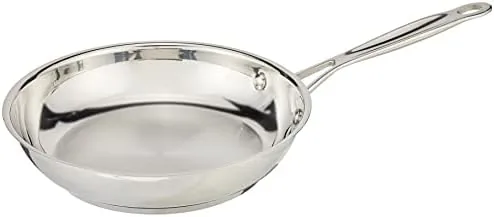
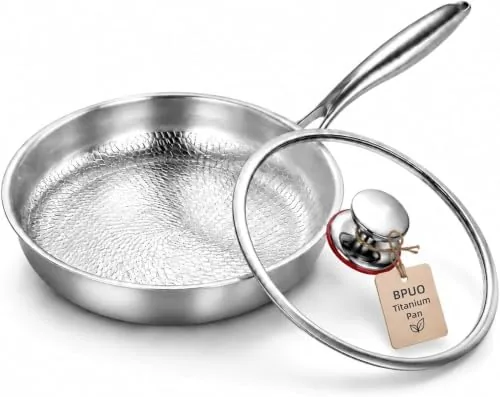
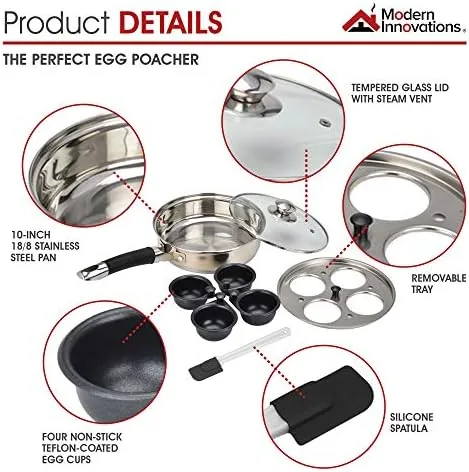
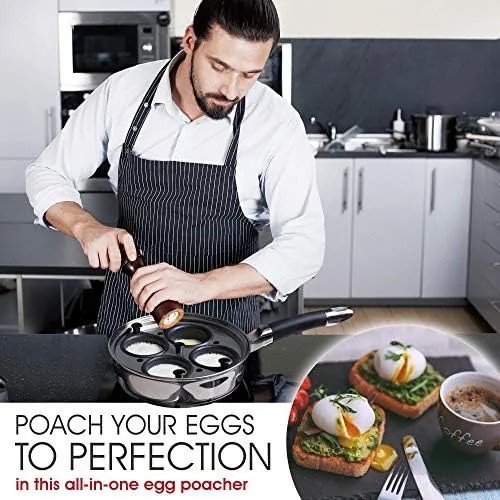
The pan is a straightforward and purposeful design. It is a stainless steel frying pan fitted with a set of nonstick poaching cups that sit in a ring arrangement inside the pan, each one shaped to cradle a single egg. The whole unit has a compact footprint, roughly the size of a standard skillet, so it does not demand special cabinet space or a dedicated drawer.
The construction is solid for the price. The stainless steel body is durable and easy to clean, the handle is riveted and stays reasonably cool on the stove, and the nonstick cups are the star of the show. The cups have a smooth, dark coating that releases cooked eggs cleanly, and they are small enough to keep the egg compact while large enough to allow the white to set into a tidy oval.
One design detail worth noting is that the pan comes with a silicone spatula, which is a thoughtful inclusion for lifting the finished eggs out of the cups without scratching the coating. The set is simple, with no moving parts and no electronics, which means there is very little that can break or wear out over time.
Key Features
The poaching cups are the defining feature. Each cup is a nonstick vessel that holds a single egg above a shallow layer of simmering water, so the egg cooks gently by steam rather than by direct boiling. That method is what produces the even, tender white and the soft, liquid yolk that define a properly poached egg, and it does it without any of the technique required for water poaching.
The versatility of the cup count is the second feature that matters. The set includes multiple cups, which means you can poach a full breakfast order at once, two, three, or four eggs in a single batch. For a family breakfast or a small brunch, that is a genuine convenience, because the eggs all finish together rather than being cooked one at a time.
The nonstick coating and the included spatula round out the package. The coating ensures the eggs release without sticking or tearing, and the spatula is shaped to slide under the egg and lift it out intact. Cleanup is simple: a quick rinse of the cups and a wipe of the pan, with no soaking required.
Real-World Performance
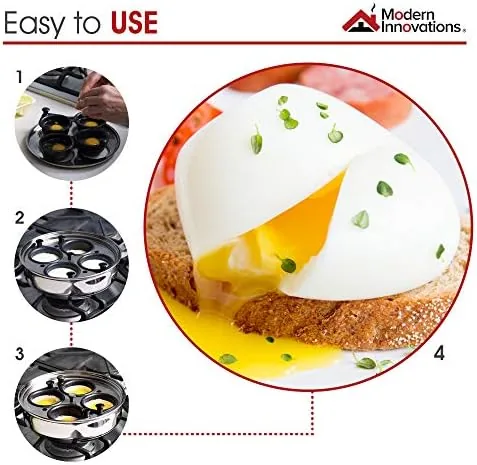
I started with the simplest test, a single poached egg on toast. I added about half an inch of water to the pan, set it over medium heat, cracked an egg into a cup, and covered the pan. Within about four minutes the white was fully set and the yolk was still runny, and the egg lifted out of the cup with the spatula completely intact. No vortex, no swirling, no shredded white.
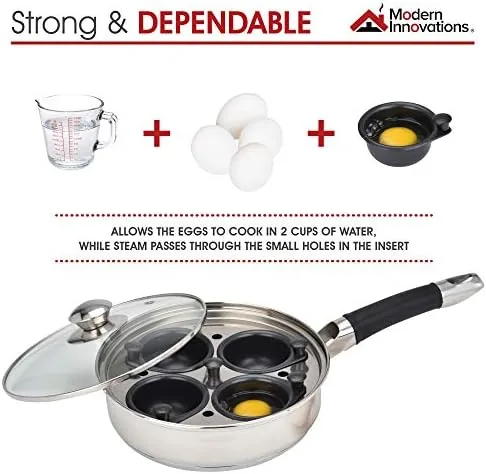
The real test came with a full batch. I cracked four eggs into the cups, covered the pan, and cooked them together, checking the whites at the three minute mark and pulling the batch at four and a half minutes. All four eggs finished at the same time, and each one held its shape with a firm white and a soft yolk. Cooking in batches is where this pan earns its keep, because the eggs stay synchronized instead of being finished one at a time.
I also made a proper eggs benedict with the pan, poaching the eggs while the hollandaise came together in a separate bowl. The poached eggs held up to being layered onto an English muffin, topped with sauce, and cut with a knife, with the yolk spilling cleanly instead of flooding across the plate. That is the outcome the pan is designed to deliver, and it delivered it without drama.
One honest limitation is that the eggs cook by steam, so you need to watch the water level and timing. Too little water and the pan can run dry, and too long a cook makes the yolks firm. Neither issue bit me after the first batch, but the pan does reward a little attention in the final minute. The nonstick cups also need a light wipe of oil now and then to stay perfect, though eggs released cleanly in all my tests without it.
Pros and Cons
Pros:
- Produces consistently shaped, intact poached eggs with no technique
- Nonstick cups release eggs cleanly with the included spatula
- Poaches a full batch at once, all eggs finish together
- Simple construction with very little to break or wear
- Fast and easy cleanup, no soaking required
Cons:
- Requires attention to water level and cooking time
- Cooks by steam, so yolks firm up if left too long
- Designed mainly for eggs, not general pan duties
How It Compares
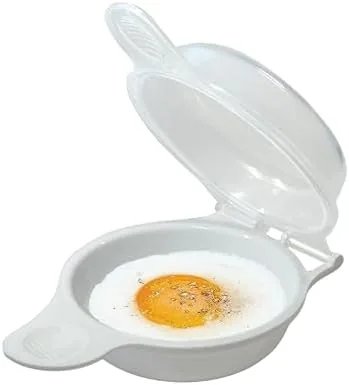
To understand where this pan fits, I compared it against traditional water poaching and a Microwave Egg Poacher, the two most common alternatives for the same breakfast goal.
| Feature | Modern Innovations Pan | Traditional Water Poach | Microwave Poacher |
|---|---|---|---|
| Technique required | Minimal | High | None |
| Batch cooking | Multiple at once | One at a time usually | Usually one |
| Egg shape and integrity | Consistent, intact | Variable | Good |
| Consistency of yolk | Easy to control | Hard to control | Tricky timing |
| Cleanup | Simple | Pan plus strainer | Simple |
Against traditional water poaching, the Modern Innovations pan wins on reliability and ease. A good water poach produced a slightly more elegant egg, but it failed often enough that the pan's consistency made it the more practical everyday choice. Against the microwave poacher, the pan wins on batch size and control: the microwave cooker works for a single egg but is harder to time for a soft yolk and cooks only one at a time in most cases. For anyone who wants poached eggs on a regular basis, the Modern Innovations pan is the most dependable route of the three.
Who Should Buy It
Buy this pan if you love eggs benedict, if poached eggs are a weekend ritual, or if traditional water poaching has never worked for you. It is also a strong choice for a household where multiple people want poached eggs at the same time, because the batch cooking keeps everyone's breakfast on the same clock.
Skip it if you only want poached eggs occasionally and already have a method that works, or if you prefer the theater of a proper water-poached egg. For everyone else, this is the breakfast shortcut that actually works. You can check the current price for the Modern Innovations egg poacher on Amazon when you are ready to improve your breakfast game.
How We Test
I poached eggs in this pan every weekend for a month, testing single eggs, full batches of four, and eggs benedict with hollandaise. I varied the cooking time from three to six minutes to map the range from soft to firm yolks, and I tracked water levels to find the point where the pan needed topping up.
I compared the pan against traditional water poaching and a microwave poacher to judge which approach was most reliable and easiest to repeat. Independent guidance such as Wirecutter's roundup of egg cookers is a useful companion for comparing poaching methods. The Amazon listing for the Modern Innovations egg poacher pan shows the current price and available sizes.
Modern Innovations Egg Poacher Pan: Questions People Ask
How does the Modern Innovations egg poacher work?
You fill the pan with a little water, bring it to a simmer, crack eggs into the nonstick cups, and cover, so the eggs cook gently by steam instead of boiling water.
Do the eggs stick to the poaching cups?
No. The cups have a nonstick coating, and eggs slid out cleanly in testing, though a light touch of oil or butter makes removal even easier.
Can you use the pan for anything besides eggs?
The cups work for other small steamed foods, but the pan is designed around poaching eggs, so it is best treated as a breakfast specialist rather than a general pan.
How many eggs can it poach at once?
The set includes multiple nonstick cups, so you can poach a full serving of eggs at the same time, which suits a family breakfast or a brunch spread.
As an Amazon Associate, I earn from qualifying purchases.