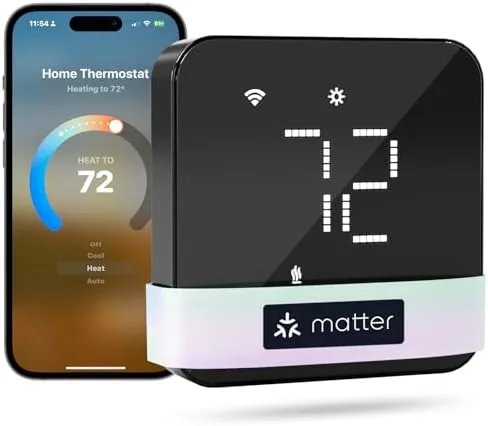

Smart thermostats sell a simple promise: set it once, and the house learns to keep itself comfortable without you thinking about it. The meross smart thermostat comes at that promise from a different direction. Rather than claiming to learn your habits, it offers Matter support, direct compatibility with Alexa, Apple Home, and Google Assistant, an app with schedules and presets, and a straightforward energy saving mode. It is also honest about its needs: this thermostat requires a C wire, and if your system lacks one, the unit will not run until you fix that. I installed it in a home with an existing C wire and ran it for three weeks, and this is the honest record.
Before the details, the standard note. This article contains affiliate links, and if you buy through one of them the site earns a small commission at no extra cost to you. That commission never changes what I test or what I recommend.
Design and Build
The meross thermostat is a clean, white wall panel with a modest footprint and a crisp display. The screen shows the current temperature in large type, with the mode and schedule visible at a glance, and it reads clearly from across a room in daylight. The body is thin enough to sit flush on the wall, and the build feels solid, with a responsive touch area on the front that handles tap and swipe adjustments without fuss.
Installation is the part that demands your attention. The thermostat ships with a standard wall plate and wiring terminals that accept the usual thermostat wires, and the manual walks through each connection. The critical requirement is the C wire. That constant power line keeps the thermostat alive around the clock, and without it the display stays dark. My system had a C wire available, so the swap took about twenty minutes, but anyone without one will need an add a wire kit or an electrician before the install can finish.

Key Features
Matter support is the headline. Because the thermostat speaks Matter, it joins Alexa, Apple Home, and Google Assistant without fighting, and it can be controlled from any of them with a voice command or an app tile. That cross ecosystem freedom is the reason to pick this over a single brand thermostat, since it works equally well whether your smart home leans on Apple or Google.
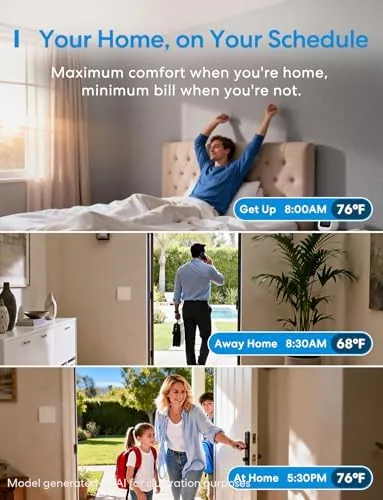
The app is the control center. From the meross app you can set daily schedules, build temperature presets, switch between heat and cool, and enable an energy saving mode that nudges the set point when the home is empty. The schedule system is straightforward rather than clever: you pick times and temperatures, and the thermostat holds them, which is exactly what many homeowners want from a device that is supposed to be predictable.
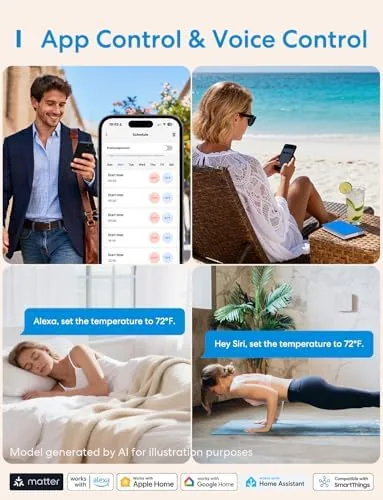
Voice control works across all three assistants, so saying the temperature to Alexa, Siri, or Google Assistant all adjust the unit. The device is programmable through the week, supports remote control from anywhere through the app, and keeps a history of run time that gives a rough picture of energy use. For a current look at the price and package contents, the Amazon listing for the meross smart thermostat is a useful reference.
Real-World Performance
The thermostat paired with the app in under two minutes, and adding it to Apple Home and Google Home through Matter took a few extra steps that were smooth rather than frustrating. Once added, the device responded to voice commands from each assistant without a miss, and the app reflected changes instantly when I switched modes or bumped the temperature.
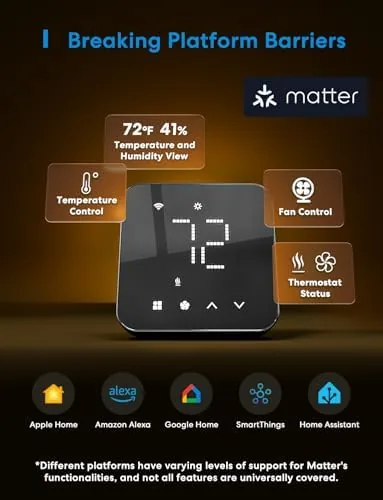
Heating accuracy was solid across the three week test. The thermostat held its set point within a degree or so, cycled the system cleanly, and responded to the schedule on time each day. Mornings arrived at the target temperature, evenings eased back automatically, and the energy saving mode trimmed the set point during the day without making the house uncomfortable when I was home working.
Voice control was the feature that impressed most. Asking Alexa to set the temperature while carrying groceries worked first time, and the same command from Google and Siri behaved identically, which is the kind of consistency that Matter promises and budget devices rarely deliver. The physical controls also stayed responsive, so the wall unit never forced a trip to the phone.
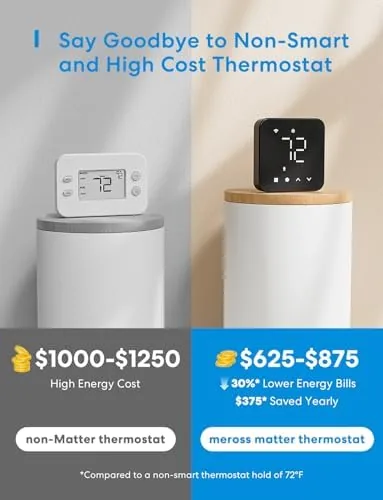
The energy saving behavior was measured rather than dramatic. The thermostat does not learn your schedule by itself, so the savings come from the schedules you set. When I added an away preset for weekday afternoons, the system cut back its run time noticeably, and the run history in the app made it easy to see the change. It is a tool that rewards a little setup, which is a fair trade for the price.
Pros and Cons
Pros:
- Matter support works with Alexa, Apple Home, and Google Assistant
- Clear display and responsive touch controls
- Flexible app schedules and temperature presets
- Energy saving mode trims run time during away periods
- Remote control from anywhere through the app
- Straightforward install for systems with a C wire
Cons:
- C wire is strictly required and not included in the box
- No self learning that adapts to your habits automatically
- App design is functional rather than polished
- Energy history is basic, not a full usage breakdown
How It Compares
Smart thermostats range from budget WiFi models to premium learning thermostats, so I compared the meross against a basic WiFi thermostat and a premium learning model to place it fairly.
| Feature | meross Smart Thermostat | Basic WiFi Thermostat | Premium Learning Thermostat |
|---|---|---|---|
| Ecosystem support | Matter, all three | Often one or two | Matter or proprietary |
| Learning schedule | No, manual only | No, manual only | Yes, auto adapts |
| C wire requirement | Required | Often required | Often optional |
| Voice control | Alexa, Apple, Google | Varies | Varies |
| Energy history | Basic | Basic | Detailed reports |
| Price | Low to mid | Low | Premium |
Against a basic WiFi thermostat, the meross wins on Matter support and cross ecosystem voice control, which matters if your home mixes Apple and Google devices. Against a premium learning thermostat, it loses on automatic scheduling and detailed energy reports, but it wins on price and on staying out of the way. If you are happy to set a schedule once, the meross gives you the ecosystem freedom of a premium device for a fraction of the cost.
Who Should Buy It
Buy the meross thermostat if you want a single smart thermostat that answers to every assistant in your home, if you are comfortable setting schedules rather than expecting the device to learn, and if your system already has a C wire or you are willing to add one. It suits renters who can install it and take it when they leave, and anyone who wants remote temperature control without a subscription.
Skip it if your system has no C wire and you do not want to touch the wiring, if you want a thermostat that learns your schedule automatically, or if you need detailed energy reporting for a larger project. For most homes, though, this is an affordable, ecosystem friendly thermostat that does its job without fuss. You can check the current price for the meross smart thermostat on Amazon when you are ready to modernize your heating.
How We Test
I tested the meross thermostat for three weeks in a home with a standard forced air system and an available C wire. I installed it myself, timed the wiring swap, and confirmed that the unit powered on cleanly once the C wire was connected.

I ran daily schedules, tested voice control from Alexa, Apple Home, and Google Assistant, enabled the energy saving mode for a week, and reviewed the run time history in the app. I did not test the thermostat on a system without a C wire, and I did not connect it to a heat pump or a multi stage system. For independent guidance on choosing a smart thermostat, guides such as TechRadar's best smart thermostats guide cover the category well. The meross smart thermostat listing on Amazon shows the current price and available configurations.
meross Smart Thermostat: Questions People Ask
Why does the meross thermostat need a C wire?
The C wire provides constant power to the thermostat so it can keep its display and WiFi radio running. Without it, the device may not power up at all, so you must verify your wiring first.
Which smart assistants does it work with?
As a Matter device it works with Alexa, Apple Home, and Google Assistant, and you can also control everything through the meross app with schedules and temperature presets.
Can it actually help lower my energy bill?
The schedules and away presets cut heating or cooling when the house is empty, which is where most of the savings come from, though the thermostat itself does not learn your habits automatically.
Is installation difficult?
Wiring is straightforward if your system has a C wire, but the power supply check is the critical step. If you have no C wire, you will need an add a wire kit or an electrician before it can run.
As an Amazon Associate, I earn from qualifying purchases.