
Teething turns a normally settled puppy into a determined little chewer, and the search for something, anything, that is acceptable to sink those new teeth into is a familiar one for every new owner. This KONG Puppy Binkie review covers two weeks with the pacifier shaped natural rubber toy through the worst of a sharp teething spell. The honest verdict is that the Binkie does the two jobs a teething owner actually needs: it gives tender gums a soft place to press and it holds a treat that buys you a calm ten minutes.
Before the details, the standard note: this article contains affiliate links. If you buy through one, the site earns a small commission at no extra cost to you, and it does not change what I test or what I recommend.
Design and Build
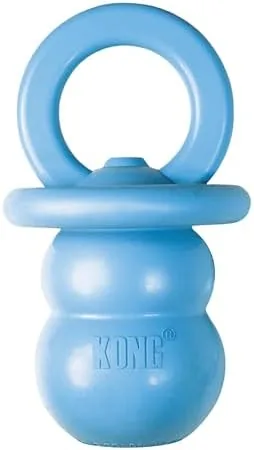
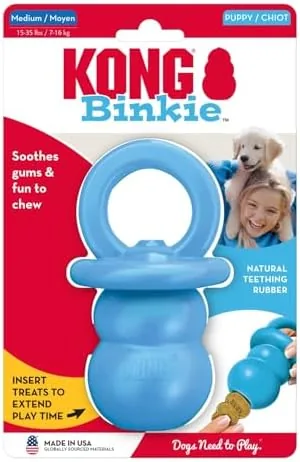
The Binkie resembles a large, flattened baby pacifier made from natural rubber, which is exactly the right metaphor for a teething puppy. There is a round, disc shaped chewing head with a series of raised knobs on one side, and a hollow stem and rounded tip that you can pack with food. It fits squarely in a forty pound hand but is compact enough for a medium puppy to grab and carry on its own.
The construction is straightforward and the material is honest. KONG uses natural rubber rather than the plasticky compounds found in cheaper pet toys, so the surface has a little give that is kinder to sore gums while still bouncing back after a squeeze. It is not the same dense red rubber as the classic KONG, and that is deliberate: the Binkie is softer and gentler for the teething phase.
The key grip point is the soft groove along the rim that sits under a puppy jaw, which is where the relief lands. The stem that tapers into a tip gives a small hard place to hold, especially once you slide a treat inside. Everything is one piece, there are no glued on parts or squeakers to detach, so there is little for a chewing puppy to destroy apart from the rubber itself.
Key Features
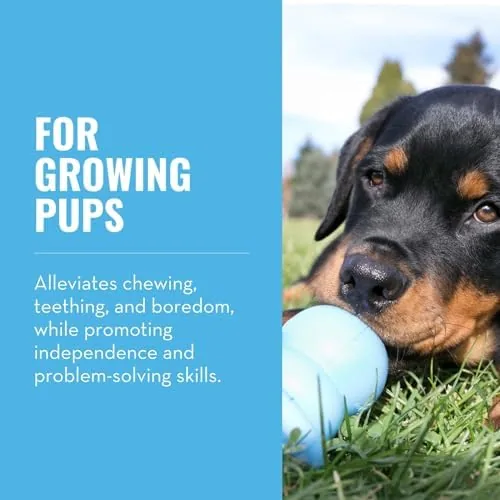
The Binkie covers the three things most owners want from a teething toy, going beyond a simple raw chew object. First is the pacifier shape itself, which the design positions under the side of the mouth where molars come in, giving the pup an appropriate place to grind and reducing the urge to attack furniture legs. Second is the raised dental knobs, which massage gums and help clean those early emerging teeth as the dog works them over.
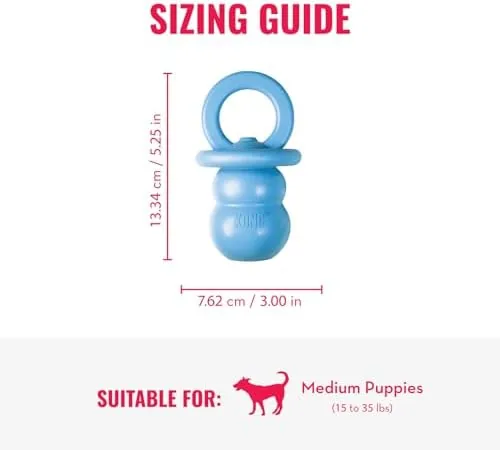
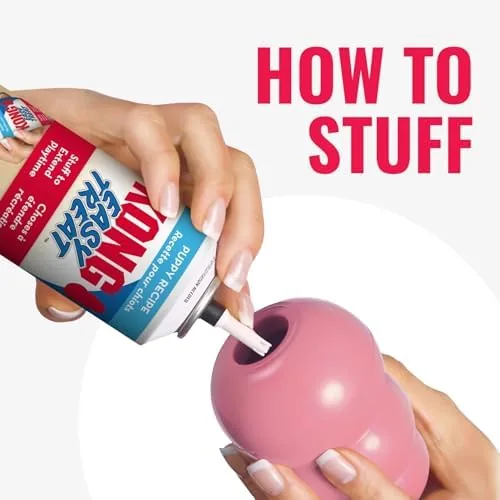
Third, and this is the feature that most sets it apart, is the hollow chamber. The stem and tip open up so you can pack in a little peanut butter, kibble, or wet pate, and the toy then works like a simple slow dispenser. A teething puppy chewing on a stuffed Binkie attacks the toy instead of the furniture for the reward, which turns a frustrating moment of constant fidgeting into a focused few minutes.
The material checks the boxes that matter for safety. Rubber is natural and free of BPA, gentle to the touch, and easy to rinse under warm, soapy water when it needs a clean. For newer puppies that teethe hard the natural rubber is firm enough to hold its shape, and for a grown dog in the same size range it is still a useful stuffable toy rather than a disposable distraction.
Real-World Performance
In practice the Binkie earned its place during one particular teething window. Around the point when the adult front teeth broke through, our pup chewed almost constantly and had no patience for a plain chew. The Binkie with a smear of peanut butter took over that impulse; the puppy held it with both front paws and worked the knobs against the side of the mouth for a solid ten minutes at a time, then complained briefly before returning.
The pacifier shape was genuinely better than the flat chews we tried in the same week. Placing the wide head under the jaw gave the puppy the spot it kept asking for, and the pup returned to the toy repeatedly instead of drifting into chewing. The relief is real, quiet, and obvious, the toy became one of a small rotation that got used every single day early in the week.
It is not a workhorse with unlimited life. Under heavy chewing pressure the rubber showed wear by the end of the second week, no holes, but a visible softened surface along the chewing edges. The natural rubber is designed for the teething stage of a puppy, not for an adult power chewer, so heavy teeth can wear it down faster than a harder toy. For the intended job, it lasted the whole teething until the pup moved into bigger chews.
Pros and Cons
Pros:
- Natural rubber gives tender gums a soft, kind surface to chew
- Pacifier shape targets the back teeth where teething hurts most
- Stuffable chamber and treats keep a busy puppy truly occupied
- One piece build with no parts to detach or swallow
- Smooth to clean with running water
Cons:
- Natural rubber is softer than the classic KONG and wears with heavy chewing
- Sized for medium puppies, not ideal for very small or adult dogs
- A loose mouth can carry it and ignore it if no treat is packed
- Stuffing the full chamber can push grease through the tip and need a rinse
How It Compares
Against the classic KONG, the Binkie trades the classic chew toughness for a softer pacifier surface and a more teething focused shape. The KONG Puppy and the KONG Puppy Natural Rubber are good comparisons, and here the direct one is the classic KONG Puppy, because it is also stuffable and bounces, but its firmer rubber tilts it more toward everyday play than toward gum massage.
| Feature | KONG Puppy Binkie | KONG Puppy classic |
|---|---|---|
| Primary role | Teething and gum massage | General chews, treat stuffing |
| Rubber feel | Soft natural rubber | Denser, firm puppy rubber |
| Stuffable treat chamber | Yes, stem and tip | Yes, center cavity |
| Sizing | Medium puppies | Puppy / small dog |
| Best for | Sore gums while teething | Daily chewing and food puzzle |
Real world use means I would pair it for a teething pup: the Binkie for the sore gum weeks and the classic KONG Puppy for the months after. The Snoop puzzle and chew lines from the same family cover similar ground, but the Binkie stands alone as the one made specifically for teeth coming in.
Note: the alternative is the KONG Puppy Binkie listing on Amazon for current sizing and color options.
Who Should Buy It
Buy the Binkie if you have a medium puppy between about five and nine months that chews constantly during the teething window. It soothes the side of the mouth where the soreness sits, it distracts with a treat reward, and it is simple enough for a first time owner to use with no learning curve. It is a strong first toy for the rotating collection a teething pup keeps.
Skip it if your puppy is a hard power chewer past the puppy stage, or if you have a very small dog that needs a smaller object. For the teething period, the KONG Puppy Binkie price and options are on Amazon for you to review.
How We Test
I ran the Binkie for two weeks with a medium puppy in the peak of teething, alongside the classic KONG Puppy, a rubber teething ring, and a flat chew toy. I scored it on how often the puppy chose it, how long it kept attention with a treat packed, how it held up to grinding, and how easy cleaning stayed.
Judgment and durability vary a lot between dogs, so results change with the size and temper of the pup. Independent sources, such as Veterinary Practice News guidance on teething puppy chew toys, are a useful second opinion on safe toy material.
KONG Puppy Binkie: Questions People Ask
Is the KONG Puppy Binkie safe for teething puppies?
Yes within reason. It is natural, BPA free rubber with a pacifier shape that gives tender gums a soft surface, and the raised knobs massage the sore spots. Supervise a new puppy at first and replace the toy as soon as the rubber shows signs of hard wear.
Can I put treats inside the Binkie?
Yes. The hollow stem and tip open up to hold kibble, peanut butter, or a little pate. A stuffed treat inside converts a soothing toy into a quiet food puzzle that keeps a busy puppy focused.
What size puppy is the Binkie for?
This version is for medium puppies. The rubber is firm enough to survive early chewing and soft enough for tender gums, a small dog may find it large to grab. An adult heavyweight is covered elsewhere by the stiffer classic KONG.
How do I clean it?
Rinse it under warm, soapy water and dry it with a cloth. Avoid very hot water and harsh dishwasher cycles, which can soften or cause the natural rubber to break down faster.
As an Amazon Associate, I earn from qualifying purchases.