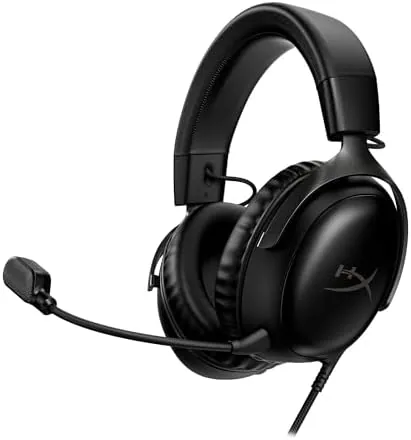

Every gamer reaches a point where the headset decides the session. A muffled teammate, an ear cup that crushes after an hour, a cable that dies during a ranked match, and the whole experience collapses around hardware that was supposed to be invisible. The HyperX Cloud III wired headset is built to be that invisible hardware, a multiplatform headset with angled 53mm drivers, spatial audio, and a durable frame that HyperX has refined over several generations. I used it as my only headset across PC, PS5, and Xbox Series X over a month of daily play, and this review is the record of how it sounded, how it fit, and whether it earns its place in the crowded mid range.
Before the details, the standard note. This article contains affiliate links, and if you buy through one of them the site earns a small commission at no extra cost to you. That commission does not change what I test or what I recommend, and the headset reviewed here was used exactly the way a gamer would use it.
The Cloud III is HyperX's answer to the question of how much headset you actually need, and the wired version keeps the price down while keeping the features that matter. The rest of this review covers the design, the sound, the microphone, the multiplatform connectivity, and whether the wired model beats the wireless version for most buyers.
Design and Build
The Cloud III follows the look that made the Cloud series famous, and it refines it. The headband is a steel frame wrapped in a padded leather style band, and the aluminum yoke that holds the ear cups is angled and sculpted in a way that reads as premium without adding weight. The whole headset is built to survive the kind of abuse that a headset thrown across a desk will not survive, and that durability is the quiet selling point of the design.
The ear cups are the best part of the fit equation. They are oval shaped and deep, so your ears sit inside the cup rather than pressed against the driver, and the memory foam fills in around the edges without squeezing. The leatherette covering seals well for sound isolation, and the cushion pressure is even enough that I wore the headset through full work days without the usual ache at the top of the ears.
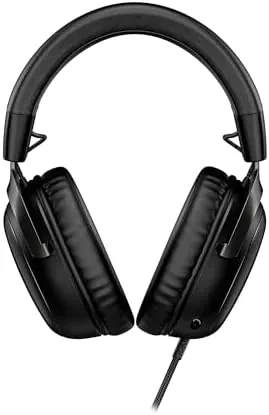
Controls are simple and placed where your fingers find them. The volume wheel sits on the right ear cup, the microphone mute is a tap on the mic boom itself, and the detachable microphone removes with a firm pull when you switch from game chat to single player. The cable is braided and detaches from the headset, which means a damaged cable is a replacement cable, not a dead headset.
Key Features
The headline feature is the angled 53mm driver array, a slight upgrade in size and angle over the older 50mm drivers. The angle directs the driver toward the ear canal, which widens the perceived soundstage and makes positional audio more convincing. Combined with the DTS spatial audio support on PC and the spatial sound built into PS5 and Xbox, the headset produces a sense of space that a closed back headset at this price does not always deliver.
The 10mm microphone is the other feature worth a close look. It is a detachable, noise canceling mic with a flexible boom that holds its position, and it delivers the kind of clear speech that your teammates will actually understand. The tap to mute function on the boom is the best placement I have used, because the mic sits exactly where your thumb rests between plays.
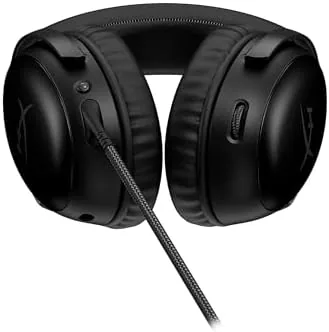
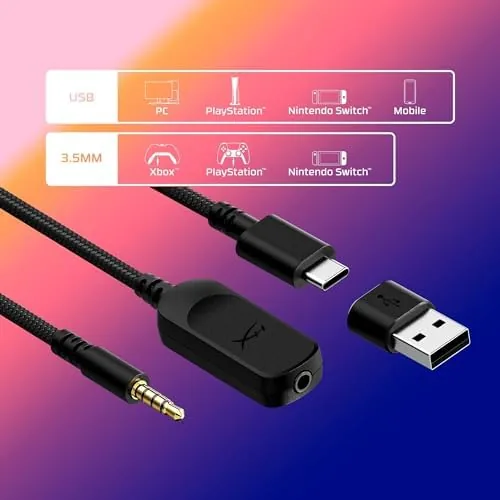
Connectivity is where the wired model earns its keep. The box includes a USB-C to USB-A adapter, a USB-C cable for console use, and a 3.5mm analog cable, so the headset covers PC, PS5, Xbox Series X and S, Switch, and mobile in one purchase. No dongle, no battery, no pairing, just a cable that works everywhere. For a household with several consoles, that is the kind of versatility that matters.
Real-World Performance
Sound quality is the reason to buy this headset, and it holds up across genres. In shooters, footsteps have a clear sense of direction and distance, and the angled drivers make the difference between hearing an enemy and reading their exact position. In open world games, the soundstage opens up nicely, with ambient wind, distant dialogue, and music sitting in a believable space around the player. The bass is present but controlled, and the mids carry dialogue without getting muddy.
On PS5 I used the headset with the console's 3D audio enabled, and the result was impressively immersive. The spatial audio engine in the console combined with the angled drivers made rotating the camera in a horror game genuinely tense, because sound clearly moved around the head rather than just switching between channels. On Xbox, the headset delivered the same quality through the controller's 3.5mm jack, which keeps it fully functional even without the USB adapter.
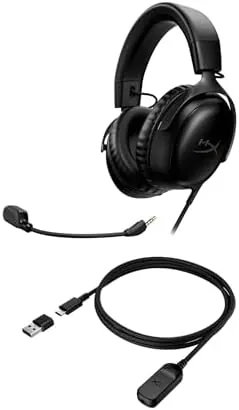
The microphone proved itself in game chat and voice calls. Teammates reported clear, natural speech with no crackle and minimal background pickup, and the mute tap worked instantly every time. I also used the mic for work calls during the review period, and it performed well enough that I did not reach for my dedicated desk microphone.
Comfort is the detail that separates this headset from the cheaper competition. I wore the Cloud III for multiple four hour sessions in a row, and the only fatigue I noticed was the natural tiredness of long play, not the ache of a poorly padded frame. The memory foam held its shape, the headband did not create a hotspot, and the clamping force stayed gentle but secure through every session.
Pros and Cons
Pros:
- Angled 53mm drivers with a wide, clear soundstage
- Works on PC, PS5, Xbox, Switch, and mobile
- Durable steel and aluminum frame
- Excellent all day comfort with memory foam
- Clear detachable mic with tap to mute
- No battery to charge or pair
Cons:
- No active noise cancellation, so sound isolation is passive
- Wired, so your movement is tied to the cable length
- Controls are limited to volume and mute
How It Compares
The mid range gaming headset market is fiercely competitive, so the Cloud III needs to justify itself against both budget and premium options. The table below lines it up with a budget headset and a premium wireless model.
| Feature | Cloud III Wired | Budget Headset | Premium Wireless |
|---|---|---|---|
| Drivers | 53mm angled | 40mm to 50mm | 50mm to 53mm |
| Connection | USB and 3.5mm | 3.5mm only | 2.4GHz Wireless |
| Platforms | PC, PS5, Xbox, Switch | Usually one platform | PC and PS5 mostly |
| Microphone | Detachable 10mm | Fixed or poor | Detachable |
| Battery | None needed | None needed | Charging needed |
Against a budget headset, the Cloud III wins on driver quality, mic clarity, comfort, and multiplatform support, and the price gap is usually small. Against a premium wireless headset, the Cloud III gives up the wireless freedom but keeps most of the sound quality for less money, and it never needs charging. For a gamer who wants quality without wireless markup, the wired Cloud III is the sweet spot.
Who Should Buy It
Buy the HyperX Cloud III wired if you game across more than one platform, if you want a headset that will survive years of daily use, or if you value clear directional audio in shooters without paying wireless prices. It is also a great pick for anyone who hates charging headsets and wants a dependable device that is always ready.
Skip it if you absolutely need wireless freedom for movement around the room, or if you want active noise cancellation for a noisy environment. For everyone else, this is the headset that quietly disappears into your setup and just works. You can check the current price of the HyperX Cloud III wired on Amazon when you are ready.

How We Test
I used the HyperX Cloud III wired as my only headset for a month across PC, PS5, and Xbox Series X, playing shooters, open world games, and multiplayer titles while testing the mic in game chat and voice calls. I also wore it for work calls and tested every included cable and connection method.
I did not use laboratory audio measurement equipment, and sound impressions are based on direct listening sessions. For a deeper technical look at the Cloud III and its drivers, RTINGS has a detailed review with measured frequency response data that is worth checking. The HyperX Cloud III wired listing on Amazon shows the current price and color options.
HyperX Cloud III Wired: Questions People Ask
Does the HyperX Cloud III wired work on PS5 and Xbox Series X|S?
Yes, the headset includes a USB adapter for PC and consoles and a 3.5mm cable, so it works on PC, PS5, Xbox, and most devices with a headphone jack.
Are the 53mm drivers better than the older 50mm drivers?
The angled 53mm drivers produce a wider, more spacious soundstage and a more controlled bass response, which makes footsteps and direction audio easier to read.
Is the microphone detachable and clear for chat?
The 10mm mic detaches when not needed, and in game chat and voice calls it delivers clear, intelligible speech without heavy background noise.
Is the Cloud III comfortable for long gaming sessions?
The memory foam ear cushions and padded headband make it one of the more comfortable headsets for all day wear, with a frame that holds its shape.
As an Amazon Associate, I earn from qualifying purchases.