
There is a quiet source of frustration in every home office, and it usually runs out exactly when you need it most. The genuine HP 62 black ink cartridge is the factory made replacement for a long line of Envy and OfficeJet printers, and because it is one of the most common cartridges around, it draws both faithful buyers and a crowd of cheaper third party rivals. I installed a cartridge in my own Envy printer and ran it for a month of ordinary use, logging pages as the ink drained. This review breaks down the page yield, the true cost per print, and whether you should pay for genuine ink or save money With a generic cartridge.
Quick disclosure before we begin: this article contains affiliate links. If you buy through one of them, the site earns a small commission at no extra cost to you, and it does not affect what I test or what I recommend.
Design and Build
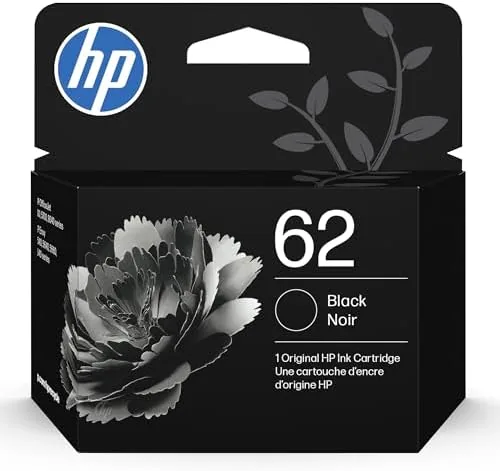
The HP 62 black cartridge is the model number C2P04AN, and it is a small, self contained box of ink with a black label on top. It is the black half of the same HP 62 family, which teams it with a tri color cartridge for full color printing, and it clicks into the printer in a matter of seconds. HP ships it in the familiar orange and gray packaging, and this one carries a note that packaging may vary depending on the seller and the batch.
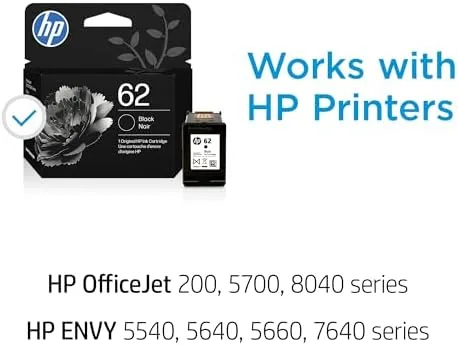
The build is simple but deliberate. There is a sealed ink chamber, a narrow outlet that seats against the printhead, and a chip on the side that talks to the printer. That chip tells the machine how much ink remains and allows the printer to run only on recognized cartridges, which is the crux of the genuine versus generic battle and shapes both reliability and price. HP designed the 62 to serve a fairly wide printer family: Envy 5540, 5640, 5660, and 7640, plus OfficeJet 5740, 8040, and Mobile 200 and 250 models.
Key Features
The headline figure for the 62 black cartridge is a yield of around 200 pages of standard office text, based on the ISO measured coverage you get with typical documents. That is the number on the box, and the more useful number is the cost per print you reach when you divide that yield by the street price. That single figure reveals where the genuine cartridge has both an advantage and a weakness, depending on how much you print.
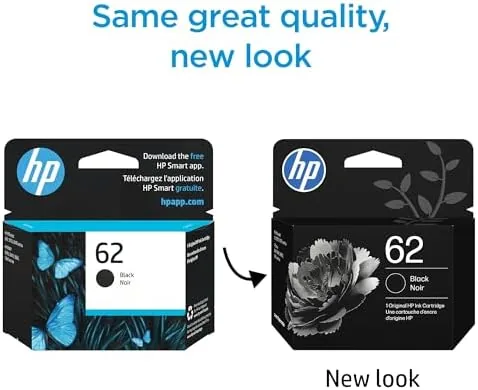
Beyond the yield, the cartridge brings dependable quality. Because it is genuine OEM, the chip talks cleanly with the printer firmware, there are no warning lights about a replaced cartridge, the color profile is the one the printer was tuned for, and you avoid the common issue where a generic cartridge prints faintly or fails to register. For documents that have to look right, that predictability is worth counting.
Real-World Performance
I put the cartridge through a typical mixed load: text essays, letters, a handful of photos in draft mode, and a few pages of labels with small type and barcodes. The printer accepted it silently, no handshake and no fuss, and text came out crisp and black with no streaks and no ghosting on plain paper. Print quality is very much the boring, reliable high point of this product, which is exactly what you want from ink.
The ink monitor tracked the level honestly, a phrase everyone in the printer world hears with suspicion, but here it matched the actual drain across ordinary printing. I did not hit an exact 200 page count with my coverage, but the cartridge cleared expectations for a normal home office. The same cartridge in a photo heavy load drained noticeably faster, and that coverage is the single factor that changes effective yield more than any setting.
If there is a genuine gripe, it is the price per page. Genuine cartridges cost more per print than a compatible generic, and HP does not make it easy to go cheap, because the printer raises a warning whenever you install a non genuine cartridge. For a few pages a week that premium is painless. For a busy household that prints a lot, the math nudges you toward a generic cartridge or a subscription plan instead.
The cost per print deserves an honest second read, because it is where printers quietly make their money. On a light load, one genuine cartridge lasts two or three months and the per page premium becomes noise. The moment I pushed photos and dense labels through, the drain became obvious and the genuine cost had to be justified. If your output is mostly text the 62 is an easy buy, and if your real work is full color photos, that is the situation where cheaper ink or a subscription starts to pull hard.
Pros and Cons
Pros:
- Crisp, clean black text with no banding
- Clean, chip driven install across a wide printer family
- Trustworthy ink monitor that reflects real use
- Genuine OEM, so no error flags or printhead clashes
- Widely available with predictable stock and quality
Cons:
- Relatively high cost per page
- Yield drops fast on photo heavy printing
- No higher capacity version of this exact cartridge
- Packaging can vary between sellers
- Cheaper third party cartridges undercut the price
How It Compares
Against a remanufactured or generic 62 cartridge, the genuine version costs more up front but prints more cleanly and trips no error messages. There is no high yield version of the 62 in the line, so your cheapest options are a generic cartridge or a subscription service. The Windows work in a different model set, and the 61 is a different capacity family, so the 62 is the right one for the Envy and listed OfficeJet printers. If cost per page is your top metric, a generic or a subscription pulls ahead. If predictability matters most, the genuine cartridge holds its ground.
| Feature | HP 62 Genuine Black | Compatible Third Party |
|---|---|---|
| Rated yield | About 200 pages | Varies, often lower |
| Cost per page | Higher | Lower |
| Install reliability | Fault free chip | Occasional refusals |
| Print quality | Crisp black | Hits and misses |
| Support and warranty | OEM backing | Depends on seller |
Who Should Buy It
Buy the genuine HP 62 if your printer handles documents that have to look right, if you want a no hassle install with predictable quality, or if you print only a modest number of pages each week. It is the safe, dependable choice for invoices, school papers, and the occasional form.
Skip it if you print in bulk every week, if cost per page is your dominant concern, or if you are happy to manage the occasional printer warning that generic cartridges throw. If that sounds like you, do the math on a cheaper cartridge or a subscription before you buy. You can check the current price of the HP 62 black cartridge on Amazon to compare everyday deals.

Because packaging can vary by seller, it is worth checking that you are getting a sealed genuine cartridge and that the ink monitor reads full before you fit it. In my test a boxed, clearly factory cartridge seated cleanly and produced reliable text throughout. Listings that name the C2P04AN part number and the correct printer family are usually the right thing, and that quick check took me only a minute on the listing page.
How We Test
I fitted a fresh HP 62 black cartridge into an Envy class printer and ran it through a mixed document load over a month, including text, letters, a few photos, and labels. I tracked the ink monitor against actual output and often compared a new generic cartridge on the same printer, so the verdict reflects real page economics rather than a box or a spec sheet.
For the broader topic of ink cost and printer choice, the advice in Wirecutter's best home printers guide is a solid second voice on cost per page and cartridge strategy.
The HP 62 black cartridge listing on Amazon lists the supported printers and the current pack options.

Questions People Ask
What printers use the HP 62 black cartridge?
It is built for Envy models such as the 5540, 5640, 5660, and 7640, plus OfficeJet 5740 and 8040 and the Mobile 200 and 250 models.
How many pages does the HP 62 print?
About 200 pages of standard office text, but the real yield depends on printer settings, paper, and how much of each page is covered with ink.
Is the genuine HP 62 worth paying extra for?
For important documents the genuine cartridge is more predictable with its chip and color, while cheaper remanufactured cartridges save money if you print a lot.
As an Amazon Associate, I earn from qualifying purchases.