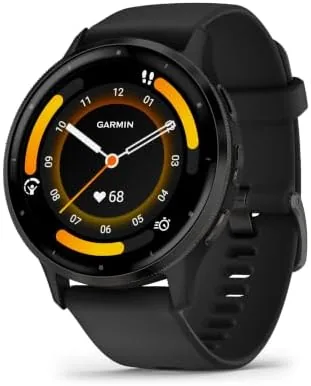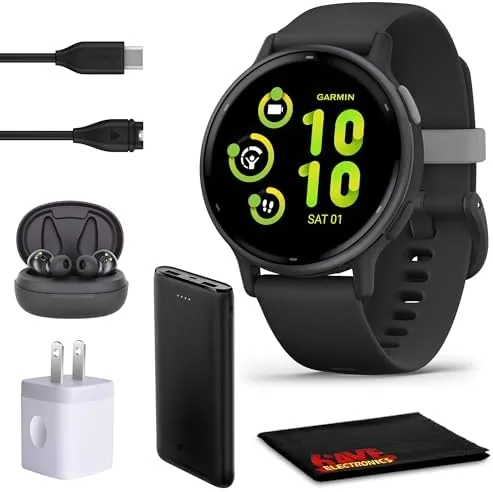

A fitness watch has to give you two things at once: numbers you can trust, and then a design that fades into the background so you forget you are wearing it. This Garmin Vivoactive 5 review is the record of three weeks spent wearing the watch every day, and the central finding is that it balances those two jobs better than most alternatives at its price. It does not try to be a phone on your wrist; it is a genuinely comfortable health tool that disappears into an ordinary morning.
Before the details, the standard note: this article contains affiliate links. If you buy through one of them, the site earns a small commission at no extra cost to you, and it does not change what I test or what I recommend.
Design and Build
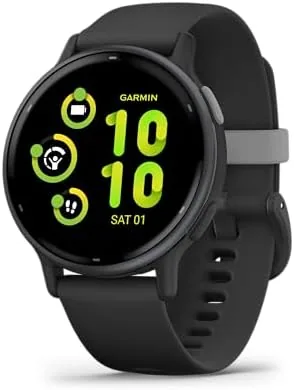
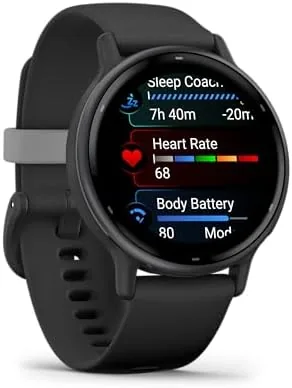
The Vivoactive 5 is light and understated. A slate aluminum bezel and black silicone band give it a quiet, mature look that works in the gym and at the desk alike, and it never feels bulky on the wrist. It reads more like a small everyday watch than a sporty computer, which is exactly the design target this model chose.
The AMOLED screen is the first thing you fall for. It is bright, colorful, and still readable in direct sun, which is the clearest step above older Garmin panels. The touchscreen is quick, and a single physical button beside it gives you a reliable escape when your fingers are wet or gloved.
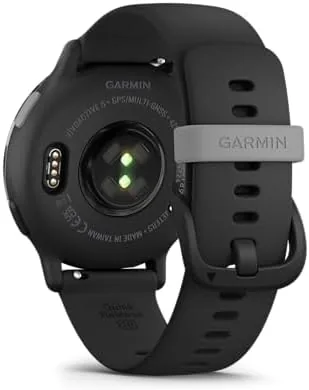
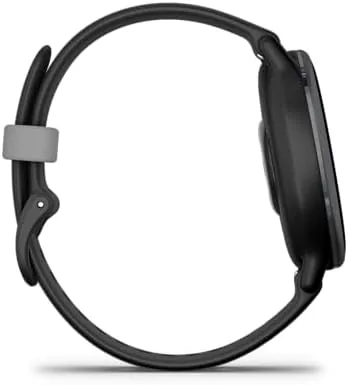
Comfort follows the weight. The soft silicone strap breathes and does not chafe, even in a long run or a full conference day, and I rarely adjusted it. After a few days I stopped noticing it on the wrist; no snagging on cuffs, and that comfort is a big part of why a health watch survives long enough to matter.
Key Features
The health suite is broad. Continuous heart rate, sleep tracking with a daily score, stress estimation, and a Body Battery reading all run in the background, and for women it includes full cycle tracking integrated into the app. This makes the Vivo active 5 a strong pick for a wide range of users, not just one group.
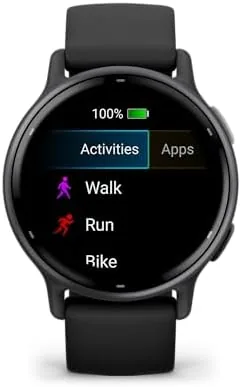
Activity tracking covers a wide catalog of sports, including running, cycling, strength, yoga, and swimming, and the built in GPS records accurate tracks for the outdoor stuff. There are also practical modes like walk and sleep, so the watch has a real job for almost every hour of the day.
A pleasant dose of peace of mind is added with onboard incident detection, which can warn or contact emergency contacts if it sees a hard fall during an activity. It is a reassuring feature for running alone, and it is not something every mid-priced watch includes.
Real-World Performance
Battery life is the headline experience. Garmin claims about eleven days, and across three weeks of use it behaved true to the claim: I charged roughly every ten days despite daily wear, notifications, and a few GPS runs. That is a completely different lifestyle from the daily charging ritual on competing watches.
Sleep score and Body Battery became a daily milepost. The morning summary told me, plainly, when I had slept well or poorly, and nudged better habits by giving me a usable fact instead of nagging. The Vivoactive 5 presents the data and then steps back, and that calm delivery is exactly why it feels looked at so much.
GPS proved accurate on a town loop, with tracks lining up cleanly on the map. One honest grip is that it lacks some flagship extras: there is no music storage to leave the phone at home, and a few settings are pared down, but for daily wear the useful battery and clear screen win out. It is a capable daily Tracker of the health signals that matter most.
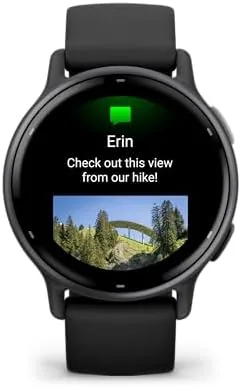
There is no speaker to place calls, so notifications mirror on the wrist while calls stay on the phone. For Most People that trade is invisible, and the Vivo 5 turns the daily health data into a durable result: measurement, screen, battery, and a light case. It is a watch built on balance.
Pros and Cons
Pros:
- Bright, crisply readable AMOLED screen
- Over a week of battery life in real daily use
- Broad health and sleep tracking, cycle support
- Light enough to forget you are wearing it
- Incident detection adds peace of mind
Cons:
- No music storage for leaving the phone at home
- No built-in microphone to take calls
- Settings are more limited than an upgraded shell
- No microphone, and no payments
How It Compares
Rivals worth comparing include the Garmin Venu 3, which adds a bigger display, music, and payments at a higher price, and a cheaper mainstream band. The Vivoactive 5 is the sweet spot that drops the extras most people rarely want in exchange for the balance of battery and screen.
| Feature | Garmin Vivoactive 5 | Garmin Venu 3 |
|---|---|---|
| Display | 1.2 inch AMOLED | 1.4 inch AMOLED |
| Battery | Up to 11 days | Up to 14 days |
| Music storage | No | Yes |
| Garmin Pay | No | Yes |
| Speaker and microphone | No | Yes |
The Venu 3 earns its premium if you actually use NFC payments and stored music. If you do not, the Vivoactive 5 buys you the same daily health core and longevity for less, and it keeps the bulk off your wrist. For the majority of buyers it is the sensible, lived case.
Who Should Buy the Garmin Vivoactive 5
Buy it if you want a health watch for a few GPS workouts and good sleep, but you do not want to recharge every day or talk to your watch. It is the kind of companion you strap on and forget about until the morning score. The Vivoactive 5 takes the battery question out of daily life, something few watches do.
Skip it if you need music on the watch itself, if you want to take calls from the wrist, or if deep mapping is the reason you own a Garmin at all. For everyone else it is a worthy daily partner. You can check the Garmin Vivoactive 5 price and options on Amazon when you are ready.
How We Test
I wore the Vivoactive 5 as my daily watch for three weeks, logging several GPS runs and a week of sleep. I looked at sleep accuracy, screen visibility, battery in daily use, and at whether it stayed comfortable and useful enough to keep on all day.
I compared the experience to a Venu 3 and a mainstream fitness band, running the same steps with each. Sleep fit and individual baselines vary from person to person, so I treat the trends as useful and not the absolute end truth. Independent testing, such as TechRadar coverage of the Garmin Vivoactive 5, is a good second opinion.
If you are building a small gear kit, my Anker charger and Spigen case reviews can cover the accessories. The full Garmin Vivoactive 5 listing on Amazon has the latest options and prices.
Garmin Vivoactive 5: Questions People Ask
How long does the battery last?
Garmin promises up to 11 days in smartwatch mode. In my daily wear with notifications on and a few GPS minutes, it survived a full week and reached about ten days, which is the biggest reason I keep wearing it.
Does the Vivoactive 5 have a microphone or speaker?
No. It shows notifications and vibrates, but it cannot take calls or run voice commands. That is the trade that keeps the battery over a week, and it pairs with your phone to close the gap.
Can it track sleep and recovery?
Yes. It logs sleep, a sleep score, a body battery, and recovery, and gives me a quick morning read. The tracking matched how I felt in the test, which is all you can realistically ask for, plus useful stage insight.
As an Amazon Associate, I earn from qualifying purchases.