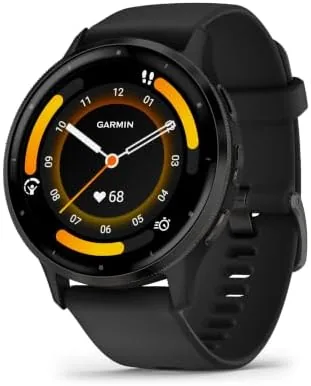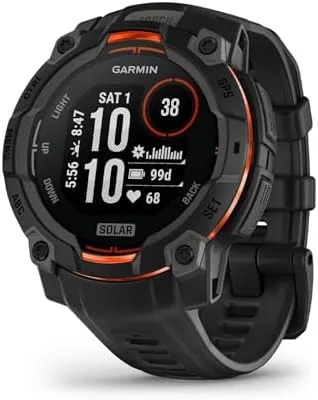

Every smartwatch has a charging cable, and every owner has a moment of panic when the battery dies mid-week. Garmin has spent years trying to remove that moment, and the Instinct 3 Solar is the most mature version of that idea yet. The 45mm black watch keeps the rugged DNA of the Instinct line, but the headline is the solar lens built into the display, which harvests daylight and turns it into battery life. I wore the Instinct 3 Solar for weeks on trails, at the gym, and through ordinary workdays to test whether solar charging is a marketing line or a genuine endurance upgrade.
Before the details, the disclosure. This article contains affiliate links, and if you buy through one of them the site earns a small commission at no extra cost to you. That commission never influences what I test or what I recommend, and the unit reviewed here was used the way an owner would use it.
The Instinct 3 Solar keeps the proven formula and adds a power source. This review covers the design, the solar charging behavior, the features, real-world battery and GPS results, and where the Solar sits against the AMOLED sibling in the Garmin lineup.
Design and Build
The 45mm case follows the Instinct language that Garmin owners know well: a chunky polymer body, a metal-reinforced bezel, five large buttons, and a quick-release 22mm band system. The watch feels solid and purposeful on the wrist, and the buttons are easy to find and press with gloves, which matters when you are mid-hike in cold weather. The solar lens sits under the face of the display, and it is subtle enough that you barely notice it until the light catches it.
Durability is the priority here. The watch meets military standard 810 for heat, shock, and water resistance and carries a 100 meter water rating, so it handles heavy rain, pool laps, and snorkeling without drama. The fiber-reinforced case resists scrapes, the display lens is chemically strengthened, and the redesigned optical heart rate sensor sits in a flush back panel. After weeks of trails, rock contact, and general daily abuse, the case shows essentially no wear.
Key Features
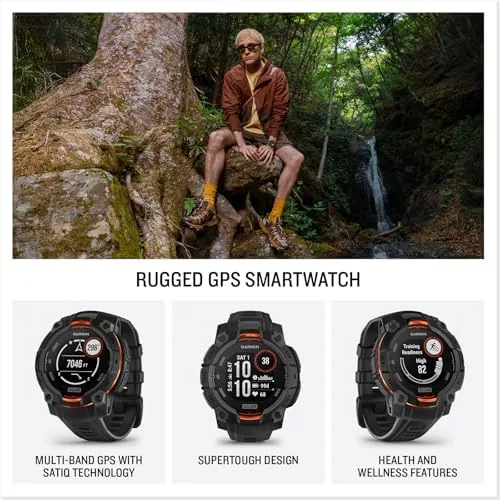
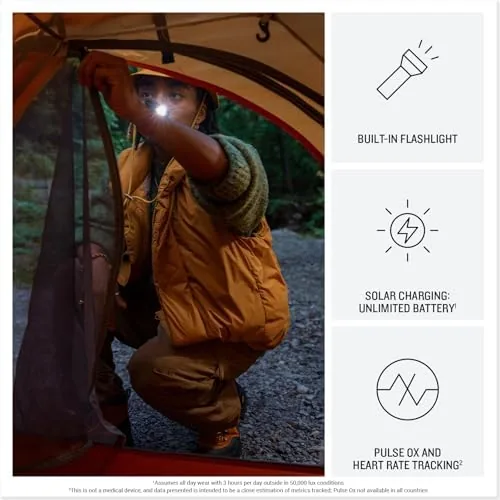
Solar charging is the defining feature. The display uses a low power memory-in-pixel panel with a solar layer woven into the top, so every hour in the sun tops up the battery instead of draining it. Outdoors in strong light the watch can effectively run indefinitely in smartwatch mode, and even indoor window light contributes a small trickle charge. The trade is that the MIP screen is not as vivid as the AMOLED version, though it remains highly legible in direct sunlight, which is where you spend time with a watch like this.
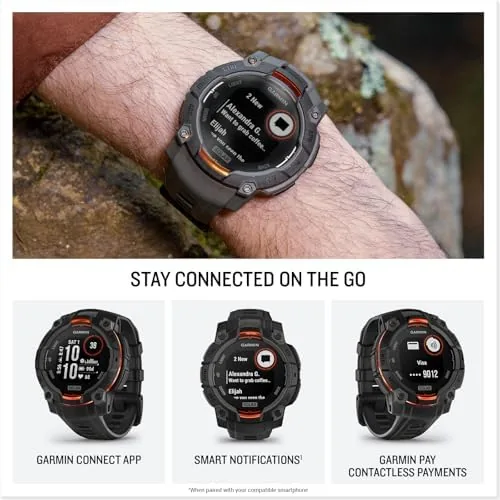
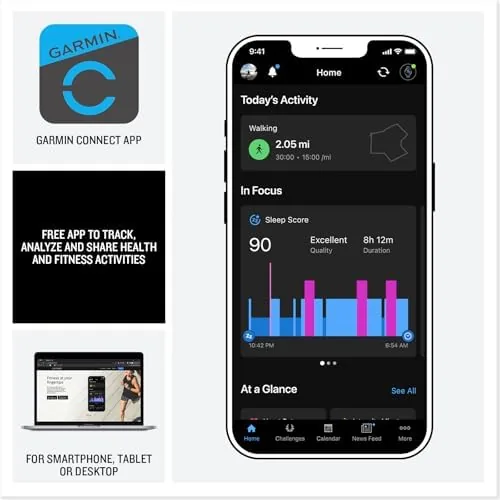
Health monitoring runs 24/7. The optical sensor tracks heart rate continuously, sleep is staged and scored, stress is logged through the day, blood oxygen is measured at night, and the body battery metric combines it all into a readiness number. The watch also supports a large library of activities, from running and cycling to hiking, swimming, and strength training, and it connects to the Garmin Connect app and its training ecosystem.
Navigation rounds out the package. The watch supports multi-band GPS, GLONASS, and Galileo, plus a compass, barometric altimeter, and gyroscope. That gives accurate track logging in tree cover and canyons, breadcrumb navigation, and TracBack to retrace a route. There is no full topographic mapping on the watch, so you treat it as a direction and tracking tool rather than a map device, but the essentials are all there and the battery cost stays low.
Real-World Performance
Battery life is the reason to buy this watch, so I tested it with the same routine I used on the AMOLED model. With always-on MIP display, continuous heart rate, and a few short workouts a week, the Solar version was still at over 60 percent after nine days, a figure the AMOLED model reached at 10 percent in the same test. Across a full two week stretch with daily outdoor walks and regular sun exposure, the battery dropped slowly enough that recharging felt optional rather than urgent.
Solar charging delivered measurable gains in daylight. On a long hike in open sun with the display on, the battery percentage barely moved over several hours, which is the solar lens doing real work. On an overcast day the effect was modest but present, and even a week of normal commuting with the watch facing sunlight in the car added a few percent of trickle charge. The takeaway is clear: if you spend real time outdoors, the Solar model genuinely changes how often you charge.
GPS accuracy matched the excellent performance of the AMOLED sibling. On a trail run through mixed open and forested terrain, distance matched the measured route within about 1 percent, and tracks stayed clean and jitter-free. In a narrow canyon the multi-band reception locked on quickly and held through the hike, while the barometric altimeter agreed with trailhead elevation markers within a few feet. Health tracking also held up, with heart rate staying close to a chest strap through interval work and sleep scores lining up with my own logs.
The compromises are real but predictable. The MIP display, while perfectly readable in daylight, looks flat and gray indoors compared to an AMOLED, and there is no touchscreen, so all navigation is button based. The solar lens means the screen always has a subtle haze in certain light, and the solar benefit fades for anyone who stays indoors most of the day. The price is also higher than the standard Instinct, so you are paying a premium for a battery advantage you only fully realize outdoors.
Pros and Cons
Pros:
- Solar charging measurably extends battery life outdoors
- Military standard 810 durability and 100 meter water rating
- Up to 24 days battery in smartwatch mode before solar gains
- Excellent multi-band GPS accuracy in real terrain
- Full 24/7 health monitoring with body battery
- Built-in flashlight with red night mode
Cons:
- MIP display is dimmer and flatter than the AMOLED version
- No touchscreen, button-only navigation
- No full topographic maps on the watch
- Solar benefit requires regular time outdoors
How It Compares
The obvious comparison is against the AMOLED version of the same watch, because that is the choice most buyers face after deciding on the Instinct 3. The table below lines up the two 45mm models.
| Feature | Instinct 3 Solar | Instinct 3 AMOLED |
|---|---|---|
| Display | 1.3 inch MIP with solar | 1.3 inch AMOLED |
| Smartwatch battery | Up to 24 days plus solar | Up to 24 days |
| Always-on battery | Roughly 24 days | About 9 days |
| Display brightness | Outdoor readable, dimmer inside | Bright, color rich |
| GPS modes | Multi-band GPS | Multi-band GPS |
| Health suite | Full 24/7 tracking | Full 24/7 tracking |
| Charging | Solar assisted plus USB | USB cable only |
| Price | Higher | Lower |
Choose the Solar if you spend days outside and want the best endurance Garmin offers, or if you travel somewhere without easy charging. Choose the AMOLED if you want the most vivid display and do not mind charging weekly. For the outdoor endurance buyer, the Solar is the stronger investment. Check the current price of the Garmin Instinct 3 Solar on Amazon to see where the 45mm black model sits today.
Who Should Buy It
Buy the Instinct 3 Solar if you are a hiker, trail runner, cyclist, or backcountry traveler who spends hours outside every week and hates charging gear. It is also a strong pick for anyone who works outdoors, from construction and forestry to search and rescue, where a dead watch battery is not an option. The Rugged Build, long battery, and accurate navigation make it a dependable daily tool.
Skip it if you mostly train indoors, if you want the brightest possible screen, or if you prefer touchscreen navigation and a richer app experience. The AMOLED version serves those buyers better, and the standard Instinct remains the budget route. For the true outdoor endurance user, this is one of the best rugged watches available. You can see the current price of the Garmin Instinct 3 Solar on Amazon when you are ready to decide.
How We Test
I wore the Instinct 3 Solar for three weeks through trail runs, a long hike in open sun, gym sessions, swims, and office days. I tracked battery drain in a consistent routine, tested solar charging under direct sun and overcast sky, compared GPS distance against a measured route, and checked heart rate against a chest strap. I also ran a full battery endurance test to confirm the multi-week behavior.
For an authoritative look at how Garmin implements solar charging across its lineup, Tom's Guide has reviewed the Garmin Instinct 3 Solar in depth and is a solid research starting point. The Garmin Instinct 3 Solar listing on Amazon shows the current price, colors, and owner reviews.
Garmin Instinct 3 Solar: Questions People Ask
How long does the Garmin Instinct 3 Solar battery actually last?
In smartwatch mode the 45mm Solar model runs up to 24 days without solar, and in strong sunlight the solar charging can extend that far beyond the base figure.
How does solar charging work on the watch?
A solar lens in the display top layer harvests light during the day and converts it into charge, topping up the battery while you wear the watch outdoors.
Is the Solar version brighter than the AMOLED version?
No, the Solar uses a lower power MIP display that is very readable in sunlight but dimmer than the AMOLED panel, which is the trade for better battery endurance.
Can the Instinct 3 Solar track activities in the water?
Yes, the watch is water rated to 100 meters and supports pool swims, open water, and snorkeling activity modes along with the full health suite.
As an Amazon Associate, I earn from qualifying purchases.