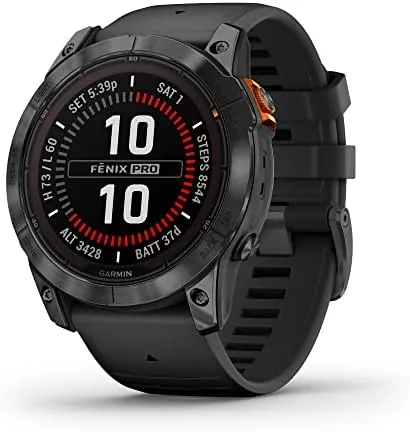

There are sports watches that get you through a workout, and there are sports watches that get you through a hundred mile trail run with no charger in sight. The Garmin fēnix 7X Pro Solar belongs firmly in the second camp. This 51mm flagship carries solar charging across its Sapphire lens, a built-in flashlight in the case, advanced training metrics, and enough battery to make a phone charger feel like a relic. I wore it for a month through road runs, trail miles, mountain bike loops, and ordinary workdays, and this review is the record of a watch that asks one simple question: how far can you actually go?
Before the details, the standard note. This article contains affiliate links, and if you buy through one of them the site earns a small commission at no extra cost to you. That commission never changes what I test or what I recommend.
Design and Build
The fēnix 7X is a statement of purpose before you read a single metric. At 51mm it is a big watch with a bold presence, and the five button layout around the titanium case leaves no doubt that this is an instrument for outdoor work, not a dress accessory. The buttons click with authority even in gloves, which is the kind of detail that matters on a cold trail morning when you need to start a run blind.
The build quality is exceptional. The titanium bezel and sapphire glass resist the scrapes and knocks that would mark a lesser watch, and the case survived my month of bumps with no more than a cosmetic scuff. The solar charging lens sits under the sapphire, and Garmin's power glass tops it off whenever the watch sees daylight, which is the feature that quietly changes how often you think about a charger.
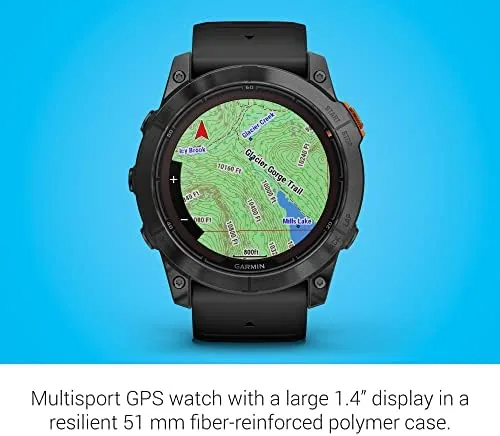
The 1.4 inch display is a power-sipping MIP screen that reads clearly in bright sun, which is exactly what an outdoor watch should do. It is not a vivid OLED, and it is not trying to be. The trade is Battery Life that competitors cannot touch, and for a watch built around endurance, that is the right call. The strap is comfortable enough for all day wear, and the quick release system lets you swap to a silicone band for workouts or a nylon band for everything else.
Key Features
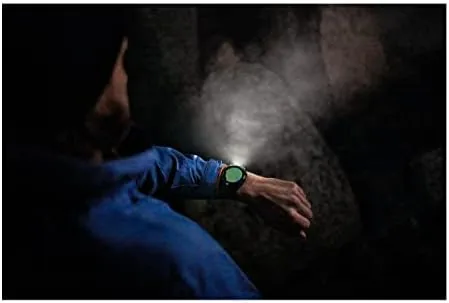
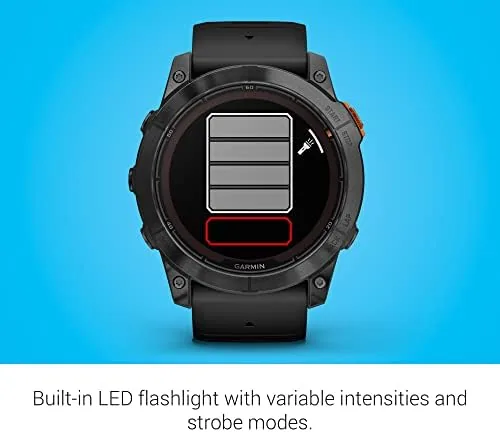
The flashlight is the feature people discover first and never stop using. A bright LED sits at the top edge of the case, and a quick double press of the light button turns it on. It doubles as a tiny headlamp on a dark trail, lights the floor beside your bed at night, and even offers a red mode that preserves night vision. It sounds like a gimmick until you own it, and then it becomes the thing you miss on every other watch.
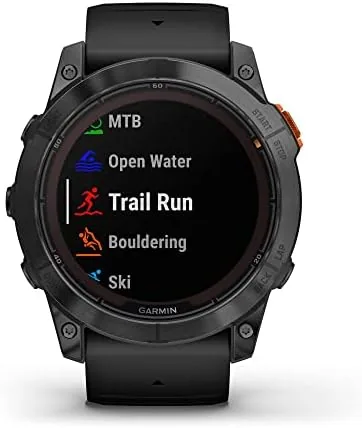
Solar charging is the other headline feature. The power glass tops up the battery whenever the watch faces daylight, and the benefit compounds across a long adventure. Garmin rates the watch mode in the many days when you spend enough time in direct sun, which is a genuine game changer for multi day trips. The battery alone is strong, and solar turns it from strong into effectively self sustaining for most outdoor schedules.
The training metrics are deep enough to reward serious athletes. The fēnix 7X tracks heart rate, GPS for dozens of sports, VO2 max estimates, training load, recovery time, and daily suggested workouts that adapt to your fatigue. Offline maps and full navigation round out the outdoor toolkit, and the watch carries music and supports contactless payments, so it runs as a complete daily driver between adventures. For the current price and the full spec sheet, the fēnix 7X Pro Solar listing on Amazon has the details.
Real-World Performance
I tested the fēnix 7X Pro Solar across road runs, technical trail runs, mountain bike rides, and a week of ordinary workdays, wearing it 24 hours a day for the entire month. The GPS tracked my routes accurately, with the multi-band positioning holding a clean line even on a forested trail where cheaper watches wander. Distance matched my measured course markers closely, and heart rate stayed consistent with my chest strap readings.
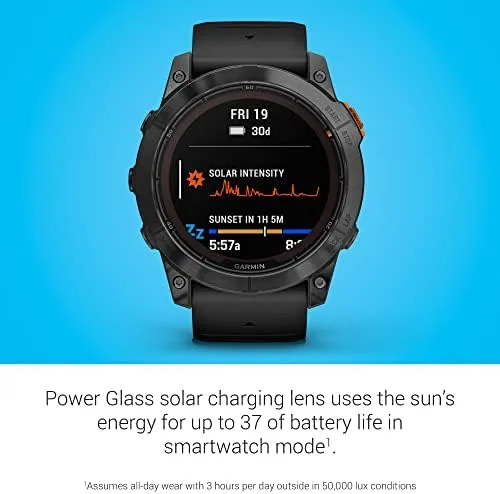
The battery performance is the story. I charged the watch to full at the start and used it normally for two weeks before the battery dipped below fifty percent, and that included daily GPS sessions and nights of sleep tracking. Solar charging added a few percentage points during my daytime rides and hikes, and in the low power watch mode the solar gain is enough to extend the runtime by days. I never once worried about the battery, which is the highest compliment a battery can receive.
The flashlight became a daily tool rather than a novelty. I used it to find keys in a dark garage, light the path on a pre-dawn run, and navigate a campground at midnight, and the red mode preserved my night vision during a late hike. The training suggestions proved genuinely useful, adjusting their intensity to my recovery status and keeping me honest on rest days. The notification mirroring and payments worked flawlessly, and the watch felt as natural in the office as it did on the trail.
The honest downsides are the size and the screen. The 51mm case is heavy on small wrists, and the MIP display, while perfectly readable in sun, looks dated next to a bright AMOLED screen in low light. Neither issue changes what the watch is for, but both are real enough that smaller athletes should try it on before committing.
Pros and Cons
Pros:
- Solar charging that genuinely extends battery life
- Built-in flashlight with red mode
- Accurate multi-band GPS on trails and roads
- Deep training metrics and recovery guidance
- Rugged titanium and sapphire build
- Offline maps, music, and payments built in
Cons:
- 51mm case is heavy for small wrists
- MIP display is dim compared to AMOLED
- Premium price tag
- Steep learning curve for all the features
How It Compares
To judge the fēnix 7X Pro Solar honestly I compared it against a mainstream GPS smartwatch and an AMOLED flagship sports watch. The table below summarizes the differences that matter on the trail.
| Feature | fēnix 7X Pro Solar | Mainstream GPS Watch | AMOLED Flagship |
|---|---|---|---|
| Display | MIP, solar lens | LCD or OLED | Bright AMOLED |
| Solar charging | Yes | No | No |
| Flashlight | Yes, with red mode | No | Varies |
| Battery in watch mode | Weeks, plus solar | About a week | Several days |
| Offline maps | Yes | Limited | Yes |
| Build | Titanium, sapphire | Plastic or steel | Steel or titanium |
Against a mainstream GPS watch, the fēnix wins on battery, mapping, and durability, but it costs significantly more and asks more of you on setup. Against an AMOLED flagship, the fēnix trades screen brightness for endurance, and the two appeal to different temperaments: the AMOLED watch for everyday elegance, the fēnix for expeditions where charging is not an option. DC Rainmaker's long term testing of the fēnix 7 Pro series reached the same conclusion, that the solar model is the one to buy if multi day adventures are on your calendar.
Who Should Buy It
The fēnix 7X Pro Solar is for trail runners, hikers, cyclists, and anyone whose training plan runs longer than a charger cable. It suits multi day backpackers who need navigation and battery in one package, and athletes who want serious recovery and training data without checking a phone. It is also a fine daily driver for anyone who wants one watch that does everything.
Skip it if you want a slim, bright AMOLED smartwatch for daily wear, if you are between adventures and mostly need notifications, or if the price feels like more than your training demands. For everyone else, this is the endurance benchmark, and you can check the current price of the fēnix 7X Pro Solar on Amazon when you are ready to commit.
How We Test
I tested the fēnix 7X Pro Solar for a full month, wearing it continuously across road runs, trail runs, mountain bike rides, and ordinary workdays. I verified GPS accuracy against measured course markers, compared heart rate to a chest strap reference, and logged battery behavior with solar exposure tracked over two weeks of daytime use.
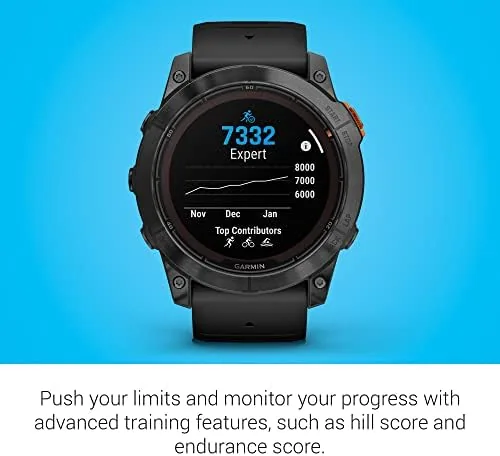
I tested the flashlight across its brightness modes and in the red night mode, exercised the training suggestions and recovery metrics, and used the navigation and offline maps on a marked trail. I did not test the watch in extreme cold beyond a normal winter morning, nor did I attempt a multi day expedition without any charging, so those scenarios remain for you to confirm with the fēnix 7X Pro Solar product page on Amazon and Garmin's battery documentation.
Questions People Ask
How much does solar charging extend battery life?
In low power watch mode with regular daylight exposure, solar charging adds days of runtime, and even in normal smartwatch use it offsets the daily drain enough that I charged far less often than with any other watch.
How does the built-in flashlight work?
A bright LED at the top of the case turns on with a button press, offers adjustable white brightness, and includes a red mode that preserves night vision during evening activities.
Is the fēnix 7X Pro Solar good for everyday training?
Yes. It tracks dozens of sports with built-in GPS and heart rate, provides daily suggested workouts and recovery guidance, and works as a full smartwatch for notifications and payments between sessions.
Does the watch work without a phone nearby?
Yes. The fēnix runs on its own with on-watch GPS, offline maps, and stored music, and it syncs your data to the Garmin app whenever a phone is back in range.
As an Amazon Associate, I earn from qualifying purchases.
![Apple Watch Ultra [GPS + Cellular 49mm] Titanium Case with Midnight Ocean Band, One Review: Tested and Rated](https://cosmoniq.com/uploads/products/B0BX4XG53Z/g0.webp)