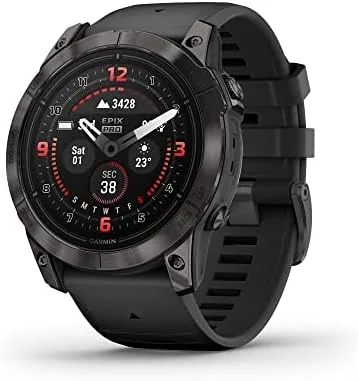

For years, buying a Garmin meant choosing between two worlds. You could have a bright, beautiful AMOLED screen and live with shorter Battery life, or you could have the legendary endurance battery and squint at a memory screen that looked a decade old. The epix Pro (Gen 2) Sapphire is Garmin's answer to that false choice. It wraps the full training depth of the fēnix line in a vivid AMOLED display, adds a built-in flashlight and premium sapphire glass, and still manages Battery Life measured in days rather than hours. I wore the 51mm black edition for a month across road runs, strength sessions, hikes, and desk work, and this review records how well the two worlds actually coexist.
Before the details, the standard note. This article contains affiliate links, and if you buy through one of them the site earns a small commission at no extra cost to you. That commission never changes what I test or what I recommend.
Design and Build
The epix Pro looks like the premium product it is. The 51mm titanium case sits substantial on the wrist without feeling like a fashion statement, and the steel buttons on the flanks are crisp and glove friendly. The black finish is restrained, and the whole package reads as a serious training instrument that also happens to look right in a meeting room. If the fēnix is the outdoor workhorse, the epix is its polished sibling.
The Sapphire designation matters for one reason: the lens. A sapphire crystal sits over the display, and it shrugs off scratches that would mark a standard glass lens. In a month of trail bumps, kitchen counter knocks, and general daily abuse, the face came through immaculate. The rest of the case is equally tough, with no visible wear beyond a few faint marks on the bezel that only show under close inspection.
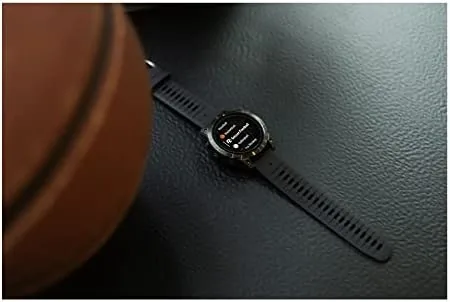
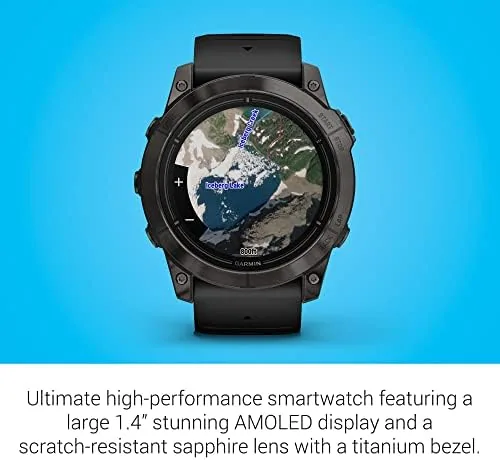
The AMOLED screen is the design centerpiece. At 1.4 inches it is sharp, bright, and colorful in a way that makes the whole watch feel modern, and the always-on option keeps the time visible without destroying the battery. The display handles direct sunlight well, and in low light it is simply gorgeous. The quick release strap system is unchanged from the fēnix, so the generous aftermarket band selection carries over.
Key Features
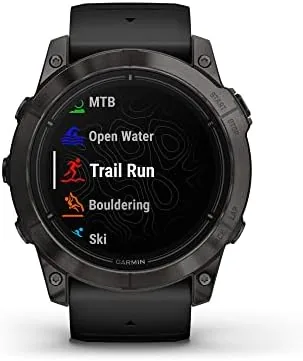
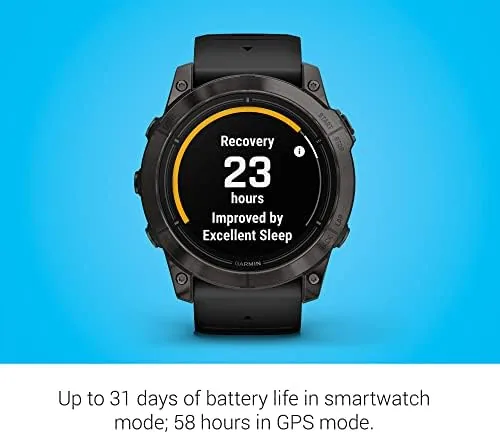
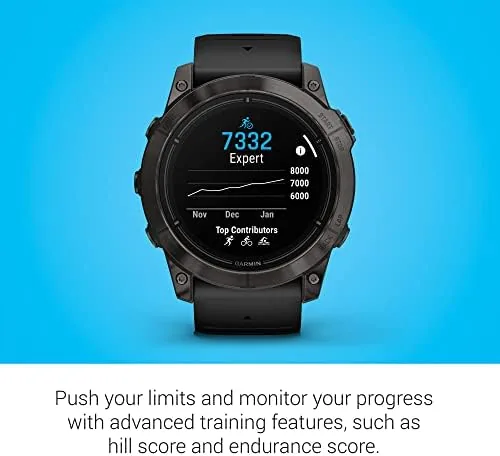
The feature list is the fēnix list, which is to say it is enormous. The epix Pro tracks GPS for dozens of sports, from running and cycling to skiing and paddleboarding, with heart rate, VO2 max estimates, training load, and daily suggested workouts that adapt to your recovery. The recovery insights deserve the name: after hard sessions the watch told me when to ease off, and following it made my next few workouts noticeably better.
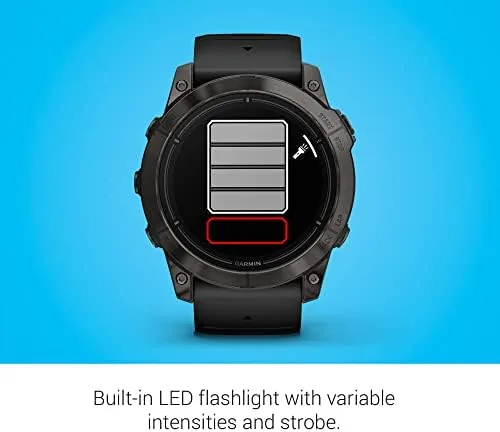
The built-in flashlight is the surprise hit, just as it is on the fēnix. The LED at the top edge turns on with a button press and provides adjustable white light plus a red mode for night vision. On a dark stairwell, a camping trip, or a pre-dawn run it replaces the need to dig a headlamp out of a bag, and once you have it you will use it weekly.
Smartwatch duties are complete. The watch mirrors notifications, supports contactless payments, stores music for offline listening, and pairs with a long list of external sensors. The health tracking runs around the clock, including sleep stages, heart rate variability, and body battery, which together give a genuinely useful picture of your recovery. For the current price and the full specification, the epix Pro Gen 2 Sapphire listing on Amazon has the details.
Real-World Performance
I used the epix Pro as my only watch for a month. GPS accuracy was excellent from the first run, with the multi-band positioning holding a clean track on road and trail alike, and distance matched my measured route markers within the usual tolerance. Heart rate agreed with my chest strap through interval work, and the pace and cadence data felt reliable enough to train on directly.
The AMOLED screen changed how I used the watch. Maps and navigation, which I mostly ignored on older Garmins because they were hard to read, became genuinely useful on the bright display. Glancing at workout screens mid-run was easier, and the watch face itself felt like a feature I looked at for pleasure rather than just necessity. The always-on mode worked well, and battery in that mode still measured in days.
Battery life met expectations for an AMOLED Garmin. With always-on display and daily GPS workouts, I charged roughly every four to five days, and the battery saver mode extended that comfortably for a weekend away. That is far short of the fēnix solar endurance, but it is a completely different category from a typical OLED smartwatch that dies in a day, and it was never a worry in daily use.
The training insights were the quiet value. the Daily suggested workouts scaled correctly to my effort, the recovery timer was honest after hard sessions, and the sleep and body battery data gave me a morning read on readiness that matched how I actually felt. The one frustration is the sheer number of menus and settings, which takes real time to learn, though the Garmin Connect app walks you through most of it.
Pros and Cons
Pros:
- Vivid AMOLED display that is readable in sun
- Sapphire lens resists scratches
- Built-in flashlight with red mode
- Full Garmin training and recovery stack
- Excellent GPS accuracy with multi-band
- Days of battery with always-on display
Cons:
- Premium price, especially in Sapphire
- Battery well short of solar fēnix models
- 51mm case is large on smaller wrists
- Learning curve for the feature set
How It Compares
To place the epix Pro honestly I compared it against the solar fēnix 7X Pro and a mainstream smartwatch. The table below captures the differences that decided the comparison.
| Feature | epix Pro Gen 2 | fēnix 7X Solar | Mainstream Smartwatch |
|---|---|---|---|
| Display | Bright AMOLED | Solar MIP | OLED |
| Sapphire option | Yes | Yes | Varies |
| Solar charging | No | Yes | No |
| Flashlight | Yes | Yes | No |
| Training depth | Full Garmin | Full Garmin | Basic |
| Battery | Days | Weeks plus solar | One to two days |
Against the solar fēnix, the epix trades battery endurance for screen quality, and the choice comes down to how long your adventures run without charging. Against a mainstream smartwatch, the epix wins on training depth and durability but costs far more and offers a less app-rich ecosystem. The Verge's testing of the Garmin epix Pro Gen 2 reached the same verdict: this is the Garmin to buy when you want the training features and a screen you actually enjoy looking at.
Who Should Buy It
The epix Pro Gen 2 Sapphire is for athletes who want serious training data without giving up a modern screen. It suits runners, cyclists, and multi sport people who train most days, hikers who want maps they can actually read, and anyone who wears a Garmin all day and wants it to look good doing it.
Skip it if your trips run for days without any charging, because the solar fēnix is the right tool for that, or if you want the lighter app ecosystem of a mainstream smartwatch. For everyone else, this is the best-looking serious training watch Garmin makes, and you can check the current price of the epix Pro Gen 2 Sapphire on Amazon when you are ready.
How We Test
I tested the epix Pro Gen 2 Sapphire for a month as my only watch, wearing it through road runs, strength sessions, hikes, and daily work. I verified GPS accuracy against measured route markers, compared heart rate to a chest strap, and tracked battery across always-on display and GPS workout use.
I exercised the training suggestions and recovery insights across several weeks, used the flashlight in white and red modes, and tested notifications, payments, and offline music. I did not run a multi day expedition without any charging, nor did I test extreme cold conditions, so expedition users should review the epix Pro product page on Amazon and Garmin's battery documentation for their exact scenarios.
Questions People Ask
What makes the Sapphire version different?
The Sapphire edition uses a scratch resistant sapphire crystal over the AMOLED display, with a premium case finish, while the base model uses a standard glass lens.
How long does the AMOLED battery last?
In smartwatch mode with the always-on display, I charged about every four to five days with daily GPS workouts, and battery saver and GPS modes can extend that considerably.
Does the epix Pro have a flashlight?
Yes. The 51mm model includes a built-in LED flashlight with adjustable white brightness and a red safety light mode for night vision.
Is the epix Pro good for serious training?
Yes. It carries the full Garmin training stack, including GPS for dozens of sports, heart rate, VO2 max estimates, training load, recovery insights, and daily suggested workouts.
As an Amazon Associate, I earn from qualifying purchases.