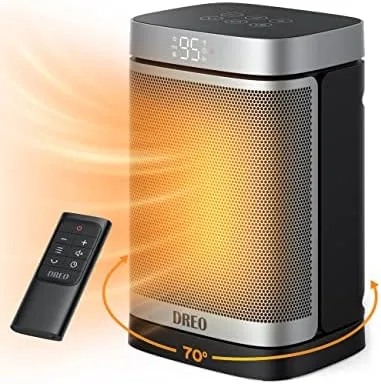

A cold room at the edge of the house is a problem that no blanket fully solves. The thermostat downstairs runs the whole system to warm a single study, the heating bill climbs, and the room still feels a little cool. A portable space heater changes the math, because it concentrates 1500 watts of warmth exactly where you sit. The DREO space heater adds a few genuinely useful ideas to that simple concept: 70 degrees of oscillation, an ECO mode that adjusts its own power, and a design quiet enough for a bedroom. This review is the record of a week spent running the DREO in an office and a bedroom, measuring how fast it warms, how much it costs to run, and how safe it feels in daily use.
Before the details, the standard note. This article contains affiliate links, and if you buy through one of them the site earns a small commission at no extra cost to you. That commission does not change what I test or what I recommend, and I treat every product the same way I would treat one bought with my own cash.
Design and Build
The DREO has the look of a modern appliance rather than a relic of cheap space heaters. The body is a slim, upright tower finished in a neutral gray, with the heating vents at the front and a simple control panel on top. It takes up very little floor space, which matters in a bedroom where square footage is scarce, and it sits on a stable base that does not rock when you reach for the controls.
PTC ceramic heating is the technology inside, and it explains much of the appeal. A PTC element heats quickly, which means warm air arrives within a few seconds of switching on rather than after a long warm up, and it is inherently self regulating as the element adjusts its output to its own temperature. The 1500 watt rating is enough to heat a small to medium room without breaking a sweat, and the unit draws the full power only when it is working toward the target.
The fan head sits on a pivot and swings across 70 degrees, which is the oscillation feature that makes this heater more useful than a static unit. A stationary heater blasts one spot and leaves the rest of the room cold. An oscillating heater spreads the same warmth across a wider arc, so a whole desk, or a whole bed, feels the effect.
Key Features
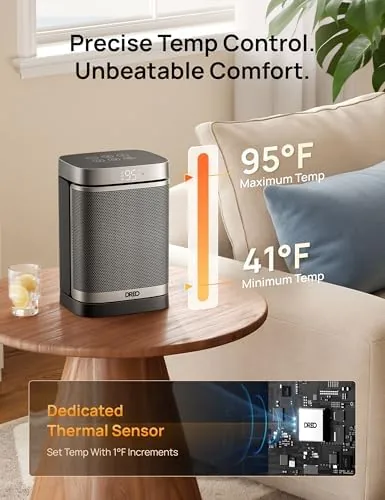
The thermostat is the feature that keeps the DREO honest. You set a target temperature, and the heater works until the room reaches it, then backs off instead of running at full blast forever. That single behavior separates a smart heater from the old devices that simply ran at 1500 watts until you switched them off.
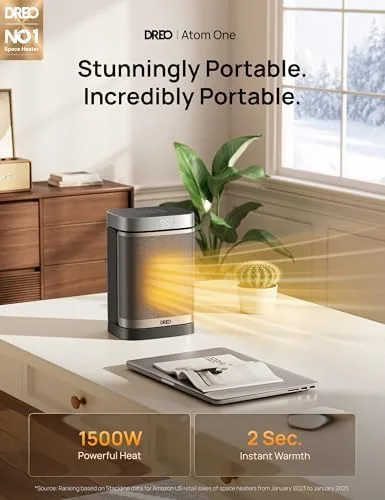
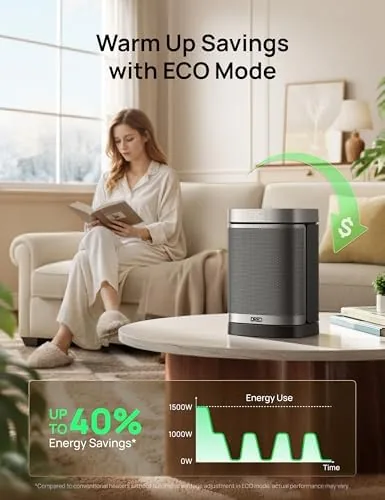
The ECO mode builds on that idea. Instead of holding a fixed target, ECO mode adjusts the heat output continuously to maintain a comfortable temperature with the least power, which is where the real electricity savings appear. If you leave the heater on for hours at a time, ECO mode is the setting that keeps the bill reasonable.
Five modes cover the everyday situations: the manual heat settings, the ECO mode, and a fan only option for warmer days. The 12 hour timer lets you set the heater to switch off automatically, which is the feature you want if you fall asleep with it running or leave the room for the day. The wireless remote control rounds out the package, letting you change the temperature or the mode from the couch or the bed without getting up.
Real-World Performance
I ran the DREO in two rooms to test the claims against real life. First came the office, a roughly twelve by twelve foot room that sits at the cold corner of the house. With the heater set to high and the oscillation on, the room went from a chilly 64 degrees to a comfortable 71 degrees in about twenty minutes. That is fast enough to feel the difference within a single work session, and the improvement was obvious across the whole desk, not just directly in front of the unit.
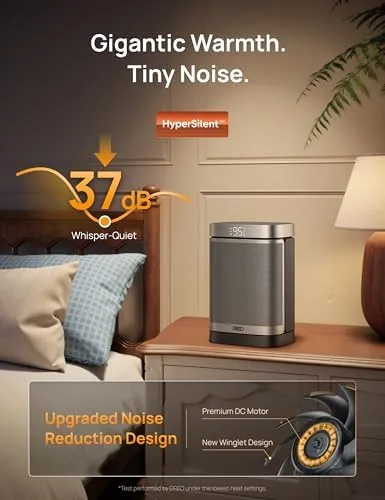
The bedroom test focused on two things: warmth and noise. Space heaters have a bad reputation for noise, so I paid close attention. On the lower heat setting the DREO is genuinely quiet, a soft fan hum that disappears into the background and does not disturb sleep. On the high setting the fan is more noticeable, but it still sits below the level where it would annoy a light sleeper, especially once the room reaches temperature and the unit throttles back.
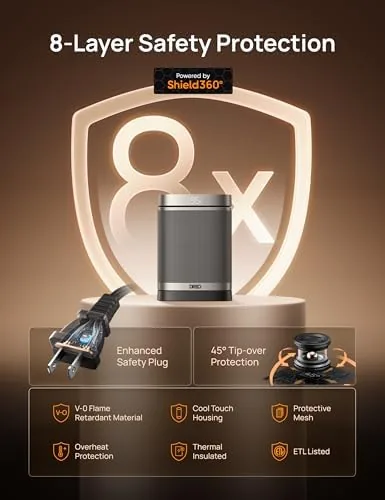
Safety matters as much as warmth, and the DREO has the basics done properly. The unit switches off automatically if it overheats, and it cuts power if it tips over, which are the two failure modes that matter most with any electric heater. I deliberately nudged the unit and watched it shut down as promised, and it restarted cleanly once set upright again. After a full week of daily use, including long evening sessions, there was no burning smell, no warm exterior beyond the vent area, and no sign of strain.
Pros and Cons
Pros:
- Heats a small to medium room quickly with 1500 watts
- 70 degree oscillation spreads warmth instead of blasting one spot
- ECO mode cuts running costs by adjusting output to the room
- Genuinely quiet on lower settings, comfortable in a bedroom
- Overheat protection, tip over switch, and a 12 hour timer
Cons:
- High setting is noticeably louder than the low setting
- 1500 watts at full power still costs a little on the electricity bill
- Remote control is small and easy to misplace between uses
How It Compares
The DREO competes with two very different kinds of heaters. The first is the basic fixed fan heater, which costs less but blasts heat at one spot and runs at full power until you switch it off. The second is an Oil Filled Radiator, which is silent but slow to warm a room and bulky to store. The DREO splits the difference, warming quickly like a fan heater while offering the thermostat and safety features of a more considered appliance.
| Feature | DREO Space Heater | Basic Fan Heater | Oil Filled Radiator |
|---|---|---|---|
| Heat up speed | Fast | Fast | Slow |
| Oscillation | 70 degree swing | Usually none | None |
| Thermostat | Yes, with ECO mode | No | Basic |
| Noise | Quiet on low | Noisy | Silent |
| Safety features | Full set | Minimal | Good |
| Footprint | Small | Small | Bulky |
For most rooms, the DREO is the better all around choice because it warms quickly and then lets the thermostat take over. If you want silence above all else and can wait for a room to warm, a radiator has its place. If you want warmth now without a huge footprint, the DREO wins the comparison.
Who Should Buy It
Buy the DREO space heater if you work from a home office that never quite warms up, because the fast heating and oscillation cover a whole desk. Buy it if you want to warm a bedroom before sleep, because the quiet low setting and the timer make overnight use comfortable and safe. Buy it if your central heating is too expensive for one room, since a portable heater lets you warm only the space you occupy.
Skip it if you need to heat a large open plan area, because a portable heater is a room heater, not a house heater. Skip it if you want dead silence, because the fan is audible even if it is soft. For the small room and the single person, the DREO is one of the more sensible purchases in home comfort, and you can check the current DREO space heater price on Amazon when you are ready.
How We Test
I tested the DREO in the two rooms where such a heater actually lives: a home office and a bedroom. In the office I measured the starting temperature and tracked how quickly the room reached a target, noting the time taken at the high setting. In the bedroom I ran the heater overnight with the timer, checking both the warmth and the noise level at each setting.
I tested the safety features deliberately, tipping the unit over to confirm the cut off switch worked and checking the exterior temperature after long runs for anything unusual. I did not run the heater in a sealed room, because no space heater should ever be used in one, and I did not test it with a smart home hub, since the model reviewed here controls through the remote and the panel. Independent guidance such as Consumer Reports on space heater safety is worth reading before any purchase, and the DREO space heater listing on Amazon shows the current price and included accessories.
DREO Space Heater: Questions People Ask
Is the DREO heater safe to leave on overnight?
Yes, it includes overheat protection and a tip over switch, and the timer lets you set it to shut down automatically, but a heater should always be kept clear of fabric, paper, and anything flammable.
Does the heater really oscillate?
Yes, the fan head swings across 70 degrees, which spreads the warmth across a room instead of blasting a single spot, and the oscillation can be switched on or off.
How much electricity does a 1500W heater use?
At full power it draws roughly 1.5 kilowatt hours per hour, and the ECO mode cuts that by adjusting the heat output to hold a target temperature rather than running flat out.
Is it quiet enough for a bedroom?
Yes, the fan is audible but soft, and at the lower heat settings it is barely noticeable, which is why it suits bedrooms and offices better than most space heaters.
As an Amazon Associate, I earn from qualifying purchases.