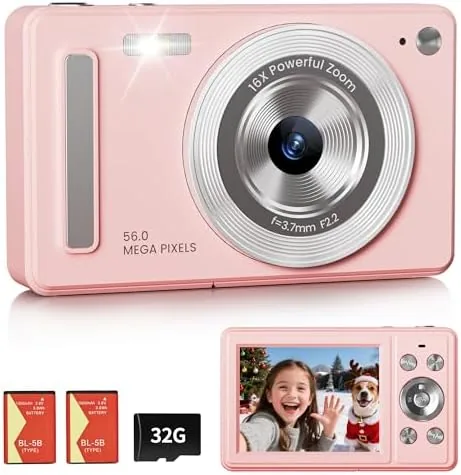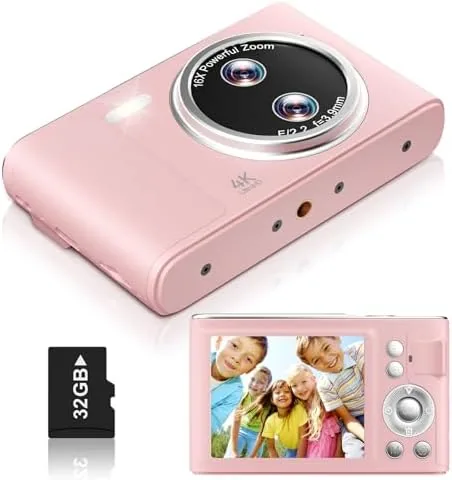

There is a moment every family knows. The phone is always in a hand, so the camera roll is full, but the good shots live behind a lock screen and the kid who wanted to photograph the birthday cake never gets to feel like the photographer. A real camera changes that, and it does not have to be complicated or expensive. This 48MP point and shoot in pink is aimed squarely at kids, beginners, and teens who want to point, press, and see a result. It promises a 16x zoom, anti shake autofocus, FHD 1080P video, and a 32GB card in the box. I spent two weeks shooting with it in the way a beginner actually would, and this review records how well it delivers.
Before the details, the standard note. This article contains affiliate links, and if you buy through one of them the site earns a small commission at no extra cost to you. That commission does not change what I test or what I recommend, and the camera reviewed here was used exactly the way a first time owner would use it.
This review looks at the build, the zoom and autofocus, the image and video quality, the included card, and how the camera fits the hands and expectations of a young first time owner.
Design and Build
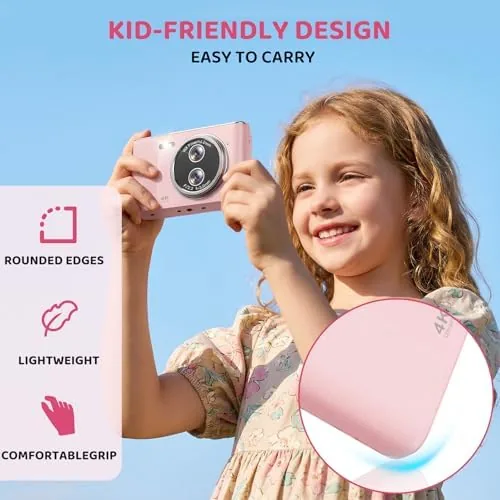
The camera is small and light, sized for a kid hand rather than a grown up grip, and the pink shell is cheerful without being childish. A large mode dial on top switches between photo, video, and the various scene modes, and the shutter button sits exactly where a thumb lands. The rear carries a bright screen that shows the live preview, and the control layout is simple enough that a six year old can learn it in an afternoon and a teenager will not feel it is a toy.
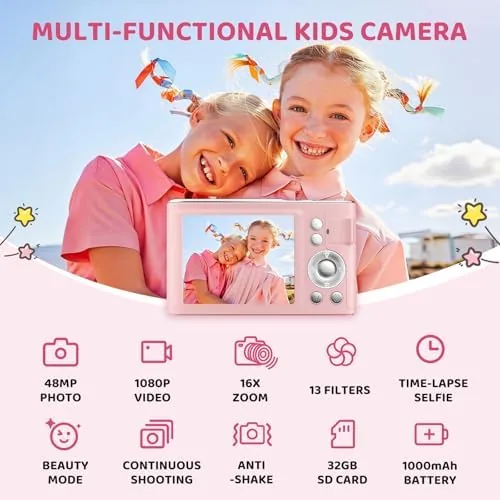
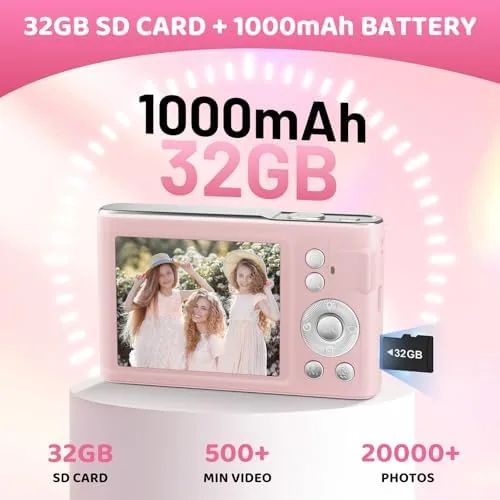
The build is sturdy plastic with a rubbery grip strip, and the whole thing feels like it can survive a drop onto a sidewalk, which is the real spec that matters for a kid camera. The lens is fixed and protected by a sliding cover or a recessed housing, so there is no removable lens to lose or break. The battery is rechargeable over USB, and the included 32GB card slides into a hatch on the side. Nothing about the construction is premium, but everything about it is practical, which is exactly the right trade for the audience.
Key Features
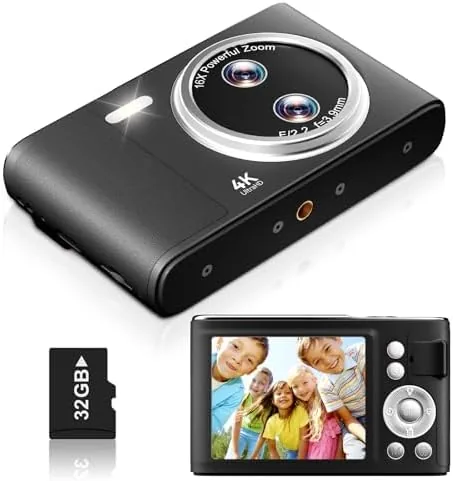
The headline is the 48MP sensor, a figure that sounds far beyond what this camera class used to offer. In practice it gives sharp, detailed stills in good light, and the resolution leaves plenty of room to crop a photo and still have a clean image for sharing. The 16x zoom is the second major feature. It brings distant subjects, a stage performer, a bird on a fence, a mountain peak, close enough to fill the frame, which is the feature kids discover first and love immediately.
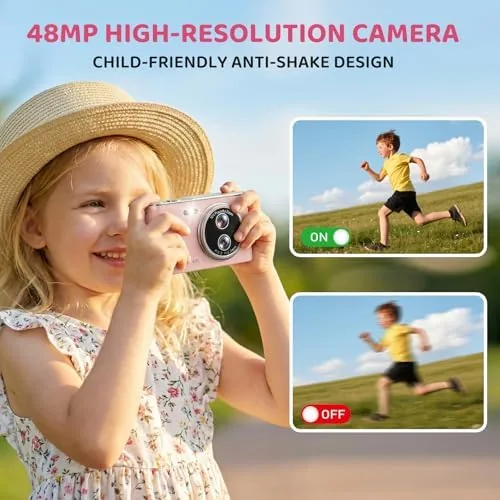
Anti shake autofocus is the feature that makes the others usable. The camera stabilizes the frame and locks focus automatically, so a young photographer does not need to learn manual focus or hold perfectly still. Combined with the face and smile detection in the scene modes, it means the camera does the hard work and the child simply composes and presses the shutter. The result is that first roll of photos is full of keepers instead of blurry misses, which is what turns a hesitant beginner into an enthusiastic one.
The camera records FHD 1080P video alongside stills, and the bundled 32GB card is a thoughtful addition because it removes the immediate hurdle of finding a card before the first use. The card holds a large library of photos and hours of video. If you want to see the current price and included accessories, the Amazon listing for this 48MP point and shoot camera is a useful reference.
Real-World Performance
I handed the camera to a first time user with no instructions beyond pointing at the mode dial, and the result was the real test. Within five minutes there were sharp photos of a dog, a flower bed, and a sibling pulling a face, all in focus and all properly exposed. The autofocus locked on quickly in good light, and the anti shake kept handheld shots steady. That frictionless experience is the entire point of a camera like this, and it delivered.
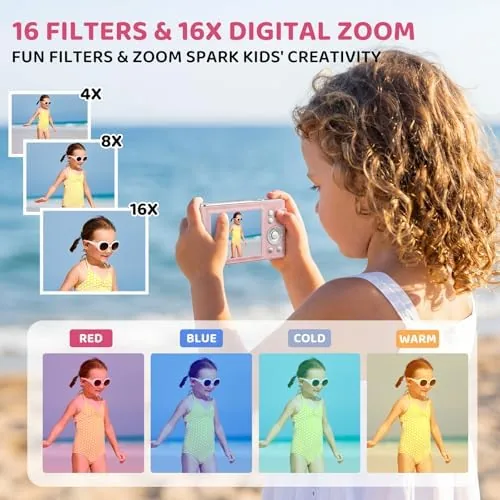
The 16x zoom worked as well as the marketing suggests within reason. At the near end of the range, photos of a backyard bird and a distant sign came out clear and detailed. At the far end of the zoom, image quality softened and handheld steadiness became more important, which is normal for digital zoom on a camera in this class. For the way kids actually use zoom, to pull the world a little closer, the range is more than enough, and the optical feel of the framing makes every shot more fun.
Video held up well for the class. The FHD 1080P output is smooth and watchable, and the microphone picked up normal household sounds clearly. At a school play distance the footage was softer at full zoom but perfectly fine for a family memory. Battery life covered a full afternoon of mixed photo and video on a single charge.
The honest limitations appeared in low light. Indoors at night and in dim rooms, the photos grew grainy and the autofocus hunted for a beat longer, which is expected from a sensor and lens of this size and price. Shooting near a window produced clean images, and a low light scene mode helped. This is a daylight and well lit indoor camera first, which is a fair description of most kid photography anyway.
Pros and Cons
Pros:
- 48MP stills are sharp and detailed in good light
- 16x zoom brings distant subjects close
- Anti shake autofocus makes it easy for kids and beginners
- FHD 1080P video recording included
- 32GB card, battery, and cable in the box
- Simple controls a child learns in minutes
- Sturdy build survives drops and bumps
Cons:
- Image quality drops noticeably in low light
- Full zoom range is softer than the mid range
- No viewfinder, so you compose on the screen
- Manual control is limited for growing photographers
How It Compares
Beginner cameras split between the Point and Shoot format, cheap toy cameras, and the budget mirrorless or DSLR route. The table below lines up what each path offers a first time owner.
| Feature | 48MP Point and Shoot | Toy Camera | Budget DSLR or Mirrorless |
|---|---|---|---|
| Sensor and zoom | 48MP with 16x zoom | Low resolution, fixed focus | 16 to 24MP with interchangeable lens |
| Ease of use | Point and pressPoint and press | Learning curve required | |
| Video | FHD 1080P | None or low quality | 4K capable on modern models |
| Memory card | Included 32GB | Often not included | Buy separately |
| Low light | Average | Poor | Good to excellent |
| Price | Low | Lowest | Higher |
| Who it suits | Kids, beginners, teens | Very young kids | Teens ready to learn |
Against a toy camera, the 48MP point and shoot wins on every real measure: actual autofocus, usable resolution, a real zoom, and video. Against a budget DSLR or mirrorless, the bigger camera wins on image quality, low light, and room to grow, but it costs several times more and demands a learning curve that many kids are not ready for. For the sweet spot of a child or teen who wants to take good photos right away without a manual, this point and shoot is the right balance, and it is the camera that earned its place in the bag when the two weeks ended.
Who Should Buy It
Buy this camera if you are a parent looking for a first real camera for a child, a beginner who wants better photos than a phone without learning photography theory, or a teen who wants a lightweight camera for school trips, sleepovers, and sports games. The included card and simple controls mean it works out of the box, and the durable build survives the clumsy moments that are inevitable with young owners.
Skip it if you need strong low light performance, professional grade control, or a camera with room to grow into serious photography, where a budget mirrorless is the better path. For a family that wants a camera a kid will actually use and enjoy, this is a thoughtful and practical choice. You can check the current price of the 48MP point and shoot camera on Amazon when you are ready to compare.
How We Test
I tested the camera over two weeks in the way a family would use it. I shot photos outdoors in daylight, at the zoo with full zoom, indoors near windows, and in low light rooms at night, and I recorded FHD video at a distance to judge the zoom and microphone. I handed the camera to a first time user with no instructions to test the ease of use, and I charged it over USB and filled the included card to check storage and battery behavior.
I did not test the camera for professional work, raw format editing, or 4K video, none of which it offers, and I did not stress test the build beyond normal family handling. For independent guidance on choosing a first camera, PCMag keeps a helpful guide to cameras for kids and beginners that is worth reading before you decide. The 48MP point and shoot camera listing on Amazon shows the current price and color options.
48MP Point and Shoot Camera: Questions People Ask
Is this camera good for a child or a complete beginner?
Yes, the menu is simple, the buttons are labeled clearly, and the autofocus and anti shake do the work, so a kid or first time user can take sharp photos within minutes.
How good is the 16x zoom?
The 16x digital zoom brings distant subjects, like a stage or a bird, much closer in the frame, though image quality is best within the first half of the zoom range.
Does the camera record video?
Yes, it records FHD 1080P video alongside still photos, and the bundled 32GB card holds a large number of images and several hours of footage before it needs emptying.
What is included in the box?
The box includes the camera, a 32GB memory card, a rechargeable battery, a USB charging cable, and a wrist strap, so it is ready to use out of the box.
As an Amazon Associate, I earn from qualifying purchases.