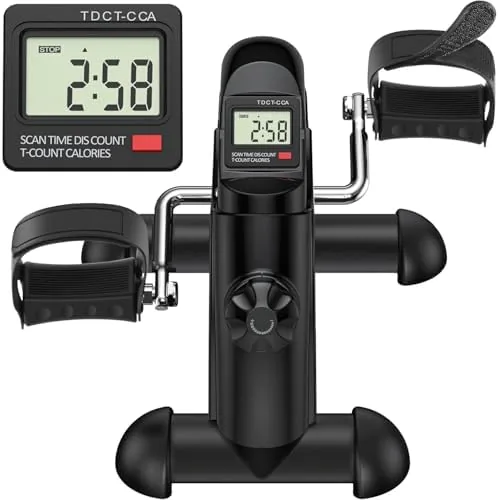

Hours of sitting are the quiet enemy of circulation, and the solutions usually involve leaving the chair, which is rarely possible during a real workday. This DeskCycle MagneTrainer review is the record of six weeks keeping the Compact peddler under an office desk and working it during calls, writing, and long stretches of focus. The honest finding is that a foot sized pedal unit with magnetic resistance can add a surprising amount of gentle movement to a day that otherwise gives your legs nothing to do.
Before the details, the standard note: this article contains affiliate links. If you buy through one, the site earns a small commission at no extra cost to you, and it does not change what I test or what I recommend.
Design and Build
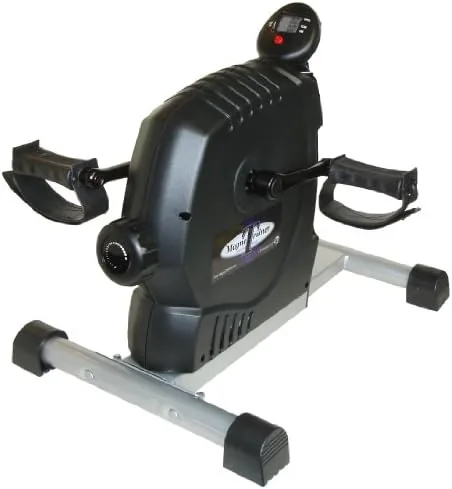
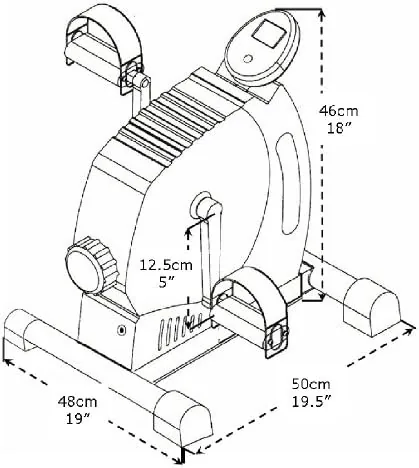
The MagneTrainer is a low, solid block of a machine that slides under a normal desk and takes up about the space of a small shoebox wide front. The two pedal platforms sit on short aluminum cranks at the base, and the whole unit is disguised as nothing in particular, which is exactly the point for an office where you do not want to advertise that you are pedaling.
The build is reassuringly solid. The housing is sturdy metal and dense plastic with a low profile, rubber feet on all corners keep it planted on carpet or tile, and a small adjustment knob on the side sets the resistance. It is clearly built to take the daily grind of hours of pedaling with nothing wearable or flimsy.
The pedals have a comfortable, flat, slightly textured surface and enough room for a full foot, and the whole unit can sit either under the desk for legs or on a table for arms. Nothing about the design needs assembly beyond the initial fit, so it goes from the box to under the desk in minutes.
Key Features
The headline feature is the magnetic resistance. Instead of friction pads that grind and wear, a magnetic flywheel creates the drag, which means the pedaling is exceptionally smooth and the unit runs almost silent. It is the difference between a piece of gym gear and a desk companion you forget is spinning.
Adjustable tension gives real control. The dial at the front moves the magnets closer and further from the flywheel, so you can start at a featherlight pedal on a hard day or work up to a steady burn for a session. Because it is magnetic and continuous, there is no stepped click and no jerky catch, just a smooth gradient of effort.
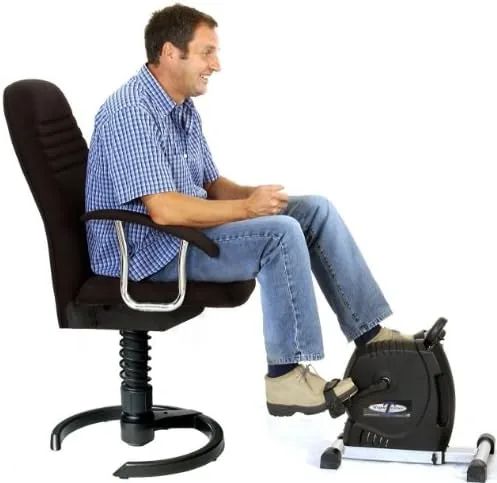
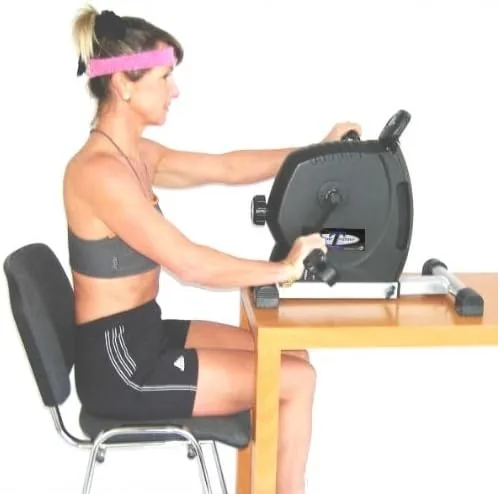
Two uses broaden the value. Under the desk it exercises the legs and raises circulation during the day, and lifted onto a surface it becomes a set of arm cranks for the shoulders and upper body. That arm mode is a quiet boon for recovery and for keeping movement when you cannot be on the feet.
There are no cords and no power draw, which suits an office. The unit is entirely mechanical, so there is nothing to plug in and no battery to manage, and the compact size means it stores out of sight under the desk or in a drawer area when not in use.
Real-World Performance
In six weeks the MagneTrainer became part of the working day rather than a novelty. The first time I set it up, I pedaled the entire writing session without thinking about it, and by the end of the first week the legs were moving for a large part of each working hour using only the space the machine occupies.
The silence is the feature I did not expect to value. On a phone call with the unit pedaling on a low setting, the other side heard nothing; the machine is genuinely quiet enough for a shared office, and meetings remained unaffected by even the mid tension. That is the quality most under desk bikes fumble.
Stability held as promised. At no point did the unit slide, creep, or jump across the floor during a leg session, even with the tension turned low. The wide base and the rubber feet keep it planted, and the pedals spin in a smooth motion that does not bump the chair or the desk above.
The honest limits are effort and scope. It will not replace a full workout or a heavy cardio session, and the pedaling can become such a light background habit that you stop noticing it, which is useful for circulation rather than for fitness. The resistance dial is easy to use, and the pressure holds at the level you set.
Pros and Cons
Pros:
- Very quiet thanks to the magnetic resistance
- Smooth, adjustable effort from light to firm
- Compact and solid, under a desk or on a table
- Works for both legs and arms and recovery
- No cords or batteries, simply mechanical
Cons:
- Light exercise, not a substitute for a heavy workout
- Can get a little easy to tune the effort higher
- Takes the foot and lower leg well but not a full seat
- Some pedals feel narrow for very large feet
How It Compares
The main rival to the DeskCycle is the cheaper magnetic and belt resistance peddlers. A belt or friction model costs less but often clicks or grinds and wears with use; the DeskCycle magnetic drive is smoother and quieter, and the difference grows more obvious the longer you use it daily.
| Feature | DeskCycle MagneTrainer | Budget friction pedal |
|---|---|---|
| Resistance | Magnetic, smooth | Friction, can grind |
| Noise | Very quiet | More audible |
| Adjustment | Dial, continuous | Knob, less even |
| Stability | Heavy, planted | Often lighter |
| Price | Higher | Lower |
Against a full under desk bike with a seat and a frame, the MagneTrainer is smaller and cheaper and focuses on the pedals alone, which suits a desk that has no space for a big unit. A full bike adds a more bike seated feel but cannot vanish under a desk the way this unit can.
Independent accounts, such as the Womens Health desk exercise advice, back up the point that steady low effort movement through the day benefits circulation and metabolism, which is exactly the desk pedal use case.
Who Should Buy It
Buy the DeskCycle MagneTrainer if you spend long hours at a desk and want to keep your legs moving without leaving the chair. It is a strong fit for an office worker, a student, a remote professional, and for anyone who wants light, low impact circulation and joint mobility through the sitting day.
Skip it if you want a full cardio workout or a seated cycle with a backrest. For quiet daily movement under a desk, the DeskCycle MagneTrainer price and options are on Amazon for you to review.
How We Test
I kept the MagneTrainer under my work desk for six weeks and pedaled it through long writing days, video calls, and evenings, and I also moved it to a table for arm sessions. I judged ease of setup, noise at different tensions, stability on carpet and tile, the range of resistance, and how it held up to hours of daily use.
Results vary with the desk height, the stiffness of the user, and the surface under the unit, and a hard seated cardio fan will want more resistance than I used. A second view, such as the Harvard Health guidance on sedentary light activity, is worth reading alongside the review, and the DeskCycle MagneTrainer listing on Amazon shows the current accessories before you buy.
DeskCycle MagneTrainer: Questions People Ask
How quiet is the DeskCycle MagneTrainer?
Very quiet. The magnetic resistance has no clashing gears, and the smooth bearings barely whisper, so a few feet from a call it is nearly silent and far quieter than a mechanical or friction model.
Will it slide while I type?
No. The base is heavy and the rubber feet grip the floor, so the unit stays planted during a session. Set a comfortable tension and it pedals smoothly without jumping or scooting.
Can I use it for my arms too?
Yes. Lifting the pedal unit onto a table lets you exercise the arms and upper body, which is useful for circulation and recovery and widens the machine beyond legs alone.
Is it good for light exercise and recovery?
Yes. The magnetic tension sets low, so you can pedal at a gentle effort that improves blood flow and joint motion without straining, which suits recovery days and long seated work.
As an Amazon Associate, I earn from qualifying purchases.