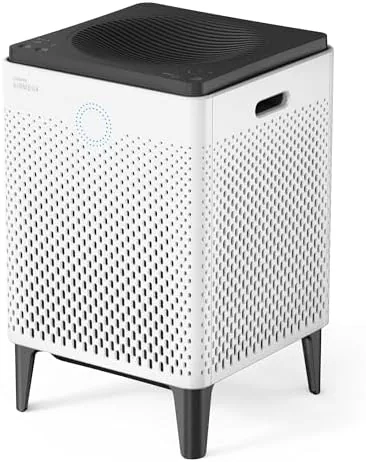

An Air Purifier only earns its place in a home if you can trust that it is doing something. This COWAY Airmega 300 review records two weeks of running the AP-1515H in a large living space, with an AQI readout that made the invisible work visible. The verdict is that this is a serious whole home machine, one that combines a washable pre-filter, a true HEPA filter, and a set of automatic modes that take the guesswork out of daily use.
Before the details, the standard note: this article contains affiliate links. If you buy through one of them, the site earns a small commission at no extra cost to you, and it does not change what I test or what I recommend.
Design and Build
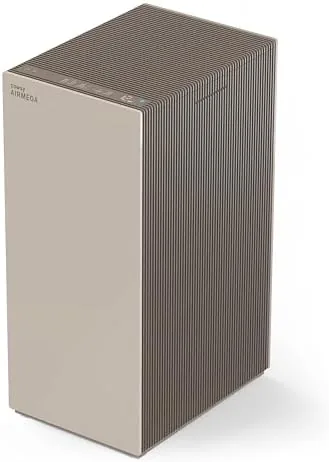
The Airmega 300 has a clean, boxy tower design with a charcoal and off white finish that fits naturally next to furniture. It is taller than a bedside purifier and heavier than it looks, which is a good sign because the internal filter area is substantial. A front grille hides the filters, and the whole unit stands steady on a hard floor without shifting when you walk past.
The control panel sits on top of the unit with touch buttons for power, mode, timer, and a sleep option. The digital display shows the current air quality reading, a number that changes as the room conditions shift, which gives immediate feedback that the machine is working. Build quality is solid, with a sturdy housing that does not rattle even at high fan speed.
Setup takes minutes. The filters ship in place behind the front panel, so you open the box, plug it in, and press power. There is a five year warranty on the unit, which is an unusually confident guarantee and a good signal about expected lifespan. Portability is handled with a pair of recessed grips on the sides. The unit is heavy enough that you will not carry it far, but the grips make it easy to lift it a few inches to vacuum underneath or to move it between rooms when a dinner party calls for cleaner air in the kitchen. A short power cord keeps the machine close to a socket, which is a minor consideration for placement.
Key Features
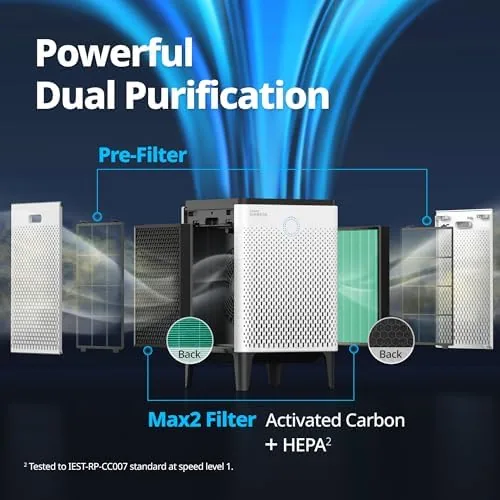
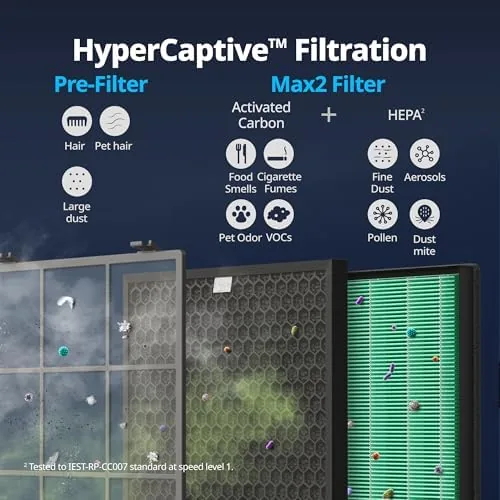
The filtration path starts with a washable pre-filter that catches the big particles like dust, fur, and lint. Because you can rinse it under the tap, the pre-filter takes the brunt of the work and protects the main filter, which lowers the running cost over the life of the machine.
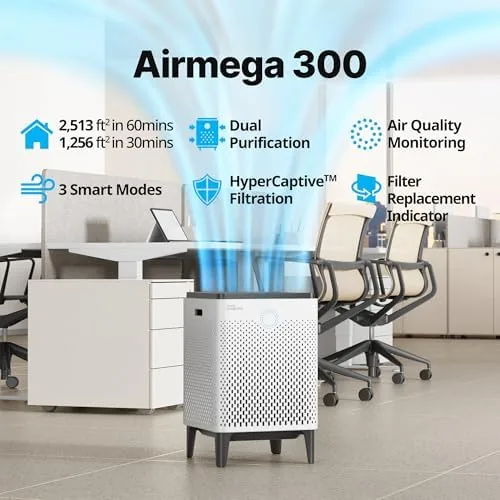
Behind the pre-filter sits a true HEPA filter designed for smoke, pollen, pet dander, and odors, plus a carbon layer that targets household smells. The rated coverage reaches up to 2,512 square feet, which puts it in the highest capacity tier of home purifiers and means a single unit can handle an open plan floor.
Automatic operation is the highlight. The built in AQI sensor reads the air and adjusts fan speed on its own, ramping up when it detects a rise in particles and settling down when the air is clean. A sleep mode drops the fan to its quietest level and dims the display, and the timer lets you schedule runs for one hour, four hours, or eight hours.
Real-World Performance
I ran the Airmega 300 in a large living area with two pets and a wood burning fireplace nearby. The first night, after cooking dinner, the AQI display climbed and the fan responded within seconds, clearing the kitchen smell faster than any small purifier I have used. Within the hour the reading dropped back to the low range, and the air genuinely felt fresher.
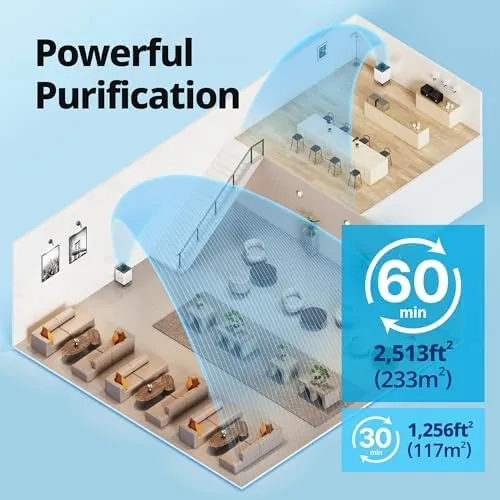
Pet dander and dust made a visible difference too. The pre-filter collected a surprising amount of fur and lint over the two weeks, and the main filter kept the room noticeably cleaner between vacuuming sessions. For allergy sufferers, the combination of a big clean air volume and a true HEPA layer is exactly what the machine is built to deliver.
Noise is well managed. On auto in a clean room the machine settles to a low hum that is easy to ignore, and sleep mode is genuinely quiet enough for a bedroom. At the highest speed the airflow is strong and the fan is audible, but that setting is only needed during a smoke event or a heavy cooking session.
The honest cost is filter replacement. COWAY recommends a new set of filters roughly once a year, and the price of the genuine filters is a real ongoing expense to budget for. The washable pre-filter softens that cost, but it does not remove it, and the machine only performs at its best with genuine filters.
I paid attention to whether the machine kept the whole living space clean or just the air around it. Over the two weeks, dust settled less quickly on shelves near the unit, and the room felt noticeably less stuffy after a day with the windows closed. For a household that deals with seasonal pollen, running the unit on auto through the spring weeks is the kind of habit that makes a real difference to how the home feels.
Pros and Cons
Pros:
- Rated coverage up to 2,512 square feet
- Washable pre-filter cuts long term running cost
- Live AQI display gives instant feedback
- Auto mode and a genuinely quiet sleep mode
- Solid build with a five year warranty
Cons:
- Replacement filters are an ongoing expense
- High speed mode is clearly audible
- No app or remote on this AP-1515H model
- Larger and heavier than typical room purifiers
How It Compares
Against a compact bedroom purifier, the Airmega 300 moves several times the air volume and actually covers a whole floor, at the price of a larger footprint. Against the app connected Airmega 300S, this model trades the phone control for a simpler on unit experience and a lower price, keeping the same filter and motor core.
| Feature | Airmega 300 | Compact Purifier | Airmega 300S |
|---|---|---|---|
| Rated coverage | Up to 2,512 sq ft | Up to 400 sq ft | Up to 2,512 sq ft |
| Pre-filter | Washable | Often disposable | Washable |
| AQI display | Yes, on unit | Varies | Yes, plus app |
| App control | No | Varies | Yes |
| Noise at low speed | Very low | Low | Very low |
For a home with one dominant living space, the Airmega 300 is the strongest value of the three because it delivers whole home capacity without the app premium. You can check the COWAY Airmega 300 on Amazon to see the current price.
Who Should Buy the COWAY Airmega 300
Buy it if you have a large open plan living area, pets, seasonal allergies, or a sensitivity to cooking smoke and household odors. It is also the right choice if you want visible proof that your air is improving, because the AQI display delivers that feedback continuously.
Skip it if you only need a small bedroom unit or if you specifically want app based remote control, which belongs to the 300S model. When you are ready to decide, the COWAY Airmega 300 listing on Amazon shows the current options.
One point that often decides the purchase is the warranty. A five year warranty on a device that runs nearly every day is a meaningful commitment from the maker, and it was the detail that convinced me the unit would outlast a cheaper alternative. For a buyer keeping the purifier in a family home for the long term, that assurance is worth folding into the value calculation.
How We Test
I ran the Airmega 300 for two weeks in a large living area with two pets, and I judged it on air quality improvements, response speed during cooking events, noise across all fan speeds, the accuracy of the AQI display, and how much the washable pre-filter collected.
I compared the readings with the machine on and off to confirm the effect was real, and I checked the noise levels in the bedroom at sleep mode. For independent guidance on air purifier selection, Wirecutter air purifier testing is a strong second opinion.
COWAY Airmega 300: Questions People Ask
How big a room can the COWAY Airmega 300 handle?
The manufacturer rates it for very large rooms up to 2,512 square feet, which makes it one of the highest capacity home purifiers and a fit for open plan living spaces.
Does the Airmega 300 have an app?
No. The AP-1515H uses an on unit AQI display with auto and sleep modes. The app connected version of the same design is the separate Airmega 300S model.
Is the COWAY pre-filter washable?
Yes. The pre-filter rinses clean under running water and can be vacuumed, which protects the main HEPA filter and lowers the long term running cost.
How often do the filters need replacing?
COWAY recommends replacing the main filters about once a year for typical use. The filter indicator on the unit tracks usage and reminds you when the set is due.
As an Amazon Associate, I earn from qualifying purchases.