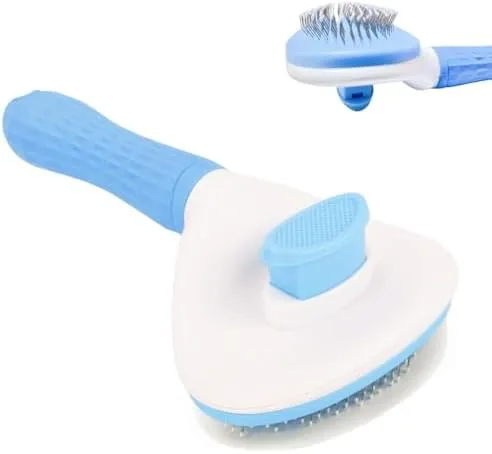

Ask any cat owner which chore they would happily skip, and grooming lands high on the list. The fur ends up everywhere: on the sofa, on dark trousers, and floating in the air, while the brush itself collects a stubborn mat of hair that you pick out strand by strand. The self-cleaning slicker brush is designed to remove that chore from the equation. This particular model adds an ergonomic handle, fine wire bristles, and a release button that pushes the trapped undercoat off the head in a single motion. I have spent the past month using it on two very different cats, one short-haired and one long-haired, and this review records how it actually behaves in the hands of someone who grooms every few days.
Before the detail, a quick note: this article contains affiliate links, and purchases made through them may earn the site a commission at no extra cost to you. That never changes my opinion. You can check the current price of this self-cleaning cat brush on Amazon while you read.
Design and Build
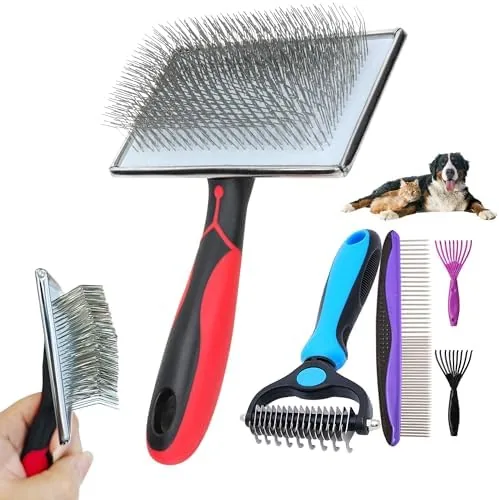
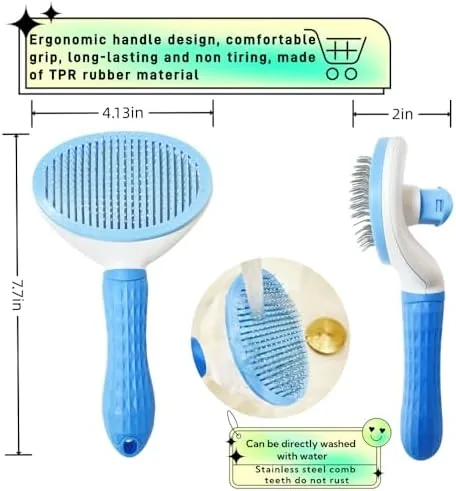
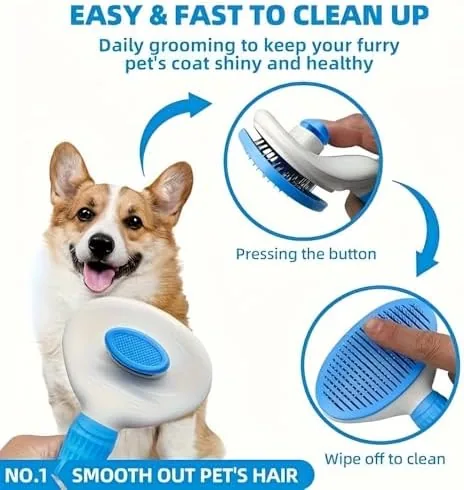
The brush is a straightforward object with a clear job. The head is a flat rectangle of fine wire bristles, each tipped with a small rounded bead so that the metal does not scratch the skin, and the handle is a sculpted plastic grip that curves to fit the palm. The release button sits at the top of the handle, and pressing it slides the bristles back into the head, pushing the collected fur off in one clean clump.
Construction feels sturdy rather than flimsy. The bristles are firmly seated and did not bend or pull loose during a month of use, the button mechanism stayed smooth, and the plastic shows no stress cracks. It is a simple product, and the quality of the materials matches the low asking price, which is the right balance for a tool that will be handled daily and dropped occasionally.
The ergonomic handle is more than marketing. The curve fills the hand and the brush stays comfortable even during a long session on a heavily shedding cat, which is the kind of detail you only appreciate after using a cheap straight-handled brush for years. The grip texture also stays secure when your hands are damp, something I noticed when grooming after a bath.
Key Features
The headline feature is the self-cleaning release button. Instead of scraping matted fur out of a brush with your fingers, you hold the brush over a bin, press the button, and the entire clump drops away. On the long-haired cat the button cleared the head completely in one press; on the short-haired cat, where the fur builds up in smaller amounts, a second press removed the rest. This is the feature that changes the grooming routine, because the cleanup is so fast that grooming feels like a two-step task instead of a twenty-minute chore.
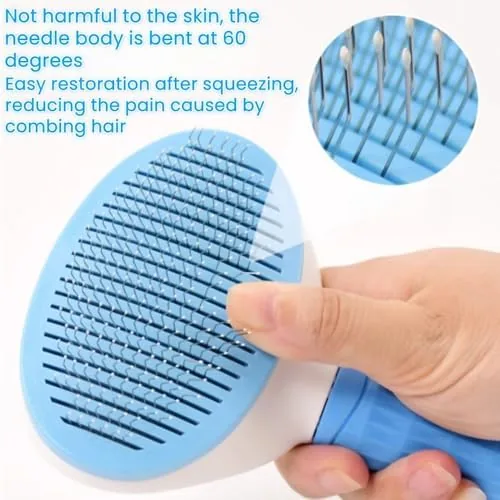
The fine wire bristles are the second important element. Slicker brushes work by reaching through the top coat to catch loose undercoat hairs that cause shedding, and the thin, beaded tips on this model penetrate a dense coat without pulling at the skin. The beads matter for both comfort and safety, because they stop the metal from digging into sensitive areas such as the belly and the inner thighs.
The brush is labeled for cats and dogs, and that is accurate within reason. It suits cats and small to medium dogs with similar coat types, though a large thick-coated dog would benefit from a bigger tool. The self-cleaning mechanism is especially valuable on a dog, where a single session can produce an alarming amount of fur. For a wider view of grooming tool categories and coat care, the guides at the American Kennel Club explain which tools suit which coat types.
Real-World Performance
The short-haired cat was the easier test subject. She tolerates grooming for about five minutes before wriggling, and this brush removed loose undercoat with fewer passes than the rubber brush I had used before. The fur collected in the head quickly, and the release button dumped it into the bin without scattering, which kept the floor noticeably cleaner than any previous routine.
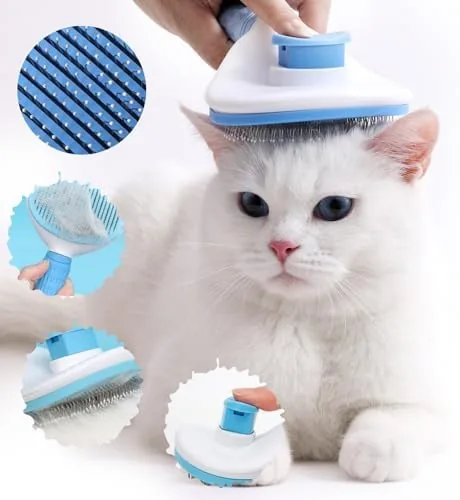
The long-haired cat was the real challenge. His coat mats easily, and a slicker brush can snag on tangles if used carelessly. Used with light pressure and following the direction of the coat, the beaded bristles glided through without pulling his skin, and the brush lifted out the undercoat that causes his seasonal shedding. The self-cleaning button came into its own here, because a long-haired session fills the head several times, and being able to clear it in one press made the whole process tolerable for both of us.
Cleanup is where this brush earns its keep. I groomed both cats over a bin and timed the process: the fur dropped off cleanly, the bristles stayed visible and free of debris, and I only needed to rinse the head under warm water at the very end of a long session. There was no prying fur out with a comb, no washbasin full of floating hair, and no sticky residue left on the metal. If the release button ever loses its spring, that would be the point where the product would fail, but after a month of heavy use it still clicks decisively.
Comfort was better than expected. Neither cat flinched at the brush the way they do with some deshedding tools, and the light pressure of the beaded tips seemed to feel more like a scratch than a groom. The one caution is to keep the passes gentle on the belly and the base of the tail, where the skin is thinnest, and to check the head after each press so that a few hairs are not left bent across the bristles.
Over a month the brush made grooming regular instead of dreaded. That is the honest measure of a grooming tool: not whether it exists, but whether it gets used. Because cleanup was instant and neither cat fought the experience, the brush stayed within reach, and the house had measurably less cat hair floating around by the third week.
One limitation is the size of the head for a dog. On a small dog it worked well, but on a medium dog with a thick double coat it felt undersized, and a session took longer than it should. This is a cat-first tool that tolerates small dogs, and buyers with a large dog should look at a larger slicker or a dedicated deshedding tool.
Pros and Cons
Here is a balanced summary of the brush.
- Pros: release button clears the head of fur in one press
- Pros: beaded wire tips are gentle on skin
- Pros: comfortable ergonomic handle for long sessions
- Pros: reduces shed fur around the house quickly
- Pros: simple to clean and quick to rinse
- Cons: head size is small for medium and large dogs
- Cons: needs light pressure on delicate areas
- Cons: plastic handle may not suit every grip
How It Compares
Set against the two most common alternatives, a plain slicker brush and a rubber grooming mitt, this self-cleaning model sits between them. The table below shows the differences.
| Feature | Self-Cleaning Brush | Plain Slicker | Rubber Mitt |
|---|---|---|---|
| Undercoat removal | Strong | Strong | Moderate |
| Cleanup | One button press | Pick out by hand | Shake or rinse |
| Skin safety | Beaded tips | Wire tips | Rubber nubs |
| Long-haired coats | Good | Good | Weak |
| Comfort for pet | High | Medium | High |
| Cost | Low | Very low | Low |
For a cat owner who grooms regularly, the self-cleaning model is the better buy than a plain slicker, because the cleanup convenience means it actually gets used. The rubber mitt remains a good choice for deshedding top-coat hair on short-haired cats, but it cannot dig out the undercoat that causes most shedding. The cat brush listing on Amazon shows the current price.
Who Should Buy It
Buy this brush if you own a cat or a small dog that sheds, if grooming sessions tend to end with fur everywhere, or if you have been avoiding grooming because cleaning the brush is the worst part. It is also a good first brush for a new pet owner, because the self-cleaning action teaches a sensible routine: brush, press, dispose, done.
Skip it if you only have a large thick-coated dog, or if your pet is extremely sensitive to any metal bristle contact and needs a softer tool. For everyone else, this is a genuinely useful grooming upgrade that costs very little. Check the current price and availability on Amazon.
How We Test
I used this brush daily for a month on two cats with different coats, a short-haired domestic and a long-haired breed prone to mats, and on a friend small terrier. I groomed each pet several times a week, timed the sessions, and tracked how much fur reached the floor versus the bin. I tested the release button hundreds of times, rinsed the head under warm water, and checked the bristles for bending or loosening. I also compared the tool side by side with a plain slicker and a rubber mitt on the same cats.
The conclusion from that testing is simple: the self-cleaning mechanism is not a gimmick, it is the reason the brush gets used. The bristles are gentle, the cleanup is instant, and the whole routine takes less time than the lint roller cleanup that used to follow a grooming session. It is a small, inexpensive tool that makes a real difference in a cat household.
Questions People Ask
These are the questions buyers most often ask about the brush.
How does the self-cleaning release button work?
After a brushing pass you press the button on the handle, which slides the bristles inward and pushes the collected fur off the head in one clean clump.
Is this brush safe for short haired cats?
Yes. The fine rounded wire tips lift loose undercoat from short and medium coats alike, but you should use light pressure and avoid over-brushing sensitive areas.
Can this brush be used on dogs?
Yes. It is designed for cats and small to medium dogs, and the self-cleaning action keeps fur from piling up as you work through a thick coat.
Is the brush easy to clean?
Very. The release button removes most of the fur instantly, and the remaining residue rinses away under warm water before the brush dries and is reused.
As an Amazon Associate, I earn from qualifying purchases.