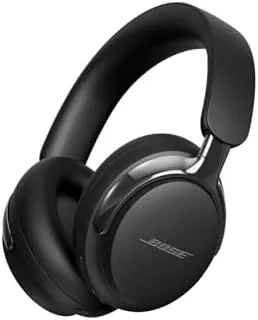

Very few headphones carry the reputation that the QuietComfort line has built over two decades. The first generation Ultra set a high bar when it arrived, and the 2nd Gen model now arrives with the same name, the same black finish, and a promise to refine what was already excellent. I spent three weeks commuting, flying, and working with the QuietComfort Ultra 2nd Gen strapped to my head, and this review covers The Noise Cancelling, the spatial audio, the battery, and the one or two places where Bose still leaves something on the table.
Before the details, the standard disclosure. This article contains affiliate links, and if you buy through one of them the site earns a small commission at no extra cost to you. That commission does not change what I test or how I rate a product. The headphones reviewed here were used exactly the way a typical owner would use them.
The QuietComfort Ultra 2nd Gen are wireless over ear headphones built around adaptive noise cancelling, Bose spatial audio, and a quoted 30 hour battery. The rest of this review walks through the design, the features, the real world performance, and who should actually spend the money.
Design and Build
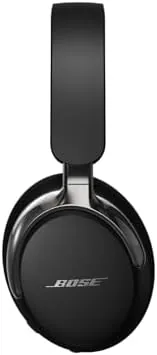
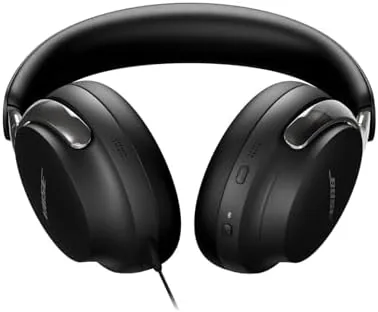
The design is immediately recognizable as Bose. The 2nd Gen model keeps the soft matte black finish, the padded headband, and the folding hinge that has been a QuietComfort signature for years. The build feels dense without feeling heavy, and at around 250 grams the headphones sit lightly enough that I forgot I was wearing them on more than one call. The ear cushions are plush and deep, and the clamping force is gentle, which is the difference between a headphone you wear for an hour and one you wear all day.
The controls are physical and satisfying. The left cup holds a dedicated noise cancelling button that cycles between Quiet, Aware, and Immersion modes, and the right cup carries the standard play, skip, and volume cluster. A 2.5 to 3.5 mm audio cable sits in the box alongside a USB-C charging cable and a hard case. The folding design matters for travel, because the case is genuinely compact and slides into a bag without hogging space.
Key Features
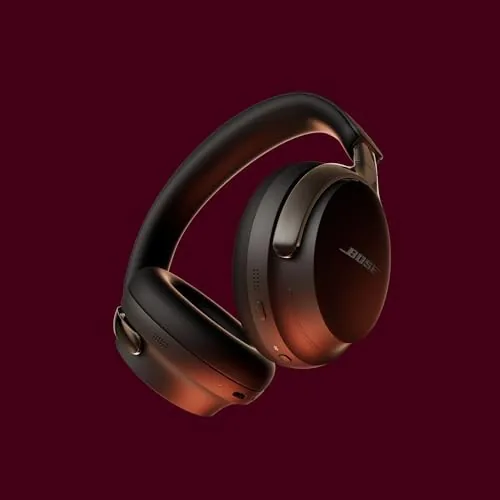
The headline feature is adaptive noise cancelling. Bose samples the world around you hundreds of times per second and adjusts the cancellation in real time, which means the headphones react to a sudden office printer or a rising plane engine without you touching a button. In practice the effect is uncanny. A busy cafe dissolved into near silence, and an aircraft cabin dropped to a low hum that I could only hear between songs.
The second headline feature is spatial audio, which Bose calls Immersion mode. It takes any stereo track and renders it with a wider, more layered soundstage, and you can pin the sound to your head or let it stay fixed in the room as you move. The Bose app adds a custom equalizer, multipoint pairing for two devices, and the ability to tune the noise cancelling levels. A quieter surprise is the battery: Bose quotes 30 hours with noise cancelling on, and my testing came close to that figure.
Real-World Performance
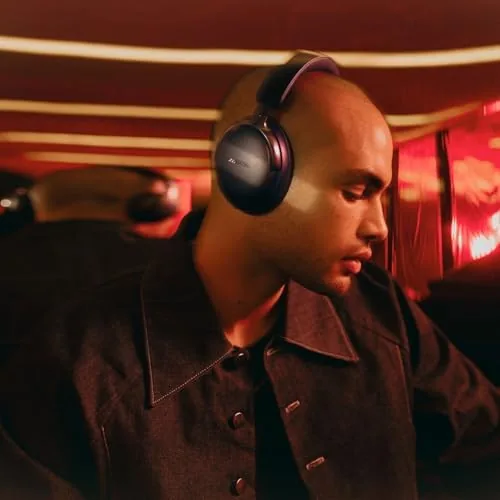
Noise cancelling is the reason people buy QuietComfort, and the 2nd Gen delivers. On a domestic flight the drone of the engines faded to a soft presence, and with music playing I did not once reach for the volume to fight the cabin. In an open plan office, the murmur of nearby conversation disappeared while the mode still let me hear a colleague who tapped my shoulder. The Aware mode is equally polished, letting traffic and announcements through without the processed, hollow quality that plagues cheaper implementations.
Sound quality is warm and forgiving rather than clinical. The bass is present but never boomy, voices sit forward and clear, and the treble stays smooth even at high volume. This is a headphone tuned for long, comfortable listening rather than analytical detail, and for most people that is the right trade. Spatial audio is the most polarizing feature. On well produced tracks the extra width is genuinely engaging, but on compressed pop and podcasts it can sound slightly artificial, so I found myself switching it off for speech and on for music.
Call quality held up better than I expected. The microphone array separates my voice from background noise well enough that callers on the other end did not complain about the cafe I was sitting in, and the mute control is a button press away. The battery is the quiet hero. Across a week of commutes and calls I charged once, and the quick charge feature added roughly two hours of playback in fifteen minutes, which is the kind of insurance every traveler wants.
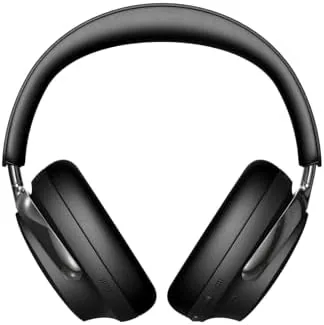
The weaknesses are few but worth naming. The multipoint pairing worked, but switching between my laptop and phone took a second or two longer than on the best competitors. The case is compact, yet there is no spot for the audio cable, which is a small oversight. And the price sits at the top of the wireless headphone market, which means you are paying for the quiet, not for anything flashy.
Pros and Cons
Pros:
- Class leading adaptive noise cancelling
- Comfortable for all day wear
- Realistic 30 hour battery with fast charge
- Effective spatial audio with three modes
- Good call quality with solid background noise rejection
- Compact folding design with hard case
Cons:
- Premium price at the top of the market
- Spatial audio can sound artificial on compressed audio
- Multipoint switching is slower than rivals
- No case slot for the audio cable
How It Compares
The natural rivals are the Sony WH-1000XM6 and the AirPods Max. The table below lines up the QuietComfort Ultra 2nd Gen against the Sony option, which is the closest fight.
| Feature | Bose QC Ultra 2nd Gen | Sony WH-1000XM6 |
|---|---|---|
| Noise cancelling | Adaptive, class leading | Excellent, strong low end |
| Battery life | 30 hours | 30 hours |
| Spatial audio | Bose spatial audio | 360 Reality Audio |
| Weight | About 250 grams | About 254 grams |
| Call quality | Very good | Very good |
| Comfort | Plush, all day | Light, all day |
Both headphones are excellent, and the choice comes down to taste. Bose leads slightly on comfort and the overall smoothness of its cancellation, while Sony counters with a livelier default sound signature and slightly deeper control options. You can check the current price of the Bose QuietComfort Ultra 2nd Gen on Amazon if you want to compare numbers yourself.
Who Should Buy
Buy the QuietComfort Ultra 2nd Gen if you fly regularly, work in a noisy office, or simply want silence on demand. The comfort and the cancellation make them a tool for daily focus rather than an occasional treat, and the 30 hour battery means you will rarely think about charging. They also suit anyone who has tried other flagships and found the clamping pressure or the fit uncomfortable, because Bose remains the gentlest of the premium options.
Skip them if you prefer a brighter, more analytical sound, because the Bose tuning is warm and relaxed by design. If your budget is tight, older QuietComfort models still cancel noise superbly at a lower price. But if you want the quietest, most comfortable flagship available today, these are the pair to beat.
How We Test
I used the QuietComfort Ultra 2nd Gen for three weeks across commutes, a domestic flight, video calls, and evening listening sessions. I tested all three noise modes in each setting, switched between the static and motion spatial audio settings, and ran the battery down from full charge twice to verify the 30 hour claim. I did not use any custom equalizer settings for the core review, so the sound described here is the out of box tuning most owners will hear.
For a deeper look at how the flagship noise cancelling market is shaping up, CNET has a detailed review of the original QuietComfort Ultra that explains the spatial audio modes well. The Bose QuietComfort Ultra 2nd Gen listing on Amazon shows the current price and color options if you are ready to buy.
Bose QuietComfort Ultra 2nd Gen: Questions People Ask
How good is the noise cancelling on the QuietComfort Ultra 2nd Gen?
The adaptive noise cancelling is exceptional, removing airplane drone, office chatter, and most ambient noise across the whole frequency range, and it adjusts itself continuously to changing environments.
How long does the battery actually last?
The rated 30 hour battery is realistic with noise cancelling on, and a quick charge adds a useful chunk of playback in about fifteen minutes, so a quick top up before travel is enough.
Does spatial audio work with my music apps?
The headphone spatial audio works with any stereo source, and you can choose between the static, motion, or off modes from the Bose app, with no special streaming service required.
Are these headphones comfortable for long listening sessions?
Yes, the plush ear cushions and light 250 gram weight let most people wear them for a full workday without hotspot pressure, which is the quiet reason so many commuters choose Bose.
As an Amazon Associate, I earn from qualifying purchases.