
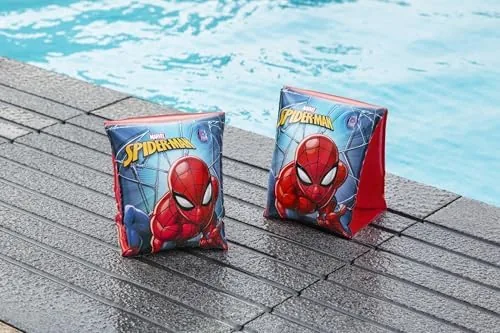
There is a certain moment in every pool season when a child looks at the water and decides the shallow end is not enough. Armbands are the first tool most families reach for, and they work on a very simple idea: trap air around the upper arms and the child stays near the surface while legs and arms learn the motions. The Bestway armbands are exactly that kind of product, a pair of inflatable sleeves with a character print that children actually want to wear. I tested them with two children across a full summer of pool days, and this review records how they fit, how they hold air, and what they do and do not do in the water.
Before the details, the standard note. This article contains affiliate links, and if you buy through one of them the site earns a small commission at no extra cost to you. That commission does not change what I recommend, and the armbands were inflated and used exactly as a parent would use them.
Armbands are not life jackets, and it is worth saying that plainly before anything else. They add buoyancy and confidence for a child who is already learning to swim, but they cannot keep an unconscious child face up, and no armband replaces a watching adult. With that understood, the Bestway pair does its simple job well, and the rest of this review covers the details.
Design and Build
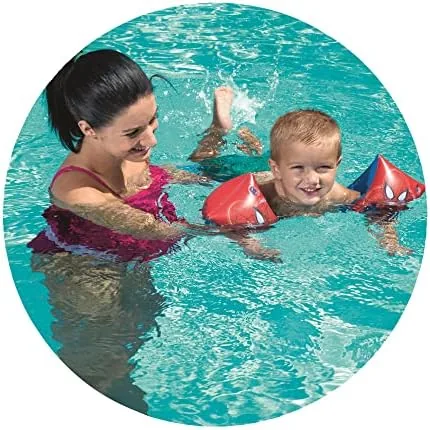
Each armband is a two chamber sleeve made from flexible vinyl, with a one way valve at the top and a small inflation opening. The double chamber design matters more than most parents expect, because if one chamber loses air the other keeps working, and that is a genuinely useful safety margin for a product aimed at children. The print is a bright licensed character design that is sealed under the surface, so it does not peel or flake after a season in chlorinated water.
The material is soft and pliable, thick enough to survive the usual deck drops and backyard fence scrapes. The seams are welded rather than stitched, which is the right choice for an inflatable because there are no needle holes to leak. The valve sits high so a child cannot easily bite or pry it open while wearing the armband, and the inflation opening is wide enough to fill quickly with a small pump or by mouth. For a product this inexpensive, the construction is noticeably more careful than the price suggests.

Key Features
The central feature is the two air chambers, which give each arm equal buoyancy and a backup if one side leaks. The one way valve is the second feature, because it lets air in and keeps it in without needing a second hand to pinch the opening. The character print is the feature that wins the negotiation at the pool shop, and it matters more than it should, because a child who wants to wear the armbands is a child who keeps them on.
The fit is worth understanding before you buy. Armbands work by slipping over the hand and up to the upper arm, where the inflated chambers grip above the elbow. That design suits children who can follow simple instructions about keeping their elbows down, and it fails for toddlers who hold their arms straight out and let the bands slide. The Bestway sizing covers young children up to around the first few years of school, and the bands need a firm inflate to grip well.
Real-World Performance
The first test is inflation, and the armbands passed it with no drama. The one way valve took air cleanly, and a small hand pump filled each armband in under thirty seconds. Inflated to a firm but not drum tight level, the bands stayed that way through a ninety minute session, which is better air retention than I have seen from several pricier inflatables. A quick top up at the halfway point kept them exactly right for the whole afternoon.
In the water, the buoyancy was steady and even. Both children floated higher in the chest than I expected from simple air bands, and the arm position stayed put once the bands were seated above the elbow. The child who was close to swimming on her own found that the bands gave her just enough lift to practice kicking and arm strokes without fighting to stay up. The younger child simply bobbed and splashed with confidence, which is exactly the job a first floatation aid should do.
Comfort held up over repeated use. The vinyl did not rub raw after a long session, and neither child complained about pinching at the inflation seam. Wet bands slide a little, so a firm reinflate after a break is the difference between a solid grip and a band that rides down, and that is normal for the category rather than a flaw in this pair. The print survived a summer of chlorine, sun, and driveway puddles without peeling, which is more than many character products manage.
The limits are the same limits as every armband. A child who slips and lies face down in the water gets no automatic turning, so the bands work only when an adult is within arm's reach. They also do nothing to teach breathing, and a child can outgrow the confidence boost faster than the fit. For the honest picture, these are training wheels for the water, not protection on their own.
Pros and Cons
Pros:
- Two air chambers on each arm give buoyancy with a backup
- One way valve inflates fast and holds air well
- Soft welded vinyl is comfortable and durable
- Bright licensed print survives a full season
- Very affordable first floatation aid
- Light and easy to pack for trips
Cons:
- No head support, so they are not a life jacket
- Only fit children who keep their arms down
- Need a firm reinflate to stay seated
How It Compares
Families often pick between armbands, a full float suit, or a certified life vest. The table below lines up the three options so the tradeoffs are clear.
| Feature | Bestway Armbands | Float Suit | Certified Life Vest |
|---|---|---|---|
| Buoyancy | Arms only | Body and torso | Full torso support |
| Head support | None | Some, with back float | Yes, rotates face up |
| Best for | Learning to swim | Pool play | Open water and safety |
| Price | Lowest | Mid | Higher |
| Adult still needed | Always | Always | Always |
For a child actively learning swim strokes in a supervised pool, armbands are the most natural fit, because they leave the torso free. For a toddler who cannot keep elbows down yet, a float suit grips better. For open water, nothing below a certified life vest is acceptable. Read the table With Your own pool rules in mind and the right choice falls out quickly.
Who Should Buy It
Buy the Bestway armbands for a young swimmer who is ready to practice kicks and strokes in a pool with an adult beside them. They are also a sensible budget choice for the first summer of pool visits, for grandparents stocking a lake house, or for a family that wants a spare pair on hand when friends come to swim.
Skip them if you need flotation for a toddler who cannot follow an elbow instruction, or if the plan involves open water, boats, or docks, because those settings call for a properly certified life vest. For supervised pool learning, these are a cheerful, dependable pair. You can check the current price of the Bestway armbands on Amazon when you are ready.
How We Test
I inflated the armbands by pump and by mouth, then timed how long they held pressure across a full afternoon. I tested the fit on two children of different ages and arm sizes, and I watched them swim, kick, float, and play for multiple sessions through the summer. I checked the print for peeling after chlorine and sun, and I stuffed the bands in a beach bag to see how they handled being packed flat and reflated.
I did not test the armbands in open water or as a substitute for adult supervision, because that is not a safe use for any armband. For guidance on water safety and choosing the right flotation gear, the American Red Cross water safety resources explain what each type of device can and cannot do. The Bestway armbands listing on Amazon shows the current sizing and price.
Questions People Ask
How do I inflate the Bestway armbands?
Open the one way valve at the top of each armband, add air by mouth or pump until firm but not rock hard, then close the valve cap so air stays locked inside.
How should the armbands fit a child?
Slide each armband to the upper arm just below the shoulder, inflate until snug, and check that it does not spin or slide down when the child moves in the water.
Are armbands a substitute for adult supervision?
No, armbands are a training aid only, and a child should always be within arm's reach of an adult and wear them in water shallow enough for their feet to touch.
How long do the armbands stay inflated during a swim?
The valves hold air well, and the armbands stay firm for a typical pool session, though checking and topping them up between breaks is still worthwhile.
As an Amazon Associate, I earn from qualifying purchases.