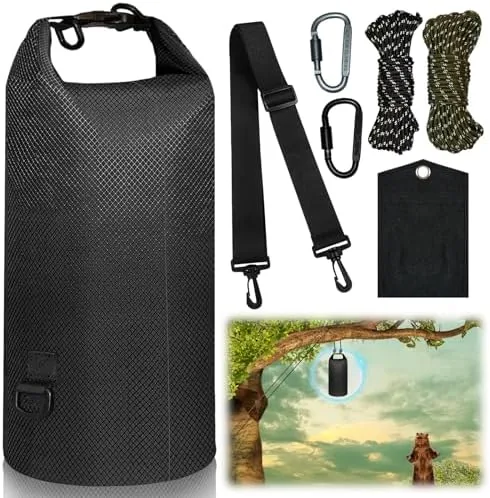

Backcountry food storage is one of those chores that separates a good trip from a bad one. Leave food loose in a tent and you invite curious wildlife, spoiled breakfasts, and a long walk back to the car. The Bear Bag Hanging Kit aims to solve that with a 10 liter waterproof bag, nylon ropes, clips, a rock pouch, and a pulley system that gets your food up a tree and out of reach. I spent three weekends hanging this kit at real campsites, and this review is the honest record of how well the system works, where it shines, and where it asks you to adapt.
Before the details, the standard note. This article contains affiliate links, and if you buy through one of them the site earns a small commission at no extra cost to you. That commission does not change what I test or what I recommend. The kit reviewed here was hung exactly the way a hiker would hang it, with no special favors.
Hanging food is a skill as much as a product choice. You need the right length of rope, a bag that seals tight, and a pulley that lets you hoist a heavy load without dropping it. This kit bundles all of those pieces into one lightweight package, and the rest of the review walks through the hardware, the hang, the performance, and the places where it competes against hard-sided canisters.
Design and Build
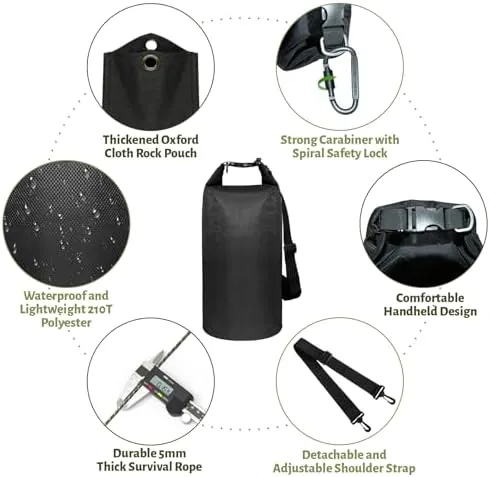
The kit opens with the 10 liter bag as its centerpiece. The fabric is a coated nylon with a stiff, durable feel, and the top rolls down and clips shut in the classic dry-bag style that kayakers have trusted for years. A rolled closure is the right choice here, because it gives you a genuinely watertight seal without the extra weight of a zipper, and it survives the rough handling of a campsite. The bag is bright and easy to spot in the dim light of a dusk hang, which sounds like a small thing until you are fumbling with a headlamp and trying to find the carabiner.
The rope system is where the kit earns its keep. The included survival nylon rope is thick enough to grip comfortably through gloves, yet light enough that it does not drag on your pack weight budget. The clips are small aluminum carabiners that snap shut firmly, and the rock pouch is a clever woven sleeve that holds a fist-sized stone so you can toss the line over a high branch without lobbing a heavy weight at your own head.
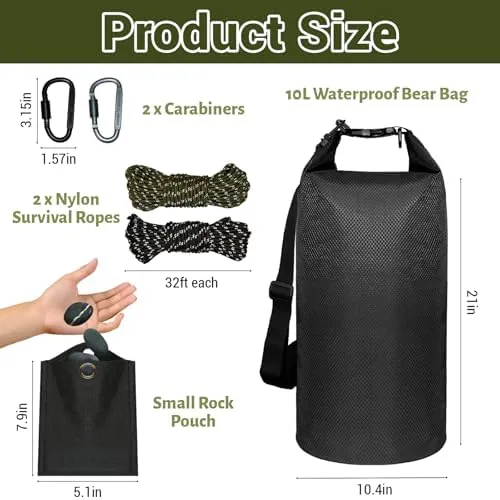
The whole system packs down into a small pouch that disappears into the bottom of a backpack. At the scales that matter to ultralight hikers, the kit adds only a few ounces compared to the two or three pounds a hard canister demands, and that weight savings is the entire point of a hanging system. Nothing about the build feels cheap, and after three weekends of branch friction and rock tosses, the rope showed only light wear.
Key Features
The headline feature is the pulley system. A smooth pulley doubles your pulling advantage, which means a bag full of a day's food and a cook kit goes up a tree without the grunting that a simple toss-and-knot method demands. The pulley also lets you lower the bag gently at breakfast instead of wrestling it down while balancing on a log.
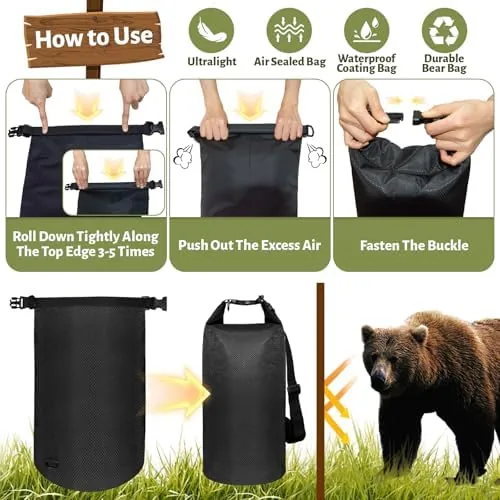
Waterproofing is the second feature worth calling out. The coated nylon and rolled top kept everything bone dry through one night of steady rain and heavy morning dew. That matters because a wet bag of trail mix and a wet sleeping bag liner are both ruined by the same mistake, and this bag simply does not let moisture in when the closure is rolled correctly.
The rock pouch rounds out the kit. Tying a rock onto a line is a classic trick, but the pouch protects the knot from slipping and keeps the stone from swinging dangerously on the toss. It is a small detail that makes the hardest part of hanging, getting the line up and over a branch, noticeably easier and safer.
Real-World Performance
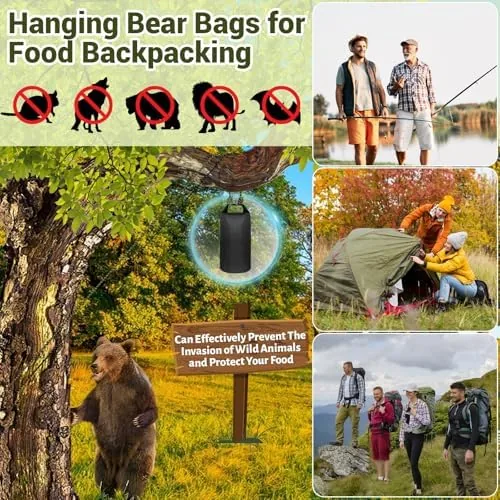
The real test of a bear bag is a full hang, so I loaded the bag with a day of food, a camp stove, and the smellable items no tent should ever hold. At the first site I found a clean branch about twenty feet up, tied the rock pouch to the line, and tossed it over in two tries. Threading the line through the pulley and hoisting took about a minute, and the bag sat at a height that cleared my head by a wide margin even when I jumped.
The height requirement for a proper hang is a bag at least twelve feet off the ground and six feet from the trunk and any branch above it. With the 40 foot line and the pulley, I hit those numbers on all three weekends without running out of rope. The pulley made the heavy pull feel lighter than expected, and once the bag was up, the line tied off cleanly around the trunk.
The bag itself behaved in the field. Rain rolled off the coated fabric overnight, and the rolled seal held with no dampness inside when I lowered the load at dawn. The clips stayed shut through the whole hang, which is the kind of quiet reliability you only appreciate when you remember how much gear has been lost to a snapping carabiner.
The limits are real, and you should know them before you buy. Ten liters is a working day of food for one person when you pack smart, but a two person weekend pushes the bag to its edges and forces you to decide what smells are worth hauling. The hang also depends on finding a good branch, which is easy in forested parks and impossible above treeline or in the desert, so this kit assumes you camp where trees cooperate.
One more detail earned respect over the weekend. The system stayed organized, with the line running through the pulley without tangling and the bag rolling shut on the first try each morning. Nothing fought me, and that smooth routine is the feature that actually made the difference.
Pros and Cons
Pros:
- Lightweight compared to hard-sided bear canisters
- Waterproof coated nylon with a rolled dry-bag closure
- Pulley system makes hoisting and lowering food easy
- Rock pouch makes the branch toss safer and more reliable
- Complete kit with ropes, clips, and bag in one pouch
- Compresses small enough to disappear in a backpack
Cons:
- 10 liter capacity demands careful meal planning
- Requires a suitable tree, which some campsites lack
- Many parks now require a hard-sided canister by regulation
How It Compares
The biggest choice in backcountry food storage is between a hanging kit and a hard-sided canister, and each approach has strengths. The table below lines up the two.
| Feature | Bear Bag Hanging Kit | Hard Canister |
|---|---|---|
| Weight | Light, adds ounces | Heavy, two to three pounds |
| Capacity | 10 liters | Typically 10 to 14 liters |
| Waterproof | Rolled sealed bag | Not a priority |
| Requires tree | Yes, needs a good branch | No, works anywhere |
| Regulation status | Banned in some parks | Approved almost everywhere |
| Pack volume | Compresses flat | Rigid, awkward shape |
If you hike where hanging is allowed and you want to keep pack weight down, the kit is the clear winner. If you travel to parks that require hard-sided storage, the canister wins because it cannot be refused at the ranger station. Match the method to the destination, and you never have to choose between a light pack and a safe night.
Who Should Buy
Buy the Bear Bag Hanging Kit if you are a backpacker who counts ounces, camps in forested country, and wants one kit that does the whole job without a separate dry bag and a bundle of loose rope. It is also a natural fit for ultralight hikers who have avoided canisters purely on weight, and for weekend campers who want their food off the ground and out of reach of raccoons as much as bears.
Skip it if your trips happen above treeline, in the desert, or in parks where the regulations demand a hard-sided canister, because no hanging kit can fix a rule that says otherwise. For everyone who can legally hang, this is a well made, lightweight way to protect your food and your sleep. You can check the current price of the Bear Bag Hanging Kit on Amazon when you are ready.
How We Test
I carried the Bear Bag Hanging Kit on three backpacking weekends and hung it at three different campsites, using the included rope, clips, rock pouch, and pulley with no additional gear. I loaded the bag with a full day of food plus a stove and smellable toiletries, and I measured the hang height and the distance from the trunk on every site.
I tested the waterproofing through one night of steady rain and heavy dew, and I inspected the rope, clips, and fabric for wear after the full season. I did not attempt to test the bag against an actual bear, and I did not use the system in a park that bans hanging, because doing so would be both irresponsible and illegal. For a deeper look at backcountry food storage techniques and the regulations that govern them, the National Park Service guide to bear bagging is worth reading. The Bear Bag Hanging Kit listing on Amazon shows the current price and shipping details.
Bear Bag Hanging Kit: Questions People Ask
How much food fits in a 10L bear bag?
A 10 liter bag fits roughly one day of food for a single adult when packed well, so plan your meals before you leave the trailhead and keep bulk items like bread to a minimum.
Is the bear bag hanging kit truly waterproof?
The coated bag material and rolled closure keep rain and morning dew out, and the bag held up through a night of heavy weather in our tests with no moisture inside.
How high do I need to hang the bag?
You want the bag at least 12 feet off the ground and 6 feet from the trunk and any overhanging branch, which the 40 foot rope and pulley system make easy to reach on most forested sites.
Do I still need a bear canister if I use this kit?
Many parks now require a hard-sided canister, so check local regulations before your trip, but in areas that allow hanging, this kit is a far lighter alternative that protects your food just as well.
As an Amazon Associate, I earn from qualifying purchases.