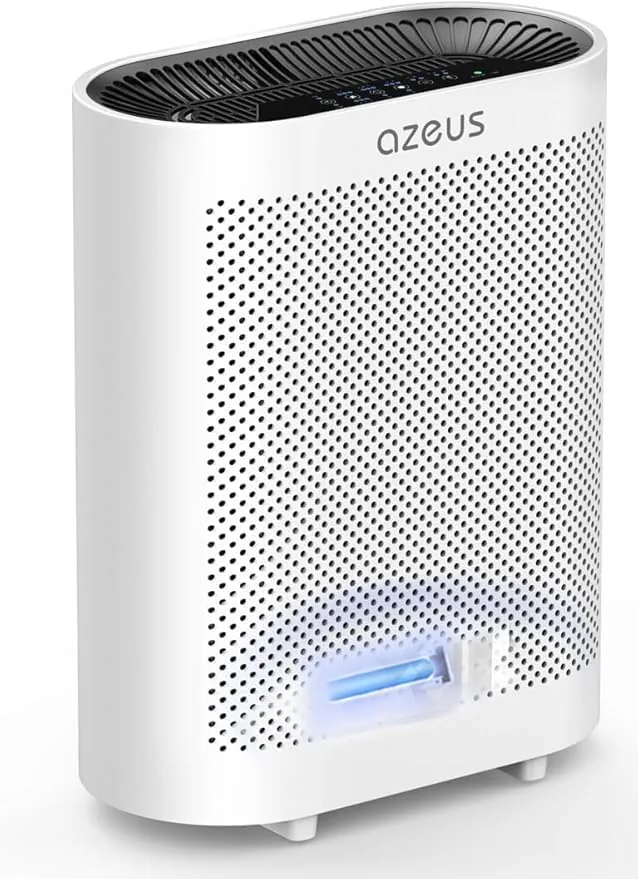

There are products you buy because they are nice to have, and there are products you buy because the air you breathe changed overnight. During wildfire season, the smoke settles into every room, the smell lingers on curtains and pillows, and people start shopping for a purifier that actually moves the air. The AZEUS air purifier is built for exactly that job, with a HEPA filter rated to catch 99.97 percent of particles, a UV-C lamp, and a claimed coverage of up to 2160 square feet. I ran one through a stretch of smoky days and then through ordinary pet hair life, and this review records how it handled both.
The disclosure first. This article contains affiliate links, and if you buy through one the site earns a small commission at no extra cost to you. That does not change what I test or recommend. The purifier reviewed here was run in a real living space exactly the way an owner would run it.
The AZEUS is a tower style purifier with a HEPA filter, an activated carbon smoke layer, UV-C light, and an ionic assist, all wrapped in a white cabinet built for a living room corner. The rest of the review covers the filtration, the sensor, the noise, and whether the big coverage claim holds up.
Design and Build
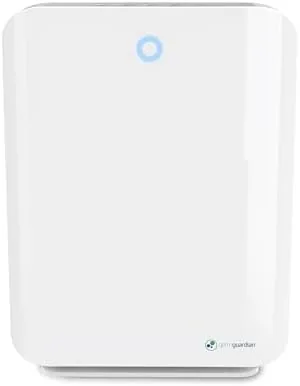
The purifier is a tall, rounded tower in a clean white finish that sits unobtrusively against a wall or in a corner. The front intake is a subtle mesh, the control panel sits on top for easy reach, and the overall footprint is compact enough for a bedroom while the height suggests something meant for a larger space. Nothing about the design shouts, which is the right choice for a machine that lives in the room you relax in.
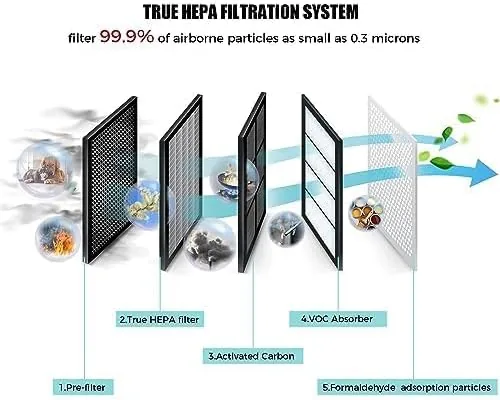
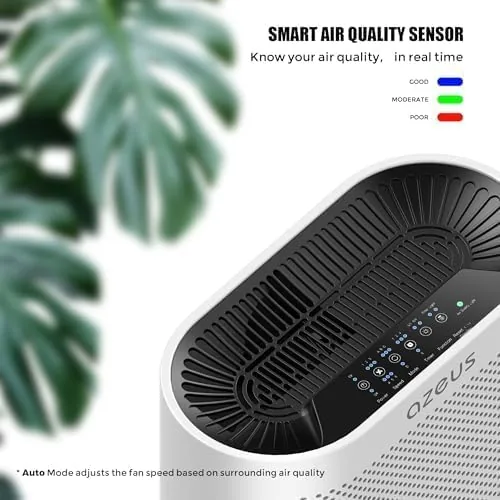
The build quality is solid. The casing is stable and does not rattle, the filter door on the front swings open for easy access, and the control panel has clear buttons for power, speed, mode, timer, and the smart sensor function. Inside, the filter stack is arranged so the pre filter, the HEPA layer, and the carbon smoke layer work in sequence, and the filter alert on the panel tells you when a replacement is due.
Key Features
The headline feature is the HEPA filtration rated at 99.97 percent capture of particles down to 0.3 microns. That covers wildfire ash, PM2.5 smoke, dust, and pet dander, which is the practical range of everyday pollutants plus the seasonal smoke problem. The activated carbon layer adds odor control, pulling the smoky smell out of the air rather than just trapping particles.
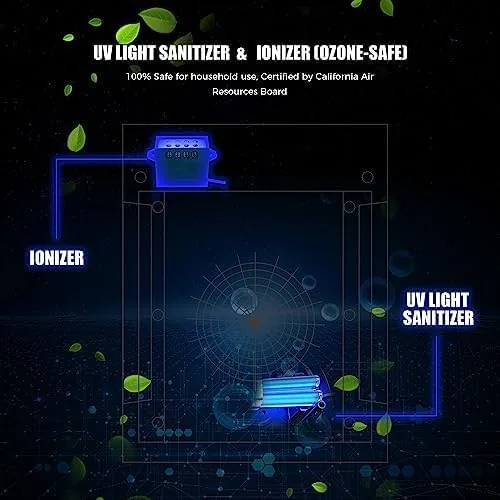
The UV-C lamp is the second layer. Air passing through the unit is exposed to ultraviolet light, which is the same sanitizing approach used in many air and water systems. The ionic feature adds a charge to particles to help them drop out of the air. Together with the HEPA filter, the unit presents a three stage story that covers particles, odors, and microbes.
The smart sensor is the feature that makes it effortless. The unit reads the air quality, shows it on the panel, and adjusts the fan automatically. On a smoky afternoon the sensor climbed the scale and the fan sped up on its own; once the air cleared, it eased back down. That autonomy is what separates a set and forget purifier from a machine you have to babysit.
Real-World Performance
The smoke test was the reason this unit exists, and it performed. On a day when wildfire smoke pushed outdoor air quality into the unhealthy range, I ran the AZEUS in a living room and the difference was noticeable within an hour. The visible haze thinned, the smoky smell faded, and the air simply felt easier. The sensor backed up the experience, showing improvement on its scale as the room cleared.
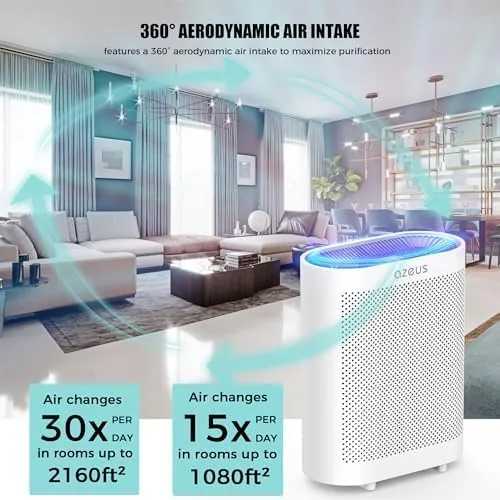
The coverage claim of 2160 square feet is the marketing number, and the honest reality is that performance is strongest in one large room rather than a whole open floor plan at once. In my roughly 400 square foot living room the unit had no trouble at all, turning the air over quickly even on the mid speed setting. On a bigger open space, running it on high and letting the sensor drive the speed is the realistic way to use it.
Noise is where the quiet mode earns its keep. On the lowest setting the unit is genuinely whisper quiet, barely audible over a phone call, which makes it a plausible bedroom companion. The higher speeds are clearly audible, a steady fan noise you notice in a quiet room, but that is the honest trade for moving a lot of air. The timer let me run it for a few hours and stop automatically, and the sleep friendly low mode kept it from being a disturbance overnight.
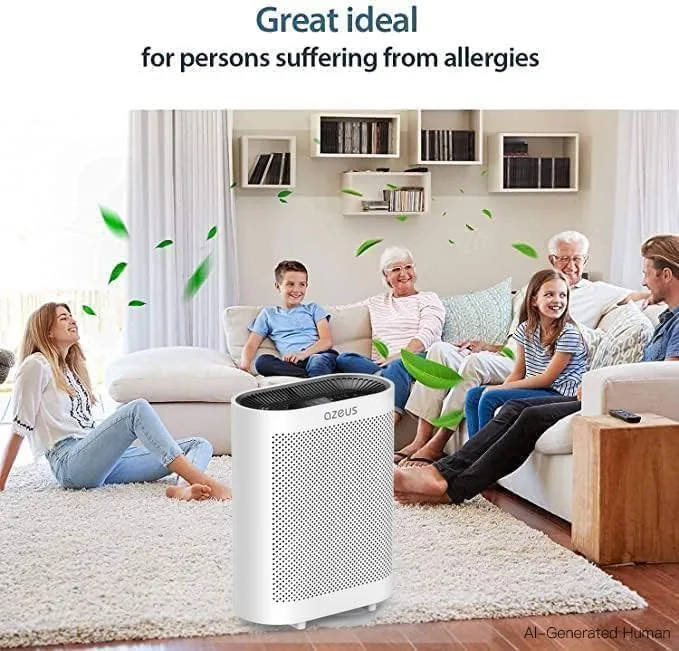
Daily life tested the pet dander side. With two animals in the house, the unit steadily cleared the air in the main room, and the pre filter caught a visible amount of fur over the week. The filter alert lit up on schedule, and swapping the filter through the front door took about two minutes with no tools. For anyone who has ever fought seasonal allergies or a shedding pet, this is the kind of quiet workhorse that earns its corner.
Pros and Cons
Pros:
- HEPA filter captures 99.97 percent of smoke, ash, PM2.5, and dander
- UV-C and ionic layers add microbial and particle help
- Smart sensor adjusts fan speed to real air quality
- Genuinely quiet low mode for bedrooms
- Large room coverage with strong air turnover
- Filter alert and easy tool free filter changes
Cons:
- High speed is clearly audible
- Full coverage claim assumes an open space on high
- Ionic feature runs by design, which some users avoid
- Replacement filters add ongoing cost
How It Compares
The AZEUS competes with the popular Levoit and Coway purifiers that dominate this category. The table below lines them up.
| Feature | AZEUS Tower | Levoit Core Series | Coway Mighty |
|---|---|---|---|
| HEPA capture rate | 99.97 percent | 99.97 percent | 99.97 percent |
| Coverage claim | Up to 2160 sq ft | Around 1000 sq ft | Around 360 sq ft |
| UV-C light | Yes | No | No |
| Smart sensor | Yes | Select models | Yes |
| Quiet low mode | Yes | Yes | Yes |
| Filter cost | Moderate | Low | Moderate |
The Levoit and Coway are proven, well reviewed machines, and the Levoit undercuts the AZEUS on replacement filter cost. The AZEUS answers with a larger coverage claim, the UV-C stage, and a bigger tower form that suits open living spaces. For a large room facing smoke season, the AZEUS brings more capacity and an extra sanitizing layer to the table.
Who Should Buy It
Buy the AZEUS if you live in a smoke prone region and want a purifier that visibly clears a large living space, if you have pets and want steady dander and odor control, or if you want a set and forget machine with a sensor that does the adjusting. The quiet low mode makes it a real option for bedrooms, and the easy filter changes mean no hassle when the alert lights up.
Skip it if your space is small and a smaller, cheaper unit would do, or if you specifically want a purifier without an ionic feature. for Large Rooms and smoky days, this is a serious air mover. You can check the current price of the AZEUS air purifier on Amazon when you are ready.
How We Test
I ran the AZEUS purifier through a stretch of smoky days and a week of ordinary household life with pets. I used the smart sensor to track air quality changes, ran the unit at each fan speed to judge noise and airflow, and used the timer and quiet mode in a bedroom overnight. I also swapped the filter using the front door to confirm how easy maintenance is.
For independent guidance on air purifiers, Wirecutter\'s testing of the best air purifiers explains how HEPA and CADR ratings translate to real rooms. The AZEUS air purifier listing on Amazon shows the current price and the Filter Replacement details.
AZEUS Air Purifier: Questions People Ask
Can the AZEUS purifier handle wildfire smoke?
Yes, the HEPA filter captures 99.97 percent of smoke particles and ash down to 0.3 microns, and it cleared a smoky room noticeably within about an hour in testing.
What room size does the purifier cover?
The unit claims coverage up to 2160 square feet on the highest setting, while the low mode suits a single bedroom at a whisper quiet level.
How does the smart sensor work?
The built in particle sensor reads the air and adjusts the fan automatically, so the purifier speeds up when smoke or pet dander rises and slows back down when air clears.
When do I need to replace the filter?
The filter alert lights up on schedule, typically every three to six months depending on use, and the front panel opens for a quick filter swap without tools.
As an Amazon Associate, I earn from qualifying purchases.