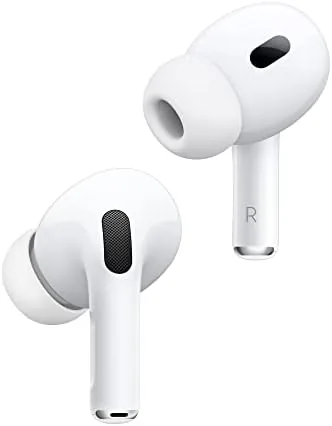

There is a reason the AirPods Pro have become the default in-ear pair for anyone who carries an iPhone, and the USB-C version of the second generation is the fullest expression of that idea. This review is the record of five weeks with the AirPods Pro 2 USB-C as my only in-ear pair, on commutes, in a noisy office, and in the quiet end of the day. The honest verdict is that the best selling Earbuds in the world also happen to be among the best, and the USB-C change quietly removes a small but real annoyance for anyone with a modern laptop or phone.
Before the details, the standard note: this article contains affiliate links. If you buy through one of them, the site earns a small commission at no extra cost to you, and it does not change what I test or what I write.
Design and Build
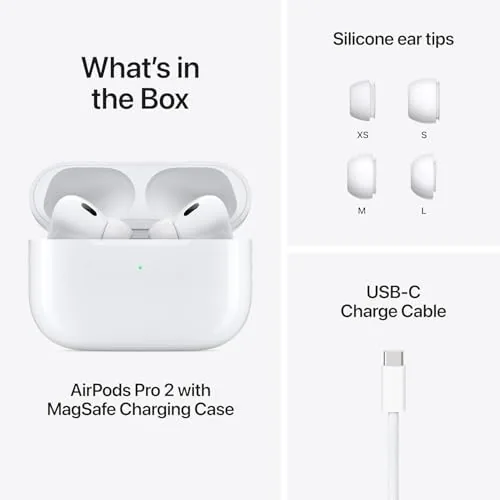
The AirPods Pro 2 keep the short-stem silhouette and soft silicone tips, now with extra-small and extra-large sizes in the box for a wider range of ears. The build is reassuringly light, and the stem's squeeze sensor is a clean, satisfying click rather than a set of fiddly taps. After five weeks my pair still seals comfortably, which is the first test any earbud has to pass.
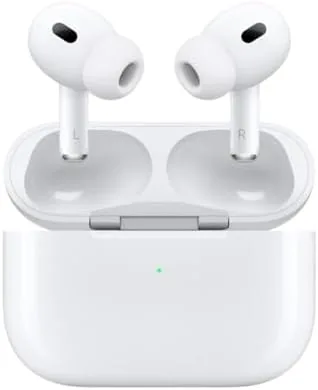
The headline change here is the USB-C case, which charges on the same cable as my laptop and phone. That is a relief in practice, and the case still opens with a soft magnetic snap and holds a charge through a full working week of daily use. There is also a built-in speaker in the case that helps you find it when it is lost, a small touch I used more than I expected, and a lanyard loop if you prefer to hang it.
Both the case and the buds are rated IP54, so dust and sweat are handled well for ordinary days, though nothing here is meant to be immersed.
Key Features
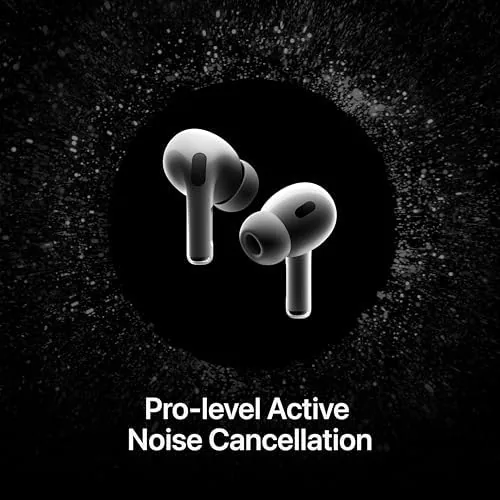
Under the hood is the H2 chip, and it does most of the heavy lifting. First, the active noise cancelling, which is the best I have used in an in-ear pair: it removes the rumble of a train and cuts the chatter of a café down to almost nothing, and it does so without the a heavy, airless feeling some headphones create. Second, the transparency mode, which is famous because it is honest; it lets the world back in at the right level, keeping the chime of a kettle and the voice of the person beside you clear while your own voice is lifted slightly for calls.
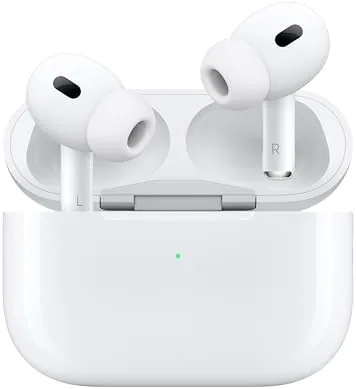
Then there is Adaptive Audio, which blends the two when you want it: the pair turns the noise cancelling down to the level of the room, so you can keep a conversation or simply hear a quiet moment without tapping any button. In practice it is subtle, and I found myself leaving it on without thinking.
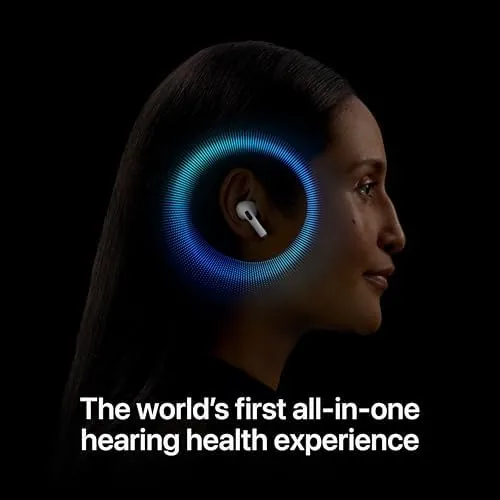
The new standout is the hearing feature, a clinical-grade helper that turns the same microphones into a measured assist. You run a short setup in iOS and the earbuds fine-tune when the room is a little louder. It is not a prescription device, and I will be careful to say that; for mild loss it is the first mainstream pair to offer this, and it makes real use of the hardware that is already there.
Real-World Performance
Battery is strong and easy. The buds last around six hours before the case takes over, and the whole system runs longer than a day, which means I rarely watched the battery level. Adaptive noise switched correctly between the office and the street without ever catching mid-sentence, and the transparency mode brought call chimes and footsteps through with detail.
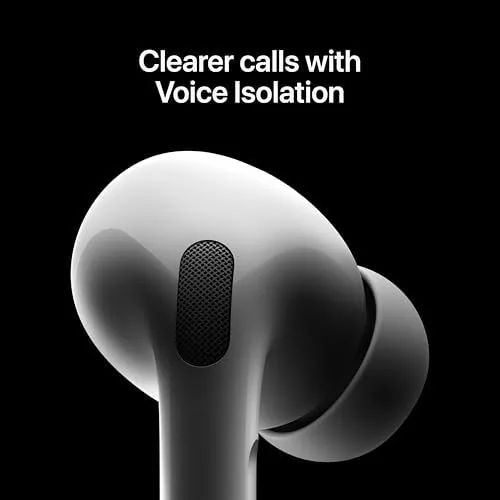
The sound is the most controlled the line has reached. Personalized Spatial Audio gives a wide seated stage, and with the head tracking on for a video it feels as though the audio lives in the room. The microphone on calls is solid, with a caller on the other end describing my voice as clear even on a busy street. That is a rare compliment for an in-ear microphone.
An honest note on the ecosystem: the full point of this pair is being wired into Apple, and an Android owner loses the effortless pairing, the hearing helper, and the spatial tuning. That has always been the AirPods calculation, and I will say plainly that for a non-Apple buyer it is a reason to look elsewhere.
Pros and Cons
Pros:
- First-class adaptive noise cancelling in an in-ear pair
- Natural transparency mode that keeps the world legible
- High fidelity sound and personalized spatial audio
- The USB-C case simplifies charging across the desk
- The hearing feature adds real value for the right owner
Cons:
- The full features are bound to the Apple ecosystem
- The premium price sits at the top of the category
- The fit still depends on finding the right tip
- Adaptive noise needs a moment to calibrate in some rooms
How It Compares
The obvious rivals are the Sony WF-1000XM5 and the Bose QuietComfort earbuds. The Sony offers slightly more adjustable noise and a warm detailed sound, but it is heavier and its fit is trickier. The Bose is comfortable and gentle, but it falls short of the seamless, effortless experience the Apple pair gives you inside its own ecosystem.
| Feature | AirPods Pro 2 | Sony WF-1000XM5 |
|---|---|---|
| Chip | H2 | V2 processor |
| ANC | Excellent, adaptive | Excellent, adjustable |
| Charging | USB-C case | USB-C case |
| Special | Spatial plus hearing | Sound tuning |
Against the Sony, the AirPods Pro 2 trade some adjustability for a better seal, a near-invisible transparency, and the hearing helper. For an Apple owner there is no close rival at the price, and that is the honest headline of the review: if your phone is an iPhone, this is the simplest excellence you can buy.
Who Should Buy the Apple AirPods Pro 2 USB-C
Buy them if you live in the Apple ecosystem and you want the simplest, most reliable in-ear silence on offer. The adaptive noise, the transparency and the hearing feature all work without a thought, and the battery treats you gently throughout a full day.
Reconsider them if you are on Android, where the unlocked features simply do not exist and a cheaper pair will serve you as well. You can check the Apple AirPods Pro 2 USB-C price and options on Amazon when you are ready.
How We Test
I used the AirPods Pro 2 USB-C for five weeks across the office, loud trains, and the quiet evening, on an iPhone and a laptop over Bluetooth. I judged the sound, the noise cancelling, the transparency, the battery, and the comfort during long sessions of real use.
I compared them against the WF-1000XM5 and the Bose QuietComfort buds over the same routes, so the verdict reflects daily use rather than a spec sheet. Independent testing, such as RTINGS review of the AirPods Pro 2, is a useful second opinion.
If you are building a full Apple setup around them, my other reviews can round out the picture. When you decide, the AirPods Pro 2 USB-C listing on Amazon has the current options.
Apple AirPods Pro 2 USB-C: Questions People Ask
Are these the same as the Lightning AirPods Pro 2?
Same sound and fit; the USB-C case charges with the same cord as the rest of your modern tech, and it is the one to buy now.
Do they work on Android?
They connect and sound fine over Bluetooth, but the hearing, the spatial details and the easy setup are bound to Apple, so they work best on an iPhone.
Is the hearing feature a medical hearing aid?
No, it is a clinical-grade helper aimed at mild loss, not a prescription device, and it walks you through a short iOS setup first.
How long does the battery last?
Roughly six hours in the buds and more than a day with the USB-C case in my test, which held me comfortably through any commute and a full day of calls.
As an Amazon Associate, I earn from qualifying purchases.