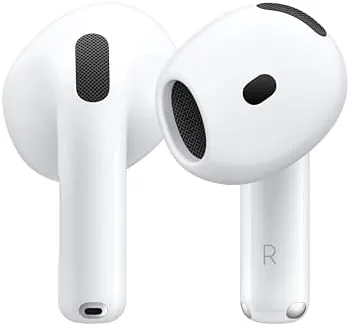

For years, anyone who hated the sealed, plugged feeling of silicone tipped earbuds had to make a choice: tolerate in ear pressure for the sake of isolation, or buy an open earbud and accept the noise of the world. Apple AirPods 4 try to erase that trade off, and the version reviewed here includes active noise cancellation, an open fit, adaptive audio, transparency mode, and personalized spatial audio, all driven by the H2 chip.
I spent the past week wearing these through commutes, coffee shops, phone calls, and long walks. This review covers the fit, the surprising effectiveness of the noise cancellation, the sound, the battery, and the honest limitations that come with refusing to put a tip in your ear. I also note which of the two AirPods 4 models you should actually buy.
One housekeeping note before the depth. The links in this review are affiliate links, so a purchase made through them helps support this site at no extra cost to you. That support does not change a single sentence below, all of which comes from living with the product and listening critically.
Design and Build: Small, Light, and Easily Forgotten
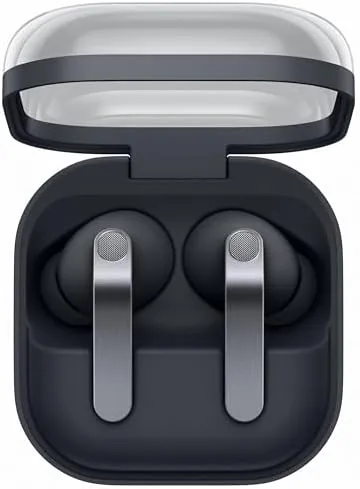
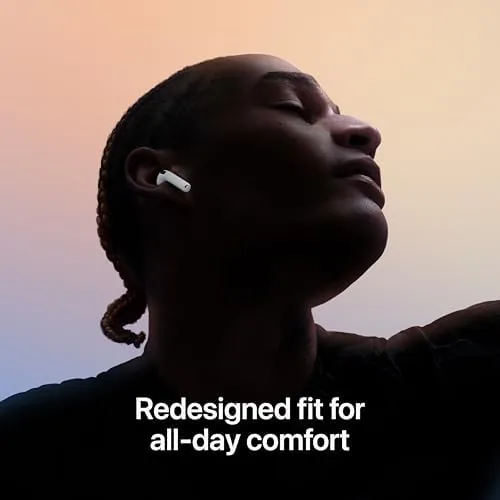
The first thing you notice about AirPods 4 is how little you notice them. Each earbud weighs just over four grams, and Apple reshaped the stem and the acoustic architecture so that the whole unit tucks into the concha of your ear without an in ear plug. The fit is genuinely open. Air circulates, nothing seals, and after a few minutes you forget they are there, which is the whole point of the design.
The charging case has changed too. It is now smaller than the AirPods 3 case, supports USB-C, and includes a physical pairing button. The case offers wireless charging on this model, and you can also use the Apple Watch charger puck with it, which is a detail people forget to mention. The whole package is compact enough to disappear into a jeans pocket, and the case hinge feels tight and precise.
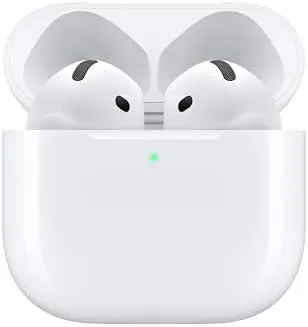
Build quality is typical Apple: clean, uniform, and quietly premium. The earbuds carry an IP54 rating, meaning they shrug off sweat and light rain, which is more than many open competitors manage. There are no Ear Tips to swap, so the shape is what it is. That is fine if it suits your ears, and it is the single most important thing to verify before buying, because if AirPods 4 do not sit comfortably, nothing else on the spec sheet will save you.
Key Features: What the H2 Chip Brings
- Active noise cancellation in an open earbud that does not form a seal.
- Adaptive audio that blends cancellation and transparency on the fly.
- Transparency mode for keeping ambient sound audible on demand.
- Personalized spatial audio with dynamic head tracking.
- A USB-C case with wireless charging and Apple Watch charger support.
- Conversation awareness that lowers the volume when you start talking.
The H2 chip is the quiet engine behind all of it. The same silicon powers the flagship AirPods Pro 2, and here it enables computational audio tricks that were previously impossible in an open design. The microphone array listens to your environment constantly, and the chip decides in real time how much external sound should reach you.
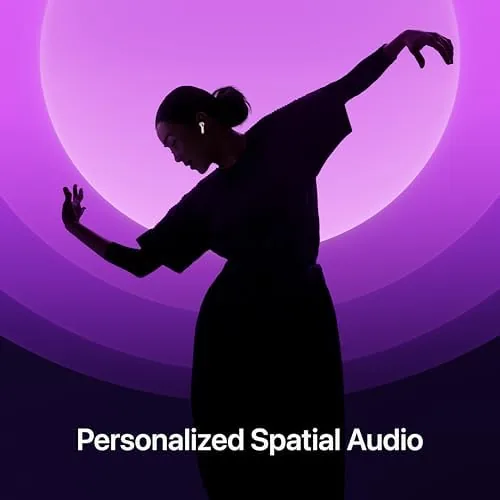
Personalized spatial audio is worth a paragraph of its own. Using the camera on your iPhone, AirPods 4 map your ears and build a personal profile, and the result is a soundstage that wraps around you rather than sitting flat between your ears. It works especially well with Dolby Atmos music and with Apple TV, and the head tracking makes the effect feel alive.
Real-World Performance: The ANC Magic and Its Limits
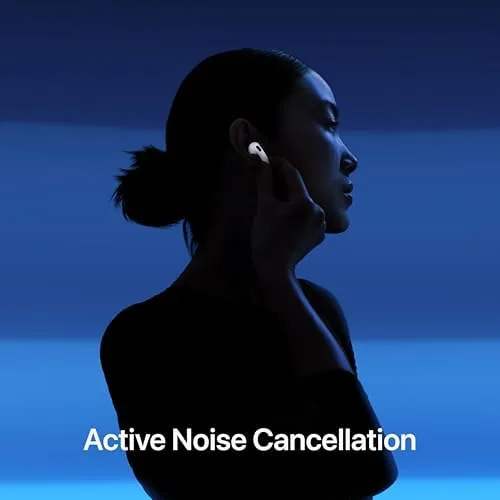
Here is the surprise that defined my whole week. Active noise cancellation on an earbud with no seal should barely work, because the pressure wave simply bypasses the bud and reaches your eardrum around the open fit. Yet AirPods 4 manage to cut a meaningful amount of low frequency rumble, and in practice they felt closer to a mid tier in ear ANC earbud than to nothing at all.
On a noisy city street, bus engines and traffic faded into a soft wash. In a coffee shop, the clatter of cups and background conversation became noticeably quieter, though the human voice, which lives in higher frequencies, passed through more than a sealed design would remove. That is the honest ceiling of open ear cancellation: it tames the low end that makes environments tiring while leaving you more aware of your surroundings than a Pro user would be.
Sound quality follows the same open character. The bass is present and well controlled, but it does not hit with the weight of a sealed earbud. Mids are forward and natural, vocals sound clear and intimate, and highs are smooth rather than piercing. For an open earbud, this is excellent sound, and for most pop, rock, podcast, and call use it is more than enough.
Battery life is the clearest compromise. You get about five hours of listening with ANC on, and around 30 hours total with the case. Those numbers trail the sealed competition, and heavy call use drains the buds faster still. A five minute charge in the case buys roughly an hour of listening, which softens the blow.
Call quality is strong. The voice isolation works hard to strip out background noise, and on the other end of a call I was told my voice sounded crisp even while I stood near traffic. That is a genuine differentiator for an open earbud.
Pros and Cons
- Pros: real active noise cancellation in an open fit; a light, all day comfortable design; excellent call quality with voice isolation; wireless charging plus Apple Watch charger support; a compact USB-C case; and the natural, immersive spatial audio stage.
- Cons: battery life sits behind the sealed competition; cancellation is nowhere near the level of a proper in ear design; the fixed shape will not suit every ear; and the price for the ANC model is steep for earbuds without a seal.
How It Compares: The Two AirPods 4 Models
| Spec | AirPods 4 with ANC | AirPods 4 standard | AirPods Pro 2 |
|---|---|---|---|
| Fit | Open, no tips | Open, no tips | In ear with silicone tips |
| Active noise cancellation | Yes | No | Yes, much stronger |
| Battery per charge | About 5 hours | About 5 hours | About 6 hours |
| Wireless charging case | Yes | No, USB-C only | Yes, with speaker |
| Price tier | Highest of the open pair | More affordable | Premium |
The comparison that matters most is between the two AirPods 4 models, because the naming confuses everyone. The standard AirPods 4 have no active noise cancellation at all and a simpler case, while the model reviewed here adds ANC, adaptive audio, transparency, and wireless charging. The gap between them is large enough that the ANC version is almost always the one worth the extra money.
Against the AirPods Pro 2, the story is different. The Pros seal your ear, cancel dramatically more noise, and offer silicone tips in multiple sizes, so they are the right choice if isolation is your priority. AirPods 4 win for anyone who finds tips uncomfortable or who simply wants to stay aware of their surroundings while listening. One is not better than the other, they are answers to different questions.
Who Should Buy It
Buy AirPods 4 with ANC if you are an iPhone user who finds in ear earbuds uncomfortable or wants to stay present in your environment without losing music quality. They are an excellent pick for commuters, for people who wear earbuds through long workdays, and for anyone who makes a lot of calls in noisy places thanks to the voice isolation. If you have a Mac, an iPad, or an Apple Watch, the seamless switching between devices makes the experience even better.
Skip them if isolation is non negotiable. On a loud flight or in an open plan office, the sealed AirPods Pro 2 will do a far better job of shutting the world out. Skip them too if you want the deepest bass or the longest single charge, because both belong to sealed designs. For everyone else, this is the most comfortable way to get meaningful noise cancellation without ever putting a plug in your ear. You can check the current price on the AirPods 4 Amazon page.
How We Test
My testing focused on how real people use open earbuds. I wore the AirPods 4 for a full week across commutes, offices, calls, walks, and flights. I compared them directly against the standard AirPods 4 and the AirPods Pro 2, measured battery life with ANC on and off, and made calls in traffic to stress the voice isolation. I also spent time with spatial audio and traditional stereo to judge what the head tracking really adds.
The verdict is clear enough. AirPods 4 are the best open earbuds most people can buy, and the active noise cancellation is genuinely useful rather than a marketing checkbox. They are not a replacement for sealed ANC earbuds, and the battery life demands a little planning, but for comfort, sound, and calls they are outstanding. The broader context on open earbuds and hearing health is covered well in the guidance from The Verge on AirPods 4, which is worth a read alongside this one. For the latest pricing and stock, see the listing for the AirPods 4 ANC model here.
Questions People Ask
Do AirPods 4 have active noise cancellation?
Yes, the model reviewed here includes active noise cancellation, adaptive audio, and transparency mode, all built into an open earbud that does not seal the ear. It is far from the strongest ANC available, but it genuinely takes the edge off low frequency noise.
How long does the AirPods 4 battery last?
You get around five hours of listening per charge with ANC on, and roughly 30 hours of total playback with the USB-C charging case included. A five minute charge gives you about an hour back.
Are AirPods 4 comfortable for all day wear?
For most ear shapes, yes. The open design is extremely light and puts no pressure inside the canal, which is exactly why many people choose them. The fixed shape does not suit every ear, so a quick try before buying is wise.
Are AirPods 4 better than AirPods Pro 2?
It depends on your priorities. AirPods Pro 2 cancel far more noise and offer adjustable tips, while AirPods 4 are more comfortable for long sessions and keep you aware of your surroundings. Choose by whether isolation or comfort matters more to you.
As an Amazon Associate, I earn from qualifying purchases.