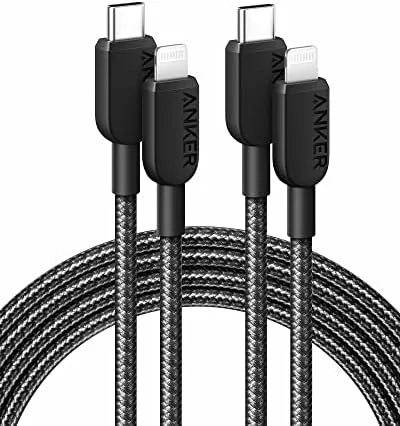

Cables are the least exciting purchase in any household, and the most important one to get right. A cheap Lightning cable works for a week, then stops charging unless you hold it at the perfect angle, and it often leaves you hunting for a charger at the worst moment. The Anker 310 USB C to Lightning cable is a straightforward response to that problem: a two pack of six foot cords, MFi Certified so Apple approves of them, built by a company with a strong reputation for accessories. I used both cables daily for a month across a desk and a bedside table to see whether they hold up.
Before the details, the standard note. This article contains affiliate links, and if you buy through one of them the site earns a small commission at no extra cost to you. That commission never changes what I test or what I recommend.
Design and Build
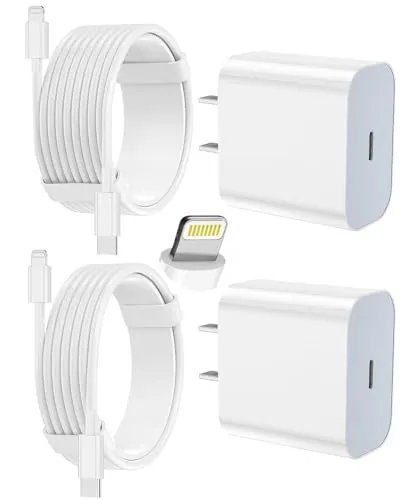
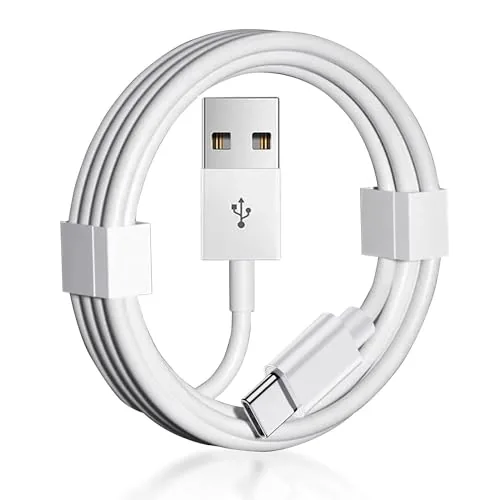
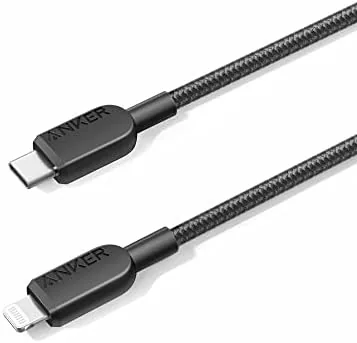
Each cable is a six foot run of black, slightly textured cord with a USB C connector at one end and a Lightning connector at the other. The first impression is reassuringly solid. The connectors are housed in sturdy plastic with a ribbed grip, and the cable itself has a taut, quality feel rather than the thin floppiness of bargain cords.
The six foot length is the design decision that makes the set useful. At the desk, the extra reach lets the phone sit comfortably on the far side of a keyboard. Beside the bed, it means the phone can rest on the nightstand rather than on the floor or wedged awkwardly against the headboard. Six feet is the length that removes the most everyday cable frustration.
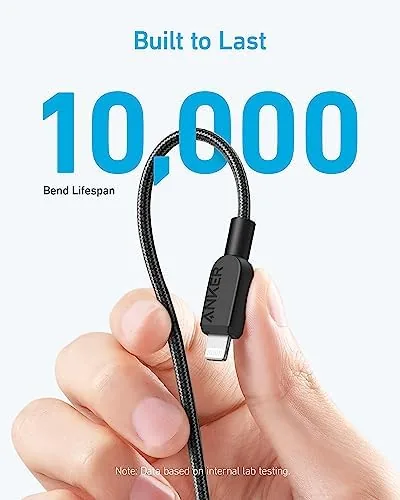
Anker is known for reinforcing its cables at the stress points, and the 310 follows that pattern. The joint where the cord meets each connector has a longer, more flexible shroud that bends without cracking, which is exactly where cheap cables fail first. The MFi certification is printed on the packaging and matters because Apple licensed the chip inside, which means the cable will charge, sync, and avoid the compatibility warnings that unlicensed cords sometimes trigger.
Key Features
The MFi certification is the feature that sets an Anker cable apart from a no name cord. It means the cable is Apple approved, built to the official specification, and guaranteed to work with Lightning devices without intermittent errors or rejected charging. For anyone who has fought with an unofficial cable that flashes the unsupported accessory warning, this removes that entire class of problem.
The two pack format is the practical selling point. One cable lives at the desk, the other beside the bed, and you never have to move a charger between rooms or dig a cord out of a travel bag in a hurry. At a similar price to a single premium cable, the pair is the better value for a home that owns more than one iPhone.
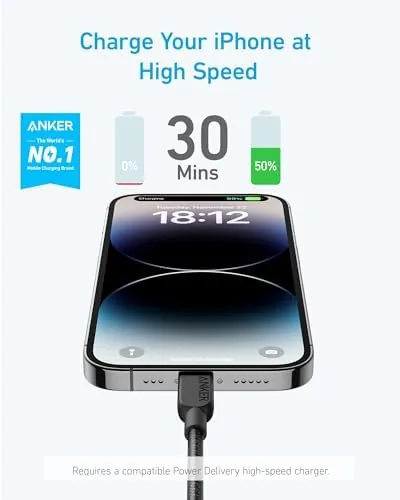
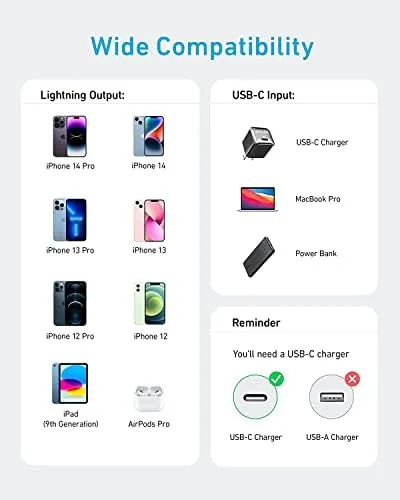
The USB C end is worth understanding. It plugs into any modern USB C power adapter, including the chargers that ship with most current laptops and tablets, so you do not need a separate Apple power brick. The cable supports fast charging on iPhones that support it when paired with a compatible adapter, and it handles data syncing as well as power delivery.
The six foot length also makes the cable flexible in a living space. You can run it across a nightstand, behind a desk, or from a wall outlet across a coffee table without feeling shortchanged, and it coils up neatly into a small loop for travel.
Real-World Performance
I used one cable at a desk and the other at a bedside table for a full month. The desk cable charged an iPhone every working day, often while the phone sat in active use, and it never once failed to register or dropped to a trickle. The bedside cable handled nightly charging, including the inevitable late night fumbling in the dark, without complaint.
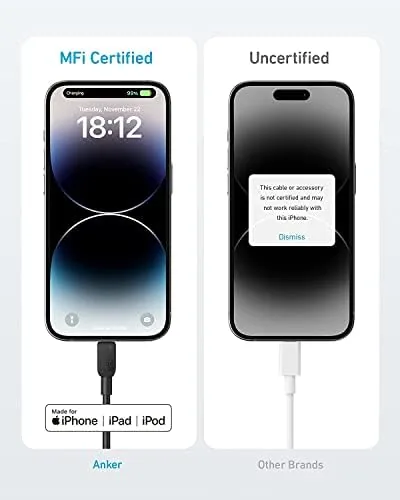
Charging behavior was exactly what you expect from an MFi certified cable. With a 20 watt USB C adapter, an iPhone charged at its normal fast charging rate, and there were no unsupported accessory messages, no stopping and starting, and no need to wiggle the connector. I also used the cable for a phone to laptop sync and the data connection worked flawlessly.
The durability test was the more meaningful part of the month. I coiled the cables tightly, stepped on the cord once while reaching under the desk, and pulled both connectors by the cable rather than the housing on more than one occasion. After a month, neither cable showed fraying, loose joints, or any change in charging behavior. The reinforced shrouds held up to the bending that kills most budget cables.
The length proved its worth daily. Six feet was long enough to use the phone in bed without hanging the cable over the side, and at the desk it reached across the full surface. The only minor complaint is that both cables are identical black, so telling the desk one from the bedroom one required remembering, and the cords are thin enough to tangle if thrown loosely into a bag.
Pros and Cons
Pros:
- MFi certified, so Apple approved charging and syncing
- Two cables in the pack cover a desk and a bedroom
- Six foot length adds real everyday flexibility
- Reinforced connectors resist the bending that kills cheap cables
- USB C end works with modern adapters and supports fast charging
- Reliable data syncing as well as power delivery
Cons:
- Black finish on both cables makes them easy to mix up
- No braided jacket, so the cord is not the toughest option
- Charging speed depends on the adapter you pair it with
- Six feet can be more cord than you need in a tight spot
How It Compares
A USB C to Lightning cable competes with braided premium cords and with budget store brands. I compared the three to show where each fits.
| Feature | Anker 310 2-Pack | Braided Premium Cable | Budget Store Cable |
|---|---|---|---|
| MFi certified | Yes | Usually yes | Often no |
| Length | 6 ft each | Varies | Varies |
| Quantity | 2 | 1 | Varies |
| Jacket | Standard PVC | Braided nylon | Thin PVC |
| Reinforced joints | Yes | Varies | Rarely |
| Price | Budget friendly | Higher | Lowest |
A braided premium cable looks tougher and resists tangles better, but it costs more per cable and you usually buy it singly, which means paying twice to cover two rooms. A budget store cable is cheapest, but unlicensed cords often stop charging reliably, throw compatibility warnings, and fray within weeks. The Anker 310 sits in the sensible middle: certified, reinforced, and sold in a pair, so the cost per working cable is lower than both alternatives. If you want the toughest possible cord for heavy use, a braided cable is worth the extra. For everyday charging in a home with more than one device, the two pack is the practical choice. The Anker 310 2-pack is available on Amazon.
Who Should Buy It
Buy the Anker 310 2-pack if you want reliable, Apple approved charging without overpaying, if you want a cable permanently at the desk and another at the bedside, or if you are tired of cheap cords that fail after a few weeks. It suits households with iPhones, students who need a spare in a backpack, and anyone who keeps a charger in more than one room.
Skip it if you need an ultra durable braided cord for constant travel abuse, or if you have moved past Lightning ports entirely to USB C only devices. For dependable, certified charging at a fair price, the Anker 310 set is hard to beat. You can check the current price of the Anker 310 cable 2-pack on Amazon when you are ready.
How We Test
I used both Anker 310 cables daily for a month, one at a desk and one at a bedside table, charging an iPhone through a range of USB C adapters. I tested fast charging, data syncing, and the durability of the reinforced joints through repeated bending, coiling, and the occasional accidental tug.
I did not test the cable with every Lightning device ever made, and a month of use cannot fully predict years of heavy wear. For background on charging standards and cable safety, CNET explains what to look for in a charging cable. The Anker 310 cable listing on Amazon shows current pricing and pack options.
Anker 310 USB C to Lightning Cable: Questions People Ask
Is this cable compatible with my iPhone?
Yes, the MFi certification means it is Apple approved for charging and syncing, and it works with any iPhone that has a Lightning port, including the iPhone 14 series and most older models.
How fast does it charge?
With a compatible USB C power adapter it supports fast charging on supported iPhones, and it matches the standard charging behavior you expect from an Apple rated cable.
Why choose the 2-pack over a single cable?
The two six foot cords let you keep one at a desk and one beside the bed or in a bag, so you are never hunting for a cable when a device runs low.
Is the cable durable?
Anker uses reinforced construction at the connector joints, and our month of daily bending and coiling showed no fraying or intermittent charging.
As an Amazon Associate, I earn from qualifying purchases.