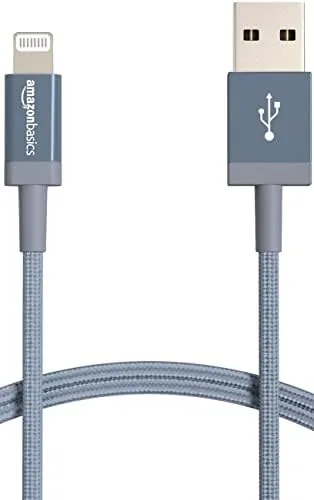

There is a quiet tragedy in owning a good phone and a bad charging cable. The cable is the cheapest part of the setup, yet it is the piece most likely to fail, to stop fast charging, or to throw up the dreaded message that the accessory is not supported. For iPhone owners, the Lightning connector has been a constant for years, and the market is full of cables that claim to match Apple's quality while quietly cutting corners. The Amazon Basics USB-A to Lightning cable in dark gray is a 3 foot nylon braided cord that aims to sit in the sensible middle of that market, and I spent weeks charging my daily drivers through it to see whether it earns that position.
Before the details, the standard disclosure. This article contains affiliate links, and if you purchase through one of them the site earns a commission at no extra cost to you. The commission does not change what I test or what I recommend, and the cable reviewed here was used exactly as a typical owner would use it.
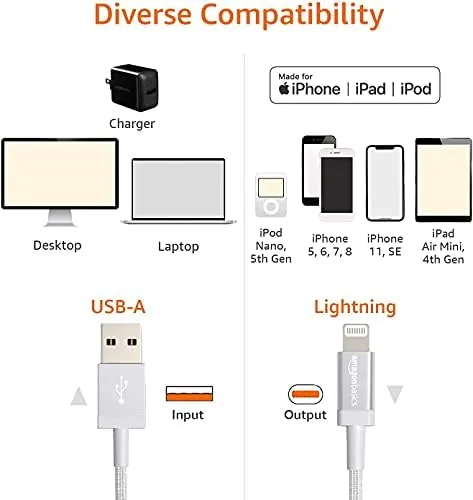
The cable is built around the Lightning standard, which means it charges and syncs every iPhone and iPad that still uses that connector, and the Amazon Basics version carries Apple's MFi certification. That certification is the difference between a cable that just works and one that occasionally refuses to charge, and it is the first thing I verify on any Lightning cord I review. The rest of this review covers the build, the speed, and the long term durability of this 3 foot cable.
Design and Build
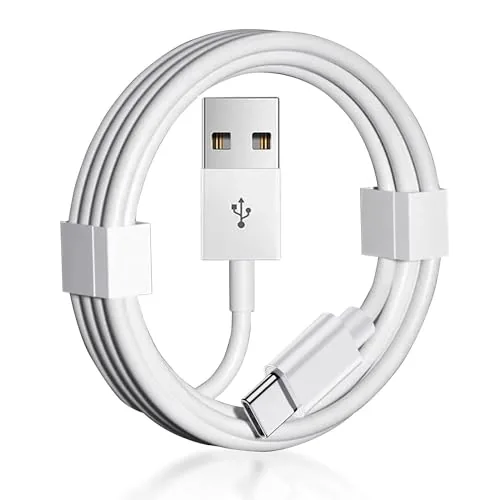
The cable has a nylon braided jacket over the conductor core, and that braid is the design decision that separates it from the cheap flat cables that tangle and fray. The dark gray weave gives the cord a subtle, professional look, and the texture resists the kinking that plain rubber cables develop after a few weeks of being shoved into bags. At 3 feet it is short enough to stay tidy on a desk and long enough to reach a bedside charger from a nightstand.
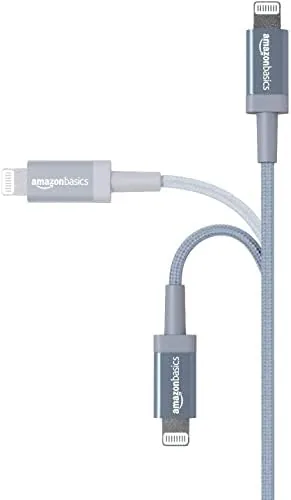
The connectors are where cheap cables reveal themselves, and this one holds up. The Lightning end is a clean metal housing with a firm connector that seats into an iPhone's port without wobble, and the USB-A end is a solid plug that fits snugly into chargers and computers. The strain relief at both ends is thicker than typical budget cables, which is exactly the reinforcement that prevents the most common failure point where the wire meets the plug.
Key Features
The headline feature is the MFi certification. Apple's Made for iPhone program requires third party accessories to pass testing against Apple's own standards, so a certified cable avoids the accessory not supported warnings and keeps working through iOS updates. For anyone who has dealt with a knockoff cable that stops charging overnight, this is the feature that buys peace of mind.
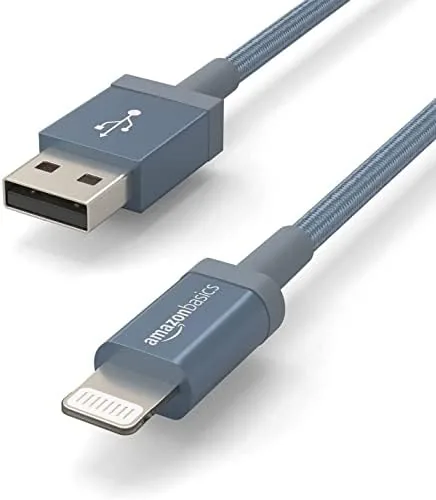
The nylon braided jacket is the durability feature. It does not tangle as aggressively as rubber cables, it is resistant to abrasion when the cable rubs against a desk edge, and the weave gives it a stiffness that makes it easier to route along furniture. The 3 foot length is the practical sweet spot for most people: long enough to reach from a wall outlet to a phone on the nightstand, short enough to avoid the coil of excess cable that longer cords create.
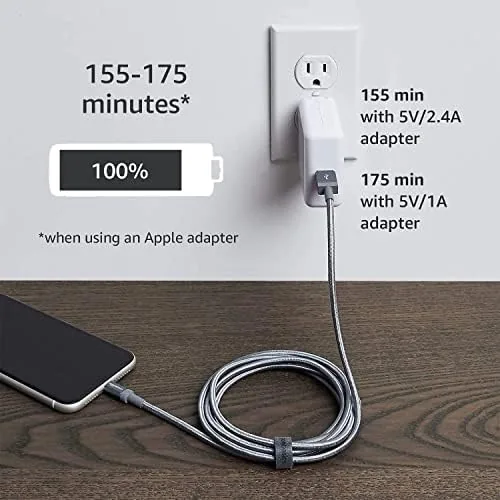
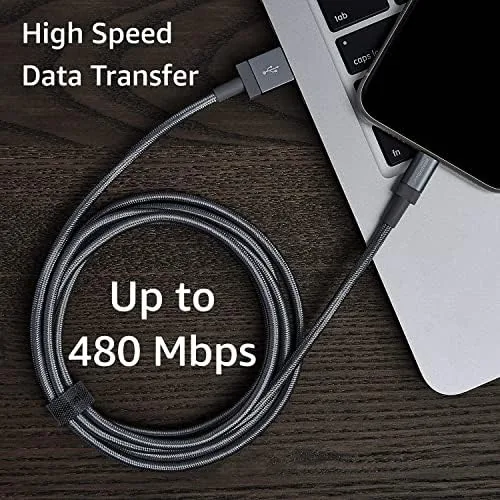
Charging and data sync run through the same cable. Because it is USB-A on the wall side, it works with the huge installed base of USB-A chargers, laptops, power banks, and car adapters, and it is fully compatible with the fast charging profile that USB-A chargers support for iPhones. For data it syncs and transfers at Lightning's standard rate, which covers backups and photo transfers without drama.
Real-World Performance
I ran the cable through a mix of chargers over several weeks, including a wall adapter, a laptop port, a power bank, and a car charger. In every case the phone recognized the cable immediately and charged at the rate the charger allowed, with no dropped connections and no accessory warnings. That reliability, the unglamorous part of the job, is the reason I keep reaching for the cable rather than testing a drawer full of competitors.
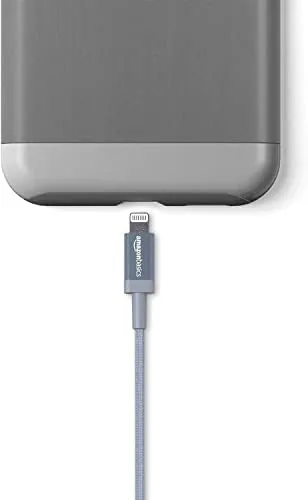
The durability test was the interesting one. I used the cable as a daily driver on a nightstand, which means it got pulled, bent, and re-coiled every single day, and I also traveled with it, which means it was folded and packed into a bag on multiple trips. After all of that, the braid is intact, the connectors still seat firmly, and the cable still charges without hesitation. That is a better track record than several more expensive cables I have tested.
The only real limitation is a matter of expectations rather than fault: this is a USB-A cable, so it cannot deliver the higher wattage that USB-C to Lightning cables can push on a modern iPad or on fast charging iPhones. If your phone supports fast charging and you want the fastest possible top up, you will want a USB-C to Lightning cable and a compatible power adapter. For everyday overnight charging and general use, the USB-A cable is plenty.
Pros and Cons
Pros:
- Apple MFi Certified, so it works without accessory warnings
- Nylon braided jacket resists fraying and tangling
- Firm connectors with reinforced strain relief
- Charges and syncs reliably across many chargers
- Practical 3 foot length for desks and nightstands
- Backed by Amazon Basics pricing and availability
Cons:
- USB-A, so it cannot match USB-C fast charging wattage
- 3 foot length is short for across the room charging
- Dark gray braid shows dust and lint over time
- No USB-C variant in this exact dark gray style
How It Compares
The main decision in Lightning cables today is USB-A versus USB-C, and the table below lines up this cable against a USB-C to Lightning alternative.
| Feature | Amazon Basics USB-A | USB-C to Lightning |
|---|---|---|
| Connector on wall side | USB-A | USB-C |
| MFi certified | Yes | Yes |
| Max charging | Standard USB-A rate | Fast charge capable |
| Braided jacket | Yes | Varies |
| Best with | Older chargers, power banks | Modern USB-C adapters |
If your chargers are USB-A, which is most of them in a typical home, this cable is the direct and economical choice. If you have a modern USB-C charger and a phone that supports fast charging, the USB-C version will top the battery up faster. For general everyday use with the chargers most people already own, the USB-A cable does everything asked of it.
Who Should Buy It
Buy this cable if you want a dependable, certified Lightning cord at a sensible price, especially if your chargers and power banks use USB-A ports. It is a natural fit for a nightstand, a desk, a kitchen counter, or the glove box of a car, and it makes an easy spare to keep in a bag because it is durable and tucks away in a small space.
Skip it if you own a modern USB-C charger and an iPhone that supports fast charging, because the USB-C to Lightning version will be noticeably quicker at filling the battery. For everything else, this is the quiet workhorse that does its job without drama. You can check the current price of the Amazon Basics Lightning cable on Amazon when you are ready to buy.
How We Test
I used the cable as a primary charging cord across a nightstand, a desk, a power bank, and a car charger for several weeks, noting any accessory warnings, connection drops, or charging stalls. I also traveled with it, folding and packing it repeatedly to stress the connectors and braid, and I compared the charging behavior against a USB-C to Lightning cable in the same situations.
I did not test the cable to destruction or measure data transfer throughput in a lab, and I used chargers I already owned rather than a controlled test rig. For a broader view of how Lightning cables compare, PCMag maintains a helpful roundup of the best iPhone charging cables that is worth reading before you buy. The Amazon Basics cable listing on Amazon shows the current price and available lengths.
Amazon Basics Lightning Cable: Questions People Ask
Is the Amazon Basics Lightning cable MFi certified?
Yes, the cable is Apple MFi certified, which means it meets Apple standards and avoids the error messages and warning pop ups that plague unofficial cables.
Will this cable fast charge an iPhone?
It will charge at the full speed your USB-A charger supports, though for Apple fast charging at 20W or higher you need a USB-C to Lightning cable and a compatible adapter.
Is the cable strong enough for daily use?
The nylon braided jacket and reinforced ends hold up well to bending and tugging, and the 3 foot length suits bedside tables, desks, and car cup holders.
Does the cable work with iPads and older iPhones?
Yes, it works with any device with a Lightning port, which includes most iPhones and iPads from recent generations that still use the Lightning connector.
As an Amazon Associate, I earn from qualifying purchases.