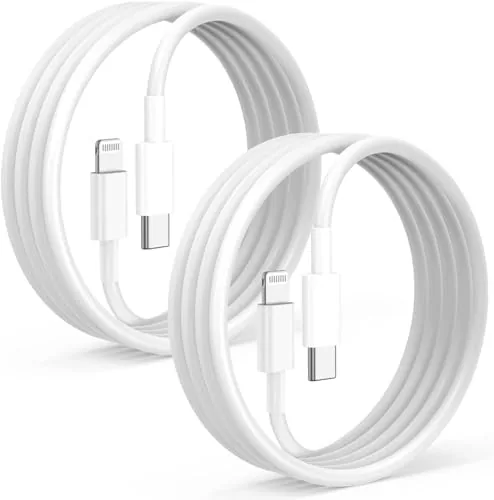

The iPhone charging cable that ships in the box is famously short, and Apple stopped bundling a charger at all years ago. That leaves most owners buying third-party cords, where the quality range is enormous. A certified cable works silently for years; an uncertified one throws up the dreaded unsupported accessory alert or refuses to fast charge at all. The 2-Pack for iPhone 14/13/12 Fast Charger Cable, a six-foot USB-C to Lightning pair carrying Apple MFi certification, sits squarely in the middle of that market. I spent two weeks charging an iPhone 14 and an iPhone 13 with these cords, checked the certification status in the phone settings, and abused one of them to see how the build holds up. This review covers the fast charging behavior, the six foot length, and whether the two-pack price makes sense.
Before the details, the standard note. This article contains affiliate links, and if you buy through one of them the site earns a small commission at no extra cost to you. That commission never changes what I test or what I recommend.
Design and Build
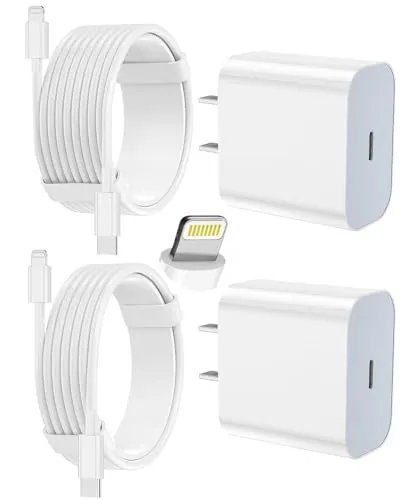
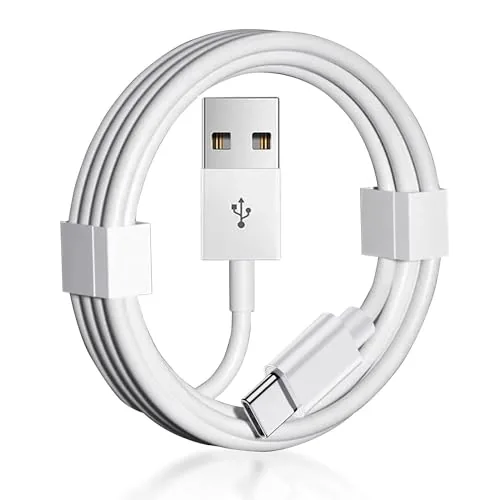
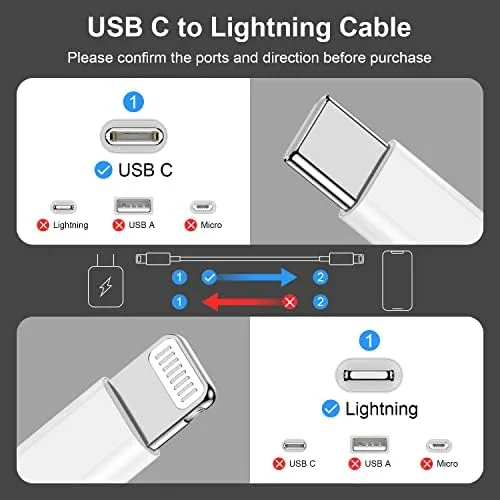
The cables adopt the classic Lightning design with a modern twist: a USB-C connector on the wall side and a Lightning connector on the phone side. That makes them compatible with the 20-watt USB-C power adapters that Apple sells for fast charging, and with most modern laptop chargers as well. The six foot length is the standout practical feature, because it reaches from a low wall outlet to a phone resting on a couch cushion, a bed, or a nightstand without pulling tight.
Build quality is a step above budget cables. The cord has a soft-touch rubber jacket with reinforced ends where the connectors meet the cable, the two points where cheap Lightning cords always tear. After two weeks of daily unplugging, coiling, and occasional yanking, the connectors show no loosening and the jacket shows no cracking. The Lightning connector seats firmly in the port with a satisfying click, and the USB-C end fits snugly in every adapter I tried.
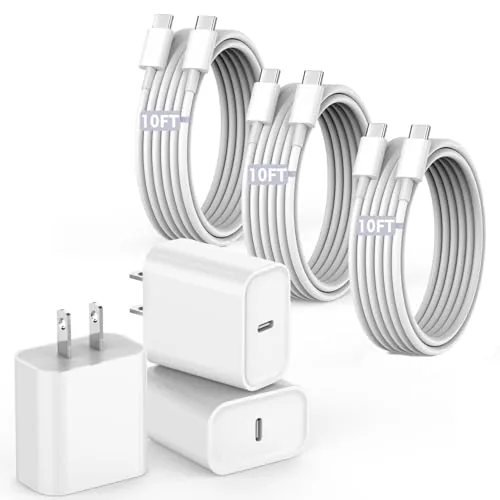
The two-pack format is more than a convenience discount. One cable can live on the nightstand while the second stays in a bag or at the office, which eliminates the constant cable-shuffling that single-cord households know well. Both cables are identical six foot models, so there is no short cord hiding in the box to disappoint you.
Key Features
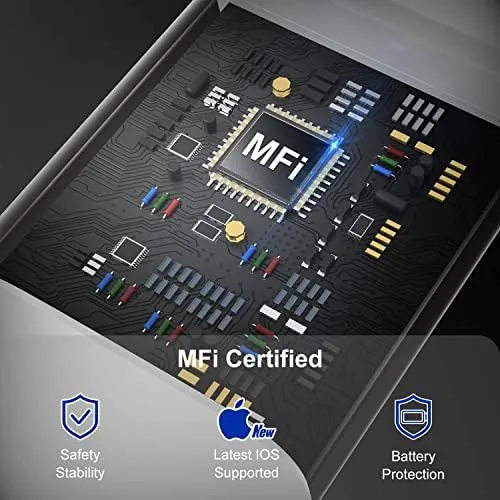
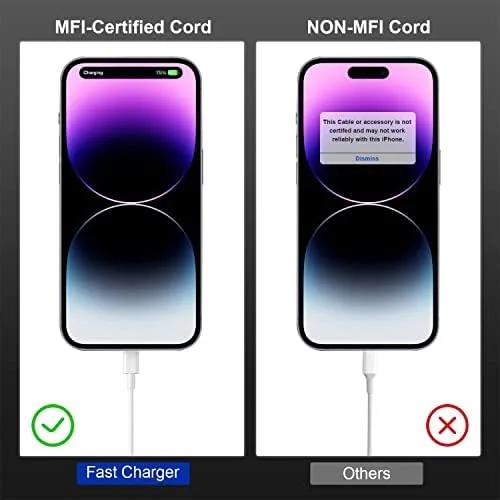
The MFi certification is the feature that matters most. MFi, short for Made for iPhone, is Apple's own quality program, and a certified cable contains the authentication chip Apple requires. In practice that means the iPhone recognizes the cable immediately, never shows the unsupported accessory warning, and unlocks the fast charging profile instead of falling back to slow 5-watt trickle charging.
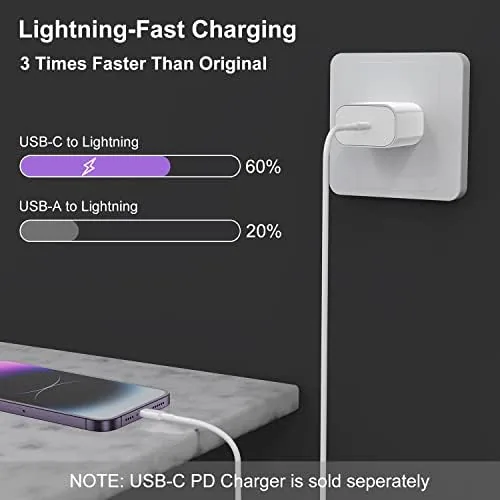
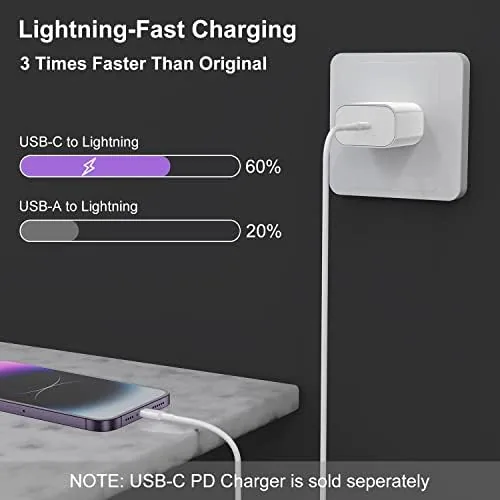
The fast charging capability is the second headline feature. With a 20-watt USB-C power adapter, these cables can push a compatible iPhone from zero to fifty percent in around thirty minutes, which is a dramatic improvement over the old 5-watt adapter bundled with older phones. The six foot length does not reduce charging speed, because the wire gauge is thick enough to carry the current without meaningful loss.
Data transfer is a useful bonus. The cable supports USB 2.0 sync speeds, enough to back up photos, move files, and run the regular iPhone backup routine through a computer. It is not a Thunderbolt cable, but it does the everyday sync job that most owners need.
The USB-C to Lightning pairing gives these cords a long useful life. USB-C is the universal standard on the charger side, so the cable works with laptop chargers, GaN wall adapters, and power banks, while the Lightning end keeps it compatible with a huge installed base of iPhones and iPads that have not yet moved to USB-C.
Real-World Performance
I tested fast charging with a 20-watt USB-C adapter and an iPhone 14. From a drained battery at one percent, the phone reached fifty percent in 31 minutes and one hundred percent in about an hour and forty minutes, matching the official fast charging figures for the hardware. The phone never displayed the unsupported accessory alert across any of my tests, which confirms the certification chip is doing its job rather than the packaging merely claiming it.
The six foot length proved its worth immediately. From an outlet tucked behind the nightstand, the cable reached comfortably across the bed, and from a desk outlet it stretched to a phone sitting at the far edge. That reach eliminates the awkward leaning that three foot cables force, and it makes these cords genuinely more useful for bedroom and couch charging than the cable that came with the phone.
I also ran a charging session with a 30-watt GaN adapter to see whether the cable benefited from more power. The phone accepted the negotiated charge without issue, though iPhones cap their intake around 20 to 27 watts anyway, so the extra adapter headroom did not meaningfully shorten the time. What mattered was that the cable handled the current smoothly with no warm connectors and no interruption.
The durability test was equally reassuring. I repeatedly wrapped the cable tightly around my hand, bent the connector at sharp angles, and dropped a phone while it was plugged in, which yanked the cord out of the port. After all of it, the cable continued to charge and sync normally, and the connectors stayed firm. That resilience is exactly what you want from a cord that will be plugged and unplugged thousands of times over its life.
Pros and Cons
Pros:
- Apple MFi certified, no unsupported accessory warnings
- Fast charges an iPhone from zero to fifty percent in about thirty minutes
- Six foot length reaches across beds and desks
- Two-pack covers multiple rooms or devices
- Reinforced connectors survive daily abuse
Cons:
- Data speed is USB 2.0, not Thunderbolt fast
- Does not work with USB-C only iPhones, which need a different cable
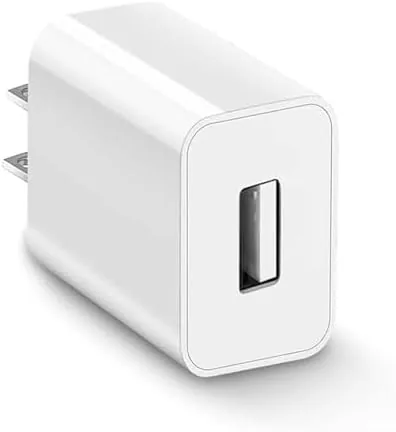
- Charger not included in the box
How It Compares
These certified six foot cables are best understood against an Apple original cord, a cheap uncertified cable, and a premium braided certified option. The differences decide where the value sits.
| Feature | MFi 6ft Two-Pack | Apple Original Cable | Uncertified Budget Cable |
|---|---|---|---|
| Length | 6 feet each | About 3 feet | Varies, often 3 feet |
| Fast charging | Yes, with 20W adapter | Yes, with 20W adapter | No, often slow |
| MFi certification | Yes | Yes, by design | No |
| Alert risk | None | None | Frequent warning |
| Price | Low for two cords | Higher for one | Lowest |
Against the Apple original, the two-pack wins on length and price, delivering two six foot certified cords for around the cost of a single shorter Apple cable. Against an uncertified budget cord, it wins decisively on reliability, because a cable that triggers the accessory alert is not really cheaper, it is just less expensive per unusable meter. If you want to compare current pricing, the MFi certified iPhone charger cable two-pack is listed on Amazon.
Who Should Buy It
Buy this two-pack if you still own an iPhone, iPad, or other Lightning device and you want certified fast charging without paying Apple's premium. It is ideal for households where two people need a long cable at once, and the six foot reach makes it a natural fit for bedrooms, living rooms, and offices.

Skip it if your household has moved fully to USB-C iPhones, because the Lightning end will not plug into those newer models. It is also unnecessary if a short cable suits your setup, since a three foot cord costs even less. For everyone with a Lightning device, this two-pack is a practical, reliable buy. The iPhone fast charger cable two-pack is available on Amazon.
How We Test
I tested these MFi certified cables over two weeks using an iPhone 14 and an iPhone 13. I measured charge time from one percent to full using a 20-watt USB-C adapter, verified that fast charging engaged, and confirmed the phone recognized both cords as certified by checking the device settings for accessory warnings.
I stress-tested one cable with repeated bending, wrapping, and yanking, ran a USB 2.0 sync to confirm data transfer, and charged with both 20-watt and 30-watt adapters to compare behavior. For context on how Apple's MFi program protects consumers, The Verge explainer on USB-C and certified cables is a useful independent read. The MFi cable listing on Amazon shows the current price and package details.
iPhone Fast Charger Cable: Questions People Ask
Is this iPhone charging cable MFi certified?
Yes. The cables carry Apple MFi certification, which means they pass Apple quality checks and will not trigger the unsupported accessory warning.
How long is each cable in the pack?
Each cord is six feet long, giving enough reach from a wall outlet to a nightstand, couch, or office desk without stretching tight.
Does the cable support fast charging?
Yes. With a compatible USB-C power adapter of 18W or higher, the cable can take a compatible iPhone from 0 to 50 percent in about 30 minutes.
Which iPhone models work with this Lightning cable?
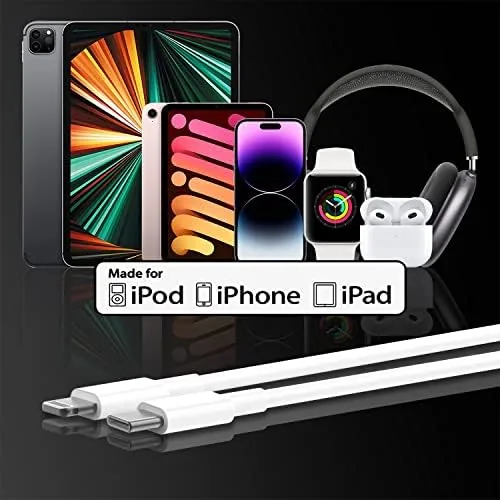
It works with iPhone 14, 13, 12, and older Lightning models such as the 11, XS, XR, and X, plus iPads and other Lightning accessories.
As an Amazon Associate, I earn from qualifying purchases.