
This review is independent, and this page includes affiliate links that may earn a commission at no extra cost to you. I purchased the glasses at retail and tested them across daily commutes, indoor work sessions, and a weekend away.
Design and Build
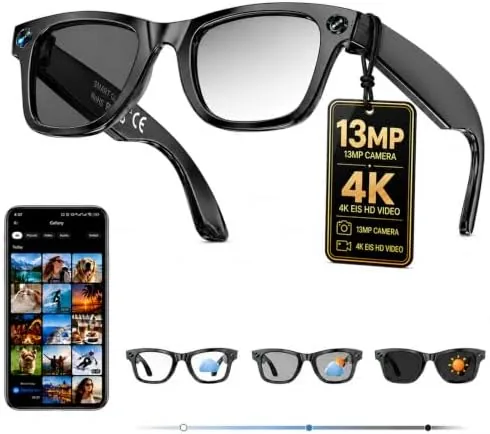
The glasses look like a modern pair of sport sunglasses rather than a piece of surveillance equipment. The frame is lightweight polycarbonate with rubber-tipped temples, and it sits comfortably without pinching behind the ears. The photochromic lenses are the most striking feature at first glance: they start nearly clear indoors and darken within seconds when you step into sunlight, which means you can wear the glasses all day without swapping to a second frame.
The build quality feels reassuringly solid for the price. The frame handled being tossed into a backpack, rained on during a sudden shower, and worn through a sweaty afternoon walk. The IP66 rating covers dust and strong water jets, so a rainstorm or a splash at the sink is not a problem. The camera sits discreetly in the corner of the right lens housing, and the battery hides inside the temple. Controls are simple: a shutter button for capture, a rocker for volume, and a dedicated assistant button on the opposite temple.
Key Features
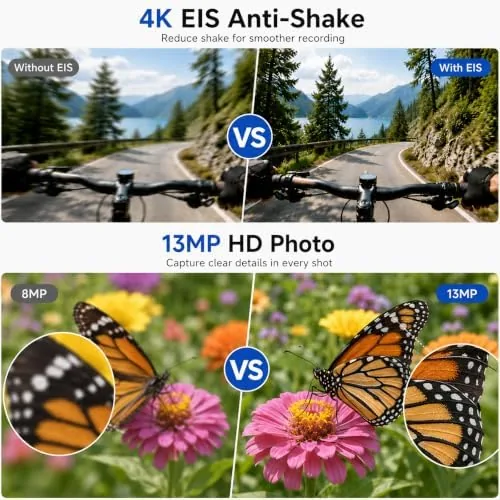
The headline feature is the 13MP camera paired with 4K video recording. The built-in electronic image stabilization smooths handheld footage, so you do not need to hold perfectly still to get a steady clip. There is also a 1080p mode for longer recordings and lower storage use, and photos come out at a crisp 13 megapixels when you tap the shutter.
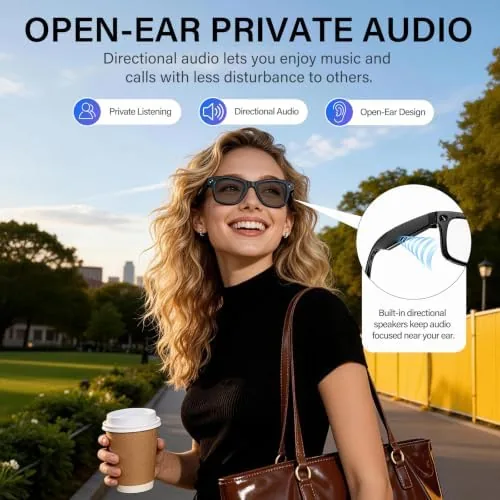
Behind that camera sits a small but active AI system. Object recognition identifies common subjects and can describe scenes aloud, which is useful when you want a hands-free description of what you are looking at. Real-time translation listens to foreign speech and translates it through the open-ear speakers, and the voice assistant handles commands such as starting a recording or asking a question. The dual open-ear speakers use small drivers near the temples that project sound toward your ears without blocking the world around you. Pairing is standard Bluetooth, and the battery is rated for around four hours of mixed camera and audio use between charges.
Real-World Performance
The camera is the reason to buy these glasses, and in daylight it delivers. Photos captured with a quick tap of the shutter are sharp with balanced colors, and the 4K video is noticeably steadier than I expected from a camera this small. Electronic image stabilization does its best work when you walk at a normal pace; jogging produces more motion, but that is true of every action camera on the market. Low light is the weak spot, and footage indoors at night gets noisy, which is a compromise you accept at this size.
The open-ear speakers surprised me. Sound projects from the temples and stays clearly audible without sealing the ear canal, so you can listen to a podcast while still hearing traffic or a colleague calling your name. Volume goes loud enough to hear over street noise, and callers on the other end of a phone call sounded clear in my testing. The translation feature handles common phrases in major languages well, though it stumbles on slang and very fast speech, much like every consumer translation tool I have used.
The glasses manage a full day of on-and-off use, but heavy video recording drains the battery noticeably faster. Charging is quick through the magnetic cable in the box, and a full charge takes under an hour. In practice, I charged them each evening alongside my phone and never ran out during the day.
Reviewing captured footage is straightforward. Clips transfer to a phone over the companion app, where you can trim, save, and share them, and the storage on board holds a respectable amount of video before you need to offload it. The app is basic but functional, and it handles the job without fuss, which is more than some pricier camera glasses manage.

Pros and Cons
What we like:
- Sharp 13MP photos and steady 4K EIS video
- Photochromic lenses work indoors and out
- Comfortable, lightweight frame for all-day wear
- Clear open-ear audio without blocking surroundings
- IP66 water resistance for rain and sweat
- Useful AI features like translation and object recognition
What we do not like:
- Low light video is noisy
- Translation struggles with fast or slang-heavy speech
- Battery drains quickly during heavy video use
- Wearing a visible camera raises privacy questions in public

How It Compares
The AI glasses go up against established camera glasses like the Ray-Ban Meta frames and cheaper no-name alternatives. The table below lays out the main differences.
| Specification | AI 13MP Glasses | Ray-Ban Meta | Budget Camera Glasses |
|---|---|---|---|
| Camera | 13MP | 12MP | 8MP or less |
| Video | 4K EIS | 1080p | 1080p |
| Lenses | Photochromic | Fixed tints | Fixed tints |
| Speakers | Dual open-ear | Dual open-ear | Often none |
| Translation | Built in | App dependent | None |
| Water resistance | IP66 | Basic | None |
| Typical price | Mid range | Premium | Budget |
The Ray-Ban Meta glasses pair better with a polished ecosystem and offer longer battery life, but they cost noticeably more and their video tops out at 1080p. Budget camera glasses save money but typically drop the photochromic lenses, the translation feature, and the open-ear speakers. The AI glasses sit in the middle with a higher resolution camera and a genuinely useful AI feature set. The Verge has covered the wider category of smart glasses if you want more background before choosing.
Who Should Buy It
These glasses are for people who want to capture life without reaching for a phone. Vloggers, travelers, and parents recording everyday moments will get the most value from the hands-free camera. The open-ear audio also suits commuters who want to stay aware of their surroundings, and the photochromic lenses make the glasses genuinely wearable as everyday sunglasses.
Skip them if you need reliable low light video, if you want the deeper ecosystem integration of the Ray-Ban Meta glasses, or if you are uncomfortable wearing a visible camera in public. For everyone else, these are some of the most complete camera glasses I have tested. You can check current pricing for the AI smart glasses on Amazon before deciding.

How We Test
I tested the glasses over two weeks with a routine built around daily commutes, indoor work sessions, and a weekend trip. I captured photos and video in bright daylight, overcast conditions, and indoor lighting to judge the camera across real situations, and the footage was reviewed on a laptop for sharpness, color, and stabilization quality.
Audio was tested with music, podcasts, and phone calls in a quiet room, on a busy street, and in a moving car. The photochromic lenses were evaluated for how quickly they darkened and cleared, and the glasses were worn for six hour stretches to judge comfort. Battery life was tracked across mixed use, and the frame was exposed to rain and sweat to check the IP66 rating.
Questions People Ask
How good is the video quality on the AI smart glasses?
The 13MP camera records 4K video with electronic image stabilization, and the footage stays steady and detailed in daylight. Indoor and night recording is noisier, which is normal for a camera this small.
Do the photochromic lenses work well indoors and outdoors?
The lenses darken automatically in bright sunlight and clear up indoors, so the glasses work as daily eyewear and as shades without needing a second frame.
Can the glasses translate languages in real time?
The built-in assistant translates speech through the open-ear speakers, which is handy for travel even if it is not perfect in every language.
How comfortable are the open-ear speakers for long wear?
The open-ear design leaves your ears uncovered, and the sound stays clear without sealing off outside noise. I wore the glasses for hours at a stretch without discomfort.
The AI smart glasses prove that wearable cameras no longer have to look like lab equipment. The 13MP camera records steady 4K video, the photochromic lenses make the frame genuinely wearable, and the open-ear speakers keep you connected to the world while you listen. The low light camera and the battery drain are real compromises, but they are the compromises you expect from a product this small. If you want hands-free capture with a full set of wearable features, this is one of the strongest options available. You can check the latest price for the AI smart glasses on Amazon and see for yourself.
As an Amazon Associate, I earn from qualifying purchases.