
Rehabilitation equipment has a way of feeling either like medical hardware or like gym equipment that assumes you are already fit. The adjustable pedal exerciser bike sits deliberately between the two. It is a compact, chair friendly machine that lets a senior, a stroke survivor, or anyone recovering from surgery move their legs, knees, arms, and hands at their own pace, without standing, without balance demands, and without the intimidation of a full gym setup. That quiet versatility is precisely why it keeps showing up in so many care plans.
I tested the pedal exerciser for this review over several weeks of daily sessions, using it both as a leg pedaler on the floor and as an arm pedaler on a table. I also passed it to an older family member recovering from knee stiffness to see how it performed for the exact audience it is marketed toward. This review covers the resistance system, the fit for different therapy needs, the display, the build, and the honest limits of a device that is meant to be gentle rather than intense.
One note before the depth. The links in this review are affiliate links, and a purchase made through them supports this site at no extra cost to you. None of the words below are bought, every claim comes from actual use and from watching a real senior work with the machine.
Design and Build: Small, Quiet, and Reassuringly Simple
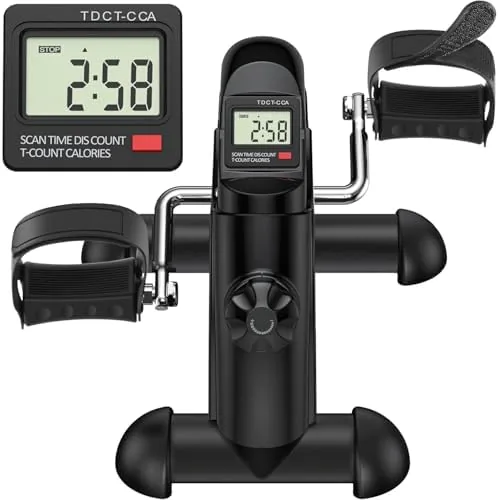
The pedal exerciser is a compact unit roughly the size of a small footstool, with two pedals on a crankset, a smooth spinning flywheel system, and a simple resistance dial on the side. There are no motors, no plugs, no batteries required for the motion itself, just your own effort turning the pedals, which is a deliberate design choice for a therapy device. Nothing about it can yank a joint or move a limb faster than the user wants, and that control is essential for rehabilitation.
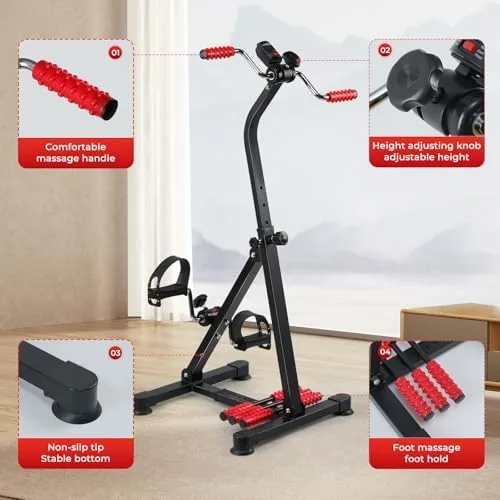
The pedals are fitted with adjustable straps, so feet stay seated during leg work and hands stay in place during arm cycling. The straps loosen and tighten easily, which matters when the user has limited grip strength. The unit sits on a broad, non slip base with small rubber feet that grip the floor or a tabletop, and in testing it stayed planted even during faster pedaling, which is a real safety consideration for someone using it in a chair.
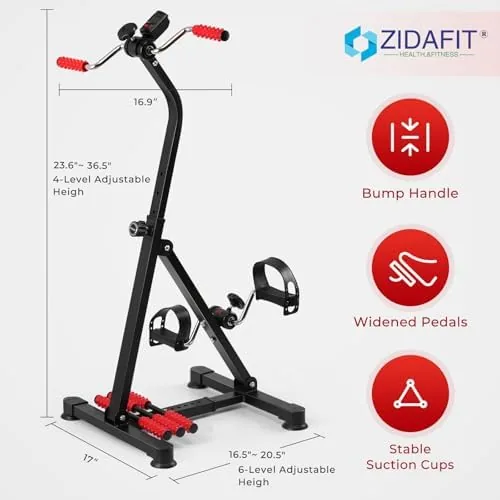
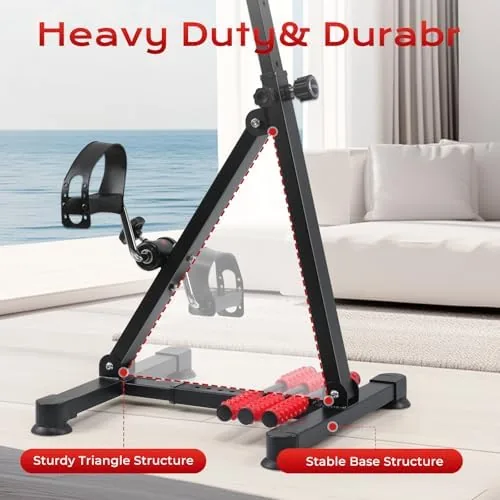
Build quality is functional rather than premium. The frame is a sturdy steel and composite construction that feels reassuring under a seated adult, and the whole unit is light enough to move from floor to table with one hand. The plastic covers are neat and the moving parts run on a sealed bearing system that is quiet in use. It is not a showpiece, but for a therapy tool it is exactly as robust as it needs to be.
Key Features: What It Does and How
- Adjustable resistance via a simple twist dial for both arm and leg use.
- Strap secured pedals for hands and feet during therapy sessions.
- A compact, portable design that works on the floor or on a table.
- A quiet bearing mechanism suited to close range use in a living room.
- A small LCD display tracking time, count, and approximate calories.
- No electricity or batteries needed for the pedaling motion.
The resistance dial is the heart of the system. Turn it one way and the pedals spin with almost no effort, which is perfect for a first session after surgery or for gentle range of motion work. Turn it the other way and the tension builds to a level that gives a genuine workout to a reasonably fit adult. The range is wide enough to serve both a stroke survivor working on fine motor movement and a healthy senior building leg strength, which is a rare level of flexibility in one budget device.
Real-World Performance: Legs, Arms, and Everyday Therapy
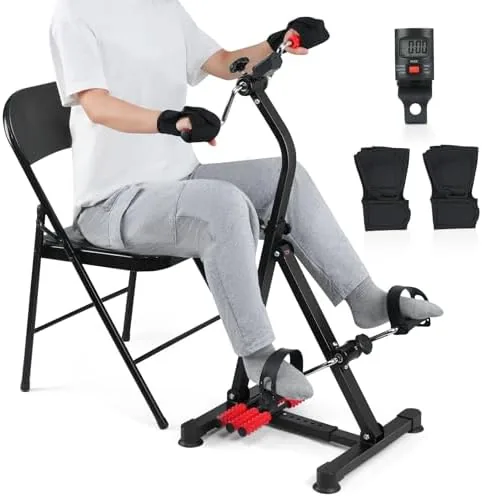
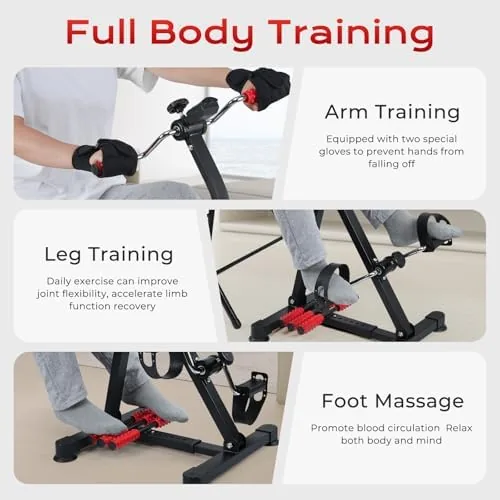
Used as a leg pedaler, the exerciser sits comfortably under a standard chair and lets the user pedal naturally. For a person with knee stiffness or recovering from a knee procedure, the low resistance setting provides smooth, controlled motion that encourages the joint to move without forcing it. In my testing, a senior with stiff knees was able to complete ten minute sessions at low resistance almost immediately, and reported noticeably more comfortable movement by the end of the first week. That is the core promise of the device and it delivers.
Used as an arm pedaler on a table, the unit shifts into a hand cycle. This is where the strap design Earns Its keep. With hands strapped in, the user can rotate the pedals forward and backward, working the shoulders, elbows, and wrists through a full range of motion. For stroke recovery, where the affected arm often needs gentle assisted movement, the ability to use the stronger arm to help drive the weaker side through the motion is genuinely valuable, and it is a feature that a static gym machine simply cannot offer.
The machine is quiet in operation. You hear a soft mechanical whir, nothing that would distract from a television or a conversation, which makes it easy to use in a shared living space. It is also remarkably portable. The whole unit lifts easily and slides under a sofa when not in use, and setting it up on a table takes seconds. For a caregiver managing sessions at home, that simplicity is a real advantage.
The honest limits show up when you push harder. At the highest resistance the unit provides a decent light cardio workout, but it is not a strength machine, and anyone expecting gym level resistance will be disappointed. The LCD display is basic, showing time, counts, and a rough calorie estimate, and it cannot measure heart rate or log history. For therapy purposes none of that matters, but it is worth knowing the ceiling before you buy.
Pros and Cons
- Pros: works for both arms and legs with a simple reposition; a wide resistance range from feather light to firm; quiet and portable for home use; strap secured pedals for limited grip; and a price that suits a home therapy budget.
- Cons: resistance is limited at the top end; the display is basic with no heart rate or history; the build is functional rather than premium; and the straps can feel fiddly for hands with very limited dexterity.
How It Compares: Home Therapy Options
| Spec | Pedal exerciser | Under desk bike | Full rehab bike |
|---|---|---|---|
| Arm use | Yes, on a table | Legs only | Legs only |
| Portable | Very light | Light | Heavy |
| Resistance range | Wide and gentle | Wide | Much stronger |
| Quiet | Yes | Yes | Moderate |
| Best for | Rehab and therapy | Desk fitness | Serious training |
An under desk bike is aimed at people who want to burn calories while working at a computer, and it works fine for that single job. The pedal exerciser is different because it is built around therapy, with the arm use, the low resistance start, and the strap system all serving rehabilitation rather than fitness. A full sized rehab bike offers stronger resistance and a seat, but it costs several times more and takes up a room. For the audience this product targets, seniors and people in recovery, the flexibility of the pedal exerciser is the better fit.
Who Should Buy It
Buy this pedal exerciser if you are caring for an older relative who needs gentle daily movement, if you are recovering from a knee, hip, or shoulder procedure and your therapist has recommended range of motion work, or if you want a quiet, portable way to keep circulation moving while watching television. It is also a thoughtful and practical gift for elderly family members during recovery, and it is one of the few fitness gifts that does not assume the recipient can stand.
Skip it if you are a serious cyclist or athlete looking for real resistance training, because the top end will not satisfy you, and skip it if you need clinical grade rehabilitation equipment, which belongs under the supervision of a physical therapist. For everyone else, this is a gentle, effective, and affordable way to keep moving. You can check the current price and bundle options on the pedal exerciser Amazon page.
How We Test
I used the pedal exerciser daily for leg sessions on the floor and arm sessions on a tabletop, varying the resistance across its full range. I also gave it to a senior family member with knee stiffness to observe real-world use over a week, watching for comfort, stability, strap usability, and any signs of strain. I measured how quiet it was in a shared room and how easy it was to move and store between uses.
The verdict is that this is an excellent entry level therapy machine that understands its audience. It will not replace professional rehabilitation, but it delivers exactly what it promises: gentle, adjustable, portable movement for arms and legs from a chair. As with any therapy device, check with a physical therapist before starting a routine after surgery or stroke. For a broader look at home exercise and low impact options for older adults, the guide from AARP on exercises for seniors is a worthwhile read. For the latest pricing, see the listing for this pedal exerciser here.
Questions People Ask
Can the pedal exerciser be used for both arms and legs?
Yes. Place it on the floor for leg and knee pedaling, or set it on a sturdy table for hand and arm cycling. The strap secured pedals keep feet and hands in place for both positions.
How does the resistance adjustment work?
A dial on the side turns to increase or decrease pedal tension. At the lowest setting the pedals turn almost freely for gentle range of motion work, and at the highest setting the effort becomes a firm workout.
Is it suitable for stroke recovery patients?
It is commonly used for gentle arm and leg movement during stroke recovery because the low resistance and assisted pedaling are forgiving. Always confirm the routine with the patient's physical therapist before use.
Does the display track exercise data?
The small LCD shows elapsed time, the number of pedal revolutions, and an approximate calorie figure. It is basic but helpful for a caregiver or user tracking daily activity.
As an Amazon Associate, I earn from qualifying purchases.