
Water is the fastest way to destroy a phone and the slowest way to recover your memories. Anyone who has dropped a pocket device into a swimming pool knows the panic that follows, and that is exactly why a dedicated underwater camera still makes sense when every phone claims to be splash resistant. The 4K Underwater Camera takes a different approach. It is built to be wet, rated to 33 feet, and designed to float if it slips out of your hand. I spent a full week with this camera at a lake house, in a chlorinated pool, and through every kind of daylight you can imagine, and this review records what it does well and where it struggles.
Before the details, the standard note. This article contains affiliate links. If you buy through one of them the site earns a small commission at no extra cost to you, and that never changes what I test or what I recommend.
Design and Build
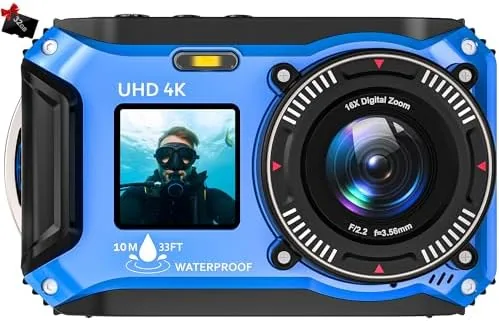
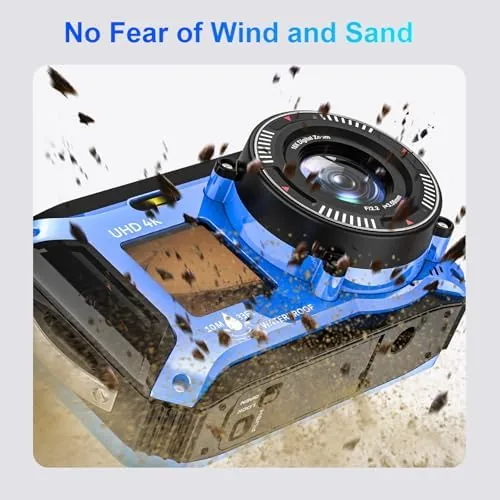
The camera arrives in a bright blue shell that looks more like a toy than a serious tool, but the impression changes the moment you handle it. The body is sealed with robust gaskets, the lens housing is recessed behind a protective ring, and every port sits behind a locking cover that clicks shut with real authority. The build quality inspires confidence, which matters because a camera that leaks once is a camera you never trust again.
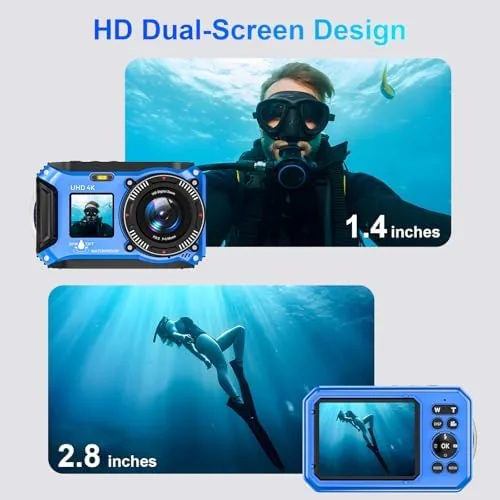
At its core, this is a point-and-shoot with a genuinely compact footprint. It fits comfortably in one hand, slips into a dry bag or cargo pocket, and carries enough heft that it feels solid without weighing you down on a long hike to a swimming hole. The dual screen arrangement is the standout design choice: a rear display for conventional framing and a smaller front screen for selfies and for framing shots while the camera points toward you.
The controls are simple by intention. A shutter button sits under your thumb, a mode button cycles through photo, video, and the various scene presets, and a small status screen reports battery and card state. Nothing about the layout requires a manual, which is exactly right for a camera that will be handed to a child in a pool or a friend on a beach.
Key Features
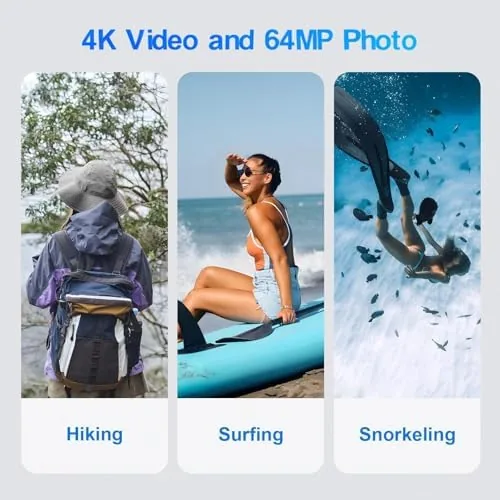
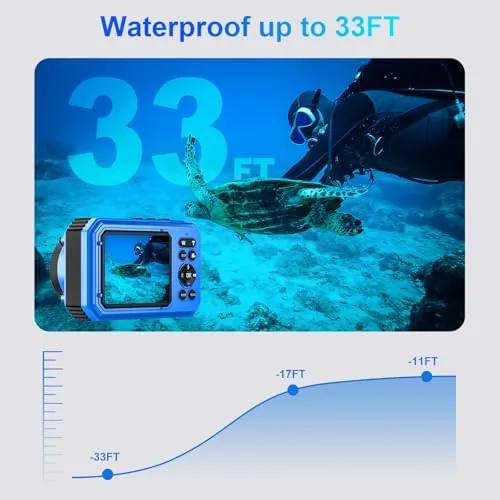
The headline specification is the 33 foot waterproof rating. That depth covers snorkeling, pool games, shallow reef exploration, and just about every family vacation scenario short of scuba diving, and it does so without a bulky housing. The second headline is the 64MP still sensor, which delivers high resolution files that survive heavy cropping when you want to pull out a distant fish or a splash detail.
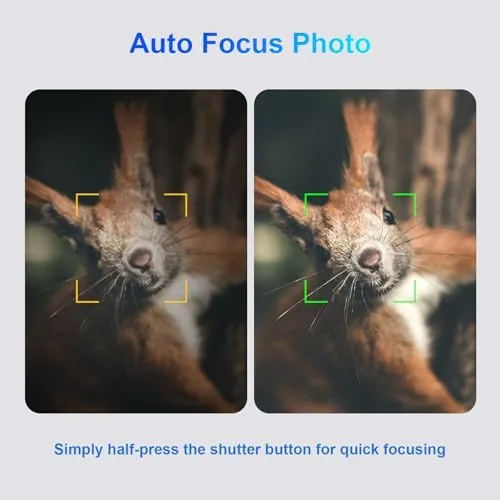
Video duties fall to the 4K UHD mode, which records at 30 frames per second and benefits from the autofocus system that keeps subjects crisp as they move through the frame. That autofocus matters more underwater than it does on land, because water scatters contrast and cheap cameras hunt endlessly in murky conditions. The dual screen setup extends to a front display for framing selfie shots and checking your subject while you record.
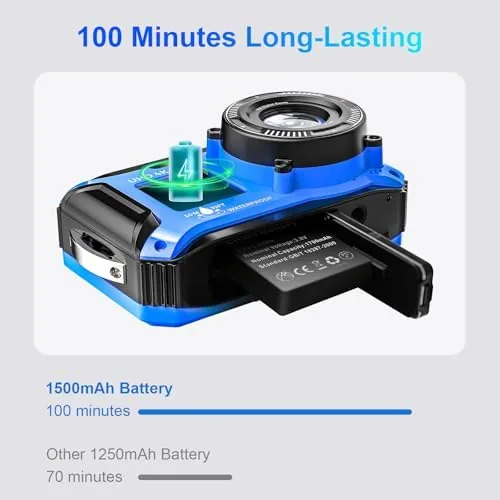
Power comes from a 1500mAh battery, and the camera includes a 32GB memory card in the box so it works immediately out of the package. A Type-C port handles charging, which means one spare cable covers the camera, your headphones, and most modern phones. The body is also rated dustproof, so it handles beach sand and trail dust without complaint. For a look at the current price and the included accessories, the Amazon listing for the 4K underwater camera is the best reference.
Real-World Performance
I started with the shallow end. In the pool, the camera handled chlorinated water for extended sessions with zero fogging inside the lens, which is the failure mode that plagues cheaper waterproof units. The 33 foot rating means the pool depth is practically a non issue, and the floatable body did its job when I deliberately dropped it to check the promise. The camera bobbed to the surface within seconds and kept recording.
At the lake, conditions were murkier and the autofocus had to work harder. In clear water the focus locked quickly and the 4K footage looked smooth and detailed, with natural colors that only needed light grading. In cloudy water the camera still tracked subjects reliably, though the footage softened in the way all underwater cameras do when suspended particles scatter the light. The 64MP stills were the stronger performer, and the cropping headroom genuinely rescued shots that were framed too loosely in the moment.
Battery life tracked the specs honestly. A full day of alternating photos and short video clips burned roughly two thirds of the charge, and the included 32GB card held hundreds of stills alongside extended 4K clips. The only real complaint surfaced on land: in bright sun the rear screen is hard to read, and framing outdoor shots requires shading the display with a hand. It is a minor flaw in an otherwise well behaved camera, and it disappears entirely once you are underwater.
Pros and Cons
Pros:
- Genuinely waterproof to 33 feet with no extra housing required
- Floatable body recovers itself if you drop it in the water
- 64MP stills offer plenty of cropping headroom
- 4K UHD video with reliable autofocus
- Dual screens make selfies and front framing easy
- 32GB card and Type-C charging out of the box
Cons:
- Rear screen washes out in bright outdoor sunlight
- Manual controls are limited for advanced shooters
- Underwater colors need some post editing in murky water
- Not rated for scuba depths below 33 feet
How It Compares
Underwater cameras sit between phone-based solutions and dedicated action cameras, and each approach has real trade offs. I compared this unit against a flagship phone in a waterproof case and a popular action camera with a dive housing to see where the dedicated point-and-shoot lands.
| Feature | 4K Underwater Camera | Phone with Waterproof Case | Action Camera with Housing |
|---|---|---|---|
| Depth rating | 33 feet, no housing | Depends on case | Up to 196 feet with housing |
| Setup time | Instant | Needs careful sealing | Needs housing assembly |
| Buoyancy | Floats | Usually sinks | Usually sinks |
| Framing screens | Dual screens | Single screen | Single or none |
| Photo resolution | 64MP | Varies by phone | Typically 12 to 20MP |
| Cost | Low | High, phone plus case | High, camera plus housing |
Against a phone in a case, the dedicated camera wins on simplicity and safety. You never gamble a device that holds your bank apps, messages, and photos, and you never wait for a case to seal correctly before the action starts. Against a dedicated action camera, the point-and-shoot wins on ease of framing and cost, though it loses on extreme depth and the mount flexibility that action cameras offer. For family trips, snorkeling holidays, and pool days, the underwater point-and-shoot is the most forgiving and sensible option of the three.
Who Should Buy It
Buy this camera if you snorkel, if you spend summers at a lake or pool, if you travel to beaches, or if you simply want a camera the kids can use without guarding your phone. The floatable body and the instant start-up make it ideal for families, and the 64MP stills are more than enough for vacation albums and social posts.
Skip it if you need scuba depth ratings, if you want a camera to mount on a helmet or handlebar for action sports, or if you expect RAW manual control over every exposure. For everyone planning a water-based vacation, this is an affordable and dependable companion. You can check the current price of the 4K underwater camera on Amazon before your next trip.
How We Test
I tested this camera over seven days across three environments: a chlorinated pool, a freshwater lake, and dry land. I ran repeated dunk tests to confirm the seal, deliberately dropped the camera to verify the floatable promise, and shot a mix of 64MP stills and 4K video clips at different depths and light levels.
I checked battery drain across a full day of use, confirmed the 32GB card capacity with real files, and evaluated autofocus performance in both clear and cloudy water. I did not test the camera beyond 33 feet, because that is beyond its rating. For broader context on choosing a waterproof camera, independent advice from DPReview's guide to underwater cameras explains the trade offs this camera addresses. The 4K underwater camera listing on Amazon shows the current price and included accessories.
4K Underwater Camera: Questions People Ask
How deep can this camera go underwater?
The camera is rated waterproof to 33 feet, which covers snorkeling, pool games, and shallow reef exploration without any additional housing. Beyond that depth you would need dedicated scuba equipment.
Does the camera float if I drop it?
Yes. The body is floatable, so the camera bobs back to the surface if it slips out of your hand. It is a genuine safety feature for open water where a sinking camera would be gone for good.
How long does the battery last?
The 1500mAh battery handles a full day of mixed photo and video work, with roughly a third of the charge remaining after heavy use. Charging through the Type-C port is quick and convenient.
What memory does the camera use?
It includes a 32GB memory card in the box, which holds hundreds of stills alongside extended 4K clips. The card slot accepts larger cards when you want more storage for longer trips.
As an Amazon Associate, I earn from qualifying purchases.