
Eggs have a way of refusing to behave. A cracked egg spreads into whatever shape the pan gives it, pancakes wander into uneven blotches, and the tidy round egg that belongs on a breakfast sandwich rarely arrives on its own. The 4-inch silicone fried Egg Rings Set tries to fix that with four simple round molds that hold eggs, pancakes, and sandwich fillings in a neat circle while they cook. I used the set every morning for two weeks, making fried eggs, pancake rounds, and breakfast sandwiches, and this review covers how well the rings hold their shape, release the food, and survive repeated use.
Before the first egg goes in the pan, the standard note. This article contains affiliate links, and if you buy through one of them the site earns a small commission at no extra cost to you. That commission does not change my testing or my verdict, and the rings were used exactly as a home cook would use them.
The concept is simple: four round silicone molds that sit in the pan and shape whatever you pour into them. The rest of this review walks through the build, the features, and how the rings behave across a week of breakfasts.
Design and Build
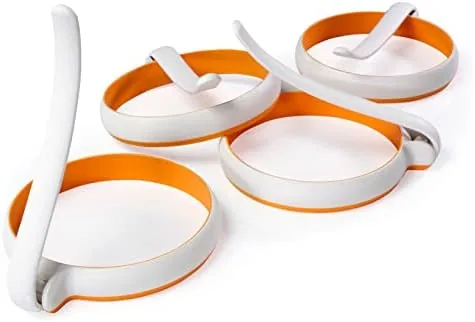
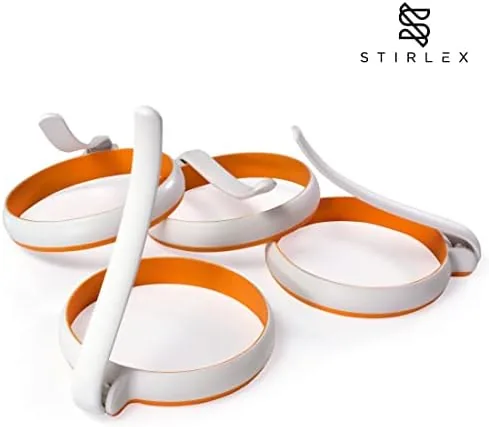
The set ships as four individual rings, each measuring 4 inches across, which is the size of a standard English muffin or breakfast bun. The silicone is food grade and flexible, with a smooth interior surface that does not grab the food, and a small lip around the base that helps the ring sit flat in the pan. The walls are tall enough to hold a decent amount of batter or a whole egg without spilling over the top, which is the first sign that the mold was designed around real cooking rather than just looked right on a shelf.
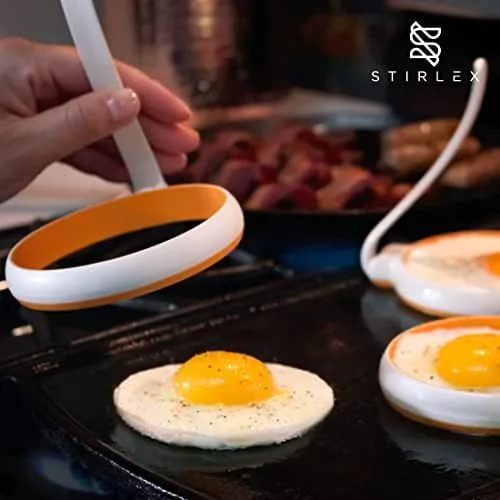
The build is deliberately simple, and that is mostly a strength. There are no hinges, no clips, and no metal parts to bend or break, so each ring is as sturdy as a single molded piece of silicone can be. The rings flex when you squeeze them, which makes them easy to lift off a cooked egg, and they spring back to their original round shape without distorting. The flexible body is the whole design, and for this job it works. There is nothing to assemble, nothing to tighten, and no latch to jam, which keeps the product in one piece for as long as the silicone holds up.
Key Features
The 4 inch round shape is the core feature. A standard breakfast sandwich bun is close to 4 inches across, so an egg cooked in the ring lines up neatly with the bread instead of hanging over the edges. Pancakes poured into the ring come out as consistent rounds, which matters if you are making a stack for a family or packing lunches, because every pancake matches the one before it.
The nonstick silicone surface is the second feature. Eggs release from the interior cleanly, even with only a whisper of oil, and the rings do not scratch the skillet the way a metal mold would. Because silicone tolerates high heat, the rings sit comfortably in a hot pan and lift out with a gentle squeeze of the fingers without scorching. The food grade rating also means the molds are safe to touch food directly, with no coating that can flake off into breakfast.
The four pack size rounds out the design. Four rings fill a standard skillet at once, so you can cook the whole family eggs in a single batch, or use two rings while the others wait for a second round. The rings stack and store flat in a drawer, which keeps the kit tidy between uses, and the flexible material means they can bend into a small space without damage. The combination of shape, surface, and quantity covers the practical breakfast scenarios most households actually face.
Real-World Performance
I started with the basic job, fried eggs. I placed a ring in a lightly oiled nonstick skillet, cracked an egg into the center, and covered the pan with a lid to help the top set. In about three minutes the white firmed into a perfect round, the yolk stayed centered, and the egg lifted out with a gentle squeeze of the ring. The nonstick interior held up its end, releasing the cooked egg without tearing the white or leaving a residue behind, and the ring itself came away clean with a quick rinse.
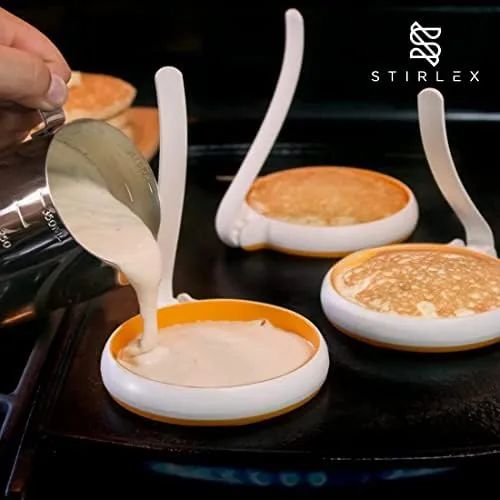
Pancakes were the second test. I poured a small ladle of batter into each ring and let it cook on one side, then flipped the ring and pancake together to finish the other side. The rounds came out nearly identical in size, which is exactly what you want when you are stacking pancakes for a crowd, and the batter did not leak under the base because the ring sat flat against the pan. The release was clean, and the pancakes needed only a light wipe of butter to stay loose in the mold.
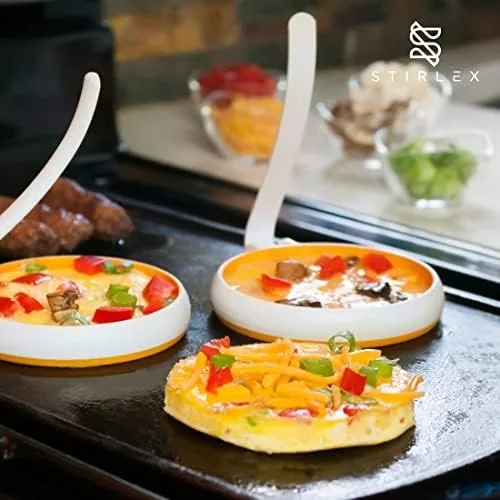
The breakfast sandwich test combined both jobs. I cooked an egg in the ring, toasted a muffin, and layered the egg with cheese and sausage. The 4 inch round fit the bun almost perfectly, with a thin rim of egg visible around the bread, which is the right look for a hand held sandwich. The same ring also shaped a hash brown patty and a folded omelet, so the set is genuinely multi purpose rather than a one trick accessory, and it earned a permanent spot in the morning routine.
The honest limits showed up after a week of use. A ring can slide slightly in the pan if you pour batter too aggressively, so a steady hand helps keep the shape exact. The silicone also wants a little oil or butter to be truly nonstick; with a completely dry pan, the egg can catch at the base and tug when you lift. Neither issue is serious, and both are easy to work around, but they are worth knowing before you buy.
Cleanup was the easiest part of the whole test. The rings rinsed clean under warm water, and the occasional stuck bit came off with a soft sponge. The silicone tolerated the top rack of a dishwasher without warping or losing its shape, which is the kind of low maintenance that keeps a breakfast tool in regular rotation rather than buried in a drawer.
Pros and Cons
Pros:
- Round 4 inch mold matches standard breakfast buns
- Food grade silicone is safe for nonstick pans
- Eggs and pancakes release cleanly from the interior
- Four rings cook a family batch at once
- Flexible body is easy to squeeze and lift
- Stack and store flat in a drawer
Cons:
- Rings can slide in the pan if filled too quickly
- A little oil is still needed for a perfect release
- No handles, so hot rings need a careful touch
- Single size fits only standard buns
How It Compares
The Silicone Egg rings sit between a dedicated metal egg mold and a freehand approach in the pan, and the choice comes down to how much shaping you want and what you are willing to risk on the cookware. The table below lines up the options.
| Feature | Silicone Ring Set | Metal Egg Molds | Freehand in Pan |
|---|---|---|---|
| Round egg shape | Excellent | Excellent | None |
| Pan safety | Gentle on nonstick | Can scratch | No mold used |
| Ease of release | High | Varies | Not needed |
| Batch cooking | Four at once | One or two | Any number |
| Cleanup | Dishwasher safe | Hand wash | Skillet only |
| Price | Low | Low | None |
A metal mold holds a firmer shape but risks scratching a nonstick coating, which is a real cost over time. Cooking freehand is cheapest but leaves eggs in whatever shape they choose, and the egg always spreads. The silicone rings give you consistent rounds without risking the pan, which is the balance most breakfast cooks actually want. For the sandwich lover or the pancake stacker, the set removes the biggest frustration of morning cooking. You can check the current price of the 4 inch silicone egg rings on Amazon.
Who Should Buy It
Buy the set if you make breakfast sandwiches, if you want uniform pancakes for a family, or if you are tired of eggs spreading across the whole skillet. It is also a strong fit for a first kitchen, a dorm room, or a camping kit, because the rings are light, flexible, and effectively unbreakable, and they take up almost no space in a drawer.
Skip it if you prefer the freeform look of a naturally fried egg, or if you only cook a single egg at a time and do not need four molds. For anyone who likes their morning eggs neat and their pancakes identical, the set is a small, inexpensive fix that quietly improves a meal you make every day.
How We Test
I used the silicone rings for two weeks, cooking fried eggs, pancake rounds, breakfast sandwiches, hash browns, and folded omelets across a mix of nonstick and stainless skillets. I watched the rings for shape distortion, checked how they sat in the pan under batter and liquid, and cleaned them by hand and on the top rack of a dishwasher to test the silicone tolerance.
I did not use the rings over an open flame or on a grill, and I did not test them beyond the 4 inch cook size. For a deeper look at egg technique, Serious Eats explains the basics of cooking fried eggs in useful detail. The 4 pack silicone egg rings listing on Amazon shows the current color options and bundle deals.
Silicone Fried Egg Rings: Questions People Ask
Can I use these silicone rings on a nonstick pan?
Yes, the food grade silicone is soft and safe for nonstick surfaces, and the rings will not scratch the coating the way metal molds can.
Do eggs stick to the silicone egg rings?
The molds release eggs and pancakes easily, especially if you add a light smear of oil or butter before you crack the egg in.
Are the 4 inch rings big enough for a breakfast sandwich?
Yes, a 4 inch ring matches a standard sandwich bun, so the cooked egg rounds fit nicely between the bread.
How do I clean the silicone molds?
Rinse them in warm soapy water or place them on the top rack of a dishwasher, since silicone tolerates heat and gentle washing without warping.
As an Amazon Associate, I earn from qualifying purchases.