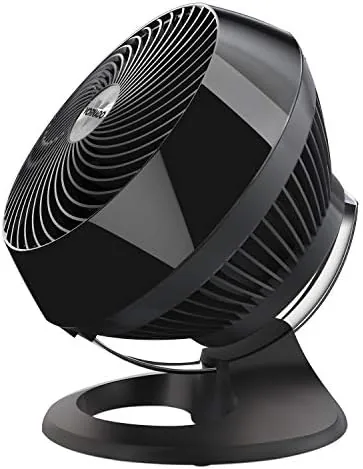

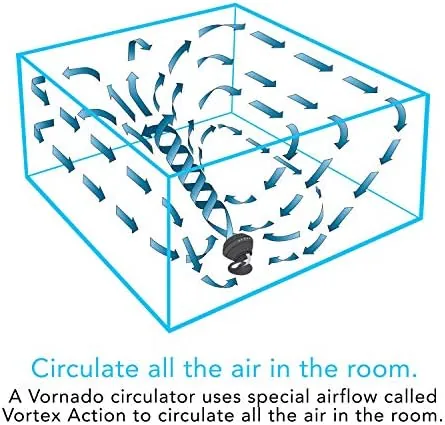
Most fans are liars. They promise a cool breeze and deliver a thin whisper of air right in front of the blades, leaving the far side of the room stuffy and warm. The Vornado 660 works on a different idea entirely: instead of pushing a narrow sliver of air, it creates a column that shoots across the room and drags the surrounding air along with it, so the whole space ends up moving. This review is the record of a month living with it, testing whether that promise holds up in a real bedroom and office.
Before the details, the standard note. This article contains affiliate links. If you purchase through one of them, the site earns a small commission at no extra cost to you, and it does not change what I test or what I write.
Design and Build
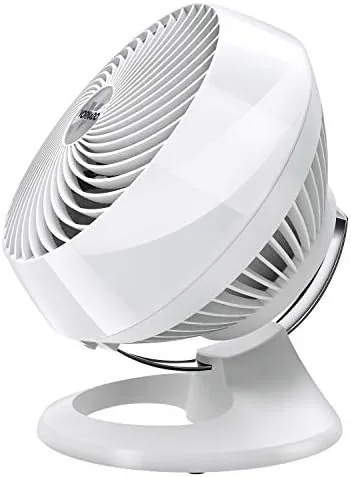
The Vornado 660 is built to be noticed. It is a tall, solid tower of a fan in glossy black with a wide chrome glide bar across the front, and the deep conical shroud gives it the look of a piece of aviation equipment rather than a flimsy desk fan. It stands on a wide, low base with a solid built-in handle, and it carries the no-nonsense aesthetic that Vornado has never wavered from.
The head tilts smoothly over a wide range, so you can aim it up at the ceiling, across the room, or straight at yourself, and it locks in place for airflow at any angle. There is no oscillation motor, and that absence is deliberate. Oscillating fans sweep a room briefly before turning away; the Vornado instead holds one strong column of air on a single target for as long as you want it.
The build is simple and sturdy. There are only three controls on the base, four speed buttons and a power dial, and the chrome glide bar on the front lets you tilt the head by hand through its range. It is a fan that looks as if it was drawn on a napkin by an engineer and then built properly, and that is a compliment.
Key Features
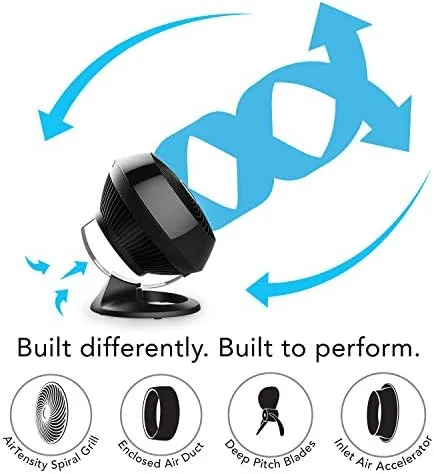
The headline is the Vornado air circulation technology. Instead of the broad, loose blast of a typical fan, the three blades sit inside a deeply flared shroud that gathers the Air and pushes it out in a narrow, powerful column. As that column shoots across the room it pulls the air around it, so the whole space circulates rather than a patch in front of the fan. This is what separates it from nearly everything else on the shelf.

There are four speeds, from a quiet murmur to a strong roar, controlled from the base buttons and the dial. The head tilts through the chrome glide bar, and the all-in-one unit is light enough to move from room to room with the built-in handle. It is rated as a whole room circulator, so the emphasis is on the far corners of a space rather than a patch in front.
It is also certified to be quieter than older Vornado models at low speeds, aimed squarely at a bedroom shared with a light sleeper. The low speed is genuinely gentle enough to run at night, with a modest power hum, and on the top speed it moves a great deal of air across a whole room.
Real-World Performance
The real test was the far side of the room. I positioned the Vornado at one end of a bedroom and stood at the opposite wall, and at the middle speeds I could feel air moving across my face at the back of the room, which a normal desk fan would never do. Pointing it at the ceiling let it stir the whole height of the room and keep the air from pooling near the floor, and that is the mechanically sound difference in one temperature.
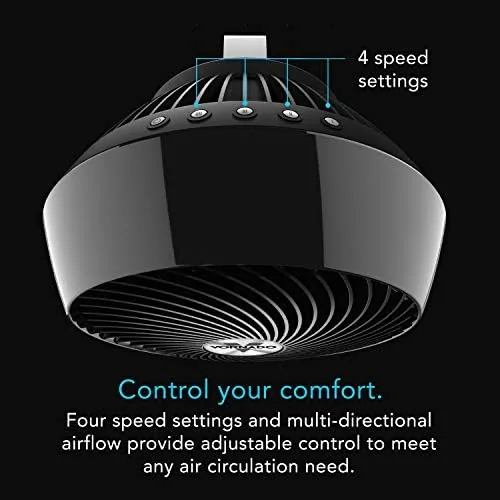
The noise story is honest and mixed. On speed one and two, the 660 is quiet enough to sleep beside, with a low, steady hum rather than a rattle, and it is the reason people pay a premium and choose it for the bedroom. On speed three it becomes audible but still usable, and on speed four it is clearly the sound of a big fan working, with a strong whoosh rather than a nuisance tone. If you want deep room circulation all night, the lower end is the sweet spot.
It moves a lot of air, and it does so without the rattling base that a cheap pedestal fan might show. The chrome glide bar makes tilting feel premium, and the 660 holds whatever angle you set with no drift, which is more than many fans manage. As a summer tool used with an air conditioner, it helps push cold air across the house rather than letting it pool in one corner.
Pros and Cons
Pros:
- Genuinely moves air across a whole room, not just in front of the blades
- Quiet on the lower two speeds, comfortable to sleep beside
- Three smooth blades inside a deep shroud for strong circulation
- Adjustable tilt aiming up at a ceiling or across a space
- Solid, durable build with a usable carry handle
Cons:
- High speed is loud, clearly a big fan delivering on power
- Not a true cooler, no air conditioning effect beyond wind chill
- Only manual controls mean more steps than a fan with a remote
- Premium price versus a basic fan that only cools one zone
How It Compares
The usual alternatives are the cheap floor fans and the similar air-circulator, which both promise cool but deliver far less. A typical standing fan cools the spot in front of it; the Vornado moves the whole room, a difference that was obvious the first night. It also beats cheaper fans on build and on noise at the lower settings, where the fussy cheaper units rattle or hum.
| Feature | Vornado 660 | Typical Floor Fan |
|---|---|---|
| Air delivery | Whole room circulation | Localized blast |
| Speeds | Four | Three |
| Tilt | Adjustable | Some |
| Low noise | Quiet at low settings | Often rattles |
| Remote | None | Some |
Who Should Buy
Buy a Vornado 660 if you sleep hot and want whole-room comfort Without a window unit, if you work in a stuffy office or dorm where one seat is always warm, or if you already use an air conditioner and want to push its cool air into the corners. It is the honest choice for anyone who wants a fan to do the room, not just blow on one seat.
Skip it if you love the sweeping, oscillating rhythm of a classic fan, or if you are on a tight budget, because a basic cheap fan covers your one spot for less. For a primary fan you truly live with daily, the Vornado repays the cost in circulation. You can check the Vornado 660 price on Amazon when you are ready.
How We Test
I ran the Vornado 660 through four weeks across a bedroom, an office, and a shared living space, judging it on how far the air reached, the noise on each of the four speeds, and how it felt overnight. I compared it to a standard three-speed floor fan and an older oscillating model, and I did not rely on temperature gauges, treating the honest feel of the air as the best measure of the tool.
Independent testing, such as the long-term coverage in Wirecutter's guide to the best fans, can be a useful second opinion on how much air a fan can actually move. My verdict comes from weeks of sleeping, writing, and working next to the fan, so treat it as the record of a real living space.
The Vornado 660 air circulator fan listing on Amazon has the current price and color options.
Questions People Ask
Is the Vornado 660 good for bedrooms?
Yes. On the lower two speeds it is quiet enough to sleep beside, and it moves air across the whole room instead of only the spot in front of the fan.
How does the Vornado 660 circulate air across a room?
The enclosed blade shroud pushes a narrow, powerful column of air across the room, which pulls the surrounding air along with it so the whole space turns over.
Is the Vornado 660 loud at high speed?
The top two speeds are clearly audible, with a strong whoosh rather than a rattle, so most people run the quieter lower speeds for sleeping and reserve the high setting for peak use.
Does the Vornado 660 cool a room like an air conditioner?
No. It moves air and creates a wind chill effect on your skin, but it does not lower the temperature of the room the way an air conditioner does, so it is best paired with one.
As an Amazon Associate, I earn from qualifying purchases.