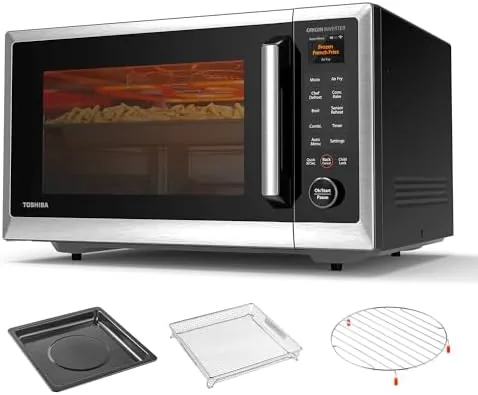

Countertops have a crowding problem. The microwave sits in one corner, the Air Fryer claims the other, and the toaster oven squeezes in somewhere between the kettle and the knife block. The TOSHIBA OptiChef Pro Max air fryer combo microwave oven is designed to collapse that clutter into a single 1.3 cubic foot silver box that reheats, defrosts, bakes, crisps, and air fries. I ran one through three weeks of daily cooking, from reheating soup to roasting chicken wings, and this review covers what the inverter power, the color screen, and the Smart Sensor actually do in a real kitchen.
Before the cooking details, the standard note. This article contains affiliate links. If you buy through one of them, the site earns a small commission at no extra cost to you, and that never changes what I test or what I recommend.
This review walks through the design, the features that matter most for daily use, several weeks of real cooking, and who should replace their existing appliances with this unit. If you are deciding between a combo oven and separate devices, the comparison table near the end will help you choose.
Design and Build
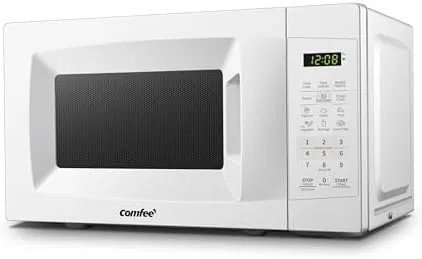
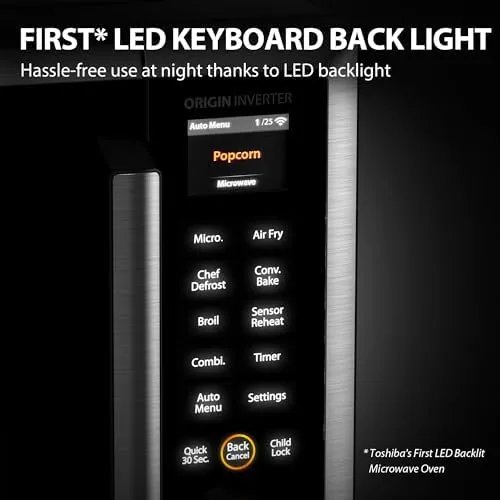
The OptiChef Pro Max looks like a premium countertop microwave at first glance, with a brushed silver finish, a dark glass door, and a 2.4 inch color screen mounted in the upper corner of the control panel. The display replaces the old seven segment digits with full color graphics that show cook modes, temperatures, and rotating status icons, which makes the unit noticeably easier to read than a traditional digital microwave.
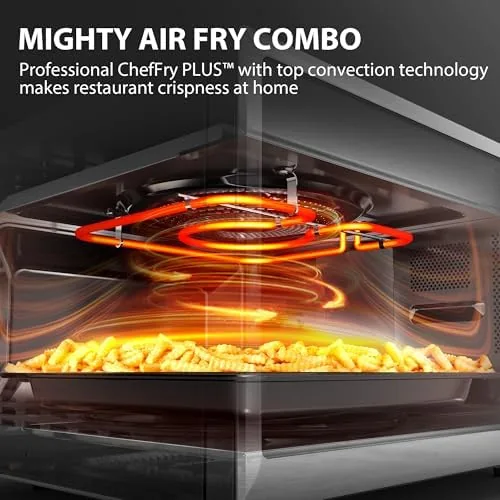
The interior is a 1.3 cubic foot cavity with a turntable, and the overall footprint is compact enough for a standard countertop without dominating the space. The door hinge, the handle, and the stainless finish all feel solid, and the unit sat flat and stable through every cook cycle. Air frying mode circulates heat through a built in fan, so the interior is designed with the airflow channels you expect from a dedicated air fryer rather than a retrofit heating element.
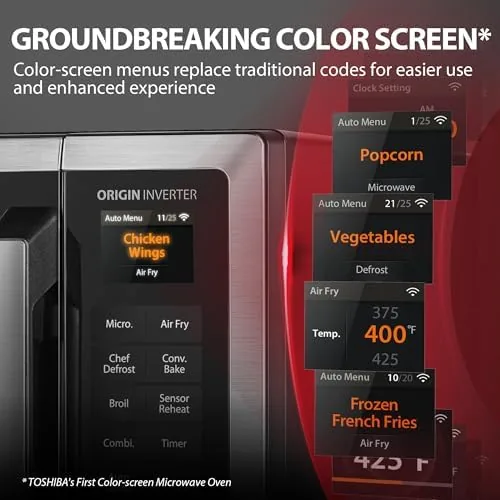
The build quality is a clear step up from budget microwaves. The door closes with a firm latch, the interior light is bright, and the glass tray sits in a stable cradle. One design tradeoff is weight. This is a heavier machine than a simple microwave, and you will want a countertop spot you do not plan to move often.
Key Features
The defining feature is the combination of microwave and air fryer in one cavity. You can microwave a frozen dinner or run a full air fry cycle on fresh wings, and the unit has dedicated modes for air fry, bake, broil, crisp, and combo cooking, where microwave power works alongside the convection fan to speed up results. The combo modes are the practical advantage, because they shorten cooking time versus a convection oven alone.
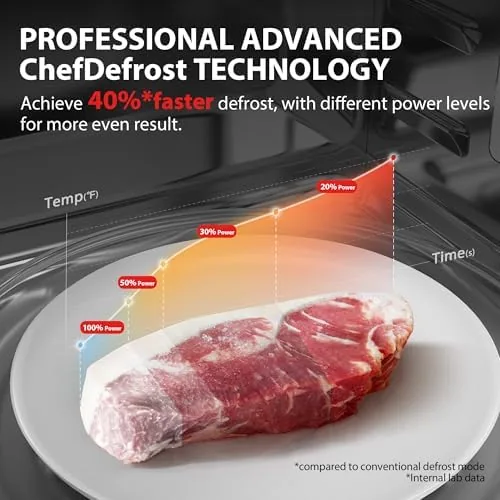
The inverter technology is the second headline feature. Traditional microwaves pulse power on and off to regulate output, which can overcook edges while the center stays cold. Inverter power delivers continuous low wattage, and the practical effect shows up in defrosting and reheating. A frozen block of meat defrosted more evenly than it does in a pulsing microwave, and delicate reheating of sauce and rice did not create hot spots.
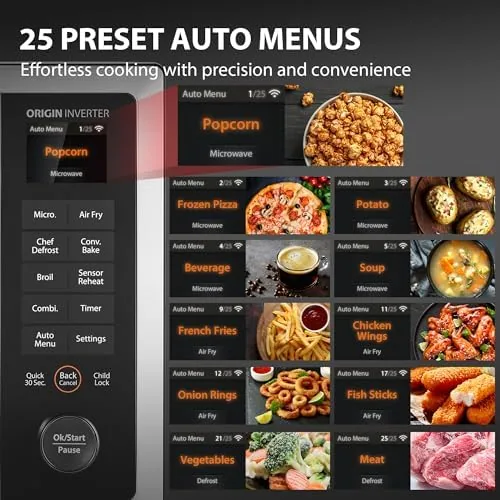
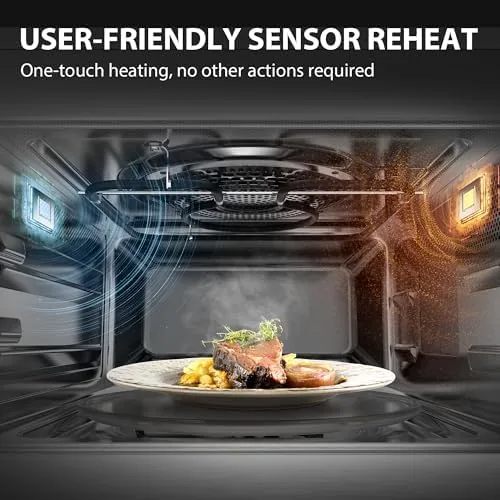
The smart microwave sensor adds a genuinely useful automation layer. When you choose sensor modes such as popcorn, potato, beverage, or reheat, the unit measures steam and humidity inside the cavity and stops the cycle when the food reaches the right level. I used the sensor reheat constantly, and it removed the guesswork of pressing a manual time. The Alexa compatibility rounds out the feature set, so you can start and stop selected cycles with voice commands through the included app and skill. For a current look at pricing and package contents, the Amazon listing for the TOSHIBA OptiChef Pro Max is a useful reference.
Real-World Performance
I started with the most common job, reheating leftovers. The sensor reheat handled rice, pasta, soup, and a stir fry with consistent results, and the inverter power meant reheated dishes came out warm throughout rather than scorched at the rim. The beverage mode handled coffee and tea without boiling them over, and the popcorn mode stopped before the bag burned, which is more than I can say for my old microwave.
The air fry function is where this unit earns its keep. Frozen french fries came out crisp on the outside and soft inside, and chicken wings finished with a dry, browned skin instead of a steamed exterior. The unit does not hold as much as a large basket air fryer, so a full batch of wings for four people needed two rounds, but the quality was genuinely comparable to a dedicated air fryer. The baking and broiling modes also worked well for smaller jobs such as reheating pizza, melting cheese, and toasting the surface of a casserole.
Defrosting deserves special mention because the inverter makes a real difference. A frozen pound of ground beef defrosted from the outer edge to the center without any section starting to cook, which is the classic failure of pulsing microwaves. The crisping function handled refrigerated leftovers such as fried chicken and dumplings by bringing back some of the crunch that a plain microwave destroys.
The honest limitations show up at the edges. The unit is loud in air fry mode, because the convection fan runs continuously, and the cooking times are slower than a dedicated microwave for basic reheating. The interior is also easier to soil in air fry mode, and grease residue needs a wipe down after oily batches. None of these problems broke the experience, but they are worth knowing before you cook.
Pros and Cons
Pros:
- Combines microwave, air fryer, and convection oven in one countertop unit
- Inverter power defrosts and reheats more evenly than pulsing microwaves
- Smart sensor removes guesswork from popcorn, reheat, and beverage cycles
- Color screen is bright, clear, and easier to read than old style displays
- Combo modes speed up cooking versus a convection oven alone
- Alexa voice control works for common cycles
Cons:
- Air fry capacity is smaller than a dedicated basket air fryer
- Convection fan is noticeably loud during air fry cycles
- Heavier than a standard microwave and not easy to move
- Basic microwave jobs take slightly longer than a pure microwave
How It Compares
Combo ovens compete against separate devices, and the choice depends on your counter space and cooking style. I compared this unit against a standard microwave and a standalone basket air fryer to show where each excels.
| Feature | OptiChef Pro Max | Standard Microwave | Basket Air Fryer |
|---|---|---|---|
| Reheating speed | Fast | Fastest | Slow |
| Air fry quality | Good | None | Excellent |
| Defrost control | Excellent, inverter | Fair | None |
| Capacity | 1.3 cu ft | 1.0 to 2.2 cu ft | Basket only |
| Countertop space | One unit | One unit | Second unit |
| Price | Mid to high | Low | Mid |
Against a standard microwave, the OptiChef wins on versatility but loses on pure reheating speed and price. Against a basket air fryer, it wins on footprint and the ability to also defrost and reheat, while the dedicated fryer holds larger batches and often produces slightly better texture. For most kitchens, the single unit is the smarter use of countertop space, and you can check the current price for the OptiChef Pro Max on Amazon to weigh the cost against the space it saves.
Who Should Buy It
Buy the OptiChef Pro Max if your countertop is crowded and you keep reaching for both a microwave and an air fryer in the same week. It is ideal for apartments, dorm rooms, small kitchens, and anyone who wants one appliance that can reheat a coffee, crisp frozen fries, and roast a small chicken without pulling out three machines.
Skip it if you cook for large households that need a full sized air fryer basket, if you want the absolute fastest reheating available, or if you have the space and budget for separate dedicated appliances that each excel at one job. For the typical kitchen that wants fewer machines and more countertop, this unit delivers on the promise.
How We Test
I used the OptiChef Pro Max daily for three weeks in a home kitchen. I tested the sensor reheat and beverage modes across soup, rice, pasta, and coffee, ran air fry cycles on frozen fries and fresh chicken wings, defrosted frozen meat from ground beef to chicken, and used the crisping function on leftover fried food.
I tracked cooking times, checked for cold spots and hot spots after every reheat, and measured noise during air fry cycles. I did not test the Alexa integration beyond the basics, and I did not run heavy daily air fry loads that would stress the fan beyond normal use. For independent perspective on combo ovens and countertop cooking, CNET's guide to the best countertop ovens explains how combo units fit into a modern kitchen. The TOSHIBA OptiChef Pro Max listing on Amazon shows the current price and what comes in the box.
Questions People Ask
Does the OptiChef Pro Max really replace a separate air fryer?
Yes for smaller batches. The air fry and crisp functions produce genuinely crunchy results, but the 1.3 cubic foot cavity holds less than a large standalone air fryer basket, so large family portions need two rounds.
What does inverter technology do in this microwave?
Inverter power delivers continuous low wattage instead of pulsing on and off, which means defrosting and gentle reheating are more even and delicate foods such as chocolate and sauces are less likely to scorch.
Can the microwave be controlled with Alexa?
Yes. The unit connects to Wi-Fi and works with Alexa voice commands for starting and stopping common cook cycles, though you still open the door and set the dial for the most complex programs.
Is the 1100W power enough for everyday reheating?
Yes for standard meals. 1100W heats leftovers, drinks, and prepared foods quickly, and the sensor function stops cooking automatically when the food reaches the right level.
As an Amazon Associate, I earn from qualifying purchases.