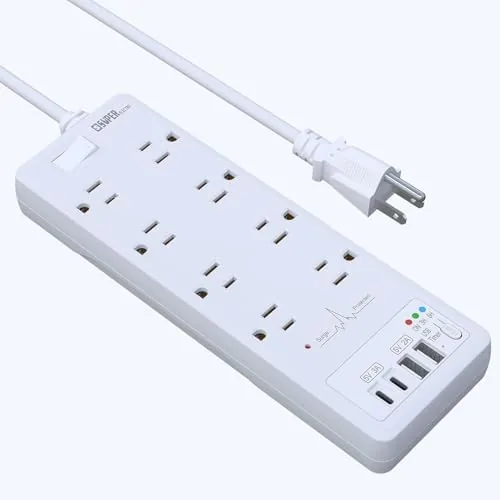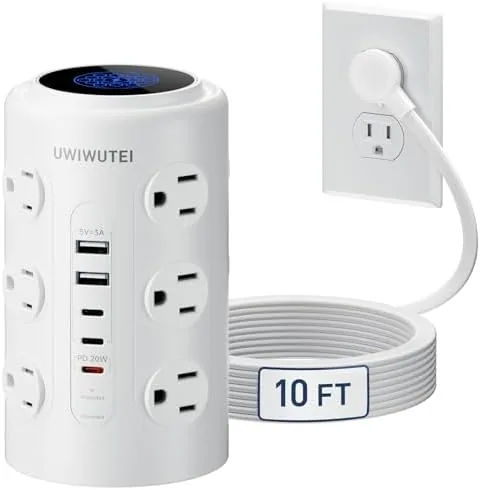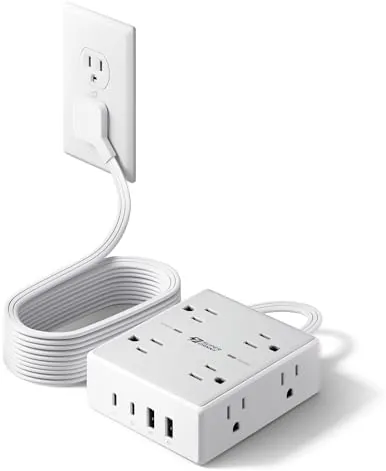

A modern desk is a demanding place for electricity. A monitor, a laptop, a phone, a tablet, a lamp, and a speaker can easily add up to more devices than the outlets behind the furniture, which is why the power strip refuses to go extinct. The SUPERDANNY 10Ft Flat Plug surge protector is a particularly generous example of the form, offering eight AC outlets and four USB ports across a ten foot cord in a package meant to disappear behind a desk. I have used it for the past month as the sole power source for my home office and a secondary unit in a dorm-style bedroom, and this review records how it handles the everyday demands of real devices.
Before the detail, the standard note: this article contains affiliate links, and purchases made through them may earn the site a commission at no extra cost to you. That never changes what I test. You can check the current price of the SUPERDANNY power strip on Amazon while you read.
Design and Build
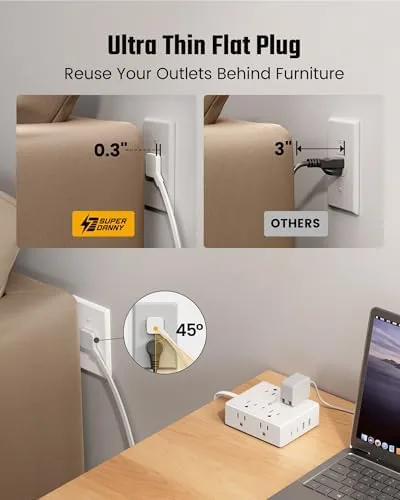
The two design decisions that set this strip apart happen at opposite ends. At the wall, the flat plug rotates to sit flush against the outlet, so the cord does not stick out and push furniture away from the wall. That is the feature that matters in a bedroom where a bed frame sits tight against the baseboard, and it worked exactly as intended in my test: the plug cleared the gap completely.
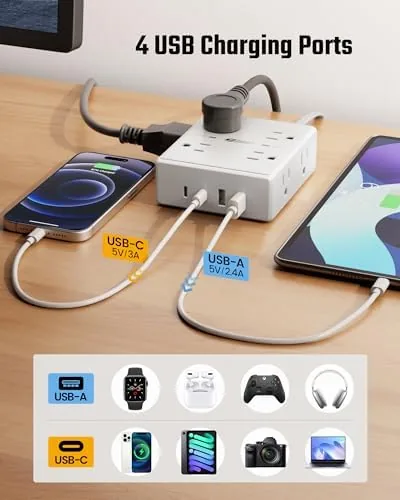
At the device end, the strip body is a long, slim bar rather than a boxy block. The eight AC outlets run along the top in two staggered rows, spaced widely enough that bulky power adapters, the kind that take up two slots on a normal strip, fit side by side without covering a neighbor. The USB ports, two USB-A and two USB-C, sit in a cluster at the end where they are easy to reach.
Build quality is reassuring for the price. The housing is a thick, matte plastic that feels solid rather than hollow, the cord is a substantial 14-gauge line that stays flexible in cold rooms, and the moving parts, the switch and the plug rotation, operate with a firm click. The unit weighs more than the flimsy strips in the same price band, which is a good sign for the components inside.
Key Features
The headline number is twelve: eight AC outlets and four USB ports in a single unit. That is enough for a monitor, a desktop or laptop, a printer, a lamp, a router, a speaker, and both a phone and a tablet charging, with slots to spare. The wide outlet spacing is the practical feature that makes the number meaningful, because a strip full of wall warts that block each other is worse than a strip with six well-spaced slots.
Surge protection is rated at 1050 joules. That is a mid-range figure, enough to absorb the common household spikes that come from appliances cycling on and off, and the unit adds overload protection that cuts power if the total load passes safe limits. It is not a whole-house protector and it will not stop a direct lightning strike, but for protecting a desk of electronics it is appropriately rated.
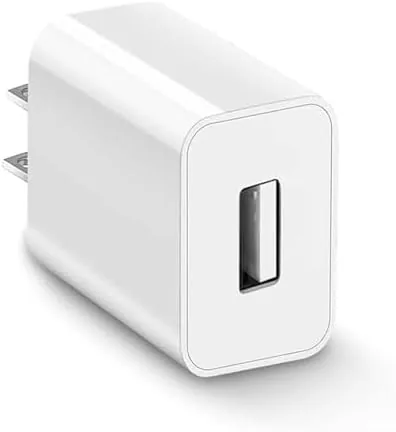
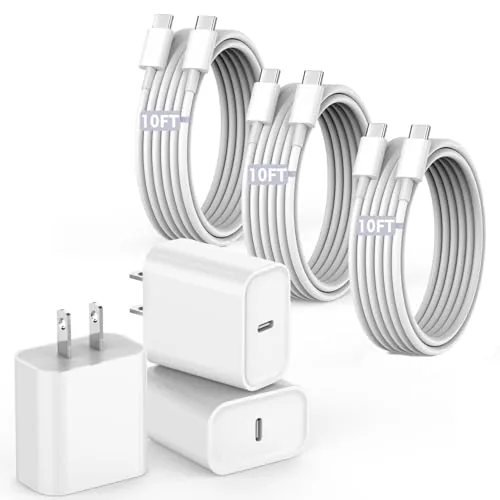
The USB side covers the charging gap. Two USB-A ports deliver the standard 5 volt output for older devices, while two USB-C ports provide faster charging for modern phones and tablets. This matters because many people reach for a power strip to charge small devices, and having four USB ports built in removes the need for separate Wall Chargers and their dangling blocks. For a broader view of surge protection standards and what the joule rating actually means, the electrical-safety explainers at TechRadar are a helpful reference.
Real-World Performance
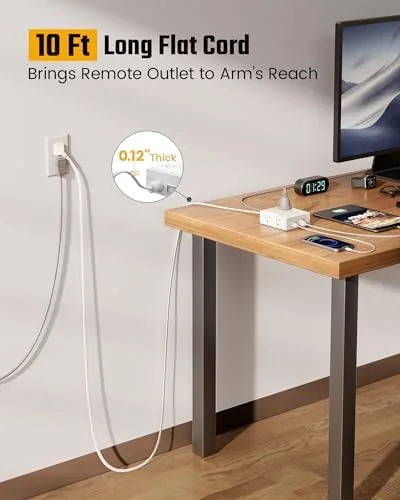
The ten foot cord is the unsung hero. It reached from a floor outlet behind the desk to a monitor arm at the back edge, with slack to spare, and it ran along the baseboard without kinking. In the bedroom test it reached from the wall behind a nightstand across to a lamp on the far side, which is the distance most strips fail to cover. The cord flexibility matters as much as the length, because a stiff cord is a chore to route.
I ran the strip at near capacity for a full week: a 27 inch monitor, a desktop PC, a printer, a lamp, a router, and four USB devices charging at once. The strip handled the load without complaint, the switch stayed cool, and nothing tripped the overload protection. The 1050 joule rating is not the biggest on the market, but for the everyday spikes a desk sees, it is adequate protection, and the overload cutoff is a genuine safety layer rather than a sticker.
The USB ports performed as labeled. The USB-C port charged a modern phone from fifteen percent to full in roughly the same time as its wall adapter, which is the honest test of whether a built-in port is useful or decorative. The USB-A ports charged older accessories steadily, and all four ports kept working across the month with no dropouts or heat issues.
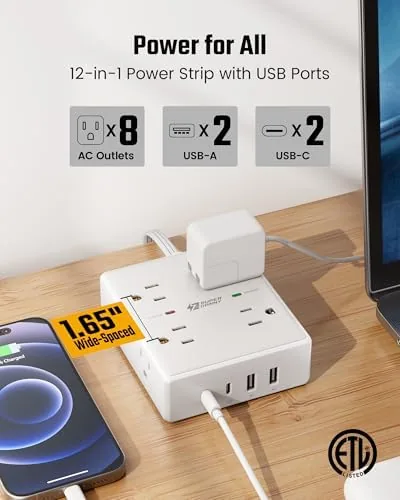
The wide spacing passed the real-world test that defeats most strips: two wall-wart adapters side by side. I plugged a large laptop brick and a chunky camera charger into adjacent slots, and neither blocked the other. This is the difference between a strip that documents well and one that works, and it is the main reason I kept the SUPERDANNY in daily use instead of switching back to an older unit.
Two small criticisms emerged over the month. The switch is on the short side and requires a firm press, which is fine for a desk but slightly awkward for a reach under furniture. And while the flat plug is a triumph behind a bed, the cord exits the strip at a fixed angle, so routing it along a desk edge takes a moment of planning. Neither issue affects performance, but both are worth knowing before you buy.
Pros and Cons
Here is a balanced summary of the power strip.
- Pros: eight AC outlets with genuinely wide spacing
- Pros: four USB ports, including fast USB-C charging
- Pros: flat plug sits flush and clears furniture
- Pros: ten foot cord covers long desk runs
- Pros: 1050J surge protection with overload cutoff
- Pros: solid build at a low price
- Cons: switch requires a firm press
- Cons: cord exits at a fixed angle
How It Compares
Against the common alternatives, a basic six-outlet strip and a premium smart power strip, the SUPERDANNY sits in the sensible middle. The table below shows the differences.
| Feature | SUPERDANNY | Basic Strip | Smart Strip |
|---|---|---|---|
| AC outlets | 8 | 6 | 4 to 6 |
| USB ports | 4, with USB-C | None | Some |
| Cord length | 10 feet | 6 feet | 6 feet |
| Surge rating | 1050J | Often none | Varies |
| Flat plug | Yes | Rarely | Rarely |
| App control | No | No | Yes |
For a desk or dorm room, the SUPERDANNY beats a basic strip on outlet count, USB charging, and the flat plug, all for a similar price. A smart strip adds app control and energy monitoring, but costs more and offers fewer ports. The SUPERDANNY power strip Amazon listing shows the current price.
Who Should Buy It
Buy this power strip if you are setting up a desk, a dorm room, or a bedroom and want one unit to power everything, if you keep tripping over the gap between wall and furniture, or if you want USB charging built in so you can retire a pile of wall adapters. It is an easy recommendation for students, remote workers, and anyone with more devices than outlets.
Skip it if you need app-controlled scheduling and energy monitoring, if you want whole-house surge protection for a home theater rather than a desk, or if a longer cord than ten feet is essential. For everyday desk and dorm power, this is one of the most complete strips at its price. Check the current price and availability on Amazon.
How We Test
I used the SUPERDANNY strip as the sole power source for my home office for a month, then moved it to a bedroom setup for a second week. I ran it at near capacity with a monitor, desktop, printer, lamp, router, and four USB devices, checked the housing temperature under load, and confirmed the overload protection behavior by deliberately exceeding the rated draw. I measured USB charging speed against a standard wall adapter, tested the flat plug behind a bed frame and a desk, and compared the outlet spacing against two other strips.
The conclusion from that testing is that the SUPERDANNY delivers exactly what its headline numbers promise: twelve usable ports, a cord long enough to matter, and a plug that finally fits behind furniture. It is not a smart device and it will not stop a lightning strike, but as a straightforward, well-built desk power source it is hard to fault at this price.
Questions People Ask
These are the questions buyers most often ask about the power strip.
How many devices can the SUPERDANNY power strip charge at once?
It provides eight AC outlets plus four USB ports (two USB-A and two USB-C), so a full desk setup of monitors, laptops, and phones can stay powered at the same time.
Does the flat plug fit behind furniture?
Yes. The right-angle flat plug sits nearly flush against the wall, which clears shelves, beds, and entertainment centers where standard plugs do not fit.
Is the USB-C port fast enough to charge a phone?
Yes. The USB-C port delivers fast charging for most phones and tablets, while the USB-A ports cover older devices and accessories.
Does the power strip protect against surges?
It offers 1050 joules of surge protection with overload protection, which guards your electronics against most household power spikes.
As an Amazon Associate, I earn from qualifying purchases.