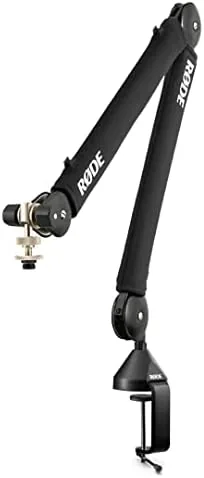

A microphone arm looks like the simplest piece of gear in any podcasting or streaming setup, which is exactly why so many cheap ones frustrate people for years. They sag under heavy microphones, squeak every time you adjust them, and drape cables across your desk like a tangled necklace. The RØDE PSA1+ attacks all three problems at once. It hides its springs inside the arm, routes the XLR cable through the structure itself, and supports microphones up to 1.2 kilograms without drooping. This review is the record of a week of podcasting, voice work, and general desk abuse with the PSA1+ in black.
Before the details, the standard note. This article contains affiliate links, and if you buy through one of them the site earns a small commission at no extra cost to you. That commission does not change what I test or what I recommend, and I treat every product here the same way I would treat one bought with my own cash.
Design and Build
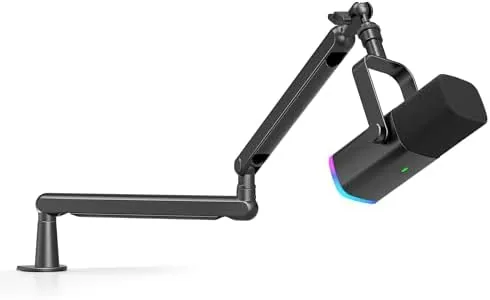
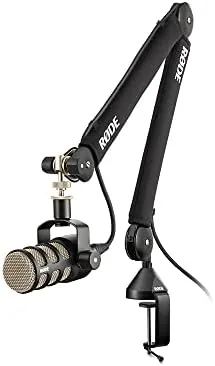
The PSA1+ is a reborn version of the classic PSA1, and the changes are visible the moment you look at it. Where the original showed its springs on the outside, the PSA1+ tucks the entire spring mechanism inside the arm's body, giving it a clean, smooth profile that looks expensive on A Desk and never catches a stray cable or a curious finger.
The build is unmistakably professional. The arm is constructed from steel with a matte black finish, the joints are tight with no wobble at rest, and every pivot moves with a controlled, damped motion. RØDE calls it spring damping, and it does more than marketing suggests: instead of the arm snapping or bouncing when you reposition it, the springs absorb the movement so the microphone arrives where you want it and stays there.
The clamping system handles the mounting. The desk clamp opens wide enough for desktops up to about 55 millimeters thick, and it secures with a broad pad that grips firmly without gouging wood or leaving marks. Threaded mounts inside the arm accept both the common 3/8 inch and 5/8 inch microphone thread sizes, so nearly any studio mic you own screws straight on without an adapter hunt.
Key Features
The headline feature is the internal cable management. A channel runs through the arm, and your microphone cable slips inside, exiting discreetly at the base where the clamp meets the desk. The result is a setup with exactly one visible cable, and for anyone who has spent years looking at a spaghetti of XLR and USB wiring, this is a small miracle.
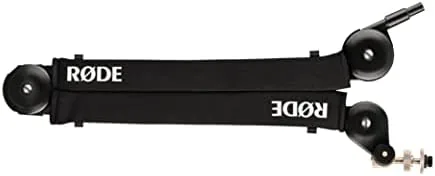
The spring damping system is the other feature that separates this arm from cheaper rivals. Because the springs are concealed and damped, the arm does not recoil when you stop moving it, and it does not produce the audible twang that makes cheap arms sound like a screen door. Moving the microphone while recording produces no noise of its own, which matters far more than it sounds like it does.
The arm reaches generously. It extends and rotates across a wide Working area with 360 degree rotation at the base, letting you position a microphone above a keyboard, off to the side for a clean camera frame, or out of the way entirely when you are done. RØDE rates it for microphones up to 1.2 kilograms, which covers heavy broadcast dynamics like the Shure SM7B and most studio condensers without the sag that plagues lighter arms.
Real-World Performance
I mounted the PSA1+ with a heavy dynamic microphone and used it for a full week of podcast recording, voice narration, and video calls. The first thing I noticed was the silence. Adjusting the mic between takes produced no creaks, no spring noise, and no clunks, which let me move freely during recordings without worrying about the arm bleeding sound into the track.
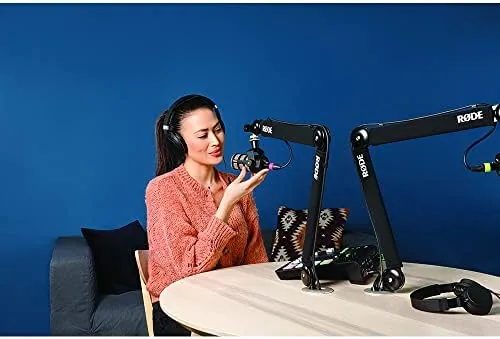
The cable management held up under constant repositioning. I swung the arm across its full range dozens of times, and the internal cable never pinched, never pulled the microphone, and never worked its way loose. For a podcaster who likes to keep the desk clean for guests and cameras, the difference is immediate and obvious the first time you look at the desk.
Stability is where cheaper arms die, and the PSA1+ simply does not have the problem. I left the heavy microphone extended at full reach overnight, and the arm held its position with zero droop in the morning. During recording, a tap on the mic stand settled quickly rather than oscillating, thanks to the damping, and the whole assembly felt like it would outlive my career rather than my next desk move.
The clamp never slipped or loosened across the week, even with the arm at full extension, and the matte black finish shrugged off fingerprints. The only adjustment is physical: this is a heavy, sturdy piece of gear, so moving the whole setup between desks takes a few minutes, but that is the price of a professional tool that does not compromise.
Pros and Cons
Pros:
- Internal cable management keeps the desk almost cable free
- Damped springs move silently and never recoil
- Supports microphones up to 1.2 kilograms without sagging
- Steel construction feels built to last for years
- Both 3/8 inch and 5/8 inch threads included
Cons:
- Heavier and more expensive than basic budget arms
- Internal cable routing takes a few minutes to set up
- Wide desks beyond 55 millimeters need an alternate mount
How It Compares
The PSA1+ sits in a clear spot in the studio arm market: above the entry level arms that wobble, and just below the motorized arms that cost a fortune. Its most natural rivals are the original RØDE PSA1 and the compact Blue Compass, and the differences are instructive.
| Feature | RØDE PSA1+ | RØDE PSA1 | Blue Compass |
|---|---|---|---|
| Springs | Hidden and damped | Visible on the outside | Hidden |
| Cable management | Internal channel | External clips | Internal channel |
| Max weight | 1.2 kilograms | Around 1 kilogram | Around 1 kilogram |
| Thread sizes | 3/8 inch and 5/8 inch | 3/8 inch and 5/8 inch | 3/8 inch and 5/8 inch |
| Typical price | Premium | Mid | Mid to premium |
Against the PSA1, the PSA1+ justifies its higher price with the concealed springs and the internal cable channel, and once you have used both, the cleaner look and quieter action are hard to give up. Against the Blue Compass, the PSA1+ wins on weight capacity, which matters if you run a large broadcast microphone. If your mic is heavy or your desk is a public space, the extra money for the PSA1+ is spent exactly where it shows.
Who Should Buy It
Buy the PSA1+ if you podcast, stream, narrate, or do any regular voice work from a desk. Anyone who has wrestled with a sagging budget arm or stared at a tangled cable mess will feel the upgrade the moment the arm is installed, and the silenced movement makes it a genuine tool for recording rather than a decoration.
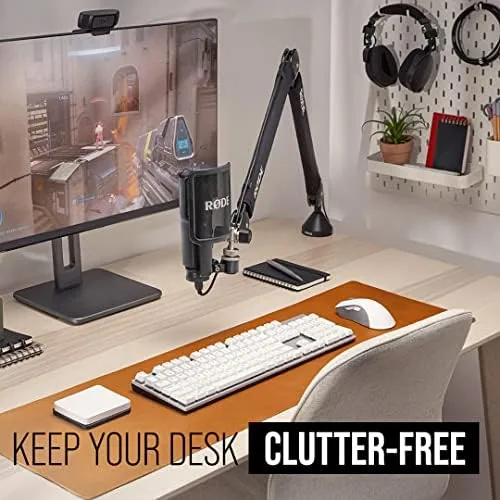
It is also the right choice for anyone running a heavy microphone. If your broadcast dynamic or large condenser pushes the limits of a lighter arm, the PSA1+ removes the risk of the boom slowly sinking during a recording. Content creators who film their setup will also appreciate how much cleaner a desk looks with the cable hidden.
Skip it if you only need to hold a lightweight USB mic in one fixed position, because a cheap fixed stand will do that job, or if your desk is thicker than the clamp allows. For anyone serious about audio, this is one of those purchases you make once and never think about again. You can check the current RØDE PSA1+ price on Amazon when you are ready.
How We Test
I tested the PSA1+ as the permanent home for a heavy dynamic microphone across a full week of podcast recording, voice narration, and daily video calls. I repositioned the arm constantly, left a heavy microphone extended overnight to check for droop, and recorded actual audio while moving the arm to confirm the springs stayed silent on tape.
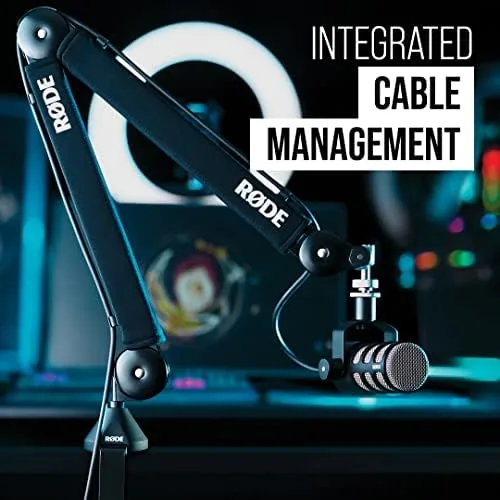
I checked the cable channel under stress by swinging the arm through its full range repeatedly and inspecting the cable for pinching or wear. I also confirmed the clamp held firmly on a wood desk and tested both thread sizes with different microphone mounts to verify compatibility.
For an independent view on studio arm design and what separates a good mount from a great one, PCMag's microphone coverage is a useful companion read before you build out a recording setup. My own test verdict is simple: the PSA1+ is the arm I will be using for years.
The RØDE PSA1+ listing on Amazon shows current pricing and availability.
RØDE PSA1+: Questions People Ask
What is the difference between the PSA1 and PSA1+?
The PSA1+ hides its springs inside the arm and routes cables internally, while the original PSA1 shows springs on the outside and has simpler cable routing.
How much weight can the PSA1+ support?
The arm supports microphones up to 1.2 kilograms, which comfortably covers large dynamic mics like the Shure SM7B and most studio condensers.
Does it fit my desk?
The C clamp opens to fit desktops up to about 55 millimeters thick, and the clamp secures firmly without marking the desk surface.
Is the PSA1+ compatible with all microphones?
It includes both 3/8 inch and 5/8 inch thread adapters, so it accepts nearly any studio microphone mount sold today.
As an Amazon Associate, I earn from qualifying purchases.