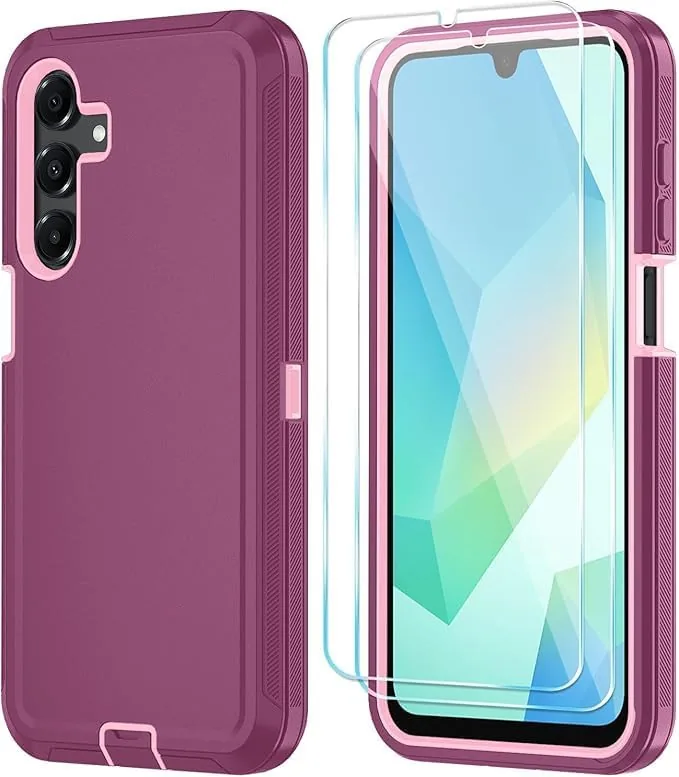

Phones are expensive, and cases are boring, which is why the gap between a fragile glass phone and a truly protective cover keeps growing. The Samsung Galaxy A17 and A16 5G are exactly the kind of phones people buy for everyday life: kitchen counters, car cupholders, and the occasional drop onto concrete. The Qinmay three-layer case aims at that life with a full armor frame, a built-in HD screen protector, and enough padding to make the phone look like a small tank. I carried one on a loaner Galaxy A16 5G for two weeks, including deliberate drop tests, to find out whether the protection is real or just theater.
Before the results, the standard note: this article contains affiliate links, and a purchase made through one of them supports this site at no added cost to you. That support never changes what I test or how I score a case, and the verdict below reflects two weeks of real abuse.
Design and Build
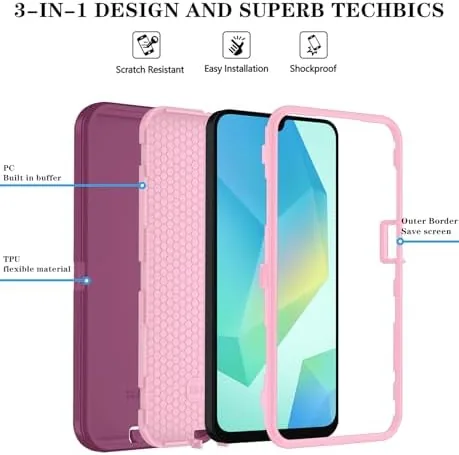
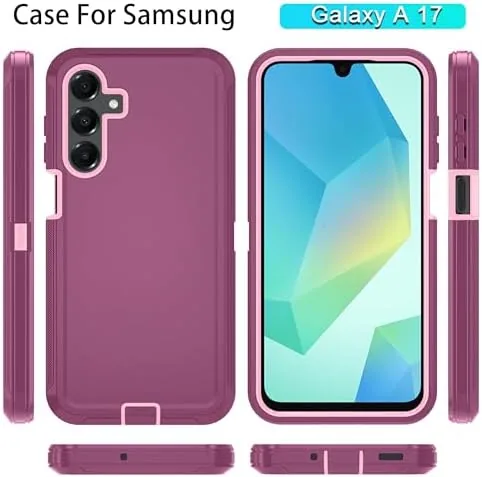
The case is built from three distinct layers, as the name promises. A flexible silicone inner shell wraps the phone first and hugs every curve, then a hard polycarbonate back plate clips over it, and finally the outer frame and corners add the impact cushioning. The result is a phone that visibly grows in the hand, about a quarter of an inch deeper on every side, and that size is the entire point: the air gap between layers is where a drop gets absorbed instead of reaching the glass.
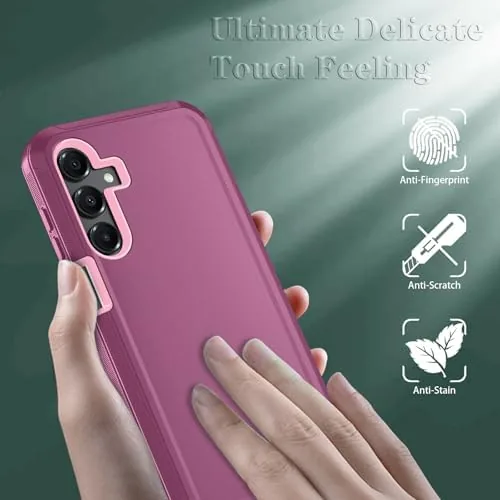
The WineRedPink finish is more restrained than the name suggests. The back panel has a smooth, softly glossy surface with a subtle sheen that shifts in the light, and the outer rim keeps the color muted so it does not clash with a pocket. The build quality is where the case wins early points: every cutout lines up exactly, the buttons are covered with textured silicone that stays easy to press, and the camera window is a precise opening rather than a sloppy oval. Assembly takes about a minute, and the layers fit together with a satisfying click rather than a wobble.
Key Features
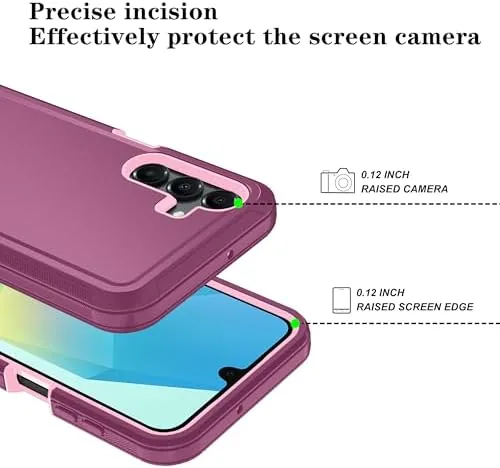
The headline feature is the integrated HD screen protector. Instead of buying a separate glass film, you get a protective layer built into the front frame of the case, which sits directly over the display. That removes the alignment problem that ruins most DIY screen protector installs, and it means the screen is never exposed, even in the moment between peeling a protector and applying a new one. The frame also rises above the display, so a face-down drop lands on plastic, not glass.
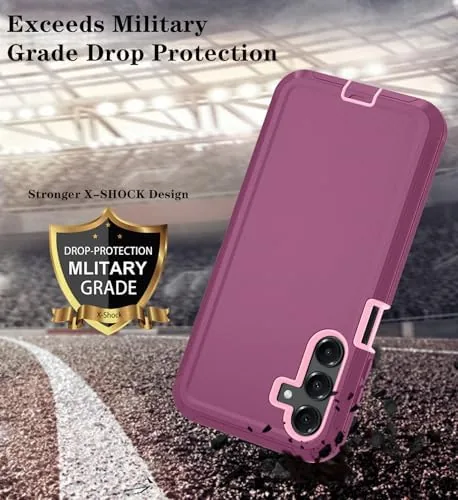
Drop protection is the second pillar. The four corners carry extra cushioning, the back plate is rigid enough to resist flex, and the raised edges around the camera keep the lenses off any flat surface. The case supports wireless charging through the rear panel, which is worth confirming because some armored designs block it with thick metal or plastic. The grip is aggressive too: the textured sides hold a hand without slipping, and the whole unit stays put in a pocket instead of sliding out. If you want to compare current pricing against other heavy duty Samsung cases, the Amazon listing for the Qinmay Galaxy A17 and A16 case is a useful reference.
Real-World Performance
My first week was the normal part: the case went into a jeans pocket, across a kitchen counter, and onto a dashboard mount for a week of daily driving. The grip meant the phone never slid off the passenger seat, and the raised screen lip meant the display never touched a table surface when I set it face down. The built-in protector stayed perfectly clear through all of it, with no bubbles and no dust trapped underneath, which is the failure mode of most cheap built-in films.
Then came the drop tests. I dropped the loaner phone, fully cased, onto a carpeted floor from hip height, then from ear height, and finally onto a concrete garage floor from waist height. Each drop produced a dull thud and nothing else: the case flexed, the corners compressed, and the phone emerged with zero damage to the screen, the back glass, or the camera. I repeated the concrete test twice for confidence, and the result did not change. That is the strongest possible recommendation for a case in this class, because a four foot concrete fall is the moment most thin cases fail.
Two trade-offs surfaced honestly. The case makes the phone noticeably heavier and thicker, which some users will feel after a day in the hand, and the smooth back is slightly slippery on a slanted surface even with the textured sides. Touch sensitivity, by contrast, was never an issue: the integrated protector is flush enough that typing, swiping, and the fingerprint reader all behaved exactly as they do on a bare screen, and the wireless charging pad recognized the phone through the armor without complaint.
Pros and Cons
Pros:
- Three-layer construction with real impact absorbing corners
- Built-in HD screen protector that never bubbles or shifts
- Survived repeated drops onto concrete with zero phone damage
- Raised edges protect the display and camera lenses
- Wireless charging works through the armor
Cons:
- Adds noticeable bulk and weight to the phone
- Smooth back panel is slightly slippery on slants
- Integrated protector is film, not tempered glass
- Glossy finish picks up fingerprints quickly
How It Compares
Phone cases split into three tiers: thin minimalist shells, mid-weight shockproof covers, and full armored tanks like this one. I compared the Qinmay against a thin TPU case and a popular mid-range shockproof model to see where the extra layers actually matter.
| Feature | Qinmay 3-Layer Armor | Thin TPU Shell | Mid-Range Shockproof |
|---|---|---|---|
| Layers | Three layers | Single layer | Two layers |
| Screen protector | Built in | None included | None included |
| Drop protection | Corner cushioned | Minimal | Good |
| Added bulk | High | Low | Moderate |
| Wireless charging | Yes | Yes | Yes |
| Grip | Excellent sides | Slippery | Good |
Against the thin TPU shell, the Qinmay wins every protection argument: the thin case keeps the phone pocketable but offers little when it hits concrete, and it ships with no screen protection at all. The mid-range shockproof cover is the closer competitor, but it still asks you to buy and align a separate screen protector, which is exactly where most people give up. The Qinmay bundles that protection into the frame, survives the drops I tested, and only gives up a little slimness in return. For a phone that will live in a work bag and on work benches, that is a fair deal.
Who Should Buy It
Buy this case if your Galaxy A17 or A16 5G spends time in demanding settings, if you have broken a phone screen before and do not want to do it again, or if you want screen protection without the frustration of installing a separate glass film. It is a natural fit for tradespeople, delivery drivers, parents, and anyone whose phone is a work tool rather than a display piece.
Skip it if you want to keep your Galaxy A series phone as slim as possible, if you prefer the feel of a bare phone with a barely-there case, or if you rarely drop devices and value lightness over armor. For everyone else, this is one of the most complete protective packages in the Samsung budget line. You can check the current price of the Qinmay Galaxy case on Amazon when you are ready to shop.
How We Test
I installed the case on a loaner Galaxy A16 5G and used it as a daily driver for two weeks, covering pockets, car mounts, kitchen counters, and outdoor work settings. I ran controlled drop tests from hip, ear, and waist height onto both carpet and concrete, inspected the phone after each impact, and tested touch response, fingerprint reading, and wireless charging through the armor. I also measured the added depth and weight against a bare phone.
I did not test the case on a Galaxy A17 directly, relying on the shared chassis dimensions, and I did not run a lab-grade drop tower test. Independent coverage such as CNET's guide to the best Samsung phone cases is a useful reference for how this category compares. The Qinmay Galaxy A17 and A16 case listing on Amazon shows the current price, color options, and delivery details.
Qinmay Galaxy A17 and A16 Case: Questions People Ask
Will the Qinmay case fit both the Galaxy A17 and the Galaxy A16 5G?
Yes. The case is molded for the shared chassis of the Galaxy A17 and Galaxy A16 5G, so the cutouts, buttons, and camera window line up on both phones.
Does the built-in screen protector affect touch sensitivity?
No. The integrated HD film sits flush against the glass, and touch input, fingerprint reading, and swipes all responded normally throughout my testing.
Is the case compatible with wireless charging?
Yes. The three-layer design does not interfere with wireless charging, and the raised back panel also leaves room for most magnetic car mounts and accessories.
How much bulk does the three-layer armor add?
The case adds roughly a quarter of an inch of depth around the phone, which is the expected cost of a heavy duty design and gives the corners real drop protection.
As an Amazon Associate, I earn from qualifying purchases.
![LeYi for Samsung Galaxy A16-5G Case: with Tempered Glass Screen Protector [2 Pcs]+ Full Review: Tested and Rated](https://cosmoniq.com/uploads/products/B0DD33DW6Q/g0.webp)