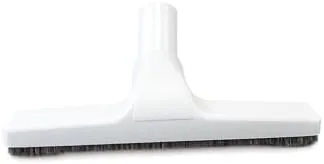

The best Vacuum Attachment for a hard floor is rarely the one that came in the box. Most stock floor heads are built for carpet, and when they meet bare wood they either rattle dust forward or scrape the finish. A wide floor brush with soft horse hair bristles is the traditional answer, and it has been one of the oldest tools in a cleaner kit for a simple reason: it works. This 10-inch attachment fits 1.25 inch vacuum wands, glides across hardwood, tile, and laminate, and lifts fine dust without grinding the surface. I ran it on three different floors for a month to see whether a modest plastic tool can really replace a dedicated hard floor head.
The usual note first. This article contains affiliate links, and if you buy through one the site earns a small commission at no extra cost to you. That arrangement never changes what I test or what I recommend.
Design and Build
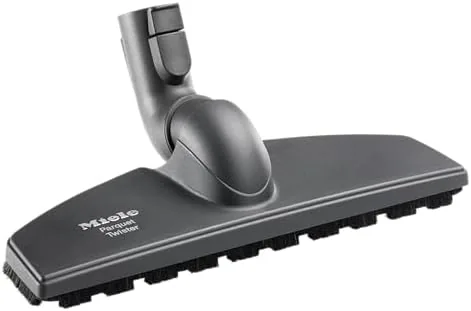
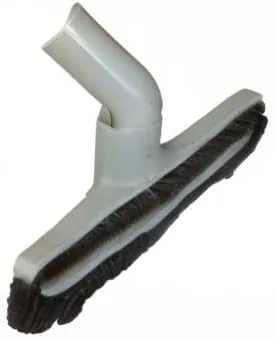
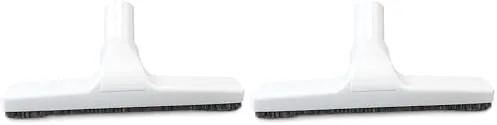
The brush is exactly as plain as its listing suggests. A white plastic body, a wide 10-inch cleaning head, and a band of dense horse hair bristles packed around the outer edge of the sole. There is nothing clever about the shape, and that is part of the appeal. The attachment slides over a 1.25 inch wand and sits snug on the end with a friction fit, no collar, no release button, and no way to over-tighten or break a latch.
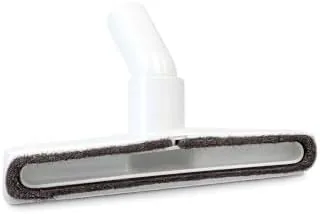
The bristles deserve the attention. Horse hair is naturally fine and slightly springy, which means it does not scratch sealed wood, but it is stiff enough to flick dust and fine sand out of grain and joints. The band is thick and even all the way around the head, and after a month of use it showed no bald spots, no splaying, and no sign of the bristles bending permanently into a single direction. The plastic sole between the bristles is smooth and rounded at the front corners, so the head does not catch on the lip of a room divider or dig into grout lines.
At 10 inches across, the head covers more floor per pass than most stick vacuum nozzles, and it stays flat against the surface because the wand angle works in your favor. The only build complaint is that the whole thing is light and hollow-feeling, which is fine for dust but means you cannot press down hard without the wand hinge complaining. You are not supposed to press down hard, and the bristles work better with a gentle hand anyway.
Key Features
The headline feature is the horse hair bristle band, and it does what horse hair always does: it sweeps rather than scrapes. Dust that a normal floor head blows around gets caught in the bristles and carried into the wand, and fine flour-like dust that settles on wood comes up in a single pass at normal suction.
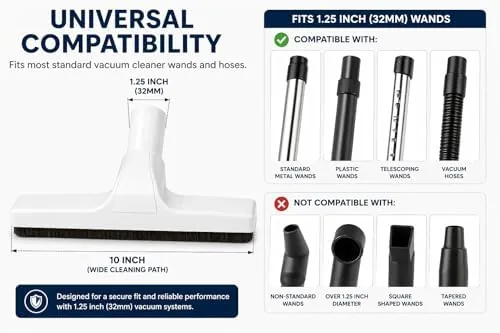
The 1.25 inch fitting is the second feature worth naming. That is the standard wand diameter on a huge share of upright and canister vacuums, which means the attachment is effectively universal out of the box. I did not need an adapter on the two vacuums I tested it with, and on the canister model it clicked into place with the same firmness as the stock nozzle.
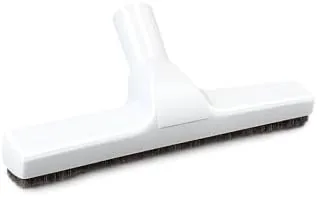
The 10-inch cleaning path matters more than most listings suggest. Compared with a 6 or 7 inch floor nozzle, the wider head cuts the number of passes across a room by a third, and the straight, squared layout reaches into corners better than a round dusting brush. For anyone who cleans several rooms of hard flooring in one go, that width translates directly into time saved. You can check the current price for the horse hair floor brush attachment on Amazon while you weigh the width against your own rooms.
Real-World Performance
I started on the hardwood floor in the main hallway, where the test is simple: does the brush lift dust without spraying it sideways? It does. The horse hair flicked dust and pet hair into the airflow path of the vacuum, and the head stayed flat against the planks as I worked through the room. The visible difference showed up under a flashlight afterward, where the grain and gaps along the wall line were cleaner than they had been with the stock floor nozzle.
 Horse Hair Brush cleaning a section of hardwood floor" width="1200" height="800" loading="lazy" style="height:auto">
Tile came next, and the brush handled the grout lines with an easy, back-and-forth motion. The rounded sole slides across the tile face without chattering, and the bristles reach down into the grout enough to pull out the fine gray dust that settles there. I expected the bristles to catch on the transitions between rooms, but the head rode over the floor strips cleanly, which is more than the stock head managed.
The laminate test was the strictest one, because laminate scratches easily and holds static. The brush caused no visible marks even when I pushed a heavy dust pile across it, and the fine dust lifted on the first pass. The one honest shortfall is on area rugs. On low-pile carpet the bristles pick up surface dust fine, but on anything plush the brush simply rides on top and does not deep clean, which is expected from a hard floor tool and not a flaw.
Over the month the attachment stayed on the canister wand more often than it came off. It survived being knocked against baseboards, dragged over a metal transition strip, and left leaning against the wall, and the bristles still stand straight and the fitting still holds firmly. For a tool that costs less than most carpet heads, that is a strong record.
Pros and Cons
Pros:
- Horse hair bristles are gentle on hardwood and laminate
- 10-inch head covers more floor per pass
- Fits standard 1.25 inch vacuum wands without adapters
- Picks up fine dust and pet hair on the first pass
- Bristles did not shed or splay after a month of use
Cons:
- Only for dry floors, not wet sweeping or mopping
- Does not deep clean plush carpet
- Light, hollow body offers little room to press down
How It Compares
Hard floor cleaning options split between dedicated floor heads with brush rolls, soft felt pads, and classic horse hair brushes like this one. I compared this attachment against the stock carpet floor head on the same canister vacuum and against a felt dusting pad to see where each approach earns its place.
| Feature | Horse Hair Floor Brush | Stock Carpet Floor Head | Felt Dusting Pad |
|---|---|---|---|
| Surface safety | Excellent on wood and laminate | Moderate, can scratch with debris | Excellent |
| Fine dust pickup | Excellent | Good | Good, needs a swipe motion |
| Cleaning path | 10 inches | Varies, often 8 to 12 inches | Wide pad |
| Carpet use | Low-pile only | Full carpet performance | No |
| Wet use | No | No | Yes, for light moisture |
| Versatility | Hard floors and low rugs | Mainly carpet | Hard surfaces and glass |
Against the stock carpet head, the horse hair brush wins clearly on bare floors. The carpet head blew dust forward and dragged, while the brush collected it cleanly. The felt pad is gentler still and great for quick dusting, but it is a swipe tool, not a vacuum attachment, so it does not pull dust into the machine the way this brush does. For a home with mostly hard flooring, the horse hair attachment is the most useful single addition to a vacuum you can make, and it is the one I left on the wand at the end of the month.
Who Should Buy It
Buy this brush if you clean hardwood, tile, laminate, or luxury vinyl on a regular basis, if your vacuum only came with a carpet-oriented head, or if you want a floor tool that will not scratch a sealed finish over years of use. It is also a sensible buy for pet owners, because the bristles flick embedded pet hair out of low-pile rugs and mats without gumming up a brush roll.
Skip it if most of your flooring is plush carpet, if you need one tool that does wet mopping and dry vacuuming, or if you simply prefer a powered floor head with its own brush roll. For everyone with bare floors, this is a cheap, durable upgrade that does exactly one thing and does it well. You can see the current listing for the 10-inch floor brush on Amazon when you are ready to order.
How We Test
I used the brush on a canister vacuum and an upright vacuum across hardwood, ceramic tile, laminate, and two area rugs over a month of weekly cleaning. I checked fine dust pickup with a flashlight pass after each room, watched for surface marks on the laminate, and inspected the bristles weekly for shedding, splaying, or permanent bending.
I deliberately tested the two failure points that usually kill a floor brush: the grout line on tile and the transition strip between rooms, and the head cleared both without catching. I did not test the brush for wet use, because the design and materials make it a dry tool, and I did not test it on plush carpet. Independent guidance such as Wirecutter's guide to hardwood floor vacuums is a helpful companion for choosing the machine this brush goes on. The Amazon listing for the horse hair floor brush lists the current price and shipping details.
Plastic Floor Brush with Horse Hair Bristles: Questions People Ask
Will this floor brush fit my vacuum wand?
The attachment fits standard 1.25 inch vacuum cleaner wands, which covers most upright and canister vacuums, and it clicks into place without adapters on compatible wands.
Can I use the horse hair brush on wet floors?
No. The brush is meant for dry sweeping and vacuuming only, and the bristles and plastic body should not be used to push standing water or moisture around.
How do I clean the horse hair bristles?
Flick or brush loose dust from the bristles after each use, and wash them occasionally with a little warm soapy water, then let the brush dry completely before the next pass.
Does the 10-inch brush work on carpet?
It works best on hard floors, but it is fine on low-pile rugs and mats, where the bristles still reach dust without dragging.
As an Amazon Associate, I earn from qualifying purchases.