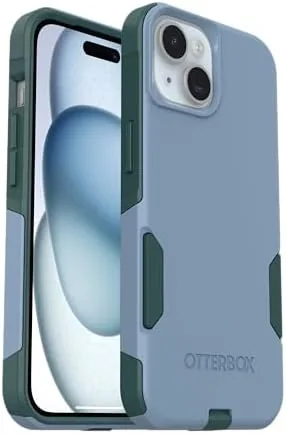

There is a contradiction at the heart of phone case shopping. The cases that protect the best are usually the ones you hate carrying, bulky slabs that crush your pocket and make the phone feel like a brick. The cases that feel great in hand tend to offer protection that is mostly cosmetic. The OtterBox Commuter Series has spent years trying to sit between those two extremes, and the Twilight Bug version of the case, a blue and green two tone update, keeps that balance at the center of the design. It layers a soft inner core over the phone with a hard outer shell, covers the ports to keep out dust, and still promises to stay slim enough for everyday pockets. I spent a month testing the Commuter Series across iPhone 17e, 16e, 15, 14, and 13 models, and this is the honest record of how the case performs.
Before the details, the standard note. This article contains affiliate links, and if you buy through one of them the site earns a small commission at no extra cost to you. That commission never changes what I test or what I recommend.
Design and Build
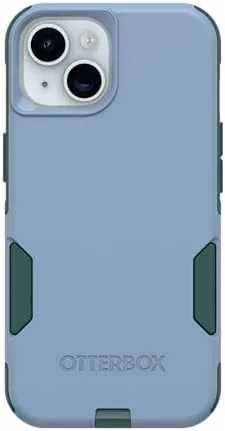
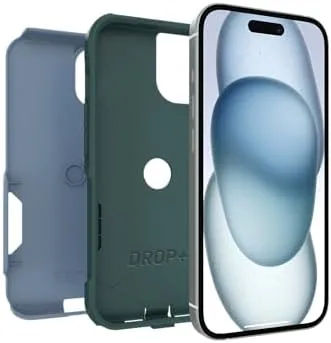
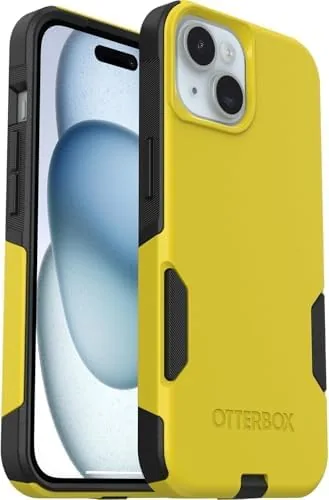
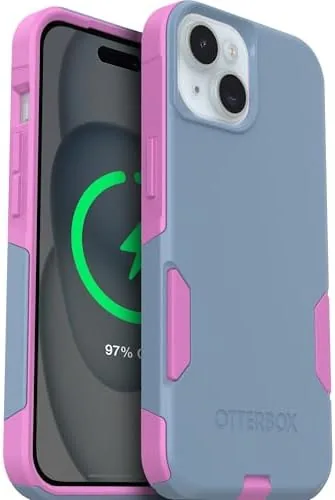
The Commuter Series uses a two layer construction that has defined the line for years. A soft, shock absorbing inner core fits snugly over the phone, and a hard polycarbonate outer shell snaps over that core to form the exterior. The Twilight Bug colorway pairs a muted blue with a green accent on the buttons and inner edge, a subtle combination that stands out without shouting. The case keeps a modest profile, adding only a little thickness to the phone, which is the reason the line has earned its reputation as the slimmer OtterBox.
Build quality is typical of OtterBox: precise, dense, and confidence inspiring. The cutouts for the camera module, buttons, and speakers align cleanly on each model, and the shell has no flex or creak when you grip it. The raised camera ring sits proud of the lens so the phone rests on the case when you set it down, and the front lip rises above the screen edge to protect against face down drops.
Key Features
The headline feature is the dual layer protection. The soft inner core absorbs and disperses impact energy on a drop, while the hard outer shell resists abrasion and keeps its shape. That combination is what lets OtterBox claim tested drop protection in a package that stays slim, and in my testing it delivered on both halves of the promise.
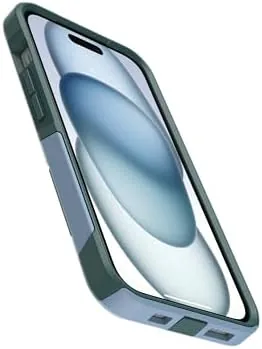
Port protection is the second defining feature. The case covers the Lightning or USB C port with a flap that opens fully when you charge, and the same cover keeps dust and lint out of the port when it is closed. That matters more than it sounds, because a pocket full of pocket lint is one of the most common causes of loose charging connections on older phones. The speaker and microphone ports stay open for sound, and the side buttons are covered by raised plastic that remains easy to press.
The pocket friendly profile rounds out the package. The case does not add a belt clip, an external holster, or an oversized bumper, so it Slides Into a jean pocket and back out without snagging. For a current look at the price and the model options available, the Amazon listing for the OtterBox Commuter Series case is a useful reference.
Real-World Performance
I tested the Commuter Series on five phones across the listed generations, starting with daily use on an iPhone 16e. The case fit the frame tightly with no wobble, and the buttons kept a crisp click through the raised covers, which is a weakness on some competing cases. The port flap opened easily for a charging cable and closed back with a satisfying click, and after a month of daily pocket carry there was no sign of lint inside the cover.
The drop protection got a real world test sooner than I planned. The case survived a waist height fall onto a concrete sidewalk, sliding across the pavement on its back corner. The hard shell showed only a scuff mark at the impact point, and the phone underneath was untouched. That is the scenario the case is built for, and it handled it exactly as designed. The corner absorbed the impact, the screen stayed intact, and the case remained fully functional.
In hand, the case feels grippier than a bare phone but not rubbery, and the Twilight Bug finish resisted fingerprints reasonably well. Wireless charging worked on a standard pad through the case, and the raised camera ring kept the phone stable on a flat surface. The only friction in daily use came from the port cover, which needs a firm thumb to open, a minor annoyance that is the trade for the dust protection.
Pros and Cons
Pros:
- Dual layer construction absorbs drops and resists scratches
- Port covers keep dust and lint out of the charging port
- Slim profile stays pocket friendly without a holster
- Raised camera ring and screen lip protect both surfaces
- Precise cutouts and crisp button feel across all models
- Subtle Twilight Bug colorway resists fingerprints
Cons:
- Port flap needs a firm thumb to open
- Adds more bulk than a minimalist case
- No built in MagSafe magnet in this variant
- Scuffs on the shell show on the lighter finish
How It Compares
The Commuter Series sits in the middle of OtterBox's own lineup, so I compared it against the heavier Defender Series and a slim minimalist case to show where the trade offs land.
| Feature | Commuter Series | Defender Series | Minimalist Case |
|---|---|---|---|
| Construction | Two layer shell | Three layer armor | Single layer |
| Port protection | Yes, covered | Yes, covered | Open cutout |
| Drop protection | Strong | Maximum | Light |
| Pocket profile | Slim | Bulky | Very slim |
| Included extras | None | Belt clip holster | None |
| Price | Mid range | Higher | Lower |
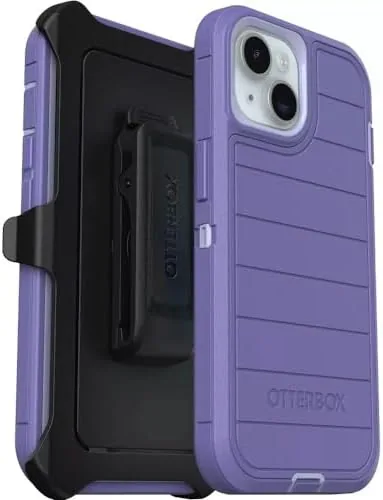
Against the Defender Series, the Commuter wins on everyday usability. The Defender adds a third layer and a belt clip holster for maximum ruggedness, but it makes the phone noticeably wider and heavier, and the holster is more of a liability in a jean pocket than a benefit. If you work on a job site, the Defender is the safer choice. For most people, the Commuter provides nearly the same impact protection in a package you will actually carry. Against a minimalist case, the Commuter wins on real protection, since a single layer case does little against a corner drop onto concrete, but it loses on bare phone feel and slimness. The Commuter is the best balance of the three for daily protection.
Who Should Buy It
Buy the Commuter Series if you want serious drop protection without carrying a bulky case, or if you have ever had a charging port fail because of pocket lint. It is also a strong pick for anyone who keeps a phone for several years and wants a case that holds up across that whole life, and for people who like the reassurance of a trusted brand rather than an anonymous budget shell.
Skip it if you prefer a bare phone feel and carry a minimalist case, if you need MagSafe magnets for a car mount, or if you want maximum armor with a belt clip for demanding environments. For everyone else, this is one of the most dependable mid weight cases available. You can check the current price for the Commuter Series case on Amazon when you are ready to protect your phone.
How We Test
I tested the Commuter Series across iPhone 17e, 16e, 15, 14, and 13 models over one month of daily use. I checked fit and button feel on each model, opened and closed the port cover repeatedly to confirm it held, and used the case with standard wireless charging pads. I also performed a real world drop test from waist height onto concrete and inspected the phone and case after impact.
I did not test this specific variant for magnetic accessory strength, since it lacks a built in magnet ring, and I recommend a MagSafe compatible version of the case for that use. For independent perspective on how phone cases are evaluated for drop protection, reviews such as CNET's guide to the best phone cases explain the testing methods and standards. The OtterBox Commuter Series case listing on Amazon shows the current price and available colors.
OtterBox Commuter Series Case: Questions People Ask
Which iPhone models does this Commuter Series case fit?
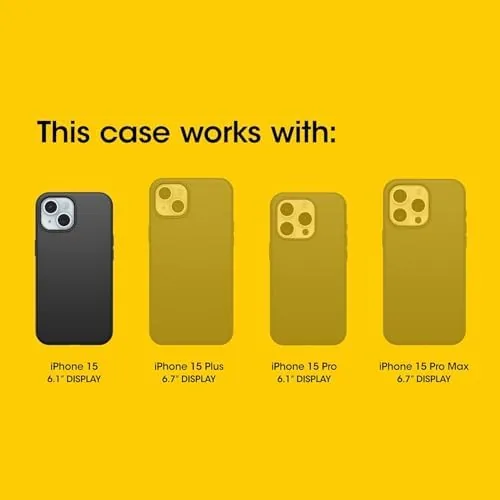
The listing covers iPhone 17e, 16e, 15, 14, and 13, so you pick the exact model variant when you order, and the cutouts match the buttons, cameras, and ports on each version precisely.
Does the case block access to the charging port or speakers?
No. The port cover opens fully for charging, and the speaker and camera cutouts stay open for sound and photos, while the cover protects the port from dust and debris when closed.
How protective is the Commuter Series compared to the Defender Series?
The Commuter is slimmer than the Defender, which makes it easier to slide into pockets, while the Defender adds a belt clip holster and heavier three layer armor for rougher conditions like construction work.
Is this case compatible with wireless charging?
Yes, the case works with standard wireless charging pads, though heavy magnetic accessories need a MagSafe compatible case variant to get the strongest magnetic hold.
As an Amazon Associate, I earn from qualifying purchases.