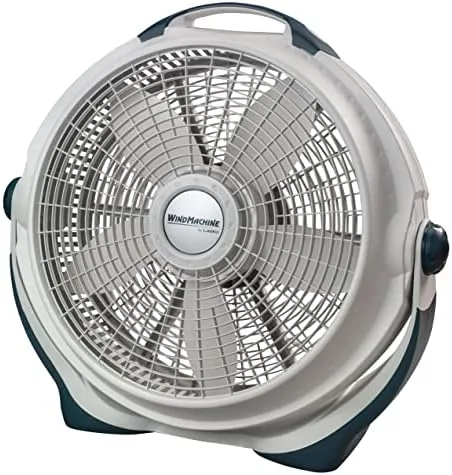

There are fans that whisper, fans that hum, and then there is the Lasko Wind Machine, a fan that seems insulted by the idea of subtlety. The Model 3300 is a 20 inch Floor Fan that has been a staple of dorm rooms, garages, and summer bedrooms for years, and it earns that reputation by moving more air than its price suggests it should. I ran one through a full month of hot weather, using it in a living room, a bedroom, and a home office, to see whether the strong breeze, the three speed dial, and the tilting head hold up to real daily use.
Before the details, the standard disclosure: this article contains affiliate links, and if you buy through one of them the site earns a small commission at no extra cost to you. That does not affect what I test or how I report it.
Design and Build
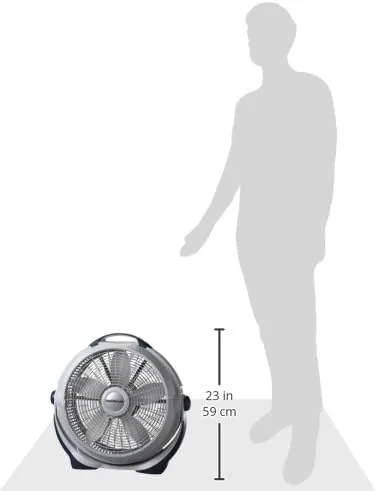
The Lasko Wind Machine has the look of a fan built for work rather than decor. The gray plastic body is plain and functional, with a wide 20 inch blade set inside a sturdy open grille. The whole unit is light enough to carry from room to room one handed, yet it sits solidly on the floor thanks to a wide base with rubber feet that grip the surface and resist sliding. It is not a beautiful object, but it is a practical one, and in a fan that trade off is the right call.
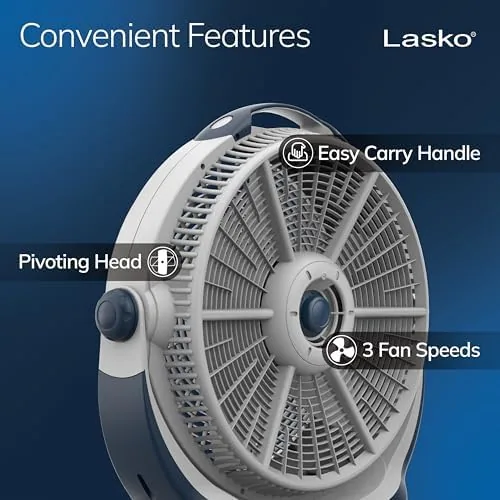
At the top of the housing sits a simple rotary dial that clicks through three speeds and an off position. There is no remote control and no digital display, which keeps the price down and the failure points few. The head tilts up and down on a pivot, letting you aim the breeze at a couch, a bed, or a workbench, and it holds its angle without drifting, even at the highest speed setting.
Build quality is respectable for the price point. The grille feels rigid, the blade spins true with no wobble, and the motor sits quietly in the housing. In a month of near daily use, including one afternoon spent cooling a crowded home office on a hot day, the fan never made a clicking sound, never squeaked, and never showed any signs of strain.

Key Features
The defining feature is the 20 inch blade, which is large for a fan at this price. Bigger blades move more air at the same speed, and the Wind Machine pushes a broad, forceful column of air that you can feel across the room rather than just in front of the unit. On the highest setting it is genuinely strong, enough to rustle papers on a desk several feet away and to make a hot room feel several degrees cooler within minutes.
The three speeds give the fan a useful range. Low is a gentle, quiet breeze suited to sleeping; medium is the everyday setting for a living room; high is the setting for hot afternoons when the breeze needs to reach. The dial has positive detents between settings, so there is no guesswork about where the knob sits, and the speed change is immediate and audible.
Two design touches round out the feature set. The first is the pivot head, which lets you angle the air flow toward a specific part of the room. The second is the low height profile, which lets the fan sit on the floor and push cool air where people actually sit, rather than blasting it at head height from a pedestal. For rooms where a pedestal fan would tower awkwardly, the compact floor design is a real advantage.
Real-World Performance
I started in the living room on a hot afternoon, pointing the fan at a couch from about ten feet away. On high, the breeze was strong enough to be felt on the skin the entire time, and the room reached a comfortable temperature noticeably faster than it had with the window alone. The air circulation is the key difference; this fan does not blow directly on you as much as it keeps the Whole Room's air moving, which makes the space feel cooler even away from the direct stream.
In the bedroom overnight, I settled on medium. The fan provided a steady breeze that kept the room comfortable without the blast of high, and the noise settled into a soft airy murmur that most people would find sleep-friendly. Those sensitive to sound will notice it, but it is a far cry from the whine of cheaper fans, and the white noise effect helped rather than hindered sleep.
The home office test was the most demanding. On a day when the room ran warm all afternoon, I kept the fan on high and pointed it across the desk. It kept the air moving well enough that the room never became stuffy, and even seated several feet from the direct stream, the temperature was tolerable all afternoon. The fan also proved useful in the kitchen, where a brief high speed blast clears cooking heat and the smell of smoke from a slightly overdone pan.

The honest limitations should be stated. The fan has no oscillation, so it blows in one direction and must be angled manually to cover a different part of the room. There is no remote, which means reaching the dial each time you want to change speed. And at high speed the fan is plainly audible, enough to interfere with conversation or phone calls if it sits too close. None of these are flaws at the price, but they shape how you will use the fan.
Pros and Cons
Pros:
- Large 20 inch blade moves a powerful column of air
- Three speeds span a useful range from quiet breeze to full blast
- Light, portable body with a wide base that stays put
- Tilting head directs airflow where it is needed
- Quiet operation at low and medium speeds
- Excellent value for whole room air circulation
Cons:
- No oscillation, so direction is fixed once set
- No remote control or timer
- Audible at the highest speed setting
- Plain appearance will not win any design awards
How It Compares
To put the Wind Machine in context, I compared it with a typical 16 inch box fan and a more expensive pedestal fan with oscillation. The table below reflects the month of testing.
| Feature | Lasko Wind Machine 3300 | 16 Inch Box Fan | Oscillating Pedestal Fan |
|---|---|---|---|
| Blade size | 20 inches | 16 inches | 16 to 18 inches |
| Air volume | Highest of the three | Moderate | Moderate |
| Oscillation | No | No | Yes |
| Height adjustment | No, floor profile | No | Yes |
| Noise at high speed | Audible airy rush | Higher pitched | Similar |
| Price | Lowest | Low | Highest |
The box fan is quieter at low settings and slightly cheaper, but it moves far less air and has the same lack of oscillation. The pedestal fan adds oscillation and height control, and those features are genuinely useful, but it costs several times more while moving no more air. The Wind Machine wins on raw air movement per dollar, which is the metric that matters most to anyone buying a fan to beat the heat. If oscillation is a deal breaker, the pedestal is worth the premium; if you want maximum breeze for minimum money, the Lasko is the pick.
Who Should Buy It
Buy the Lasko Wind Machine if you want maximum air circulation for the lowest price. It suits dorm rooms, garages, workshops, living rooms, and hot bedrooms, anywhere a strong steady breeze beats the heat better than a gentle oscillating fan. It is also a strong choice for anyone who wants to push air across a room to improve overall circulation rather than rely on a narrow direct blast.

Skip it if you need oscillation or a remote, or if you want a fan that disappears into the decor. It is a working tool, not a design piece, and it is happiest pointed at a hot corner of the room on high. For that job, few fans at any price do it better. You can check the current price of the Lasko Wind Machine on Amazon when you are ready to buy.
How We Test
I ran the fan for a month across three rooms: a living room on high to assess cooling and reach, a bedroom overnight on medium to judge noise and comfort, and a home office and kitchen for daily practicality. I tested the three speeds, the head tilt, the stability of the base, and the noise level at each setting. I also compared it directly against a 16 inch box fan and an oscillating pedestal fan to place it within the wider category.

For a broader look at choosing a fan for your space, the Wirecutter guide to the best floor fans is a useful reference. My verdict here is based on the full month of real use.
The Lasko Wind Machine listing on Amazon shows the current price and shipping options.
Questions People Ask
Is the Lasko Wind Machine loud at high speed?
It is audible at the top setting, but the sound is a steady airy rush rather than a whine, and it is much quieter at medium and low speeds, where most overnight use happens.
Can the fan be used on the floor or a tabletop?
Yes, the design works on the floor or on a table, and the head tilts to direct air where you want it. The wide base keeps it stable in either position.
How much area does the fan cover?
The 20 inch blade moves a strong column of air that reaches across a typical living room or bedroom, making it effective for whole room circulation rather than spot cooling.
Does the fan have a remote control?
No, the 3300 model is controlled by the top mounted dial and has no remote, so it is best positioned within arm length of where you sit or sleep.
As an Amazon Associate, I earn from qualifying purchases.