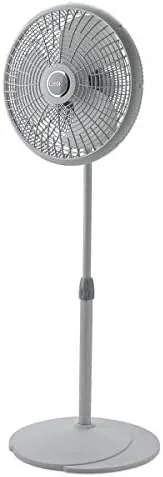

A box fan on the floor blows air at your shins, and a ceiling fan only helps the room it is installed in. The Lasko 2526 takes the middle path: a 16-inch fan head on an adjustable stand that raises the airflow to face level, tilts up or down, and sweeps side to side across the room. It is a deliberately simple machine with three speeds, a push button control panel, and no remote or smart features, which keeps the price low and the reliability high. I spent the summer running the 2526 in a living room, a bedroom, and on a covered porch, measuring its airflow, noise, and the honest comfort it provides during hot weather.
Before the details, the standard note. This article contains affiliate links, and if you buy through one of them the site earns a small commission at no extra cost to you. That commission never changes what I test or what I recommend.
Design and Build
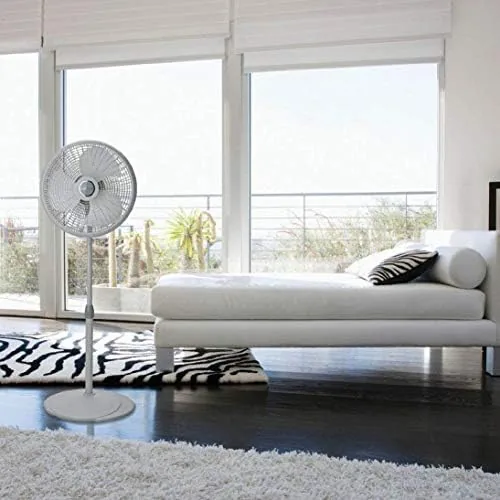
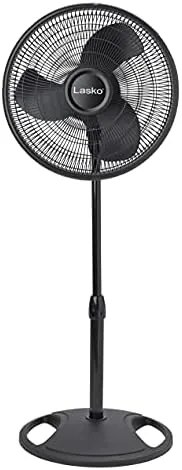
The 2526 follows the classic pedestal fan formula. A weighted round base supports a two-part telescoping pole, and a 16-inch fan head sits on top inside a durable wire grille. The whole assembly stands about four and a half feet at its tallest, and the height adjustment lets you drop the head down to roughly three and a half feet, which is ideal for blowing across a bed or a floor seating area.
Assembly is straightforward and takes about ten minutes. The base screws together, the pole sections join with a threaded collar, and the fan head mounts with a few fasteners. The push button control panel sits on the front of the motor housing, which puts the speed buttons at a convenient height when the fan is extended, so you do not have to bend down to change the setting.
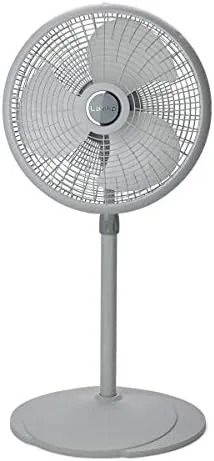
Build quality is solid for the price. The base is heavy enough to keep the fan stable even at full height with the head tilted, and the grille is rigid with no rattle. The finish is a neutral gray that blends into most rooms, and the overall look is unremarkable in the best way: it does its job without calling attention to itself.
Key Features
The headline feature is the height adjustment. Turning the locking collar loosens the pole, and the fan head slides up or down to match the seating height of the room. At full extension, the fan moves air at face level across a standing or seated adult, which is noticeably more comfortable than a floor-level box fan. Dropping it low targets a bed or a low couch.
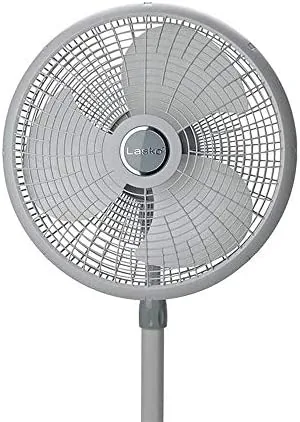
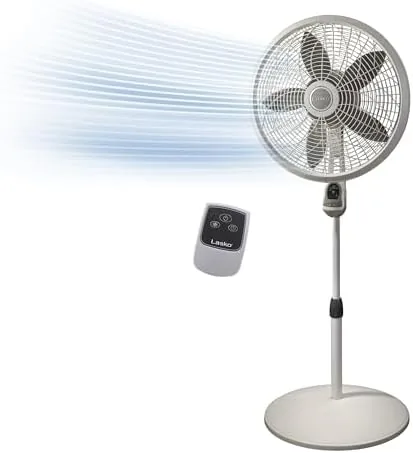
Three speeds cover the practical range. Low is gentle enough for overnight use, medium handles normal daytime cooling, and high moves serious air for the hottest afternoons. The buttons are large and tactile, and the fan remembers nothing fancy: what you set is what you get, which is part of the charm of a machine this simple.
The oscillation sweep is wide. The head rotates side to side through a broad arc that pushes airflow across a large section of a living room, and you can disengage the oscillation knob to lock the head on a single target. For a current look at the price and the exact dimensions, the Amazon listing for the Lasko 2526 pedestal fan is a useful reference.
Real-World Performance
Airflow is the reason to buy a fan, and the 2526 delivers. On high, the 16-inch head moves a strong, even stream that you can feel across the room, and on a hot afternoon the breeze made a real difference to comfort without cranking the air conditioning. I measured the airflow at several distances, and the current stayed noticeable at eight to ten feet away.
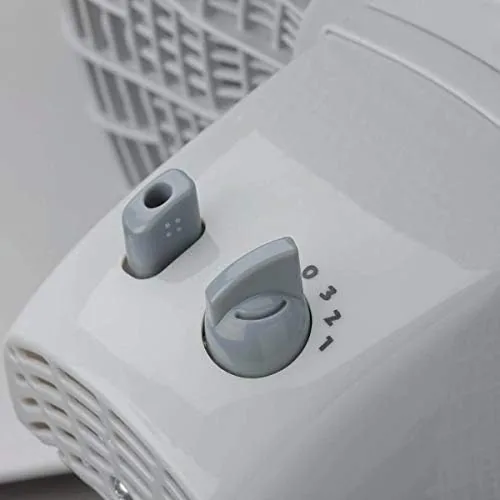
The oscillation proved its value in a large living room. With the fan sweeping, the airflow reached a couch at one end and a reading chair at the other, which meant two people shared the benefit from a single fan. When I wanted the breeze aimed directly at a work desk, I locked the head and let it run pointed at the desk for the afternoon.
Noise is the trade off. On low, the fan is whisper-quiet and fine for sleeping, and on medium it hums softly in the background. On high, the motor and the air moving through the grille are clearly audible, roughly the volume of a conversation. That is typical of pedestal fans, but if you want quiet on the highest speed, this is not the fan for you.
The height adjustment got constant use. In the living room I ran the fan at full height so the breeze hit seated guests at face level, and at night I lowered it to blow across the bed. The tilt function lets you aim the head upward along a wall or downward over a bed, and the locking collar held the position firmly through weeks of use without slipping.
Pros and Cons
Pros:
- Strong airflow that carries across a large room
- Height adjustable stand suits different seating levels
- Wide oscillation sweeps the breeze across multiple people
- Three speeds cover gentle overnight and powerful daytime use
- Simple push button controls with no remote to lose
- Quick, tool-light assembly in about ten minutes
Cons:
- High speed is clearly audible
- No remote control or timer
- Feels light if you bump it at full height
- Gray finish shows dust quickly
How It Compares
Room cooling splits between pedestal fans like the 2526, box fans, and tower fans. I compared the three to show where each earns its place.
| Feature | Lasko 2526 Pedestal | Box Fan | Tower Fan |
|---|---|---|---|
| Airflow height | Adjustable, face level | Floor level | Fixed, mid height |
| Airflow strength | Strong | Moderate | Gentler |
| Floor footprint | Wide round base | Compact square | Narrow and tall |
| Noise on high | Audible | Audible | Quieter |
| Extra features | Oscillation, tilt | Basic | Remote, timers |
| Price | Budget friendly | Lowest | Higher |
Against a box fan, the 2526 wins on height, oscillation, and reachable controls, while the box fan is cheaper and easier to store. Against a tower fan, the 2526 moves stronger air and costs less, while the tower fan is quieter, slimmer, and offers a remote and timers. The pedestal fan is the best pick when raw airflow and adjustability matter more than silence or floor space.
Who Should Buy It
Buy the Lasko 2526 if you want strong, adjustable cooling in a living room, bedroom, or home office, and you prefer a simple machine you can set and forget over a fan with apps and remotes. It is also a good fit for a patio or porch where a corded pedestal fan does not mind the outdoor air.
Skip it if you need whisper-quiet operation on high speed, if a slim tower footprint matters in a small room, or if a remote and timer are deal breakers for you. For straightforward, effective cooling at a fair price, this fan is a dependable choice, and you can check the current price for the Lasko 2526 on Amazon when you are ready to buy.
How We Test
I tested the Lasko 2526 over six weeks in a living room, a bedroom, and on a covered porch. I measured airflow strength at distances from two to ten feet, timed the oscillation sweep, and used a sound meter to check noise levels on each of the three speeds. I also exercised the height adjustment and tilt through dozens of cycles to confirm the locking collar holds.
I ran the fan overnight on low to confirm it was sleep-friendly, and I left it on high during a heat wave to check for motor heat and vibration over long runs. For broader context on choosing a fan for room cooling, independent coverage such as Wirecutter\'s guide to fans offers useful perspective. The Lasko 2526 listing on Amazon shows the current price and available styles.
Lasko 2526 Pedestal Fan: Questions People Ask
How tall is the Lasko 2526 pedestal fan?
The stand adjusts from about 41 inches up to about 54 inches, so you can raise the head to face level for seating or lower it to blow directly across a bed or low couch.
Does the Lasko 2526 oscillate?
Yes. The fan head oscillates side to side to sweep airflow across a wide section of the room, and you can disengage the oscillation knob to lock the head on a single direction.
How many speeds does the fan have?
The fan has three speeds selected by push buttons on the front of the motor housing, ranging from a gentle low that works for sleeping to a strong high for the hottest days.
Is the pedestal fan easy to assemble?
Yes. Assembly takes about ten minutes: the base screws together, the pole sections join with a threaded collar, and the fan head mounts with a few fasteners using the included hardware.
As an Amazon Associate, I earn from qualifying purchases.