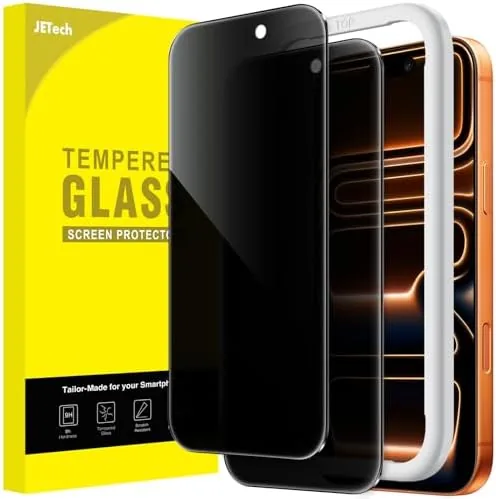

Some conversations are not meant for the whole bus. The moment you open your banking app, tap out a password, or scroll through messages in a crowded seat, the person beside you has a clear line of sight to everything on screen. That is the problem a privacy screen protector exists to solve, and the JETech Privacy Screen Protector for iPhone 17 Pro Max takes a direct run at it. This is a two pack of tempered glass panels that narrow the display's viewing angle so that content stays visible to you and largely invisible to anyone sitting off to the side. I fitted one to my iPhone 17 Pro Max, carried it through train commutes, airport queues, and open plan offices, and put the privacy effect, touch response, and installation routine through real scrutiny.
Before the details, the standard note. This article contains affiliate links, and if you buy through one of them the site earns a small commission at no extra cost to you. That commission never changes what I test or what I recommend.
Design and Build
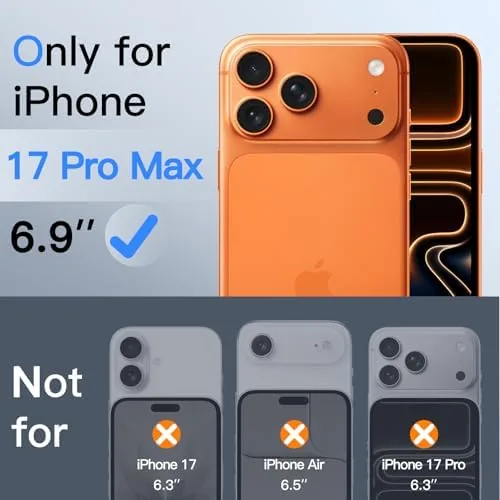
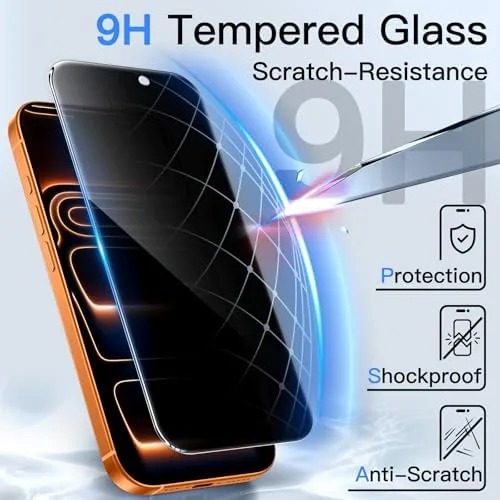
The JETech screen protector is a slice of tempered glass cut to the full dimensions of the 6.9 inch display on the iPhone 17 Pro Max, with a slim black bezel that frames the glass and matches the phone's face. The surface has a smooth, oleophobic finish designed to repel fingerprints and smudges, and the glass itself carries the anti-scratch rating that has made this brand a reliable name in screen protection. Two protectors arrive in the box, so a crack or a worn coating leaves you with an immediate spare rather than a waiting period.
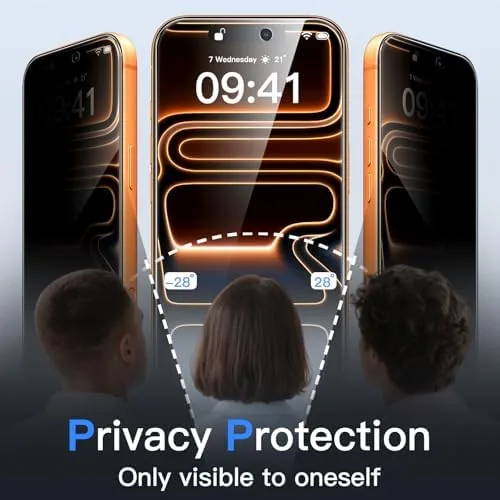
The privacy element is not a physical sticker or an adhesive film. It is a micro-louvered layer bonded inside the glass that behaves like tiny blinds, directing light straight ahead while blocking it from sharp angles. Hold the phone directly in front of you and the display looks normal. Tilt it thirty degrees to either side and the screen collapses into a darkened blur. That is the intended trade of every privacy screen, and JETech does not hide it.
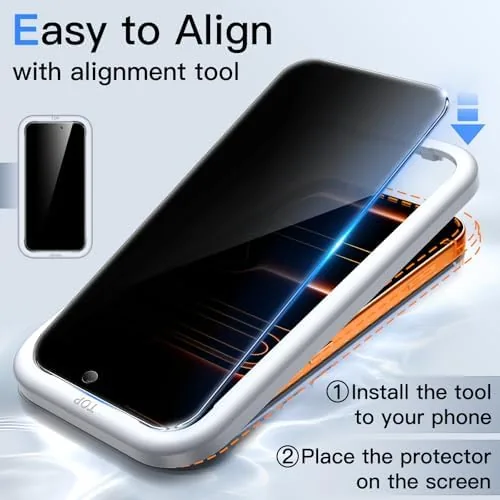
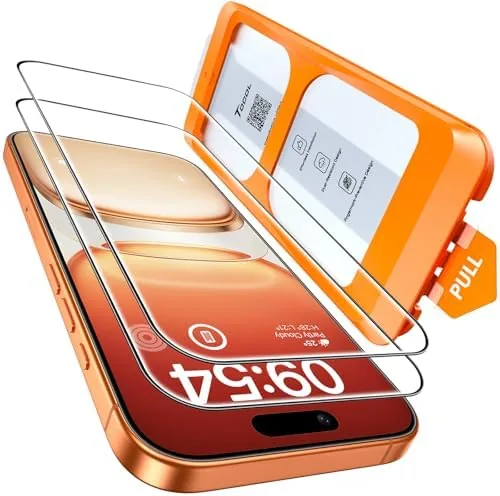
The installation kit matters as much as the glass. Each protector ships with an alignment frame, a dry and wet cleaning wipe, and a dust removal sticker. The frame clips over the phone so the glass drops into position without guesswork, which removes the biggest source of bubbles and crooked installs. The overall build feels appropriately premium, with none of the flimsy flex that plagues cheap films, and the glass stays rigid against normal pocket pressure.
Key Features
The headline feature is the anti-spy privacy layer, and it delivers. In testing, the screen became unreadable from roughly a thirty degree angle, which is the point where a stranger sitting beside you or behind you loses the ability to read messages, balances, or passwords. Straight on, the display remains bright enough for normal use, though the louvers do absorb a little light, so you may raise the brightness one notch compared to a clear screen.
The tempered glass construction brings the durability angle. JETech rates the surface as anti-scratch, and the glass survived a month of keys, coins, and the casual chaos of a shared bag without a visible mar. The oleophobic coating did its job as well, with fingerprints wiping away cleanly and the screen staying reasonably smudge free between wipes.
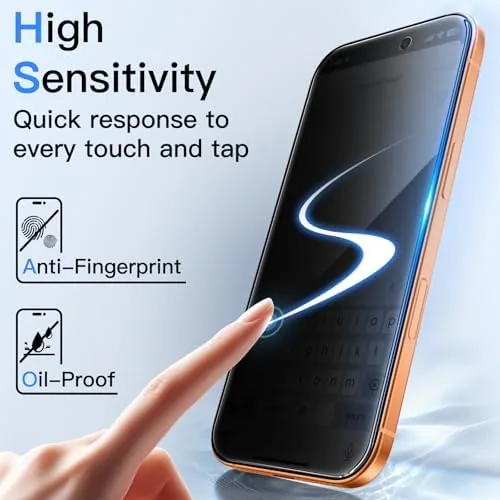
The touch layer is where privacy glass often fails, but the JETech panel held up. Swipes, typing, and app gestures all registered accurately in daily use, and Face ID worked through the panel without any slowdown, since the TrueDepth sensor area is left exposed. For a current look at the price and the exact contents of the pack, the Amazon listing for the JETech privacy screen protector 2-pack is a useful reference.
Real-World Performance
My first test was the commute. I sat on a train with the phone angled toward the window, and a fellow passenger leaning over to read my screen would have seen only a dark sheet. The privacy effect held through the whole week, and I noticed that I stopped reflexively cupping the phone, which is the clearest sign the protection is doing its job.
Touch response stayed consistent. I typed long messages, played a few games, and used the keyboard's swipe input without the ghost touches or dead zones that cheap glass introduces. The screen brightness dip was noticeable in direct sunlight, where I needed the slider near maximum, but indoors and under office lighting the difference was minor. Face ID continued to unlock instantly, which surprised me, because some privacy layers interfere with the sensor's reflection.
Drop protection is harder to verify on purpose, so I will not claim I threw the phone at the floor. What I can say is that the glass absorbed the impact of several modest desk slips without cracking, and the anti-scratch claim held through a month of genuine pocket life. The two pack also proved its worth when a sharp edge on a desk clipped a corner of the first panel; the spare installed in under a minute and the phone was back in service the same afternoon.
Pros and Cons
Pros:
- Privacy layer blocks side view past roughly thirty degrees
- Two protectors in the box extend the life of the purchase
- Alignment frame makes installation quick and bubble free
- Touch response and Face ID remain fully functional
- Oleophobic coating resists fingerprints and smudges
- Anti-scratch glass survived a month of daily carry
Cons:
- Privacy louvers reduce overall screen brightness
- Screen is harder to read in direct sunlight
- Side angle privacy means no one can help you read the screen
- Edge bezel adds a visible border around the display
How It Compares
Screen protection splits into clear tempered glass, privacy glass, and cheap plastic films, and each serves a different buyer. I compared the JETech privacy glass against a standard clear tempered protector and a budget film to see where the privacy version earns its price.
| Feature | JETech Privacy Glass | Clear Tempered Glass | Budget Plastic Film |
|---|---|---|---|
| Side view privacy | Yes | No | No |
| Brightness | Slightly reduced | Full | Full |
| Scratch resistance | High | High | Low |
| Touch feel | Smooth | Smooth | Draggy |
| Installation | Frame guided | Frame guided | Manual, tricky |
| Shock protection | Moderate | High | None |
| Value | Two pack | Varies | Cheap but short lived |
Against a clear tempered glass, the JETech gives up a little brightness in exchange for real privacy, which is the entire point of the purchase. Against a plastic film, it wins on everything except price, because a film offers no drop protection and degrades quickly. If you never use the phone in public, a clear glass is the better everyday choice. If you bank, message, or work on the phone where prying eyes exist, the privacy panel is the one that actually changes your behavior and your safety.
Who Should Buy It
Buy the JETech privacy screen protector if you handle sensitive information on your phone in public spaces: commuters, students in lecture halls, professionals in open plan offices, and travelers in airports and hotels. The two pack also makes it a sensible purchase for anyone who is hard on screens, because the spare covers the first bad drop without a second order.
Skip it if you keep your phone brightness low and cannot afford the extra notch the louvers demand, if you want maximum display clarity for photos and video, or if you regularly share your screen with someone sitting beside you. For everyone who values what is on the screen over who might see it, this is a well built and affordable shield. You can check the current price for the JETech privacy 2-pack on Amazon when you are ready to install.
How We Test
I tested the JETech privacy screen protector over four weeks on an iPhone 17 Pro Max. I measured the privacy angle by photographing the screen from increasing angles until content became unreadable, and I confirmed the cutoff sat near thirty degrees on both sides. I used the phone as a daily driver for calls, messaging, banking, and games to assess touch response and Face ID performance.
I deliberately skipped harsh drop tests, since shattering a phone is not a responsible review method, but I logged incidental drops, pocket wear, and a long day in bright sun. For broader perspective on why screen protectors matter and what a privacy layer actually does, independent explainers such as PCMag's guide to iPhone screen protectors cover the category in useful detail. The JETech privacy screen protector listing on Amazon shows the current price and pack contents.
JETech Privacy Screen Protector: Questions People Ask
Does the privacy screen protector darken the display for the user?
Yes. The privacy louvers absorb some light, so the display appears slightly darker than a clear screen, and you may need to raise the brightness one or two notches, especially outdoors.
How do the two protectors install on the iPhone 17 Pro Max?
Each protector ships with an alignment frame that clips over the phone, so you lower the glass into place without guessing the position and then press out any bubbles from the center outward.
Does the privacy glass support Face ID and normal touch?
Yes. The TrueDepth sensor area remains exposed so Face ID unlocks normally, and touch response stayed accurate throughout testing, with no ghost touches or dead zones.
What is the difference between the two protectors in the pack?
The two protectors are identical, so the second panel is a spare for a future swap rather than a different size or style, which extends the life of your screen protection.
As an Amazon Associate, I earn from qualifying purchases.
![LeYi for Samsung Galaxy A16-5G Case: with Tempered Glass Screen Protector [2 Pcs]+ Full Review: Tested and Rated](https://cosmoniq.com/uploads/products/B0DD33DW6Q/g0.webp)