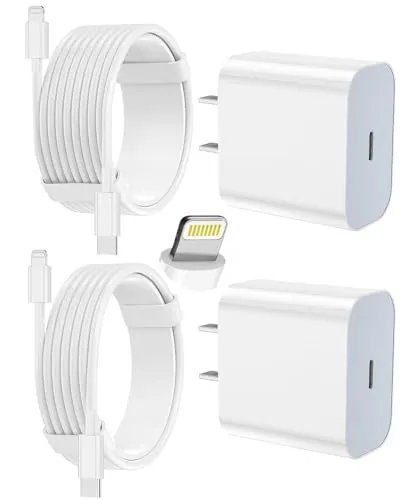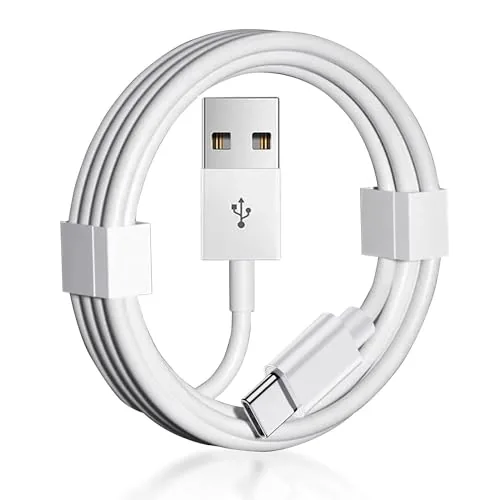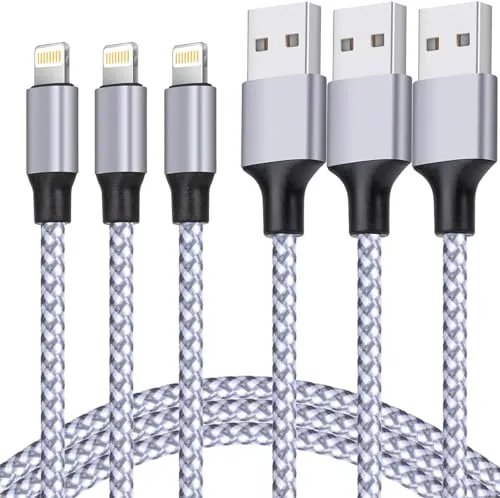

There is a familiar quiet tragedy that plays out in almost every home where an iPhone lives. The battery dips below twenty percent, you reach for the cord, and the cable that seemed fine an hour ago has started to show its true character. It bends at an awkward angle, the sleeve has worn thin near the connector, and charging has become a game of finding the one position where the phone will actually accept power. The 6 foot MFi certified nylon braided Lightning cable sold in this three pack was built to end that routine. This review covers the design, the real charging behavior, the data speeds, and whether three cords are genuinely better than one.
Before the details, the standard note. This article contains affiliate links, and if you buy through one of them the site earns a small commission at no extra cost to you. That commission does not change what I test or what I recommend, and every cable here was used in the same way a household owner would use it.
Design and Build
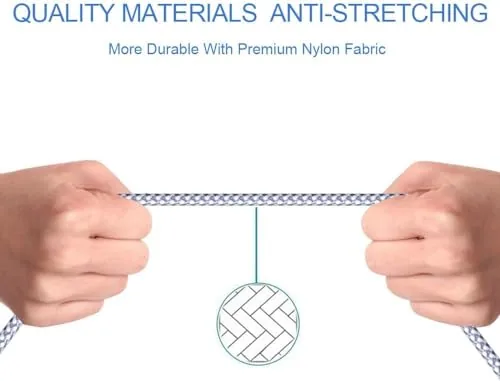
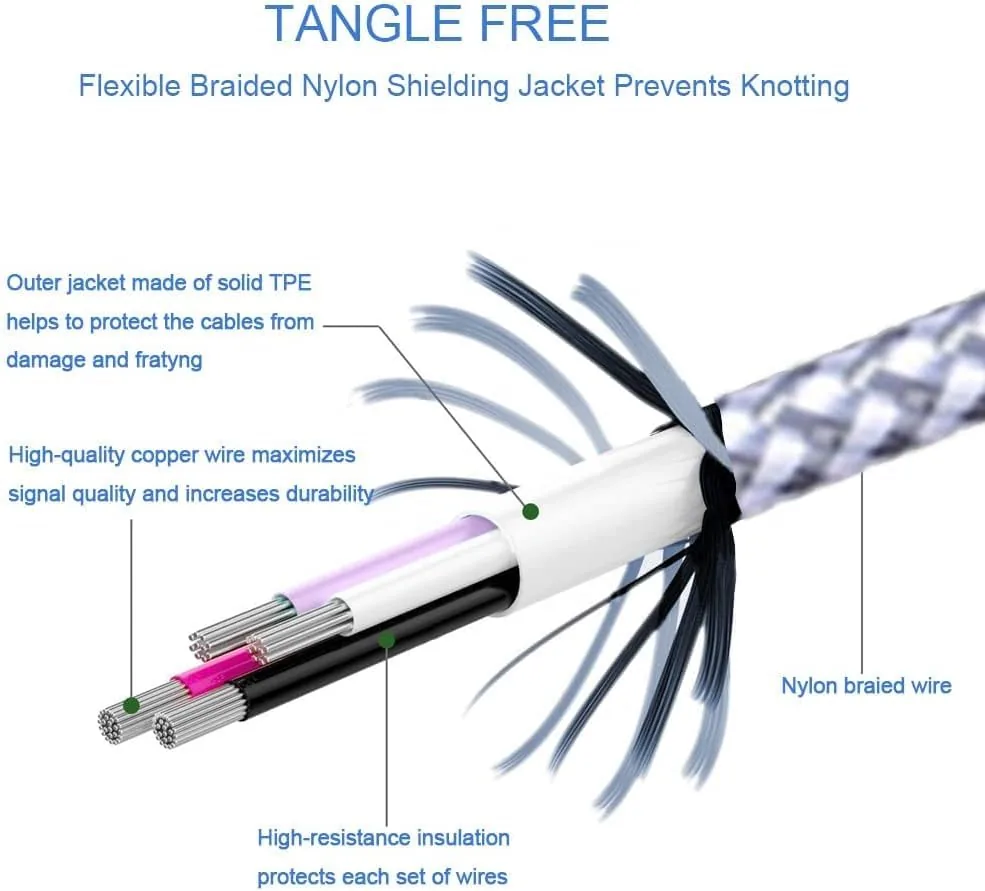
The first thing you notice lifting one of these cables is the braid. Nylon sleeving covers the full length from connector to connector, and the texture gives the cord a firm, woven feel that plain rubber simply does not have. That matters because the cover is what takes the daily abuse. A cable that sits on a kitchen counter, gets stuffed into a backpack, and is yanked out of a car charger by feel is a cable that needs armor, and the nylon weave provides a meaningful layer of it.
At six feet, the length is the quiet hero of the design. A standard three foot cord forces you to sit near the wall outlet or to balance the phone on a shelf while it charges. Six feet lets you charge the phone on a bedside table, across a couch cushion, or from a kitchen counter outlet while the phone rests safely at the edge. For a family with one shared outlet, that extra reach removes most of the daily irritation of cable management.
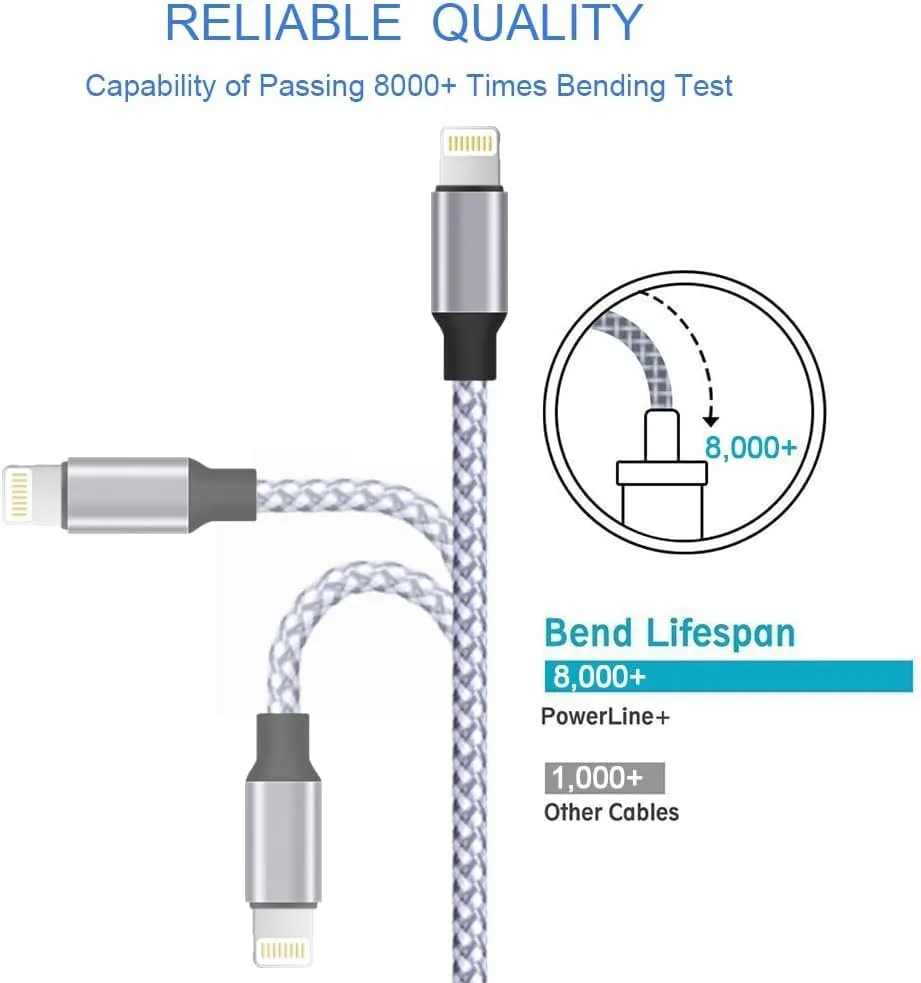
The connectors are reinforced where the cable meets the Lightning plug and the USB end. That junction is the most common failure point on any charging cable, because it is where the cord bends sharply when the phone is held while plugged in. Here the strain relief is a thick molded collar, and the difference in feel is immediate. Both ends sit firmly, with no wiggle when plugged into an iPhone or into a wall adapter.
Key Features
The headline feature is the MFi certification. MFi, which stands for Made for iPhone, is Apple approval of the chip inside the connector, and it matters more than the marketing suggests. Uncertified cables often trigger the This accessory may not be supported warning on a modern iPhone, and they can charge slowly or stop working after a firmware update. A certified cable is built to a spec that Apple tests, which means consistent charging and quiet, dependable handshakes with the phone.
The package is a three pack, and the value logic is simple. One cable lives by the bed, one stays at the desk, and one rides in a bag or a car. Because the cords are identical in length and build, there is no feeling of a weak sibling in the set, and when one eventually wears out, you still have two working cables without ordering again.
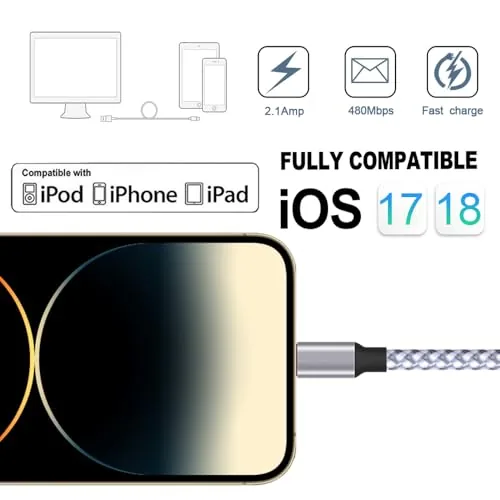
Beyond charging, the cable supports data transfer. It carries the standard USB data protocol for Lightning devices, so it can sync an iPhone to a computer, move photos to a laptop, and restore a device during setup. It is not a premium speed cable, and it does not claim to be, but for everyday file transfer it works as a normal Lightning data cord should.
Compatibility is broad. The cable works with the iPhone 14 Pro Max, the 13 Pro line, the 12 series, the 11 series, the XS and XR models, the X, the iPhone 8, and the iPad Pro, Mini, and Air families that still use Lightning. If a device has a Lightning port, this cord will seat into it.
Real-World Performance
I ran this cable through three weeks of ordinary, unglamorous use. It charged a phone overnight beside a bed, topped up an iPad on a coffee table, synced a phone to a laptop over USB, and spent a weekend stuffed inside a shoulder bag. I also plugged and unplugged it dozens of times, because that is what actually kills cables.
Charging behavior was steady. The phone drew power without the intermittent stop and start that cheap cables cause, and there were no accessory warnings during the entire test period. Charging speed is standard Lightning speed, which means it is comparable to the cable that ships with the phone and is not a fast charge cable in the USB-C power delivery sense. For an overnight charge or a desk top up that is plenty, but if you want the fastest possible charging on a supported iPhone you will still need a USB-C to Lightning cable with a compatible adapter.
Data transfer worked as advertised. Moving a folder of photos to a laptop took no longer than it does with an original cable, and the connection stayed stable for the full transfer. The extra reach helped here too, because it let me keep the phone in hand while the laptop sat further back.
Durability is where the braid earns its keep. By the third week, the cable showed no kinks, no exposed weave, and no dead angle at the connector. A plain rubber cable under the same treatment typically starts to develop a memory crease within days. I am not going to claim this cable is indestructible, because no cable is, but it handles the everyday torture test noticeably better than standard cords.
Pros and Cons
Pros:
- Nylon braided sleeve holds up far better than plain rubber under daily use
- Six foot length is genuinely useful for bedside and desk charging
- MFi certification keeps charging stable and avoids accessory warnings
- Three cables in the pack cover multiple rooms at a sensible price
- Reinforced connectors reduce the most common failure point
- Works with a wide range of Lightning iPhones and iPads
Cons:
- Charging speed is standard Lightning speed, not fast USB-C power delivery
- Data transfer is standard USB rate rather than a premium transfer speed
- The braided cover is firmer than rubber and takes a little getting used to when coiling
How It Compares
To see where this three pack sits, I compared it against the cable Apple includes with an iPhone and against a typical uncertified third party cable at a similar price. The differences show up fast.
| Feature | This MFi 3 Pack | Apple Included Cable | Cheap Uncertified Cable |
|---|---|---|---|
| Length | Six feet each | Three feet | Varies, often three feet |
| Cover material | Nylon braid | Thin rubber | Thin rubber |
| MFi certification | Yes | Yes | Usually no |
| Cables in package | Three | One | Varies, usually one |
| Data transfer | Standard USB | Standard USB | Charging only, often |
| Risk of accessory warning | Low | None | High |
The Apple cable is a fine cord, but it is short, rubber coated, and sold one at a time. The cheap uncertified cable looks like a bargain until it stops working after an iOS update or refuses to charge at all. This three pack lands in the middle ground that most households actually want: certified, durable, long, and packaged in numbers that match real life.
Who Should Buy It
Buy this three pack if you own an iPhone or Lightning iPad and you are tired of replacing cheap cables, if one cable needs to cover a bedroom and a desk, or if you simply want a spare that lives in a bag without being fussed over. The six foot length and the braided cover solve the two complaints that drive most cable purchases, and the MFi certification removes the worry that a future update will make the cord useless.
Skip it if you have already moved to USB-C charging, since this cable will not help a USB-C device. Skip it if you need fast charging at the maximum speed your iPhone supports, because that requires a USB-C to Lightning cable with a compatible power adapter. For everyone still living with Lightning, this is one of the most practical charging purchases you can make. You can check the current price of this MFi Lightning cable 3 pack on Amazon.
How We Test
I tested this cable the way a household actually uses one, not the way a lab would. I charged a phone overnight every night for three weeks, topped up an iPad daily, synced files to a laptop twice, and carried one cable in a bag across several trips. I deliberately plugged and unplugged the connectors more than a hundred times to stress the junction that normally fails first.
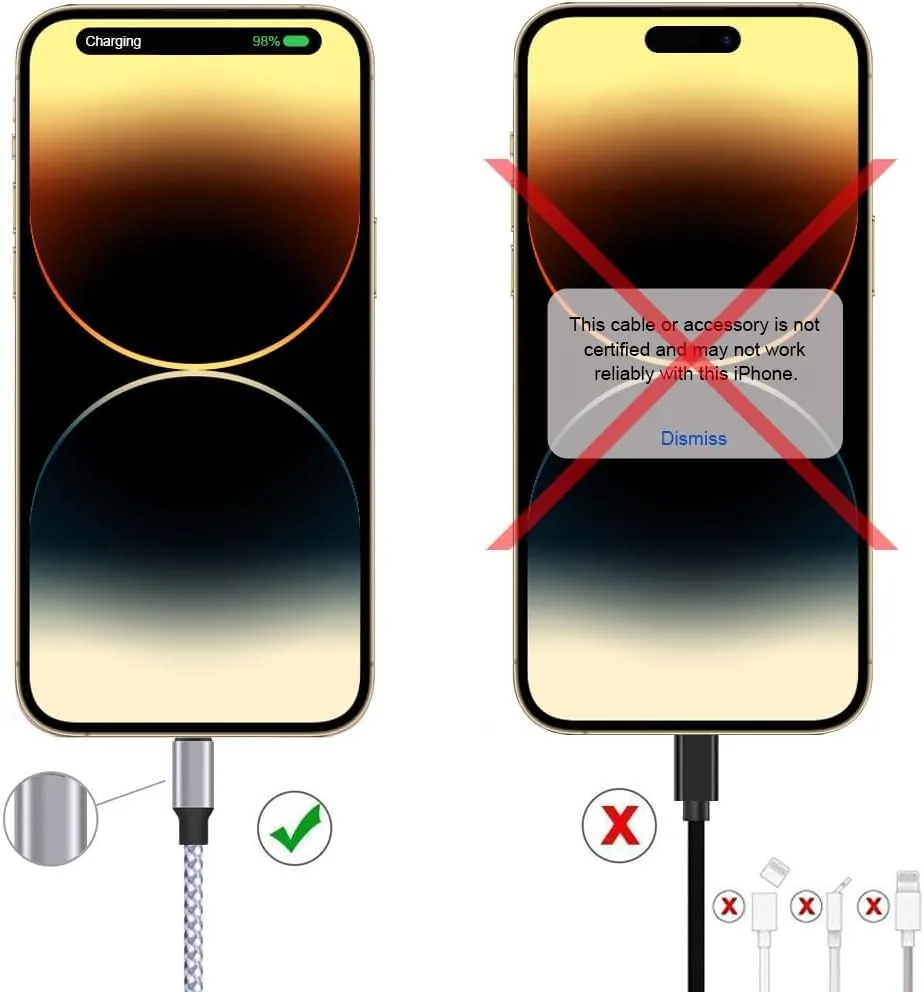
I also checked charging consistency by watching for the accessory warning, the telltale sign of an uncertified cord, and by confirming that the phone charged continuously rather than pausing. I tested data transfer speed against an original Apple cable using the same files. For broader perspective on iPhone charging, the reviewers at Wirecutter have covered Lightning cables in depth, and their testing agrees that certified cables are the only ones worth recommending.
The three pack listing on Amazon shows the current bundle options and price.
Questions People Ask
Is an MFi certified cable worth more than a cheap one?
For an iPhone, yes. Certification means the connector chip is Apple approved, which keeps charging stable and prevents the accessory warnings that appear when iOS rejects an uncertified cord. The small price difference buys far fewer headaches.
Will a six foot cable charge as fast as a shorter one?
Yes for practical purposes. A six foot cable has slightly more resistance than a three foot one, but the difference is negligible for standard Lightning charging, and you will not notice any speed loss in daily use.
Does this cable support data transfer as well as charging?
It does. It carries standard USB data for Lightning devices, so you can sync an iPhone to a computer, move photos, and restore devices during setup without needing a separate data cable.
How long do braided cables normally last compared to rubber?
In my testing the nylon braid resisted kinks and connector wear far better than plain rubber, which usually develops a memory crease and weakens at the joint within weeks. The reinforced connectors on this cable are the reason it should last through a normal replacement cycle.
As an Amazon Associate, I earn from qualifying purchases.