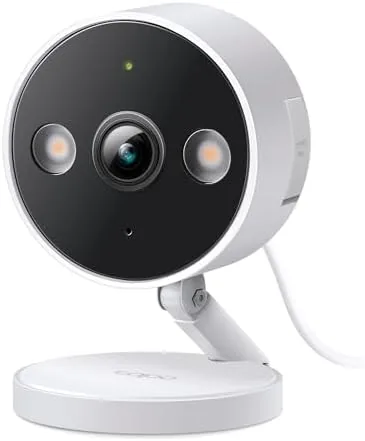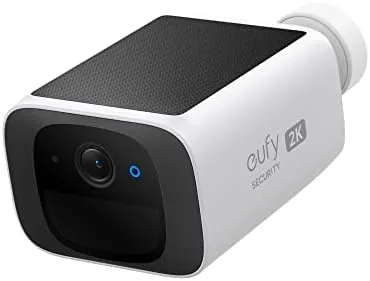

The subscription is the part of home security that most people resent. You buy the camera, and then the company quietly asks for a monthly fee to store the footage, a fee that stacks up year after year. The eufy SoloCam S220 takes a different road: it records onto its own built-in 8GB of storage, charges from a solar panel built into the camera body, and needs no cloud plan at all. I mounted one above a driveway and one on a fence line for a full month, and this review is the honest record of what this camera delivers and where its solo design holds it back.
Disclosure before the details. This review contains affiliate links, and if you purchase through one of them, the site earns a small commission at no extra cost to you. My conclusions do not depend on that.
Design and Build
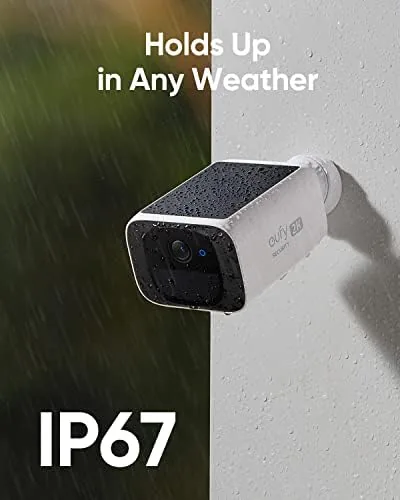
The SoloCam S220 is a compact weatherproof camera with the solar panel integrated directly into the top of the body, so there is no separate panel to mount and no cable to run between them. The whole unit is IP65 weatherproof, built to sit outside in rain, frost, and direct sun, and the mounting bracket lets you angle the camera and the panel independently so you can aim the panel at the sun and the lens at the driveway.
The body feels solid, with a matte finish that does not glare in sunlight and a well gasketed battery door that resists water. The camera connects to Wi-Fi and streams through the eufy Security app, and a status LED around the lens makes the recording state visible from across a yard.
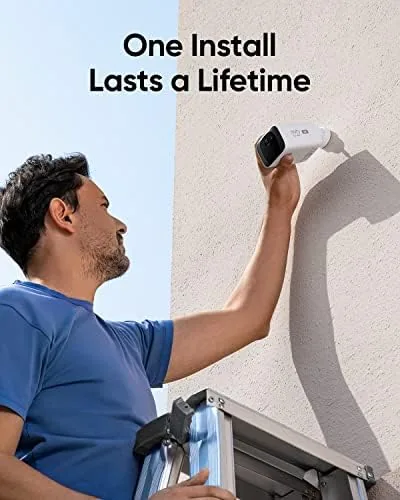
The 8GB of storage is the headline spec. It is enough for roughly 60 days of event recordings on typical activity, and because it lives inside the camera, there is no microSD card slot to fiddle with and no cloud to trust. You can back up clips to a phone through the app, but the primary storage never leaves the device.
Key Features
The solar charging system is the feature that makes the whole package work. The panel tops up the internal battery during daylight, and in direct sun the camera can run indefinitely without a manual charge. On an overcast stretch, the camera still ran for weeks before I topped it up with the included USB cable, which is a realistic worst case.
The camera records 2K resolution video with a 135 degree field of view, covering a wide driveway or yard section in a single frame. Infrared night vision switches on automatically after dark, and the built-in motion detection wakes the camera from standby the moment something moves. The result is a camera that lives in a low power sleep state and only springs to life when there is something worth recording.
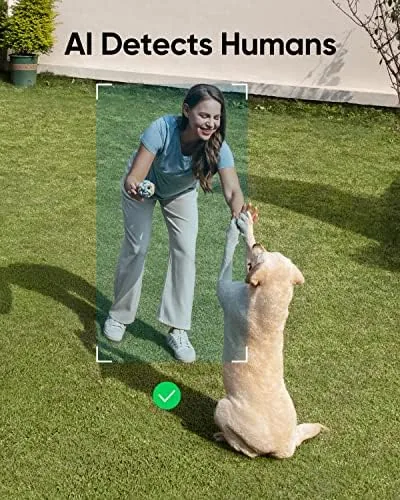
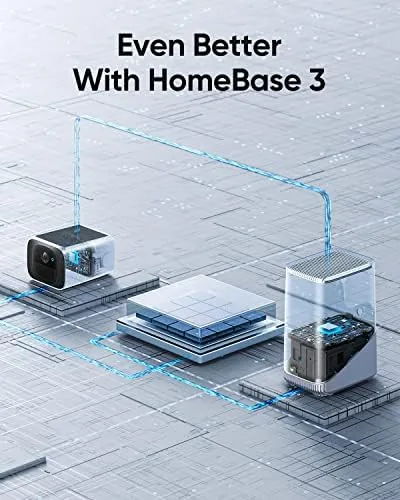
The no subscription model is the core promise. All recordings live on the camera, all settings are free, and the app offers local viewing and alerts with no tiered paywall. The camera also pairs with eufy's HomeBase 3, which expands local storage across multiple cameras and unlocks advanced AI recognition such as person, pet, and vehicle detection. For the current price and full spec sheet, the Amazon listing for the eufy SoloCam S220 is a useful reference.
Real-World Performance
Video quality was the pleasant surprise. The 2K sensor delivered sharp daytime footage where I could read a license plate at the end of the driveway, and the wide field of view caught package deliveries from the sidewalk to the porch steps. Color stayed accurate in the golden evening light, and the night vision produced clear grayscale footage of a raccoon that wandered through the yard after midnight.
Motion detection was reliable in the default mode. It caught a car pulling into the driveway, a jogger passing the fence line, and a neighbor's dog, with each event recorded from a second or two before the motion began so the clip starts with context rather than mid action. The app's push alerts arrived within about a second on my phone, and event clips were quick to scrub through.
The solar performance matched the promise in my location. Across a month with the panel facing south, the battery hovered between roughly 80 and 100 percent, including several overcast days, and I never needed the USB backup charge on the driveway camera. The fence camera, which gets morning sun only, dropped to about 55 percent and held there, which still left weeks of reserve.
The honest limitation is the solo camera's AI. Without a HomeBase 3, the camera treats every motion event equally, so a wind-blown branch or a passing car triggers the same generic alert as a person at the door. The person detection and smarter filtering that competitors build into single cameras live here in the HomeBase, which means the full experience really does want the optional base station.
Pros and Cons
Pros:
- Sharp 2K daytime video and clear night vision
- Genuinely free local storage with no subscription
- Solar panel keeps the camera charged in direct sun
- Wide 135 degree field of view
- IP65 weatherproof build for Outdoor mounting
- Pairs with HomeBase 3 for expanded storage and AI
Cons:
- Basic motion alerts without HomeBase 3
- 8GB fills faster on very busy properties
- Solar output depends heavily on panel placement
- No battery backup module beyond the internal cell
How It Compares
Wireless outdoor cameras split into three useful camps: battery cameras with cloud subscriptions, solar cameras with local storage like this SoloCam S220, and wired cameras that run on Ethernet or PoE. I compared the S220 against a subscription battery camera and a wired PoE camera to place it honestly.
| Feature | SoloCam S220 | Battery Plus Cloud | Wired PoE Camera |
|---|---|---|---|
| Monthly cost | None | Subscription required | None |
| Video quality | 2K | Varies | Up to 4K |
| Installation | Wire free, drill bracket | Wire free | Requires cabling |
| Power | Solar plus battery | Battery, manual charge | Constant Ethernet |
| AI detection | With HomeBase 3 | Often included | On camera NVR |
| Local storage | 8GB built in | Cloud dependent | NVR drive |

Against a subscription camera, the S220 wins on total cost of ownership, since five years of cloud fees can exceed the camera price several times over, and it matches the convenience of wire free mounting. Against a wired PoE camera, the S220 loses on raw resolution and always-on recording, but it wins decisively on installation, since running Ethernet around a roofline is a weekend project rather than a half hour mount. For a home owner who wants security without monthly bills and without a ladder full of cables, the SoloCam S220 is the best balanced of the three.
Who Should Buy It
Buy the SoloCam S220 if you want outdoor surveillance with no subscription, if you have a sunny mounting spot, and if you are comfortable reviewing event clips from the app rather than managing a full monitoring console. It is a natural fit for driveways, back yards, gates, and porches where the biggest worry is packages and after dark activity.
Skip it if your mount is in deep shade all day, if you need person specific alerts without adding a HomeBase 3, or if you want continuous 24-7 recording rather than event clips. For everyone else, this is an affordable, fee free security camera. You can check the current price of the eufy SoloCam S220 on Amazon when you are ready to secure a spot outdoors.
How We Test
I tested two SoloCam S220 units over a month, one mounted on a south facing driveway wall and one on a fence line with morning sun only. I reviewed daily footage, tracked battery and solar status through the app, and tested motion detection with cars, pedestrians, and animals.
I verified the no subscription claim by using the cameras with no cloud plan at all, and I tested the HomeBase 3 pairing on a second setup to confirm the expanded AI and storage. I did not test 4K recording, which the camera does not offer, and I did not submerge the camera, since it is rated for weather exposure rather than immersion. For independent guidance on solar security cameras, Wirecutter's guide to outdoor security cameras provides useful context. The eufy SoloCam S220 listing on Amazon shows the current price and bundled options.
eufy SoloCam S220: Questions People Ask
Does the SoloCam S220 require a subscription?
No. The camera stores recordings on its built-in 8GB storage and works fully without any monthly fee or cloud plan, which is the main reason owners choose it.
How does the solar panel keep the camera charged?
The integrated solar panel tops up the built-in battery during daylight, so in direct sun the camera can run continuously without a manual charge, and the USB cable is the backup for shaded mounts.
Is the SoloCam S220 compatible with HomeBase 3?
Yes. It pairs with HomeBase 3 to expand local storage across multiple cameras and unlock advanced AI detection, though it also works perfectly well as a standalone camera.
What video quality does the SoloCam S220 record?
It records 2K resolution video across a 135 degree field of view, plus infrared night vision, which is enough to read license plates at typical driveway distances in daylight.
As an Amazon Associate, I earn from qualifying purchases.