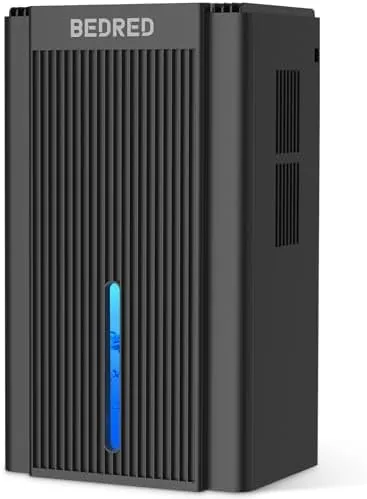

Stale air and damp closets are not just uncomfortable, they can slowly warp wood, encourage mildew, and make a bedroom feel heavier than it should. I spent three weeks running this 95OZ dehumidifier in a bedroom, a living room, and a basement to see whether a compact unit could actually take the humidity down without becoming an annoying machine to live with. The pitch is simple: quiet thermoelectric operation, auto shut off when the tank fills, and a seven color ambient light that makes the device double as a soft night lamp. This is my full account of what it does well and where it falls short.
Before the numbers, the standard disclosure. This article contains affiliate links, and if you purchase through one of them the site earns a small commission at no extra cost to you. My conclusions do not depend on whether you buy through any link.
Design and Build
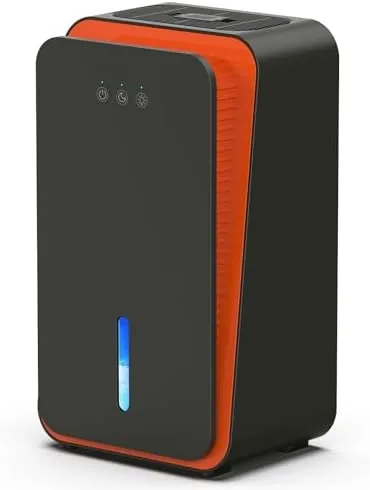
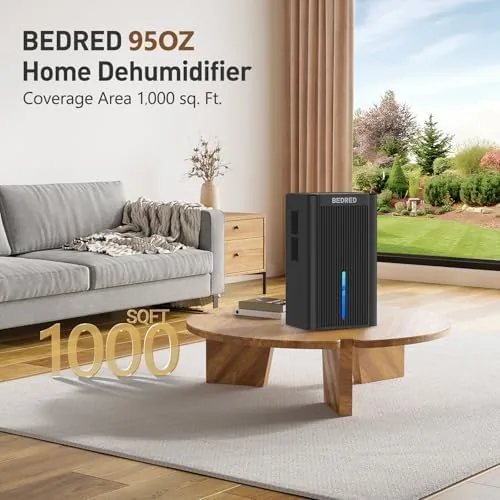
The unit is a compact thermoelectric dehumidifier, which means it uses a Peltier plate rather than a compressor. That choice shows immediately in the weight: the device is light enough to lift with one hand and easy to move between rooms, which is exactly what a unit rated for 1000 square feet should be. The body is a clean black plastic shell with a rounded profile, and the removable water tank slides out from the front with a single handle.
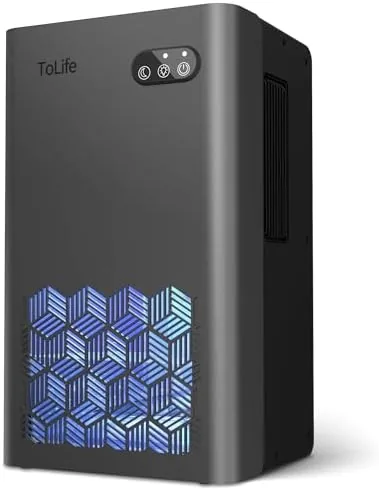
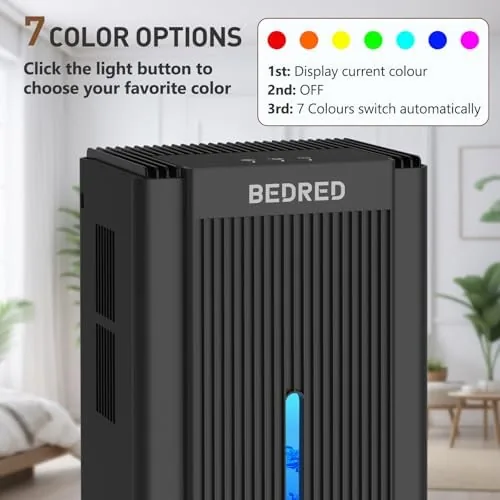
The front panel carries the seven color ambient light, which sits behind a soft diffuser and cycles through colors or stays fixed on one shade. You can turn it off entirely if you want zero glow at night. On top sit the simple controls: power, the light mode, and a fan speed toggle. There is no touchscreen and no app, which keeps the learning curve to zero and the price point sensible for a secondary room.
The build quality is better than the price suggests. Panels fit without rattling, the tank locks in place with a satisfying click, and the rubber feet keep the unit planted on hardwood and carpet alike. The air intake wraps around the back and the filtered vent is easy to pop off and rinse when dust builds up.
Key Features
The defining feature is the 95 ounce water tank. That is roughly 2.8 liters, which is generous for a thermoelectric unit and means you are not emptying the thing every few hours. In a consistently humid basement the tank still fills in about a day and a half, but in a normal bedroom I went two days between empties.

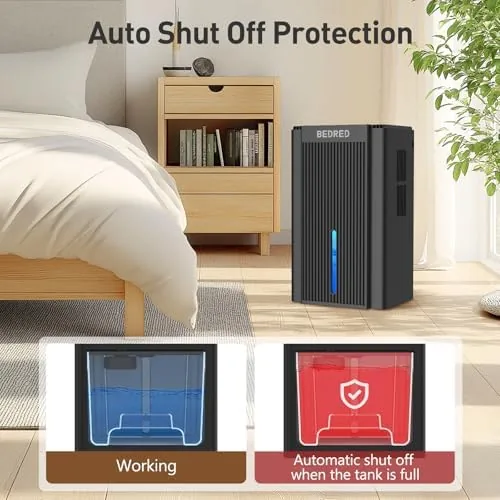
Auto shut off works exactly as advertised. When the tank reaches full, the unit powers down on its own and a small indicator light comes on, so there is no risk of a spill even if you forget to check. The full tank simply stops the machine instead of overflowing.
The seven color ambient light is a genuine extra rather than a gimmick. In the bedroom I set it to a warm amber, and it produced a gentle glow that was pleasant enough to fall asleep next to, with the ability to switch colors when I wanted a different mood. The light can be dimmed or shut off, and it does not interfere with the dehumidifying function at all.
Coverage is rated up to 1000 square feet, which in practice means a large bedroom, an open living room, or a finished basement. Thermoelectric units work more slowly than compressor models, so the rating reflects gradual moisture control rather than rapid drying of a soaking wet space. For a current look at the price and the exact tank size, the Amazon listing for the 95OZ dehumidifier is a useful reference.
Real-World Performance
My main test was the basement, which sits below grade and reads consistently damp in the mornings. I ran the unit on high for four days straight and measured the humidity with a separate hygrometer. The reading dropped from about 72 percent to 58 percent over the first 48 hours and held there, which is a meaningful improvement for a space that had felt clammy every morning.
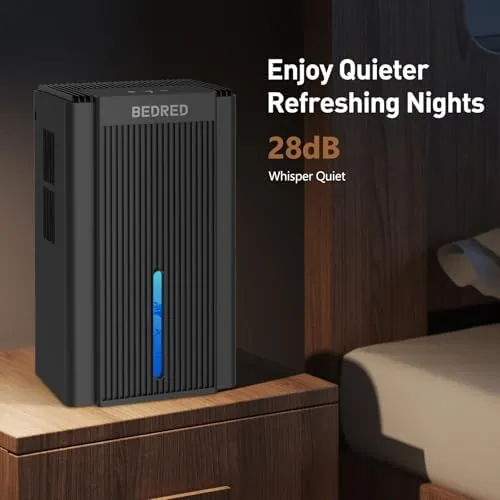
In the bedroom the effect was more subtle but still noticeable. The air felt lighter, and the musty smell that sometimes surfaced on humid nights did not return once the unit had been running overnight. The noise is the headline here: at its quiet setting the unit is nearly inaudible, and even on high it sits at a low hum that did not interrupt sleep. This is the main reason to choose a thermoelectric unit over a louder compressor model in a bedroom.
The ambient light proved useful in practice too. It acted as a subtle night lamp in the bedroom, and in the living room a slow cycling of colors added a relaxed accent without looking like a gaming rig. I did find the tank fill indicator occasionally triggered while the unit was on a slant, so I kept the device on a flat surface to avoid premature shut off.
The honest limitation is speed. This unit will not rescue a flooded basement or a bathroom that is steaming every morning. It removes moisture gradually, which is exactly right for maintaining comfort in a space that is already mostly dry but slightly damp. If you need aggressive drying, a compressor unit is the better tool.
Pros and Cons
Pros:
- Very quiet on the low setting, ideal for bedrooms
- 95 ounce tank means fewer trips to the sink
- Auto shut off protects against overflow spills
- Seven color ambient light doubles as a night lamp
- Lightweight and easy to move between rooms
- Simple controls with no app or setup required
Cons:
- Thermoelectric removal is slower than compressor models
- Not suited to very damp or flooded spaces
- Tank can trigger full indicator on uneven surfaces
- No humidity target or timer settings
How It Compares
Compact dehumidifiers split into two families: thermoelectric units like this one and compressor models that use refrigerant. They solve the same problem at very different speeds and volumes, and the right choice depends on the room. I compared this 95OZ unit against a typical 30 pint compressor dehumidifier and a smaller 500 milliliter desktop unit.
| Feature | 95OZ Thermoelectric Unit | 30 Pint Compressor Unit | 500ML Desktop Unit |
|---|---|---|---|
| Coverage | Up to 1000 sq ft | Up to 1500 sq ft | Small closet or desk |
| Tank size | 95 ounces | Pint sized or hose | About 17 ounces |
| Noise level | Very quiet | Audible hum | Nearly silent |
| Removal speed | Gradual | Fast and aggressive | Very slow |
| Weight | Light, portable | Heavy, stationary | Featherweight |
| Price | Mid range | Higher | Low |
Against a compressor unit, the thermoelectric model loses on speed but wins on noise, portability, and price. A 30 pint compressor is the right call for a genuinely wet basement, while this unit is better suited to a bedroom or living room where quiet operation matters more than raw capacity. Against a tiny desktop unit, the 95OZ model wins easily on tank size and coverage. The thermoelectric middle ground is a sensible pick for anyone who wants steady moisture control Without the hum of a compressor.
Who Should Buy It
Buy this dehumidifier if you sleep with a slightly damp feeling in the air, notice a musty smell in a spare room, or want a device that controls moisture without dominating the room visually or audibly. It is a strong fit for a bedroom, a home office, a walk in closet, or a finished basement that only needs a gentle push toward drier air.
Skip it if you are fighting a chronically flooded basement, drying a space after a leak, or running laundry in an unvented room. Those jobs call for a compressor dehumidifier with much higher daily capacity. For everyone else, this is an affordable, quiet, and genuinely pleasant way to keep a room feeling fresh. You can check the current price for the 95OZ dehumidifier on Amazon when you are ready to dry the air.
How We Test
I tested this dehumidifier over three weeks across three rooms: a main bedroom, an open living room, and a below grade basement. I tracked humidity with a separate digital hygrometer, recorded readings each morning and evening, and timed how long the tank took to fill in each space.

I ran the unit overnight in the bedroom to assess noise, tested the auto shut off by letting the tank fill completely, and used the ambient light in both fixed and cycling modes. I did not test it in a space that was actively flooding, since a thermoelectric unit is not intended for that job. For context on choosing between dehumidifier types, PCMag's guide to the best dehumidifiers explains the differences between thermoelectric and compressor designs in detail. The 95OZ dehumidifier listing on Amazon shows the current price and available finishes.
95OZ Dehumidifier: Questions People Ask
How large a space does the 95OZ dehumidifier cover?
The manufacturer rates it for rooms up to about 1000 square feet, which suits a bedroom, a living room, or an average finished basement.
How often does the water tank need emptying?
The tank holds 95 ounces, and in a humid bedroom or basement it typically needs emptying every one to two days depending on moisture levels.
Is this dehumidifier quiet enough for a bedroom at night?
Yes, the unit runs at a low noise level on its normal setting, and the ambient light can be dimmed or turned off for sleeping.
Does the dehumidifier shut off automatically?
Yes, auto shut off activates when the water tank is full, and a full indicator light tells you it is time to empty the tank.
As an Amazon Associate, I earn from qualifying purchases.