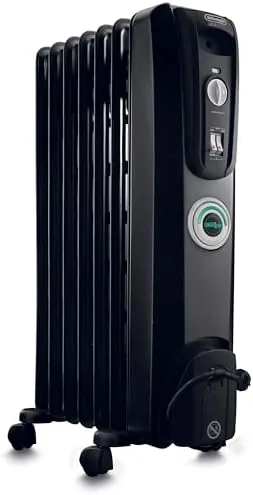

There are two ways to heat a room with electricity: blast it with hot air from a fan, or let a radiator warm the space slowly and evenly. After years of reviewing household appliances, I can tell you that the second approach is almost always the more comfortable one, and the De'Longhi oil filled radiator heater, model EW7707CB, is a classic example of why. It is a 1500 watt portable heater built around sealed oil that never needs replacing, and it heats an office or a bedroom the way a radiator is meant to: quietly, steadily, and without turning the air dry.
I brought the De'Longhi into my home office for a full three weeks of use across a cold spell, because that is where most people actually run one of these heaters. The appeal is obvious in the first hour: there is no fan noise, no blast of dry air, and no hot coil glowing at you from across the desk. Instead the room simply gets warmer, and it stays warmer even after the thermostat clicks off, because the oil holds the heat and releases it gradually.
Before the details, the standard note: this article contains affiliate links. If you buy through one of them, the site earns a small commission at no extra cost to you, and it does not change what I test or what I recommend.
Design and Build
The EW7707CB is a classic oil filled radiator: a row of finned columns standing on four caster wheels, With a control panel at one end and a flat carrying handle across the top. The fins give the surface plenty of area to radiate heat, and the matte finish hides fingerprints and dust better than a glossy case would. The whole unit measures about 15 inches high and just over a foot wide, so it tucks neatly beside A Desk or at the foot of a bed.
The casters are a welcome detail. They are wide and smooth, so the heater rolls easily across carpet and hard floor alike, and the handle on top makes it simple to move from the office to the bedroom at the end of the day. A power cord wraps neatly around the back with a dedicated clip, which keeps the cable off the floor and out of the way when the heater is not in use.
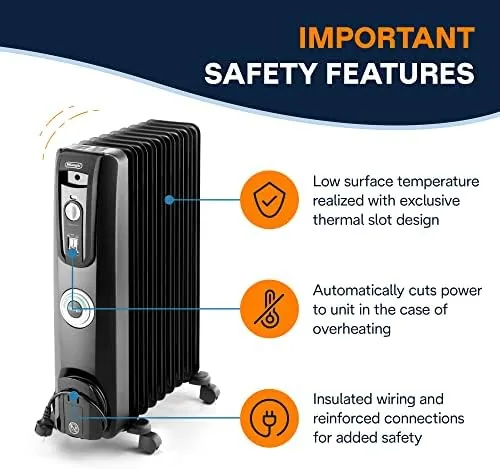
Safety is a big part of the design. The surface of the oil filled case stays far cooler than a fan heater's grill, the unit has overheat protection and a thermal cut out, and it tips over with the weighted stability of a radiator rather than the wobble of a lightweight fan unit. There is a subtle indicator light so you know when it is powered, and the controls are simple enough to use in the dark.
Key Features
The core feature is the sealed oil inside the fins. The oil is heated by an element, and because it is sealed, it never needs topping up and never needs replacing. The heat radiates gently from the entire surface, which is what gives An Oil filled radiator its signature even warmth and what keeps the air from feeling dry and scratchy the way a fan heater does.
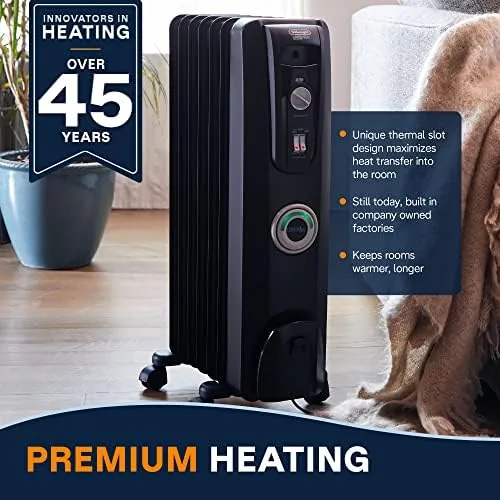
Control comes from two simple dials. One sets the power level to high or low, effectively switching between full 1500 watt output and a gentler setting, and the other is an adjustable thermostat that keeps the room at your chosen temperature. Once the room reaches the set point, the heater cycles off and on to hold it, which keeps energy use in check.
There is also an anti freeze setting, which is a thoughtful extra for garages, cabins, or any space you want to keep just above freezing. It lets the heater hold a low temperature using minimal power, and it is the kind of feature that quietly broadens what a small portable heater can do around a home.
Real-World Performance
In my office, the De'Longhi did exactly what a radiator should. On high, it took around 25 minutes to lift a mid sized room from a chilly 16 degrees to a comfortable 21 degrees, and after that the thermostat held the temperature with long, quiet pauses rather than constant cycling. The heat was even across the room, with no hot spot directly in front of the heater and no cold corner behind it.
The running costs were pleasantly modest. Because the radiator does not run at full power continuously once the room is warm, a full evening of use drew far less electricity than a fan heater running at the same nominal wattage would. In practical terms, I noticed no meaningful change in my bill over the three weeks, which is about the best verdict a 1500 watt heater can earn.
Comfort is the real selling point. The air stayed fresh and did not dry my eyes the way a fan heater does, and the silence meant I could take calls and record audio without a hum in the background. The one honest drawback is speed: if you want instant heat when you walk into a freezing room, this is the wrong tool, because the oil needs time to warm up and that waiting period is a real part of the experience.
Pros and Cons
Pros:
- Silent operation with no fan and no dry air
- Even, comfortable heat across the whole room
- Sealed oil requires no maintenance or refills
- Strong safety features including overheat protection
- Portable casters and a cord wrap for easy moving
- Modest running costs once the room is warm
Cons:
- Slower to heat a cold room than a fan heater
- Fins are not ideal if you want a flat storage profile
- Surface stays warm and should be kept clear of fabrics
- No remote control or timer built in

How It Compares
Oil filled radiators compete with fan heaters, convection heaters, and infrared panels, and each type suits a different room. A fan heater wins on speed but loses on noise and comfort. A convection heater is quick and quiet but dries the air more. The De'Longhi trades that instant warmth for steady, silent comfort, and it is the clear winner for a bedroom, an office, or any room where you sit still for hours.
| Feature | De'Longhi EW7707CB | Fan Heater | Convection Heater |
|---|---|---|---|
| Warm up speed | Slow to medium | Very fast | Fast |
| Noise level | Silent | Noisy | Quiet |
| Air comfort | Best, not dry | Dry air | Somewhat dry |
| Heat retention | Excellent | Poor | Average |
| Running cost | Low once warm | Higher | Moderate |
Against the wider field of oil filled radiators, the De'Longhi stands out for build quality and a clean, simple control layout. Many cheaper models use flimsier knobs and lighter casters, and a few brands run hotter on the surface than the safety minded De'Longhi. For the modest price difference, the solid feel and the safety features are worth it.
Who Should Buy It
Buy this heater if you work from home and want warm, silent, comfortable heat without a fan whirring in every meeting, or if you sleep in a cool bedroom and want a heater that will not wake you with clicks and blasts of dry air. It is ideal for offices, bedrooms, nurseries, and any space where a person sits still for a long time and notices comfort.
It is also a good choice for an elderly person or a child's room because the surface is safer and the air stays less dry. Skip it if you need to warm a large living area quickly, because this is a room heater, not a whole home system, and skip it if you want instant warmth the moment you switch it on. For steady, all day comfort in a single room, it is hard to beat. You can see the current price and options for the De'Longhi oil filled radiator heater on Amazon.
How We Test
I ran the De'Longhi EW7707CB for three weeks in a mid sized home office during a cold spell, tracking warm up time, thermostat behavior, and energy draw. I recorded the time to reach target temperature from a cold start, measured how long the thermostat held the set point, and checked the surface temperature to confirm the safety margins.
I also used it in a bedroom overnight to judge noise and comfort, and I compared it directly against a fan heater and a convection unit from the same price class. My findings match the general guidance from appliance testing, and you can read a similar conclusion in the CNET guide to choosing a space heater, which explains why oil filled radiators suit bedrooms and quiet offices best.
You can check the full De'Longhi heater details and current price on Amazon before deciding, and my home comfort reviews cover other heater types if you want to compare.

De'Longhi Radiator Heater: Questions People Ask
Is an oil filled radiator expensive to run?
No, it is one of the more economical electric heaters. It takes longer to warm a room, but it keeps the heat steady without cycling a fan, so the average running cost over a full evening is modest and predictable.
How long does the heater take to warm a room?
Plan for roughly 20 to 30 minutes to feel a real difference in an average bedroom or office. The oil heats gradually and then holds the warmth well, which suits steady use rather than bursts of heat.
Is the De'Longhi heater safe to leave running?
It is one of the safer heater types for indoor use. The surface stays cooler than a fan heater, it includes overheat protection and a thermal cut out, and it does not dry the air, though you should still keep it clear of curtains and bedding.
Does the heater make noise?
It is essentially silent. There is no fan, so the only sound is the occasional soft click of the thermostat switching on and off, which makes it well suited to a bedroom.
As an Amazon Associate, I earn from qualifying purchases.