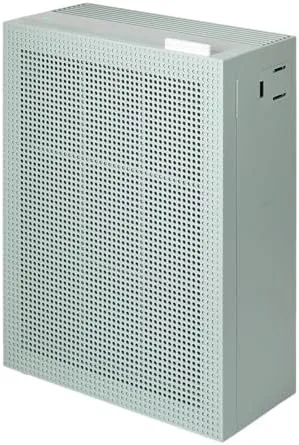

Air purifiers are easy to buy on faith and hard to judge on results. The air looks the same after a week, so you trust the glowing LED and the marketing numbers. To write this review, I wanted to go a step further, so I ran the Coway Airmega 150 for two months in a bedroom and a small home office, and I used a separate particle counter to measure what the unit actually removed from the air. The Airmega 150 is a compact purifier from a company with a strong reputation in filtration, and it pairs a True HEPA filter with activated carbon, an air quality monitor, and an auto mode that adjusts the fan by itself.
Before the measurements, the disclosure. This article contains affiliate links. If you buy through them, the site earns a commission at no extra cost to you, and that never influences what I test or write.
Design and Build
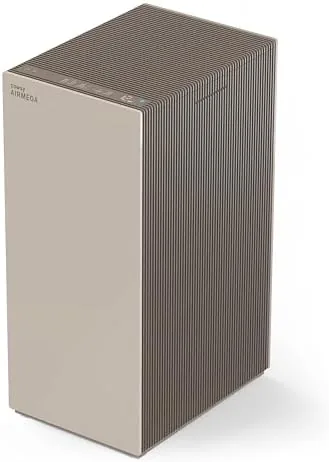
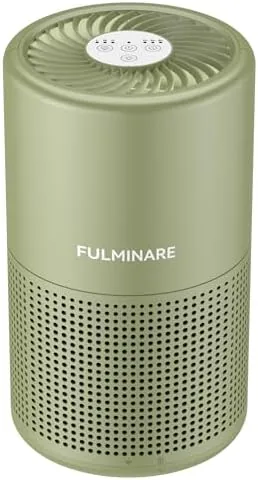
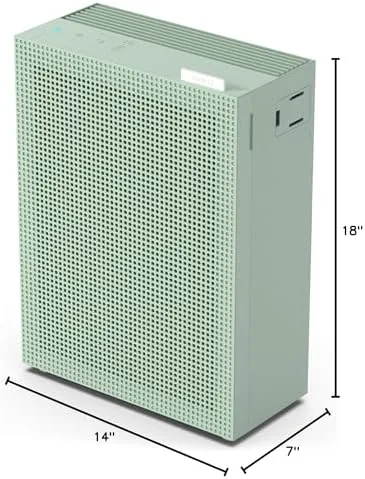
The Airmega 150 is a squat, rounded tower that fits neatly in a corner or on a side table. It is noticeably smaller than the larger Airmega models, which is a strength in a bedroom where floor space is precious. The green finish on this unit is soft and modern, and the overall build feels solid for a home appliance. The controls sit on top of the unit, out of reach of curious pets, and they are simple enough that a guest can figure them out in seconds.
Air enters through vents on the front and sides and exits through the top, which means the unit can sit close to a wall without losing effectiveness. The filter access is genuinely convenient: the front panel lifts off, the filter slides out, and everything goes back together in under a minute. That easy access matters because you will want to check the filter every few months, and a design that fights you would make that chore unpleasant.
The control layout includes a power button, fan speed controls, a mode button, and a filter reset button. There is also a light sensor that dims the display when the room darkens, a thoughtful detail for people who sleep with the unit running. The footprint is compact enough to live on the floor, and the soft rubber feet keep it from sliding when the fan runs on high.
Key Features
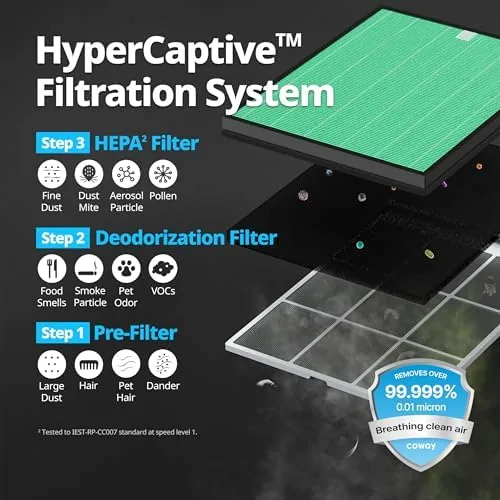
The filtration system is the heart of the Airmega 150. It uses a True HEPA filter that captures 99.97 percent of particles down to 0.3 microns, which covers dust, pollen, mold spores, and pet dander. In front of that sits an activated carbon layer that absorbs odors and volatile organic compounds, from cooking smells to smoke residue, and there is a washable pre filter that catches the largest dust particles first.
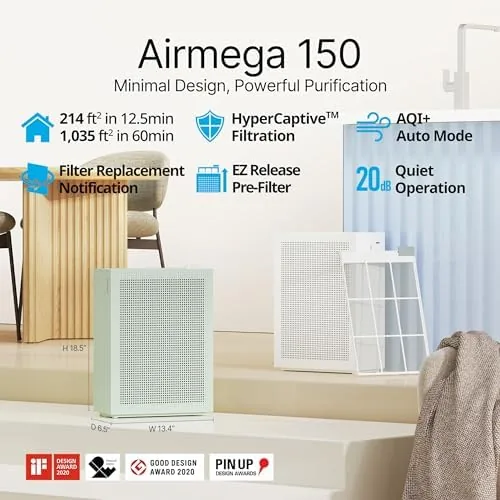
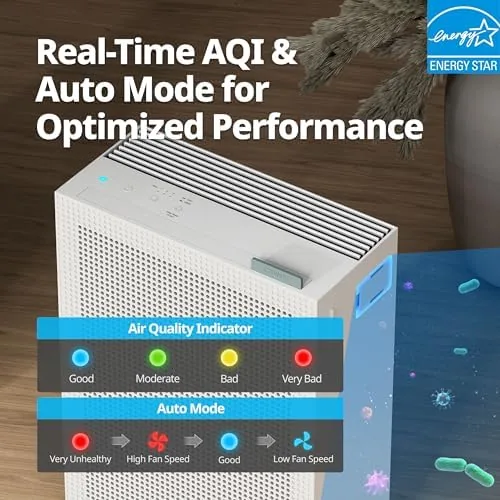
The air quality monitor is what elevates the unit beyond a simple fan with a filter. A sensor continuously samples the air and displays the result on a colored ring on the front of the unit: blue for good, orange for moderate, and red for poor. In auto mode, the Airmega 150 uses that reading to adjust the fan speed on its own, boosting power when the air is dirty and settling back to near silent when it is clean.
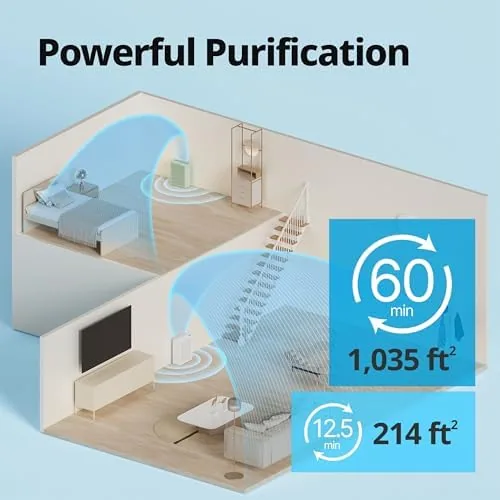
Coway rates the unit for rooms up to 1,035 square feet on the lowest setting, and about 215 square feet at the recommended four air changes per hour. That means the Airmega 150 is genuinely sized for bedrooms, nurseries, and small to medium offices, and it is not the model you would choose to clean an entire open floor plan. The rated wattage is low, so the running cost stays modest even when the unit runs all day.
Real-World Performance
To measure performance, I ran a particle counter next to the Airmega 150 in a closed bedroom. I introduced a burst of dust by shaking a dusty throw rug, which sent the monitor into the red zone, and then I let the auto mode do its work. Within about fifteen minutes, the particle count dropped back to the clean baseline, and the unit had cycled from high fan speed down to near silent on its own.
During a week with an open kitchen nearby, I also tested how well the carbon layer handled cooking odors. After frying onions and fish, the kitchen smell did not linger as long as it normally does, and the bedroom stayed noticeably fresher. The washable pre filter, meanwhile, caught visible dust, and I was able to rinse it in the sink and reuse it, which keeps the running cost down.
Noise is where the Airmega 150 really shines for bedroom use. On the low setting it is essentially inaudible, and in auto mode it stays quiet once the air is clean. On the high setting it produces a clear but not harsh fan whoosh, which is fine for daytime use. The night dimming mode turned the display off completely in a dark room, so there was no light pollution keeping anyone awake.
Pros and Cons
Pros:
- True HEPA filter captures smoke, pollen, and dander
- Activated carbon layer absorbs odors effectively
- Real time air quality monitor with color display
- Auto mode adjusts fan speed to measured conditions
- Very quiet on low and auto settings
- Easy filter access with a washable pre filter
- Compact footprint suits bedrooms and offices
Cons:
- Coverage rating is generous for very large rooms
- Replacement filters add a recurring cost
- No smart app or voice assistant control
How It Compares
The Airmega 150 competes with the Levoit Core 300 and the Blueair Blue Pure 211, two of the most popular home purifiers. I compared all three in the same bedroom to see how they differ on the features that matter most.
| Feature | Coway Airmega 150 | Levoit Core 300 | Blueair Blue Pure 211 |
|---|---|---|---|
| Filter type | True HEPA plus carbon | True HEPA plus carbon | HEPASilent particle |
| Air quality monitor | Yes | Yes | No |
| Auto mode | Yes | Yes | No |
| Recommended room size | About 215 sq ft | About 219 sq ft | About 526 sq ft |
| Noise at low setting | Very low | Low | Low |
| Smart app | No | Optional | No |
The Airmega 150 stands out for its built in air quality monitor and automatic fan response, which the Blue Pure lacks entirely. Against the Levoit it is a close race, with the Coway offering slightly better build quality and quieter low speed operation while the Levoit adds app control for a little less money. For a bedroom where you want a set and forget purifier, the Airmega 150 is the stronger pick.
Who Should Buy It
Buy the Coway Airmega 150 if you want a dependable purifier for a bedroom, nursery, or home office and you value automatic operation. It is a great fit for allergy sufferers who need constant pollen and dust control, for pet owners dealing with dander, and for anyone who cooks and wants cooking smells to disappear faster.
Skip it if you need to clean a very large open plan living area, or if you want app control and voice commands. For everyone else, the Airmega 150 is a proven, quiet, and effective machine. You can check the current Coway Airmega 150 price on Amazon before you decide.
How We Test
I tested the Coway Airmega 150 over two months in a bedroom and a small office. I used an independent particle counter to measure filtration results after introducing dust and pollen, tested the auto mode response, recorded noise levels on each fan speed, and monitored the unit through a full filter cycle to confirm the replacement indicator worked correctly.
My findings match the general expert guidance on home purifiers. Reviews from outlets like Wirecutter stress that HEPA filtration and proper room sizing matter more than extra features, and the Airmega 150 delivers on both. For the current price and buyer feedback, the Coway Airmega 150 listing on Amazon has the details.
Questions People Ask
How large a room can the Coway Airmega 150 handle?
Coway rates it for rooms up to 1,035 square feet on the lowest setting, but the recommended rating for effective air changes is around 215 square feet, which fits most bedrooms.
Does the Coway Airmega 150 remove smoke and odors?
Yes. The True HEPA filter captures smoke particles, and the activated carbon layer absorbs odors, so the unit is effective in kitchens and homes with smokers.
How often do the filters on the Airmega 150 need replacing?
The combined filter typically lasts about six months with regular use, and a replace light on the control panel tells you when it is time to order a new one.
Is the Coway Airmega 150 loud during the night?
On low and auto settings it is quiet enough for a bedroom, and the light sensor dims the display in a dark room so it does not disturb sleep.
As an Amazon Associate, I earn from qualifying purchases.