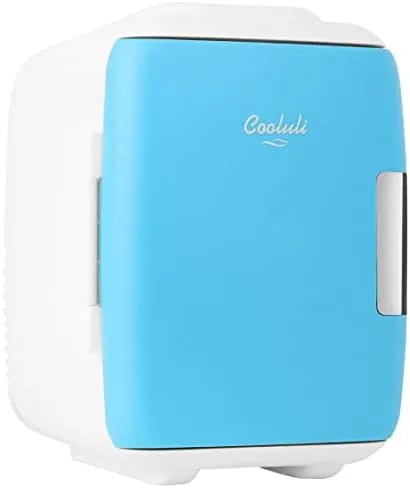

A small fridge is one of those purchases people make once and then regret. The cheap plug-in warmers barely cool a drink, and the big compressor units cost more than a weekend trip. The Cooluli Mini Fridge sits in a useful middle space: a 4 liter unit that holds six standard cans, chills or warms depending on the switch, and runs from a wall outlet, a car socket, or a USB source. I spent a month testing it on a home office desk, in the front seat of a car, and in a dorm room that doubled as a guest bedroom, and this Cooluli mini fridge review is the honest record of how it behaved in all three places.
Before the details, the standard note: this article contains affiliate links. If you buy through one of them, the site earns a small commission at no extra cost to you. That commission does not change what I test or what I write.
Design and Build
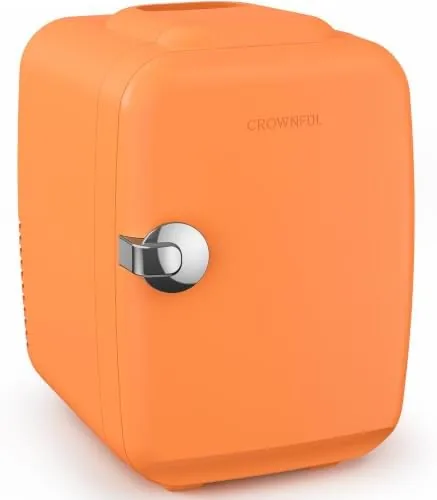
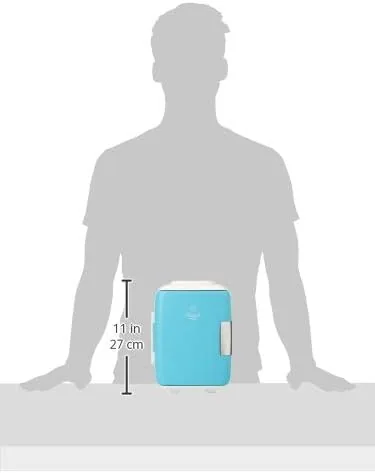
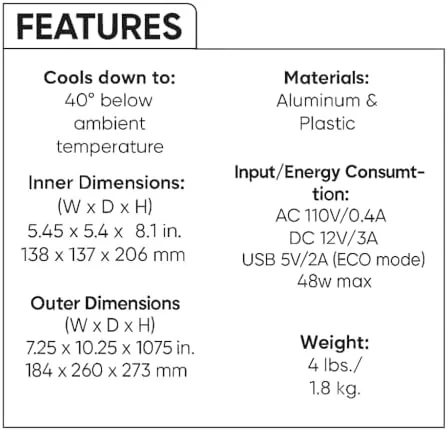
The Cooluli is a plain, practical little box, and that is mostly a compliment. The blue shell is a matte plastic that does not show fingerprints, with a front that curves inward and a recessed carry handle on top. It is light enough to lift with one hand, somewhere under four pounds fully empty, which is the whole point of a portable unit meant to move between a bedroom, a desk, and a vehicle. The handle makes that shuffle easy, and the size, about the footprint of a shoebox laid flat, fits on a dorm shelf, under a desk, or in a back seat footwell.
The front holds a simple rocker switch with three positions: off, cold, and warm. That is the entire control surface, and there is no thermostat, no display, and no app, which is the right call at this price because a digital readout on a thermoelectric box would be mostly cosmetic. The rear carries the power input jack, and the included cord reaches a wall outlet from most shelf positions without an extension.
Build quality feels honest rather than premium. The plastic is solid and the seams are even, but the hinge on the door is the obvious weak spot, a slim plastic piece that asks for gentle handling. The door latch is magnetic and holds the seal well. Over a month of opening and closing, sometimes dozens of times a day, the hinge survived fine, but it is clearly the part I would expect to fail first if treated roughly.
Key Features
The feature that separates this fridge from a simple can chiller is the dual cooling and warming function. Flick the switch to cold and the thermoelectric element draws heat out of the cavity; flick it to warm and the same element reverses to hold food at serving temperature. That one switch turns a drinks fridge into a small food warmer for a desk lunch or a hot snack.
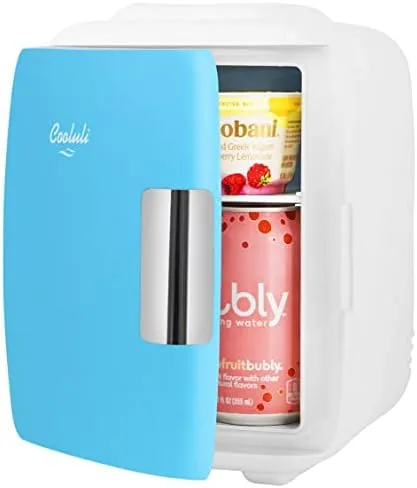
Power flexibility is the second headline feature. The unit ships with a standard AC wall adapter and a 12 volt DC car plug, so it works at a desk and in a vehicle with no extra purchase. The exclusive USB option is the third power path: with a separate USB cable, the fridge can draw power from a portable battery or a laptop, which makes it genuinely portable away from any outlet. That USB mode is weaker than the wall or car modes, as expected, but it extends the unit to tailgates and road trips.
The 4 liter capacity, roughly six standard 12 ounce cans, is small by design. It holds a few drinks and a small container of food, or a stack of skincare and makeup bottles, but it is not a family fridge. The interior is a single open cavity with no shelves, so you pack it like a lunchbox, and the compact footprint means stacking works fine.
Real-World Performance
The cold test is the one that matters, so I started there. I loaded six cans and set the switch to cold in a room at 72 degrees. After about four hours the interior sat around 38 to 42 degrees, and the cans came out properly chilled by evening. The unit never produced ice and it will not freeze anything, which is the honest limit of a thermoelectric design, but for drinks and snacks it does the job quietly and steadily.
The warm mode performed even better, which is often true of these dual units. A foil tray of leftover chicken sat at serving warmth for several hours, staying above the safety zone without scorching. For a desk lunch or a dorm supper this is the more surprising feature, and it worked every time I used it.
The car test was the reason I expected trouble, because a car cabin on a summer afternoon easily passes 130 degrees. Running the unit on 12 volt DC with the engine off and the car in shade, the fridge kept water bottles noticeably cooler than the cabin air, though it took longer than it did on AC power. On a genuinely hot day in a parked car, this is a cooler that softens the heat rather than a fridge that beats it. On the road with the car running, it keeps drinks cold for a trip without complaint.
Noise is a quiet win. The thermoelectric element makes no compressor rumble, just a faint hum that disappears under normal room sounds, and it was silent enough for a nightstand. Power draw is modest, so running it all day in a dorm made no visible dent in the bill, and the exterior stayed cool to the touch in both modes.
Pros and Cons
Pros:
- Compact 4L size holds six cans and fits a desk, dorm shelf, or car
- Dual cooling and warming functions from a single switch
- Runs on AC wall power, 12V DC car power, and an optional USB source
- Light, with a top handle, so it is genuinely easy to move around
- Quiet thermoelectric operation with no compressor rumble
- Modest power draw for continuous daily use
Cons:
- Thermoelectric cooling will not freeze anything or make ice
- Cooling is slow to reach temperature, especially in a hot car
- Slim plastic door hinge asks for gentle handling
- No thermostat, display, or temperature control beyond the switch
How It Compares
The small fridge market splits into three tiers: this thermoelectric 4L unit, a basic single function can warmer that only cools, and a compressor mini fridge that actually freezes but costs several times as much and weighs far more. I compared the Cooluli against both to see where each one earns its money.
| Feature | Cooluli 4L | Basic 6-Can Warmer | Compressor Mini Fridge |
|---|---|---|---|
| Capacity | 4 liters, 6 cans | Roughly 6 cans | 1.7 to 4.4 cu ft |
| Cooling depth | Chills, no freezing | Minimal | Freezes and makes ice |
| Warm function | Yes | Yes | Rarely |
| Power options | AC, DC, USB | AC or DC | AC |
| Weight | Under 4 pounds | Similar | 25 to 40 pounds |
| Typical price | Low | Lowest | Much higher |
Against the basic single function warmer, the Cooluli wins on cooling depth alone, because the cheap units barely dent the temperature while this one produces genuinely cold drinks. Against a compressor fridge, the comparison flips: the compressor freezes, holds far more, and keeps temperature rock steady, but it weighs thirty pounds, needs a wall outlet, and costs several times more. The honest summary is that the Cooluli is not trying to replace a real refrigerator. It is a portable, dual purpose box for the places where a real fridge cannot go, and it does that job better than anything else at its size and price.
Who Should Buy It
Buy the Cooluli Mini Fridge if you want cold drinks at arm's reach on a desk, if you are a student in a dorm or small room where a full fridge is impractical, or if you want a unit that follows you from home to car and back. The warm mode also earns its place for anyone who takes a hot meal to work and wants it at serving temperature by lunch.

Skip it if you need to freeze food, make ice, or keep a full family supply of groceries cold, because no thermoelectric unit in this class can do that. Skip it too if you expect a big countertop statement piece; this is a quiet, functional box. For the right user, though, it is one of the most useful small appliances at this price. You can check the current price of the Cooluli Mini Fridge on Amazon when you are ready.
How We Test
I ran the Cooluli Mini Fridge for a month across three locations. I tested cold mode by loading six cans and tracking interior temperature in a 72 degree room, warm mode with a foil tray of leftovers over several hours, and the car mode with a 12 volt DC plug in parked and running conditions. I also checked the USB option with a portable battery and monitored noise and exterior temperature in both modes.
I did not test the unit in a freezer environment, and I did not expect it to freeze anything, because thermoelectric fridges are not built for that. For a fuller picture of how small fridges compare, Wirecutter's guide to mini fridges is a useful reference. The Cooluli Mini Fridge listing on Amazon shows current pricing and color options.
Cooluli Mini Fridge: Questions People Ask
How cold does the Cooluli mini fridge get?
In testing the interior reached about 38 to 42 degrees in a normal room, which chills drinks and snacks properly. As a thermoelectric unit it will not freeze anything or make ice, so expect cold drinks rather than frozen food.
Can the Cooluli run in a car?
Yes. The included 12 volt DC plug connects to a car outlet, and the unit also works from a standard AC wall outlet. On a very hot day in a parked car it softens the heat rather than fully defeating it, but with the car running it keeps drinks cold for a trip.
How many cans fit in the 4 liter fridge?
The 4 liter cavity holds about six standard 12 ounce cans, with a little room for small containers or skincare bottles, so it suits a desk, a dorm, or short car trips rather than a family haul.
Does the Cooluli warm food as well as cool it?
Yes. The switch flips the same thermoelectric element between cooling and warming, and in warm mode it holds food at serving temperature for hours without scorching, which makes it a genuinely useful desk lunch warmer.
As an Amazon Associate, I earn from qualifying purchases.