
Most waffle irons share a quiet failure: you pour in the batter, close the lid, and get a waffle that is crisp at the edges and doughy in the middle because the batter never made it into the deep pockets. The rotating Belgian waffle maker was built to erase that problem. By flipping the whole iron 180 degrees during cooking, the design spreads batter evenly into every well and keeps it in contact with the hot plates, and the stainless steel body with a 122 to 572 degree temperature range and a built-in timer gives you the kind of control you would expect from a much larger machine. I have spent two weeks making waffles for breakfast, dessert, and the kind of weekend brunch that turns into a small event, and this is how the machine performed.
A quick note before the details. This article contains affiliate links, and if you buy through one of them the site earns a small commission at no extra cost to you. That commission never changes what I test or what I recommend.
Design and Build
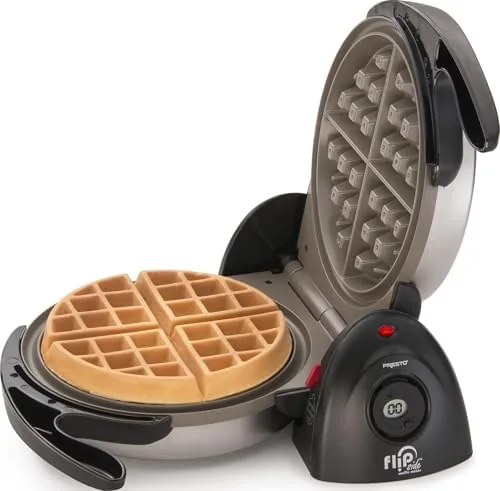
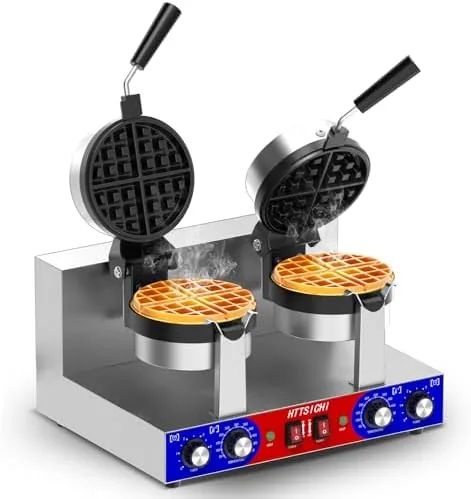
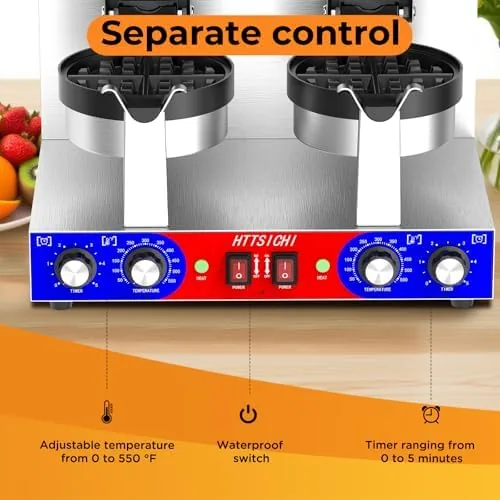
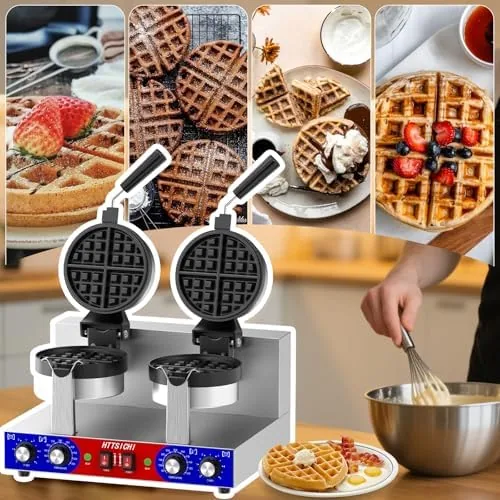
The waffle maker is a substantial piece of equipment. The stainless steel body is heavy and solid, which gives it the stable, commercial-grade presence the name promises, and the rotating frame swings on a central hinge that locks the iron in either the open or flipped position. The control panel sits on the front with a dial for the temperature, a timer, and indicator lights that tell you when the plates are hot and when the cycle is done.
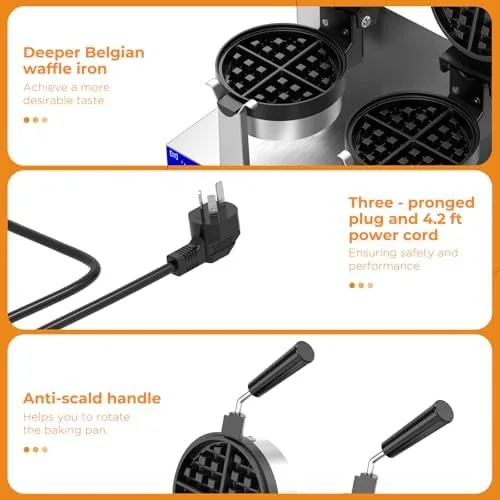
The build quality is reassuring. The deep Belgian wells are coated in a non-stick surface that releases cooked waffles cleanly, and the plates are thick enough to hold heat evenly across the whole cooking surface. The handles are designed so you can rotate the unit without touching the hot plates, and the machine stands firmly on non-slip feet during the cooking cycle.
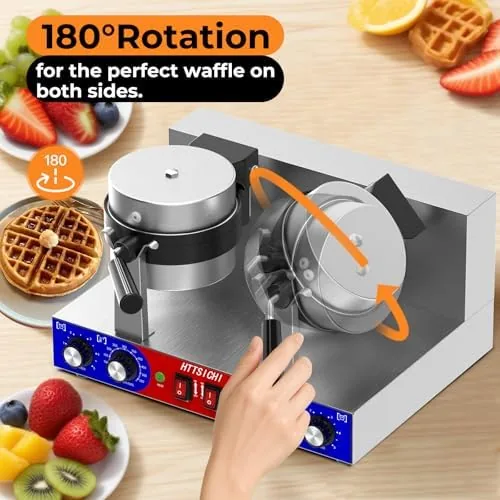
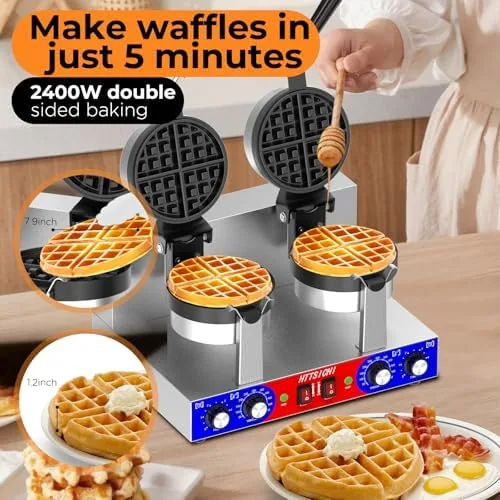
At 2400 watts, this is a powerful unit, and that power shows in how quickly it heats and how evenly it bakes. The footprint is larger than a basic flip waffle iron, so it needs counter space, but the commercial styling and stainless steel finish make it look at home in a serious kitchen. The drip tray catches overflow batter, keeping the counter clean between batches.
Key Features
The rotation is the defining feature, and it solves the problem that plagues flat waffle irons. When you flip the unit after pouring the batter, the batter flows down into all of the deep wells at once, so every pocket fills evenly and bakes against the hot surface. The result is a waffle that is golden and crisp across the entire surface, with no pale, undercooked center hiding in the middle of the pocket.
The temperature control is unusually broad. The dial spans roughly 122 to 572 degrees Fahrenheit, which covers everything from gentle, low-heat baking for light and airy waffles to aggressive heat for dark, crispy ones. Combined with the built-in timer, this gives you repeatable results: set the temperature and time once, and every batch comes out the same way. For a current look at the price and the exact specifications, the Amazon listing for the rotating Belgian waffle maker is a useful reference.
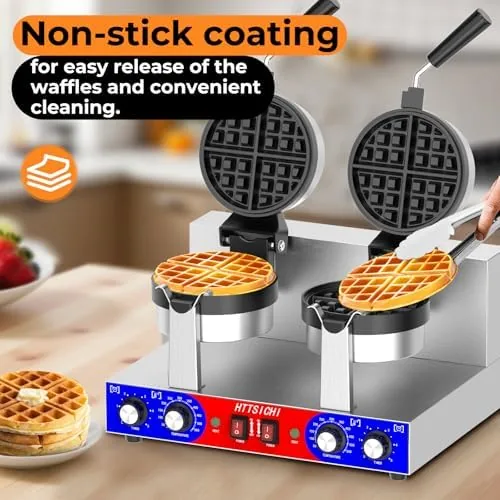
The deep wells are the other headline. The waffles bake about 1.2 inches thick, which is the fluffy interior with a crispy golden crust that defines Belgian-style waffles. That thickness also means the wells hold generous servings of batter, so each waffle is substantial enough to be the centerpiece of the plate rather than a thin breakfast afterthought.
Real-World Performance
I started with a basic buttermilk waffle batter, the kind that exposes every flaw in a waffle iron. I poured the batter into the lower wells, closed the lid, flipped the unit, and let the timer run. When it beeped and I swung the iron back, the waffle came out evenly golden on both faces, crisp at the edges, and fully cooked through every pocket. No pale middle, no runny batter leaking out of the sides, no half-done wells. That first waffle told me everything about why the rotation matters.
From there I pushed the range of the machine. A yeasted Belgian waffle batter, which is wetter and trickier to handle, filled the wells cleanly and baked into the tall, airy waffles that justify the Belgian name. A chocolate batter with a thicker pour spread evenly and released without sticking. For the brunch crowd, I ran six batches back to back, and the machine held its temperature through the whole session without a single uneven waffle, which is the mark of real thermal mass.
The temperature control proved genuinely useful. On the low end of the dial, I baked light, tender waffles that came out pale gold and soft inside, ideal for pairing with fruit and whipped cream. Cranked toward the high end, the same batter produced deeply caramelized waffles with a shattering crisp exterior. The timer eliminated guesswork, and the indicator lights made it obvious when the plates were ready and when the cycle had finished. The only real friction was the space the machine claims on the counter and the learning curve of timing the flip: the rotation window matters, because flipping too early lets batter escape and flipping late defeats the purpose.
Pros and Cons
Pros:
- Rotating design fills deep wells evenly for fully cooked waffles
- Broad 122 to 572 degree temperature range for light to crispy results
- Built-in timer and indicator lights give repeatable, reliable batches
- Thick stainless steel body holds heat through back-to-back cooking
- Non-stick plates release waffles cleanly with easy cleanup
- 2400 watts of power heat the plates fast
Cons:
- Large footprint demands real counter space
- Flipping timing takes a little practice to master
- Heavy stainless steel body is not easy to store away
- Price sits above basic non-rotating waffle irons
How It Compares
To judge this machine fairly, I compared it against a basic flip waffle iron and a classic stovetop waffle mold.
| Feature | Rotating Belgian Waffle Maker | Basic Flip Waffle Iron | Stovetop Waffle Mold |
|---|---|---|---|
| Waffle thickness | About 1.2 inches | About 0.6 inches | Varies |
| Temperature control | Broad dial, 122-572F | Limited browning dial | By stove heat |
| Even cooking | Excellent, rotating | Good | Requires skill |
| Built-in timer | Yes | Usually no | No |
| Batch consistency | Very high | Moderate | Variable |
| Counter space | Large | Small | Minimal |
Against a basic flip iron, the rotating model wins on waffle thickness, temperature range, and batch consistency, since the rotation and timer remove the two biggest variables. Against a stovetop mold, it wins on convenience and control, but it trades away the mold's tiny footprint. If you make waffles regularly and want restaurant-quality results, the rotating machine is the clear winner, and its only real cost is the counter space.
Who Should Buy It
Buy this waffle maker if waffles are a weekly habit rather than a once-a-year novelty, or if you host brunches and want to serve thick, evenly baked Belgian waffles to a table without juggling a mediocre iron. It is also a strong pick for anyone who values precise temperature control, since the wide dial lets you dial in exactly the browning you want. The machine rewards the kind of cook who likes repeatable, dependable results.
Skip it if you make waffles twice a year, or if counter space is at a premium and you want something you can slide into a cabinet. For the dedicated breakfast cook, this is the machine that ends the search for a good waffle iron. You can check the current price for the rotating Belgian waffle maker on Amazon when you are ready to upgrade your breakfast game.
How We Test
I tested the waffle maker over two weeks with three batter styles: a basic buttermilk batter, a wet yeasted Belgian batter, and a thick chocolate batter. I ran six consecutive batches for a brunch to test heat retention, used the full sweep of the temperature dial from low to high, and relied on the timer for every batch to confirm repeatability. I tracked the rotation window, checked every waffle for fully cooked pockets, and tested the non-stick release and cleanup between batches.
I did not test the machine with gluten-free batters or with toppings cooked directly on the plates, and I did not attempt commercial high-volume production, since this is sold for serious home and light commercial use. For independent perspective on waffle makers and how the rotating design compares, Wirecutter's guide to the best waffle makers is a useful reference. The rotating Belgian waffle maker listing on Amazon shows the current price and specifications.
Commercial Rotating Belgian Waffle Maker: Questions People Ask
Why does a waffle maker need to rotate?
Rotating the plates spreads the batter evenly across the deep wells and keeps it in contact with the hot surface, which prevents the thin, uneven waffles that flat irons produce.
What temperature range does this waffle iron offer?
The dial spans roughly 122 to 572 degrees Fahrenheit, so you can bake light and airy waffles at the low end or dark, crispier ones toward the top of the range.
How thick are the waffles it makes?
The deep non-stick wells bake waffles about 1.2 inches thick, which gives the fluffy interior and golden crust people expect from Belgian waffles.
Is the waffle maker easy to clean?
Yes. The non-stick plates release cooked waffles cleanly, and a quick wipe with a damp cloth handles the usual crumbs and oil between batches.
As an Amazon Associate, I earn from qualifying purchases.