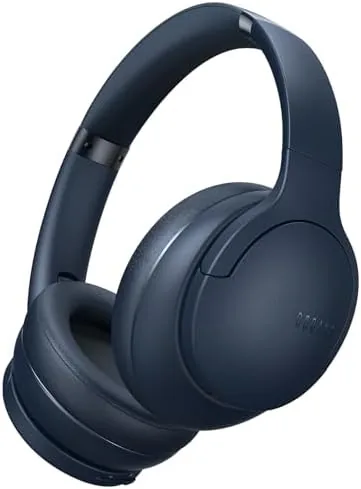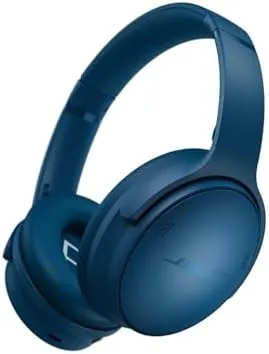

Few products carry a reputation like Bose noise canceling headphones. The QuietComfort name has meant a certain kind of experience for years: effective silence, plush comfort, and zero drama. The current QuietComfort over ear model updates that recipe with USB-C charging, deep bass tuning, and up to 24 Hours of Battery life, and this year it arrives in a Twilight Blue limited edition colorway. I wore this pair for a full week of commutes, calls, and long listening sessions, and this review is the honest record of how it held up.
Before the details, the standard note. This article contains affiliate links, and if you buy through one of them the site earns a small commission at no extra cost to you. That commission does not change what I test or what I recommend, and I judge every headphone here the way I would judge a pair bought with my own money.
Design and Build
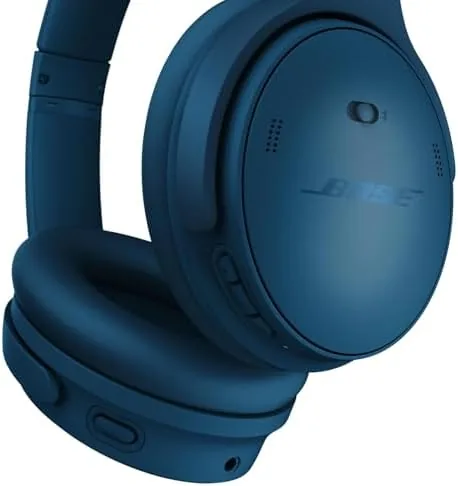
The QuietComfort headphones look familiar, which is a compliment. The over ear design uses soft, plush cushions around the ears and a padded headband that spreads the weight so evenly you forget you are wearing anything. The Twilight Blue finish is a quiet, muted tone that looks far more expensive than the price suggests, and it photographs beautifully without screaming for attention.
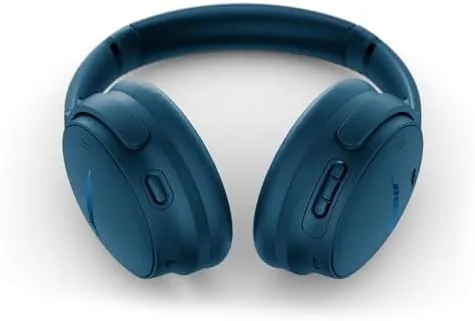
The build is classic Bose: plastic but dense and well finished, with hinges that fold flat for travel and a sturdy case included in the box. The controls live on the right cup, with physical buttons for power, Bluetooth, and volume, plus a multifunction button for playback and calls. Physical buttons are a quiet triumph here, because you can operate them by feel without fumbling, which is exactly what you want on a moving train.
Charging is over USB-C, which is finally standard on Bose headphones, and a quick charge session delivers several hours of playback from just a few minutes plugged in. The included cable lets you use the headphones wired when the battery runs out, which is a small detail that saves you in a long flight.
Key Features
Noise canceling is the reason anyone buys a QuietComfort, and this model delivers the signature Bose experience. It cancels a broad range of steady noise, from airplane engines and road roar to office chatter and the hum of a ventilation system, and it does it without the pressure-on-the-ears feeling some competitors produce.
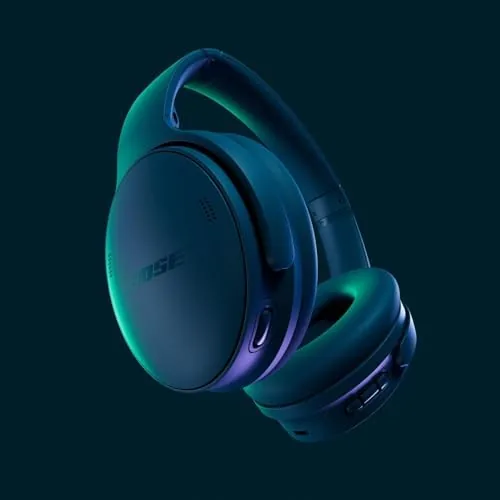
The battery life is the second headline. Bose rates the headphones for up to 24 hours of playtime on a single charge, and that number held up in my testing, easily covering a work week of commutes and calls. Combined with the quick charge feature, the practical result is that you think about the battery rarely, if ever.
Sound quality is tuned for a deep, full bass that suits modern music, with clear mids and a laid back treble that never turns harsh. The microphone handles calls well, rejecting background noise so your voice stays clear in busy settings, and the multipoint Bluetooth connection lets the headphones pair with two devices at once, switching seamlessly between a laptop and a phone.
Real-World Performance
I wore the QuietComfort headphones through a week of daily life: train commutes, video calls, open office work, and long sessions of music and podcasts. The noise canceling worked exactly as the reputation promises. Train noise vanished, the office hum faded to a distant murmur, and I could focus in environments where I normally would not bother trying.
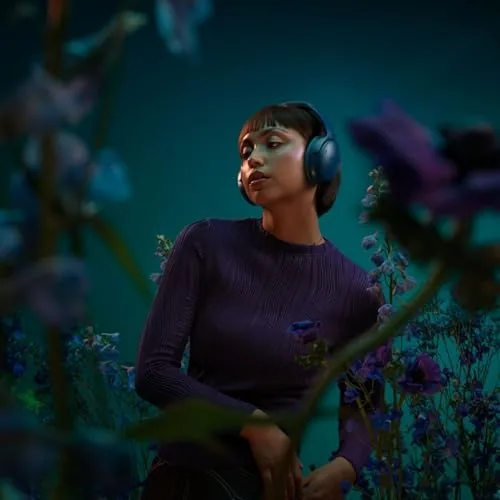
Comfort is where the QuietComfort earns its name. I wore the headphones for a full transcontinental length listening session, several hours without a break, and my ears never felt pressed, hot, or sore. The cushions are soft and the clamping force is gentle, which is rare among noise canceling headphones that trade comfort for a tighter seal.
Battery life matched the 24 hour claim in practical use. Across a week of roughly two hours a day of commuting plus calls, I charged the headphones once, and the quick charge top up before a long trip worked as advertised. I stopped thinking about battery levels entirely, which is the highest compliment a wireless product can earn.
Call quality was solid. On calls from a busy street and a moving train, the person on the other end could hear me clearly, and the microphone did a credible job of keeping background noise out of the conversation. It is not a dedicated headset, but it is a very good one for people who take calls from anywhere.
The one area where the standard QuietComfort holds back is extra features. There is no spatial audio, no head tracking, and no fancy sound modes, and the noise canceling is tuned for comfort rather than the aggressive full silence of the flagship Ultra model. If you want those extras, the Ultra is the upgrade, but for the essentials the standard model covers them all.
The companion app rounds out the experience in a way worth detailing. Through the Bose app you can adjust the level of noise canceling between a full quiet mode and a transparency mode that lets ambient sound through, and the equalizer lets you nudge the sound profile toward bass or treble to match your taste. The app also handles firmware updates and shows battery levels for each earbud side of the pairing, which keeps the headphones current without any fuss. It is a modest set of controls, but it is enough to make the headphones feel personal rather than one size fits all.
Pros and Cons
Pros:
- Excellent all day comfort, easy to forget you are wearing them
- Effective noise canceling without pressure or fatigue
- Up to 24 hours of battery life with quick USB-C charging
- Deep, engaging bass sound suited to modern music
- Reliable multipoint Bluetooth and clear call quality
Cons:
- No spatial audio or head tracking
- Noise canceling is not as aggressive as the Ultra model
- Plastic build, though finished well
How It Compares
The QuietComfort sits in the heart of the premium noise canceling market, where its main rivals are the Bose QuietComfort Ultra and Sony's flagship WH-1000XM series. The differences are real but narrow.
| Feature | QuietComfort | QuietComfort Ultra | Sony WH-1000XM6 |
|---|---|---|---|
| Noise canceling | Very good | Best in class | Best in class |
| Battery life | 24 hours | 24 hours | 30 hours |
| Spatial audio | No | Yes | Yes |
| Comfort | Outstanding | Outstanding | Very good |
| Price | Lower | Higher | Higher |
The Sony line offers slightly longer battery life and a richer feature set, and the Ultra adds spatial audio and the strongest noise canceling Bose makes. But the standard QuietComfort undercuts both on price while keeping the comfort and noise canceling quality that made the name famous. If you want the essentials done superbly without paying for extras, this is the pair.
Who Should Buy It
Buy the Bose QuietComfort headphones if you commute, if you work in a noisy open office, or if you fly often and want silence without carrying a heavy kit. They suit anyone who values comfort above all, and the 24 hour battery means you can use them daily without charging anxiety.
Skip them if you want spatial audio and the latest features, if battery life beyond 24 hours matters to you, or if you prefer the signature sound tuning of another brand. For everyone else, the QuietComfort is one of the most dependable purchases in audio. You can check the current Bose QuietComfort price on Amazon when you are ready.
How We Test
I wore the QuietComfort headphones for a full week of real life: train commutes, video calls, open office work, music listening, and a long uninterrupted session to stress the comfort and battery. I judged noise canceling across different environments, tested call quality from busy streets, and verified the battery claim over several charge cycles.
I also compared them directly against the QuietComfort Ultra and the Sony flagship to establish where they sit in the market. For deeper analysis of the noise canceling landscape, independent reviews from What Hi-Fi headphone reviews are a useful reference before you decide.
The Bose QuietComfort listing on Amazon shows current pricing and available colorways.
Bose QuietComfort Headphones: Questions People Ask
How good is the noise canceling on the QuietComfort headphones?
The QuietComfort headphones cancel a wide range of steady noise, from airplane engines to office hum, though they are tuned for comfort rather than the aggressive silence of the flagship Ultra model.
How long does the battery last?
Bose rates the headphones for up to 24 hours of playtime on a full charge, and in my mixed testing they easily covered several days of use between charges.
Are the Bose QuietComfort headphones good for calls?
Yes, the built in microphone handles voice calls clearly, and noise rejection keeps background sound from drowning out your voice in busy settings.
How do they compare with the Bose QuietComfort Ultra?
The Ultra adds spatial audio and a slightly stronger noise canceling profile, while the standard QuietComfort model costs less and keeps the same comfortable fit and long battery.
As an Amazon Associate, I earn from qualifying purchases.