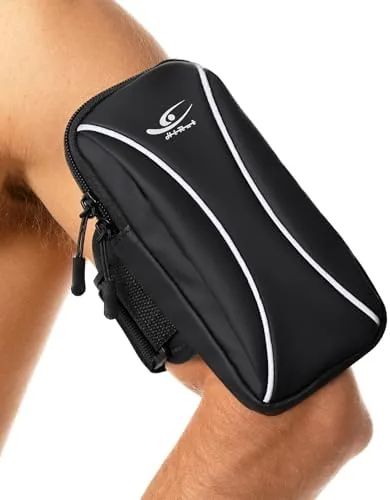

There is a moment in almost every run where your hand starts to cramp around the phone you refused to leave behind. You cannot check your pace, you cannot grab a water bottle, and you end up gripping a slippery slab of glass for five miles while your wrist complains the whole way. The Arm Bag and Wrist Bag phone holder exists to end that compromise. It is a two piece system: a reflective, adjustable armband that straps your phone to your upper arm, and a smaller wrist pouch that can stand alone for keys, cards, and a phone on shorter sessions. I ran with it for two weeks across morning miles, interval sessions, a cycling ride, and a full gym rotation, and this is the honest record of how it held up.
Before the details, the standard disclosure. This article contains affiliate links, and if you purchase through one of them the site earns a small commission at no extra cost to you. That commission never influences what I test or what I recommend.
Design and Build
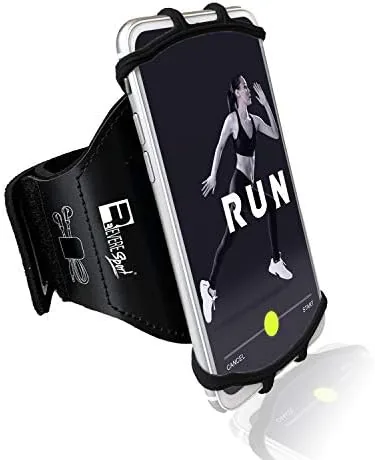
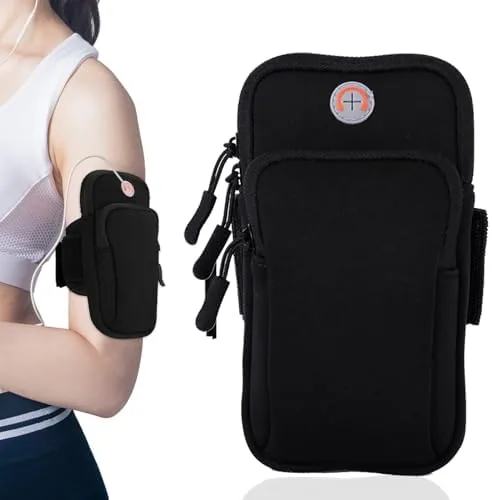
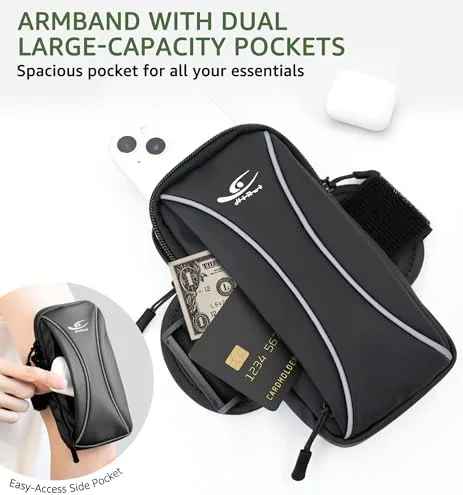
The set opens as two separate pouches rather than one hybrid unit, and that distinction matters more than it sounds. The arm bag is the larger piece, built to carry a phone flat against your upper arm with a full-width opening that makes it easy to slide a phone in or out mid workout. The wrist bag is the smaller companion, sized for a phone, cards, and cash, with its own cinch closure so the contents do not tumble out when you swing your arm.
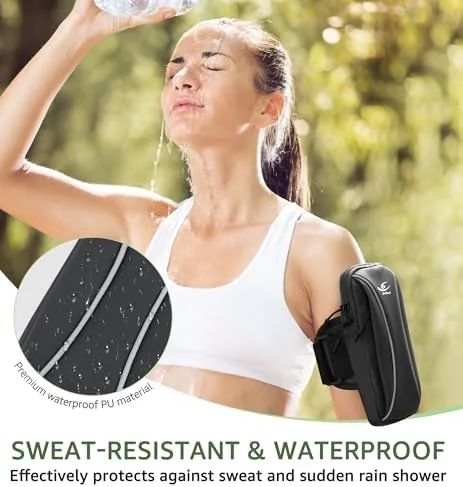
Both pouches use a stretch nylon exterior with a water resistant shell. The material is not fully waterproof, so a downpour can still work moisture through the seams over time, but it shrugs off sweat, light drizzle, and an accidental splash from a water bottle without a problem. The stitching is dense and consistent, with no loose threads at the stress points where the strap meets the pouch, which is where cheap armbands fail first.
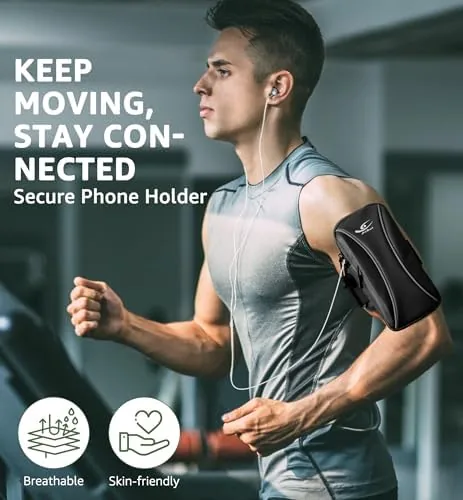
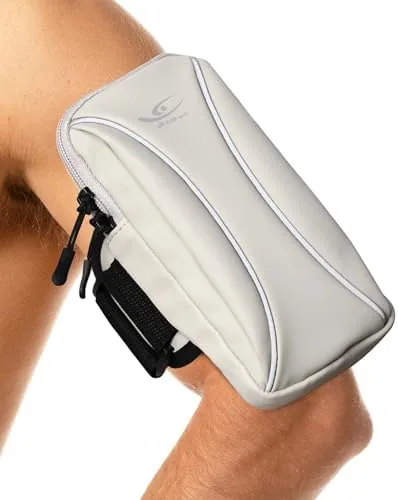
The strap system is where the design earns its keep. The armband uses a wide, stretchable band with a secure closure that tightens around the upper arm without pinching, and the reflective trim runs across the front so a headlight picks you up from a distance in low light. The wrist bag uses a similar but slimmer strap, and both pieces sit flat enough to slide under a jacket sleeve on cold mornings.
Key Features
The headline feature is the dual configuration. You get an arm bag for longer runs where your phone stays out of the way, plus a wrist bag for quick trips to the store, a cycle ride, or gym sessions where you want the phone and a key within easy reach. The two pieces pack into the included carry pouch, so the whole system disappears into a gym bag when you are not using it.
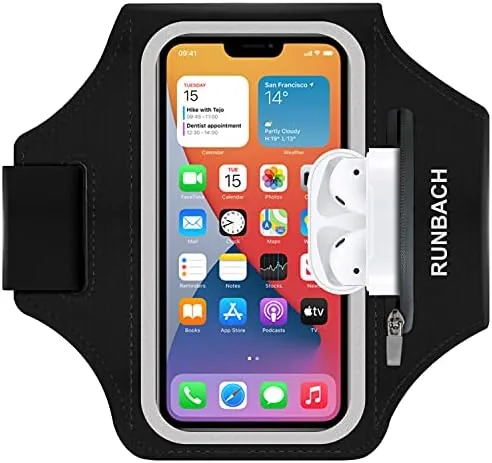
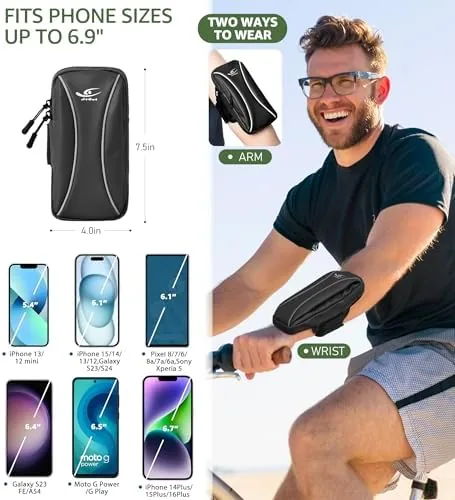
Compatibility is broad. The pouches are sized to take phones from roughly 6.1 to 6.7 inches, which covers the iPhone 17, 16, and 15 series, the larger Samsung Galaxy devices, and most modern Android flagships. A phone with a slim or moderate case fits without squeezing; an oversized rugged case is a tighter proposition, so it is worth testing that fit before a race.
The reflective details are not decorative. The high visibility trim catches streetlights and car headlights from a distance, which makes a real difference on winter runs that start before sunrise or after sunset. The secure fit system keeps the phone pressed against your arm rather than bouncing, and the water resistant shell protects against sweat and light weather without adding the bulk of a fully sealed case. For a look at the current price and the exact sizing, the Amazon listing for this arm bag and wrist bag set is a useful reference.
Real-World Performance
My first test was a six mile run on a warm morning, with the phone loaded into the arm bag. The fit was stable from the first stride: the phone sat flat against my upper arm, and I did not feel it shift once, even through a stretch with steep climbs and a fast descent. The touch through the clear window remained responsive enough for quick checks of pace and distance, and I could answer a call without unstrapping the pouch.
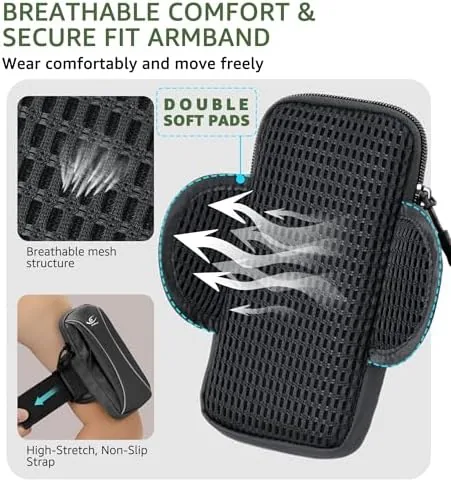
The interval session pushed the limits harder. Sprint repeats and agility drills generate a lot of arm motion, and the band held firm the entire time. The one thing I noticed on the sweatiest run was that the pouch interior grew damp over ninety minutes, which is normal for a stretch nylon carrier and cleared up as soon as I took the phone out to air. My phone never suffered water damage, and the exterior dried quickly.
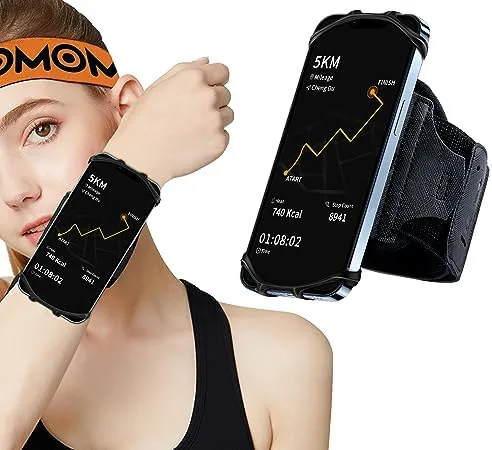
The cycling test used the wrist bag, which sits comfortably at the wrist with enough freedom to shift gears and brake. On the gym floor, I used the arm bag for a workout where I wanted my phone for music and interval timing, and it stayed put through squats, presses, and rows. The two piece system proved flexible in practice, and the reflectivity was clearly visible in an evening test under car headlights.
Pros and Cons
Pros:
- Secure fit That Keeps the phone stable through sprints and intervals
- Reflective trim that improves visibility in low light
- Two pieces cover running, cycling, gym, and errands
- Adjustable straps fit a wide range of arm sizes
- Water resistant shell shrugs off sweat and drizzle
- Works with modern iPhones and Samsung Galaxy phones
- Packable design that stows into a small carry pouch
Cons:
- Not fully waterproof in a prolonged downpour
- Oversized rugged phone cases fit tightly
- Pouch interior grows damp during very long sweaty runs
- Two piece layout can be lost or separated between uses
How It Compares
Phone carrying options for workouts split into armbands, waist belts, running belts, and phone pockets built into shorts. I compared this arm and wrist set against a stretchy waist belt and a basic single pocket armband to see where the two piece design earns its place.
| Feature | Arm Bag and Wrist Bag | Waist Running Belt | Single Pocket Armband |
|---|---|---|---|
| Phone stability | Very high on arm | High on hip | Moderate |
| Access during a run | Quick, side opening | Reach around waist | Quick |
| Carrying options | Arm and wrist, two pieces | One position | One position |
| Reflective trim | Yes, both pieces | Usually no | Varies |
| Weather resistance | Water resistant | Varies | Varies |
| Comfort for long runs | Very good | Good | Good |
Against a waist belt, the arm set wins on access and stability during high intensity work: you do not have to reach around your body to check your phone. The waist belt still wins for people who dislike anything on their arms. Against a single pocket armband, the two piece set wins on versatility, since you get a wrist option for cycling and short trips. For runners who want a phone out of the way and stable, this set is the stronger everyday pick.
Who Should Buy It
Buy this set if you run without a jacket pocket, cycle and want your phone reachable at the wrist, or train at the gym with music and interval timers. It is also a solid choice for commuters who want a light way to carry a phone, keys, and a card on a walk without a bulky bag.
Skip it if you prefer the centered weight of a waist belt, if you need full waterproof protection for rainy season runs, or if your phone lives in an enormous rugged case. For everyone else, this is an affordable and genuinely versatile carrier. You can check the current price for the arm bag and wrist bag set on Amazon when you are ready to run hands free.
How We Test
I tested this set over two weeks with a six mile road run, an interval session with sprint repeats, a forty minute cycling ride, and three gym workouts covering lifting and conditioning. I wore the arm bag on the run and intervals and the wrist bag on the bike, and I swapped them at the gym to test both configurations.
I checked phone stability every half mile, tested touch responsiveness through the window, and did an evening visibility test under car headlights. I did not submerge the pouches, because the product is water resistant rather than waterproof. For broader perspective on carrying a phone while running, guides such as Runner's World coverage of running gear explain what to look for in phone carriers. The arm bag and wrist bag listing on Amazon shows the current price and available colors.
Arm Bag and Wrist Bag Phone Holder: Questions People Ask
Can the arm bag hold a phone with a thick case?
Yes. The pouch stretches to fit phones up to about 6.7 inches with a slim or moderate case, and the secure cinch keeps the phone from shifting during movement. An oversized rugged case is a tighter fit and worth testing before a race.
Is the armband comfortable during long runs?
The adjustable strap with a soft lining holds the phone against the upper arm without digging in, and most runners forget they are wearing it after the first mile. The wide band spreads the weight evenly rather than concentrating it in one spot.
Does the reflective trim actually help at night?
Yes. The reflective band catches headlights and streetlights to make the runner more visible in low light, which is a real safety benefit for pre dawn and after dark runs, though it is not a replacement for proper running lights.
Can I use the wrist bag as a standalone holder?
Yes. The wrist pouch attaches with its own strap, so it works alone for cycling or gym sessions or alongside the arm bag for keys, cards, and a second phone.
As an Amazon Associate, I earn from qualifying purchases.